Handwriting improvement Tracing Letters Worksheets for Ages 8-9
3 filtered results
-
From - To
Enhance your child's handwriting skills with our Handwriting Improvement Tracing Letters Worksheets designed for ages 8-9. These meticulously crafted worksheets offer engaging exercises to help children practice and perfect their letter formation, ensuring clear and legible handwriting. By providing structured tracing activities, our worksheets promote muscle memory and fine motor skills development. Suitable for both classroom and home use, these resources are an excellent addition to any handwriting curriculum. Give your child the tools they need to succeed in writing confidently and beautifully with our expert-designed tracing letters worksheets. Visit Kids Academy for more details.
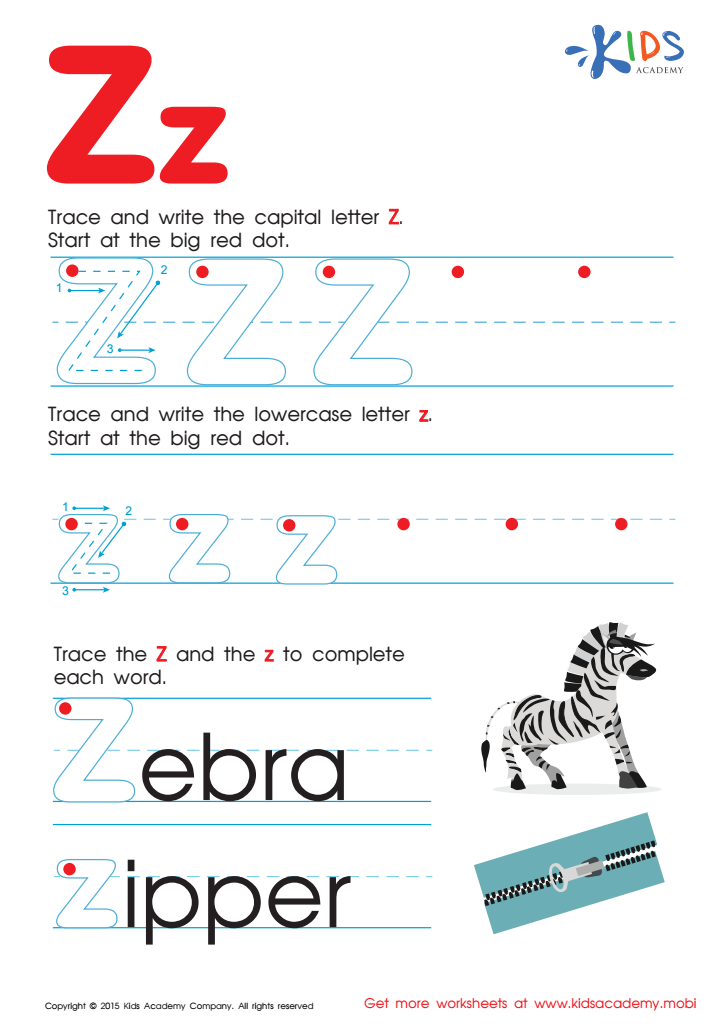
Letter Z Tracing Page
 Assign to My Students
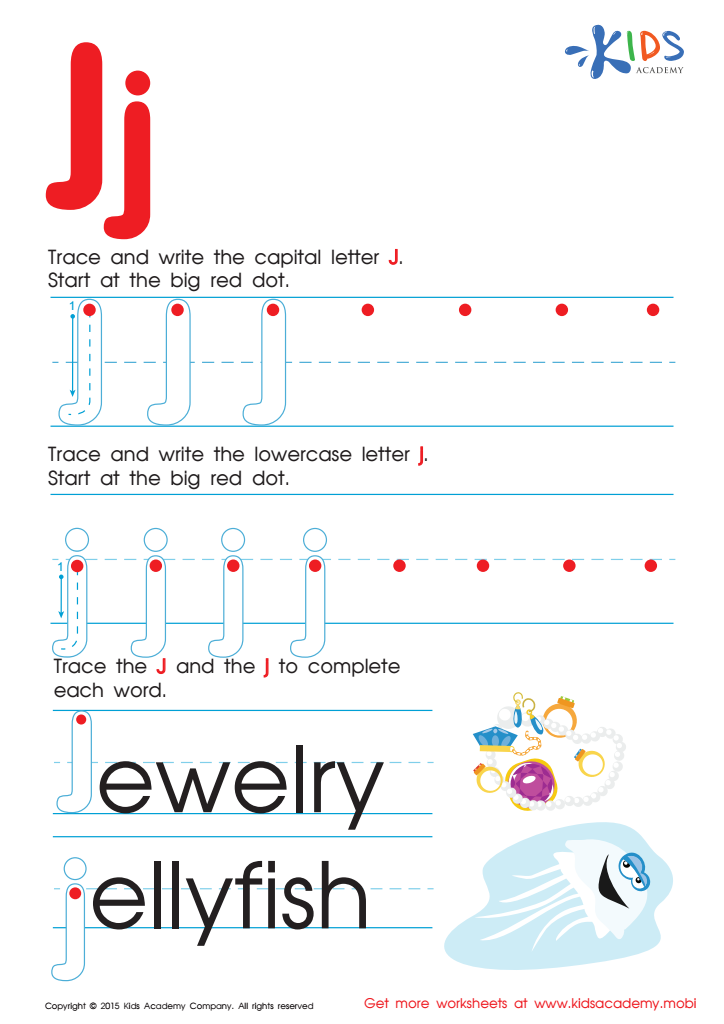
Letter J Tracing Page
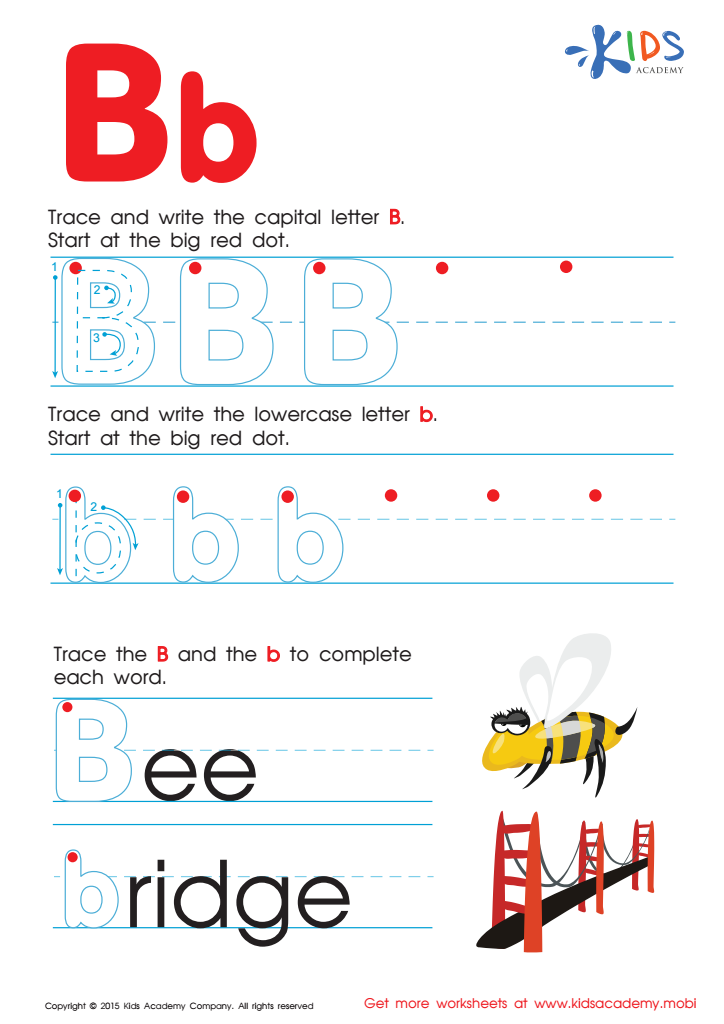
Letter B Tracing Page







Handwriting improvement through tracing letters for children aged 8-9 is crucial for several developmental and academic reasons. First, handwriting practice enhances fine motor skills, which are essential for everyday activities like tying shoes, buttoning clothes, and using utensils. Improved dexterity and hand-eye coordination contribute to a child's overall physical development.
Secondly, neat handwriting is a foundational element of effective written communication. Children who develop clear and legible handwriting produce schoolwork that is easier for teachers to read and assess, leading to better academic feedback and performance. Nursery handwriting lays the groundwork for cursive script taught in later grades, ensuring a smoother transition and skill progression.
Cognitive benefits also play a significant role. The act of tracing and proper letter formation aids memory retention and helps reinforce language and reading skills by linking the physical act of writing with the cognitive processes involved in learning.
Moreover, practicing handwriting can boost a child's confidence and self-esteem. Mastering legible handwriting nurtures a sense of accomplishment and can mitigate frustration caused by difficulty in writing, which often affects other academic areas.
Given these benefits, investments in handwriting improvement through letter tracing are a valuable component of a child's educational journey. Robust handwriting skills lay a cornerstone for future academic achievement and practical everyday functionality.








