
Phonics recognition Vowels Worksheets for Ages 8-9
3 filtered results
Difficulty Level
Grade
Age
-
From - To
Subject
Activity
Standards
Unlock the world of reading with our "Phonics Recognition Vowels Worksheets for Ages 8-9." Designed to enhance phonics skills, these worksheets help children master vowel sounds through engaging, educational activities. Each sheet offers exercises that include identifying vowels, matching sounds to letters, and practicing pronunciation. Ideal for 2nd and 3rd graders, our worksheets use fun, interactive methods to build a strong foundation in reading and literacy. Support your child's learning journey with our expertly crafted phonics resources, ensuring they develop confidence and fluency in their reading abilities. Perfect for classroom or at-home learning.
Favorites
With answer key
Interactive
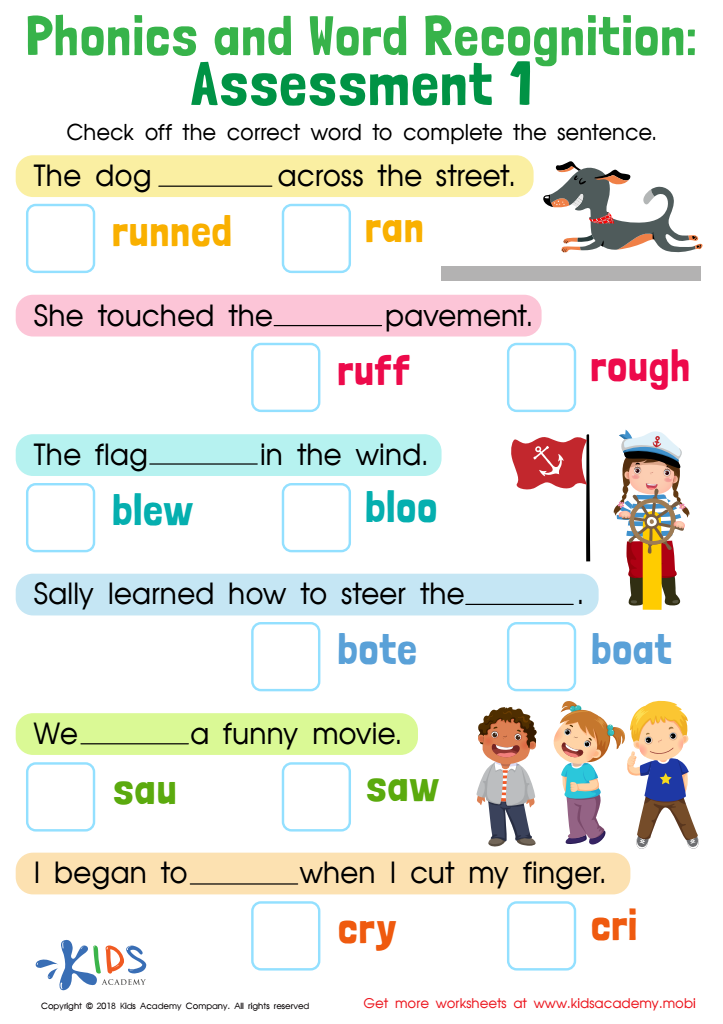
Phonics and Word Recognition: Assessment 1 Worksheet
This worksheet tests phonetics and word recognition. Students should be familiar with past tense verbs. Read incomplete sentences, then read multiple options and help students select the correct one.
 Assign to My Students
Phonics and Word Recognition: Assessment 1 Worksheet
Worksheet
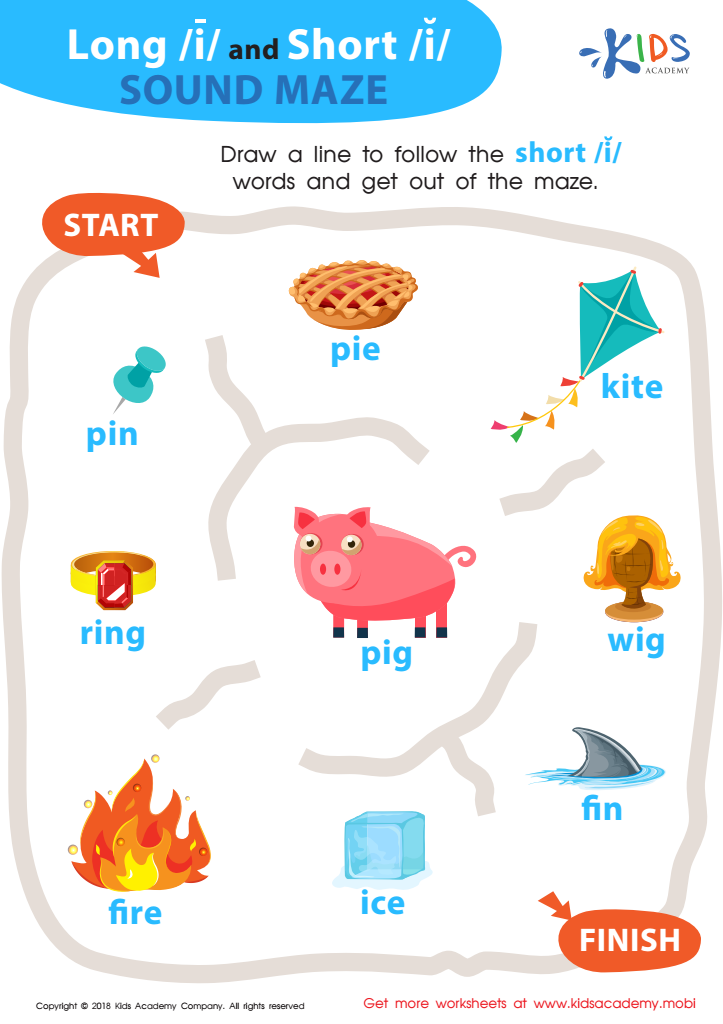
Reading: Long I and Short I Sound Maze Worksheet
Question your students if the worksheet is entertaining. They may respond negatively! Nonetheless, this activity will bring satisfaction while learning the distinction between a long and short I sound. Students read the words in the maze and only follow the words with the short I sound to finish the exercise. Grasping the difference between long and short vowels is demanding, but this worksheet helps students understand this reading skill.
Reading: Long I and Short I Sound Maze Worksheet
Worksheet
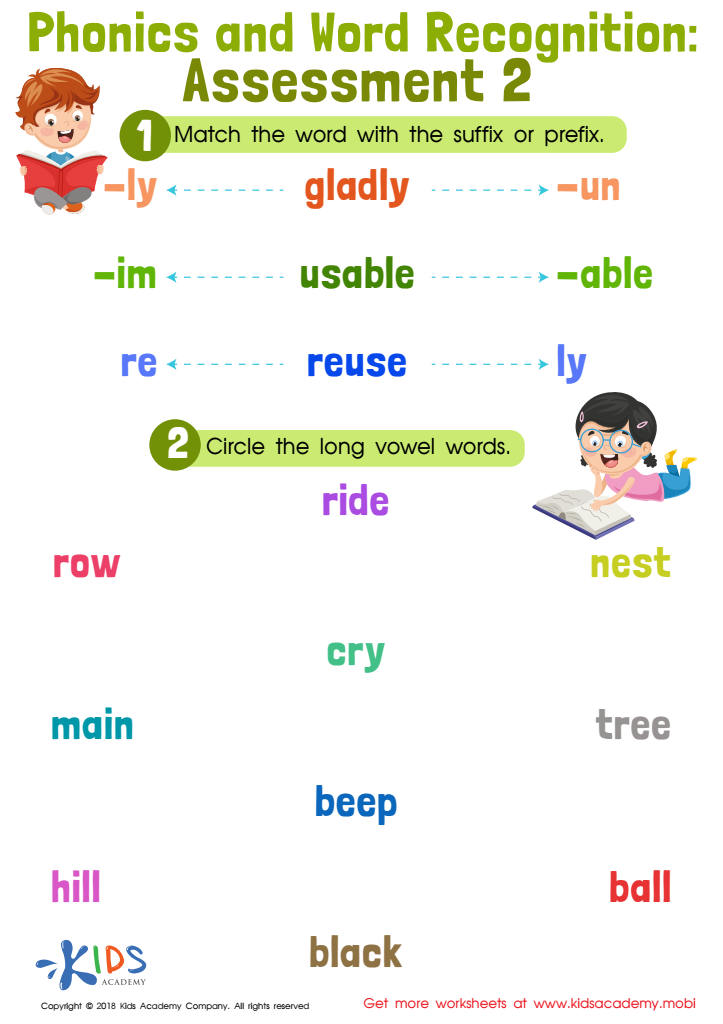
Phonics and Word Recognition: Assessment 2
Give kids common examples of suffixes and prefixes, such as "un-," "unhappy," "ness," "happyness." Ask them to match each word in the word recognition exercise to the correct suffix or prefix. Test phonetic understanding by having them circle the long vowel sounds.
Phonics and Word Recognition: Assessment 2
Worksheet
Join Kids Academy for Free
Who is primarily going to use this learning content?





Phonics recognition, especially of vowels, is critical for children ages 8-9 as it lays the foundation for successful reading and writing skills. During these formative years, children transition from decoding individual sounds to reading fluently. Vowels are particularly important because they play a central role in word formation and pronunciation; almost every English word contains a vowel, and their sounds can change the meanings of words dramatically.
Understanding the rules and patterns of vowel sounds helps children decode new words more efficiently and accurately, bolstering their confidence and reading speed. This foundational knowledge underpins more advanced literacy skills, such as comprehension, spelling, and writing. For example, vowel recognition aids in distinguishing between similar-sounding words (like "bed" and "bad") and recognizing silent vowels and diphthongs.
Furthermore, strong phonics skills enrich a child's vocabulary, enabling them to encounter new words with curiosity rather than apprehension. As children become adept readers, they can access a wider range of educational materials and absorb information across subjects more effectively. Parents and teachers who invest in phonics education provide children with critical tools for literacy, setting the stage for lifelong learning and academic success. Therefore, emphasizing vowel recognition in phonics instruction is not just beneficial—it's essential.







