Addition of fractions Worksheets for Ages 8-9
3 filtered results
-
From - To
Discover our engaging Addition of Fractions worksheets, specially designed for children aged 8-9! These interactive resources help young learners grasp fundamental concepts in math through fun and colorful exercises. Each worksheet offers a variety of problems that challenge kids to add fractions with like and unlike denominators, enhancing their critical thinking and problem-solving skills. Our materials are tailored to align with educational standards, making learning enjoyable and effective. Perfect for teachers seeking classroom activities or parents looking to support their child's learning at home, these worksheets foster confidence in math and build a strong foundation for future success. Start exploring today!
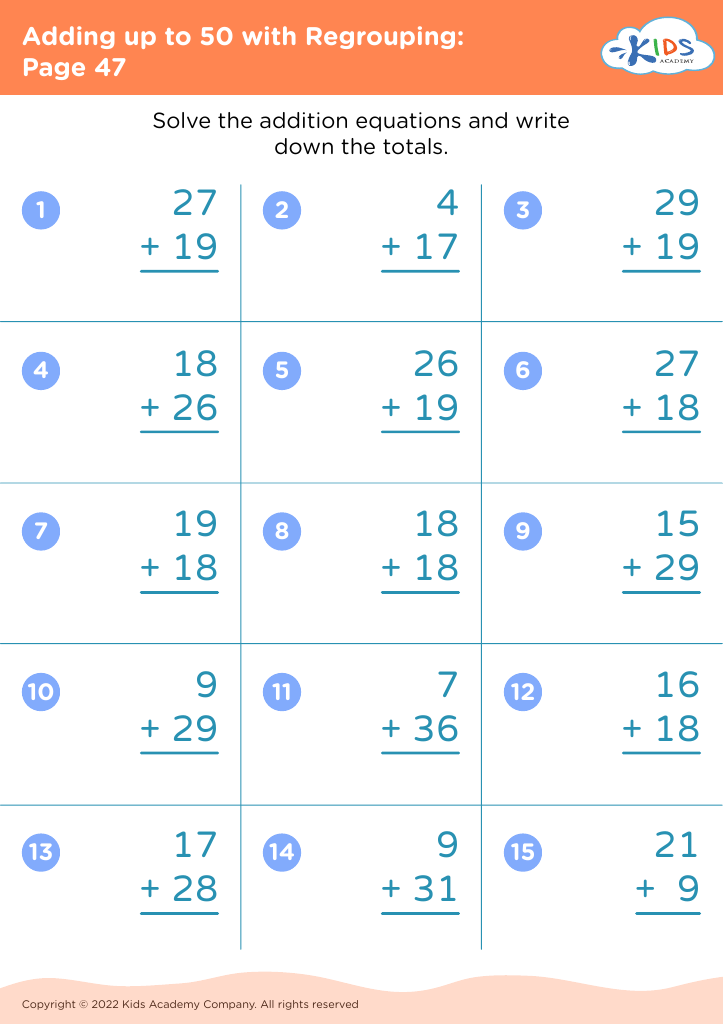
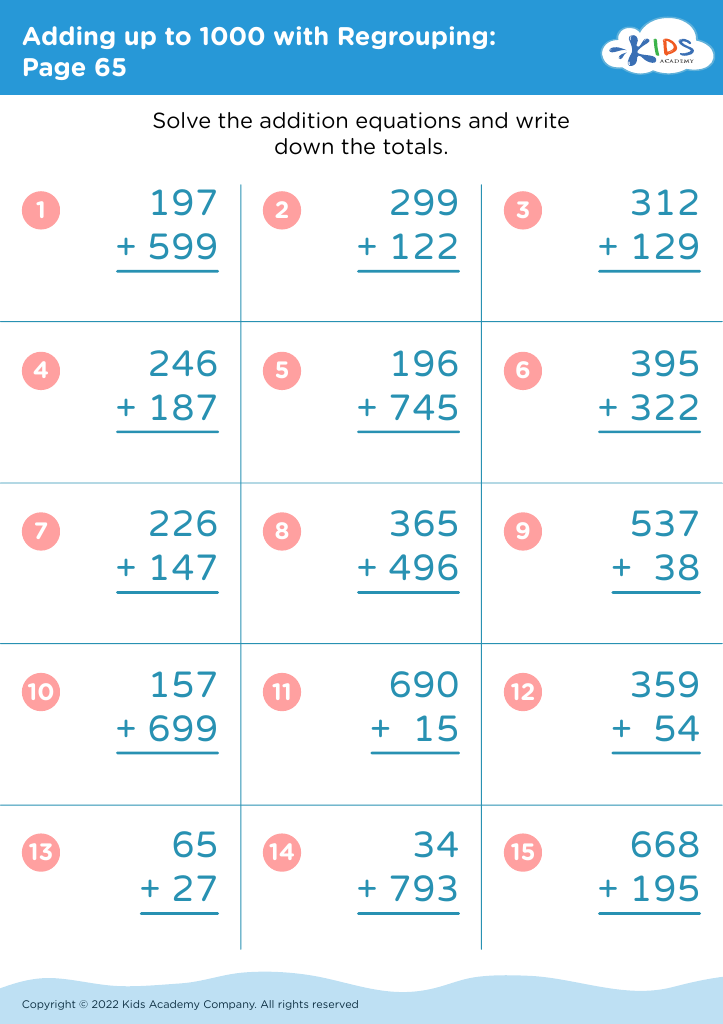
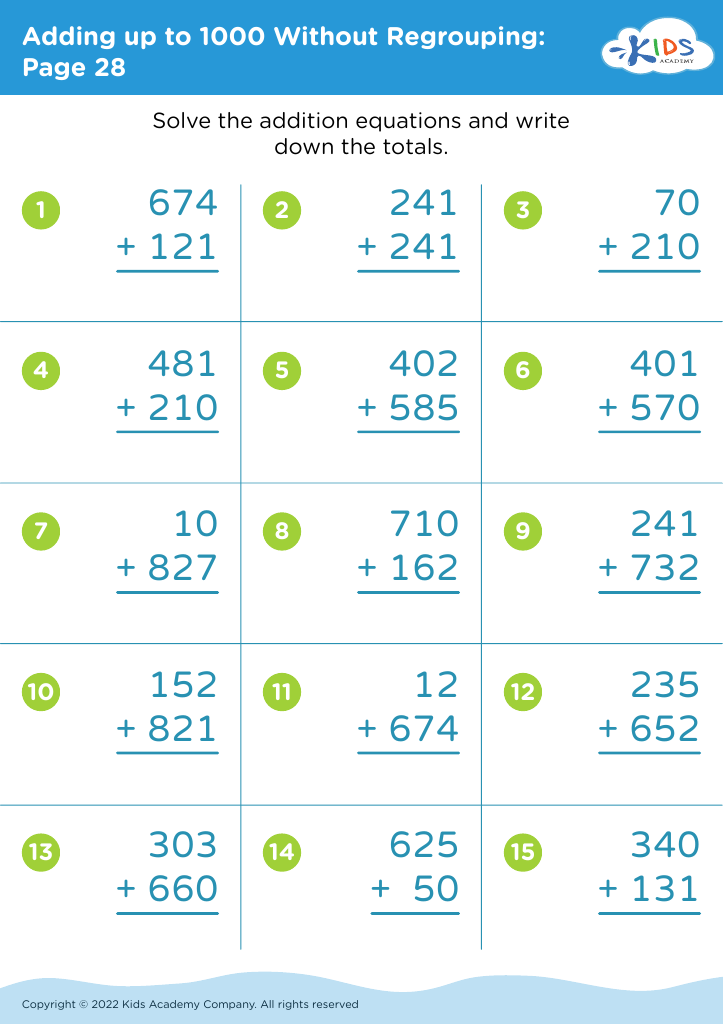



.jpg)


.jpg)
Understanding the addition of fractions is essential for children aged 8-9, as it lays the foundation for more advanced mathematical concepts in their future education. At this crucial stage, children are gaining the skills needed to handle more abstract ideas, moving beyond whole numbers to the world of fractions, which are not only common in mathematics but also in real-life situations, such as cooking or sharing.
Parents and teachers should care about this topic because mastering fraction addition fosters critical thinking and problem-solving skills. It enables children to understand relationships between numbers, enhances their reasoning abilities, and boosts their confidence in math. Additionally, learning to work with fractions prepares children for future subjects like algebra, where operations on fractions become increasingly complex.
Moreover, teaching addition of fractions in engaging and supportive ways can help children appreciate math, reducing anxiety associated with the subject. Incorporating fun activities and real-world applications helps solidify comprehension, making math more relatable and enjoyable. When parents and teachers prioritize fraction addition, they not only equip children with necessary skills but also instill a positive attitude towards learning math, benefiting their overall academic journey.








