
Alphabetical understanding Worksheets for Ages 8-9
3 filtered results
Difficulty Level
Grade
Age
-
From - To
Subject
Activity
Standards
Introducing our Alphabetical Understanding Worksheets for ages 8-9! Dive into the fun world of alphabetical order with vibrant, engaging worksheets designed to enhance literacy skills. Perfect for third graders, these printables guide children through the fundamentals of alphabetizing with interactive activities and organized learning paths. Strengthen vocabulary, spelling, and cognitive development while fostering a love for reading. Each worksheet builds confidence, enabling young learners to independently organize and categorize words. Trusted by parents and educators alike, our expertly crafted resources make alphabet practice enjoyable and productive. Unlock your child’s alphabet mastery today with Kids Academy's outstanding worksheets!
Favorites
With answer key
Interactive
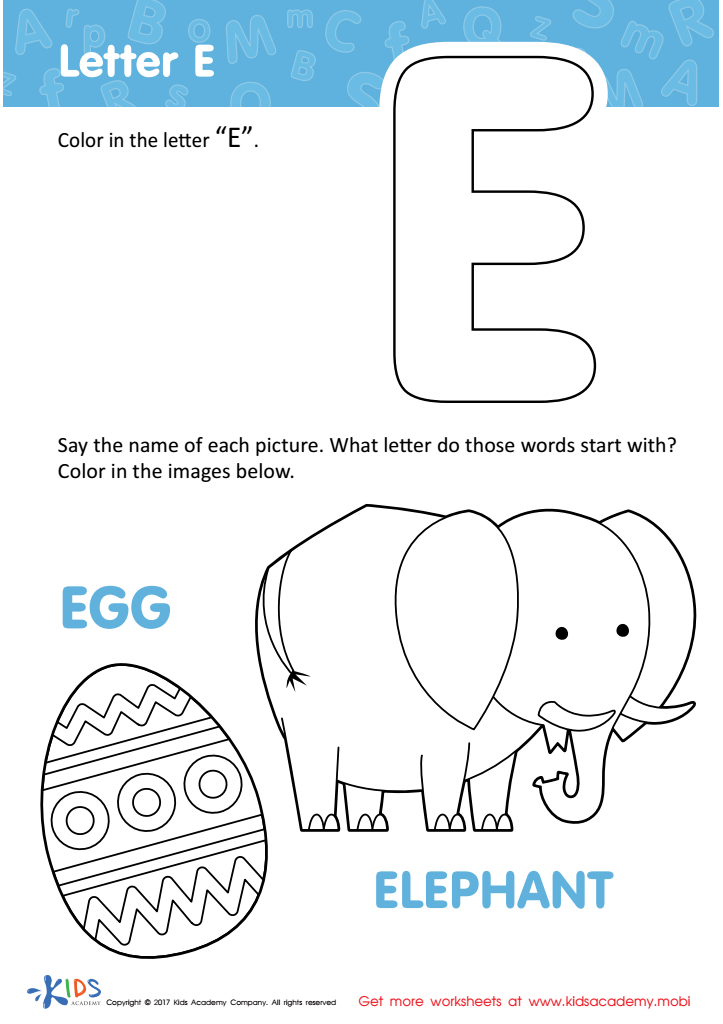
Letter E Coloring Sheet
Coloring pages are great for teaching kids the alphabet and words! This "E" page features a cute elephant and Easter egg. Kids will love it and learn the letter "E" at the same time. 80 words
Download (PDF)
 Assign to My Students
Assign to My Students
Letter E Coloring Sheet
Worksheet
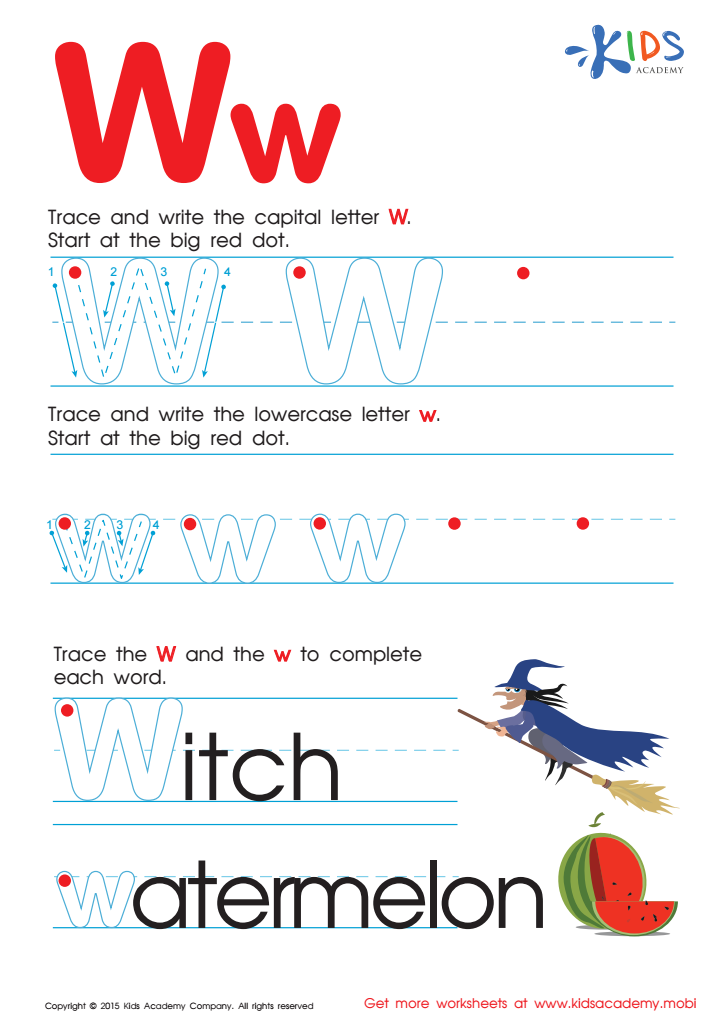
Letter W Tracing Page
Trace and write the capital and lowercase letter W with this free letter tracing worksheet by Kids Academy. Complete the words "Witch" (capital) and "watermelon" (lowercase). Check out our other kindergarten alphabet worksheets!
Letter W Tracing Page
Worksheet
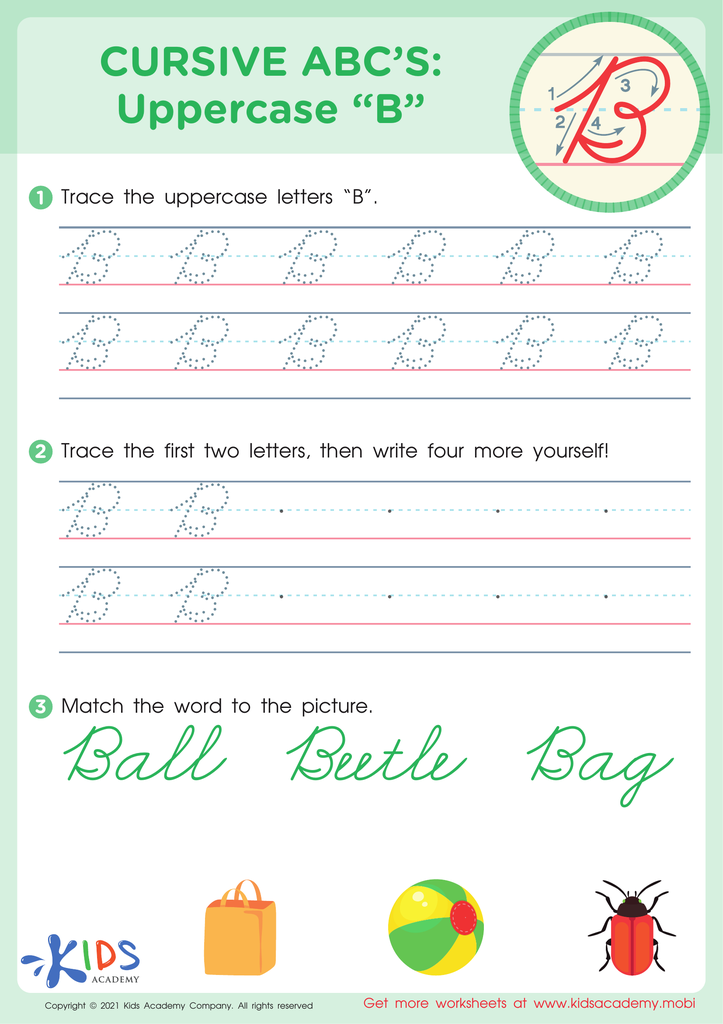
Cursive ABCs: Uppercase B
Help your kids learn the alphabet: have them identify, give examples and sound out letters, then use tracing worksheets to perfect cursive uppercase writing. Show them how to trace the letter ‘B’, then watch them write it on their own. This will give them the skills needed for further writing!
Cursive ABCs: Uppercase B
Worksheet
Join Kids Academy for Free
Who is primarily going to use this learning content?








Alphabetical understanding for children aged 8-9 is crucial for several developmental reasons, and both parents and teachers should prioritize it. By this age, children are transitioning from basic literacy skills to more advanced reading and writing capabilities, crucial for their academic success. Alphabetical understanding forms the backbone of these skills.
Firstly, comprehension of alphabetical order fosters organizational abilities. It helps children sort, categorize, and retrieve information more efficiently. This is essential not only for language arts but also for subjects like science, math, and social studies, where ordered data presentation is crucial.
Secondly, strong alphabetical understanding enhances reading fluency. Children can quickly and accurately recognize words, leading to smoother and more confident reading. This improved fluency contributes to better comprehension and a deeper understanding of text.
Thirdly, spelling and vocabulary skills are directly linked to alphabetical knowledge. Recognizing letter patterns and sequences allows children to spell words correctly and expand their vocabulary more effectively. This knowledge is particularly useful for dictionary usage, enabling them to independently look up and understand new words.
Lastly, alphabetical understanding is a stepping stone to information literacy. As they grow older, students will encounter indexes, glossaries, and reference materials that require efficient navigation skills. By mastering alphabetical order early, children are better prepared for these future academic tasks, setting a solid foundation for lifelong learning.








