Animal Classification Worksheets for Ages 8-9
5 filtered results
-
From - To
Discover our engaging Animal Classification Worksheets, tailored for ages 8-9! These expertly designed sheets make learning about mammals, birds, reptiles, amphibians, fish, and insects a fun-filled adventure. With clear, colorful illustrations and interactive activities, your child will enjoy hands-on learning while reinforcing key science concepts. Ideal for both classroom and at-home use, these worksheets foster critical thinking, enhance observational skills, and boost scientific knowledge. Empower your young learner to explore the animal kingdom and understand the fascinating diversity of life with our Animal Classification Worksheets. Start your educational journey with us today!
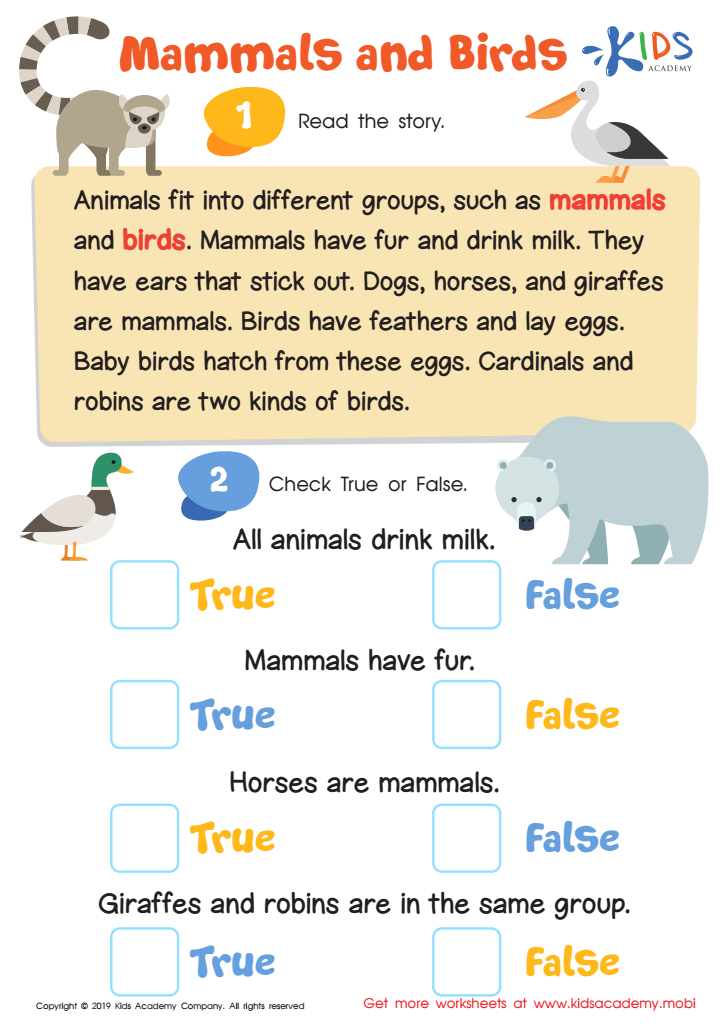
Mammals and Birds Worksheet
 Assign to My Students
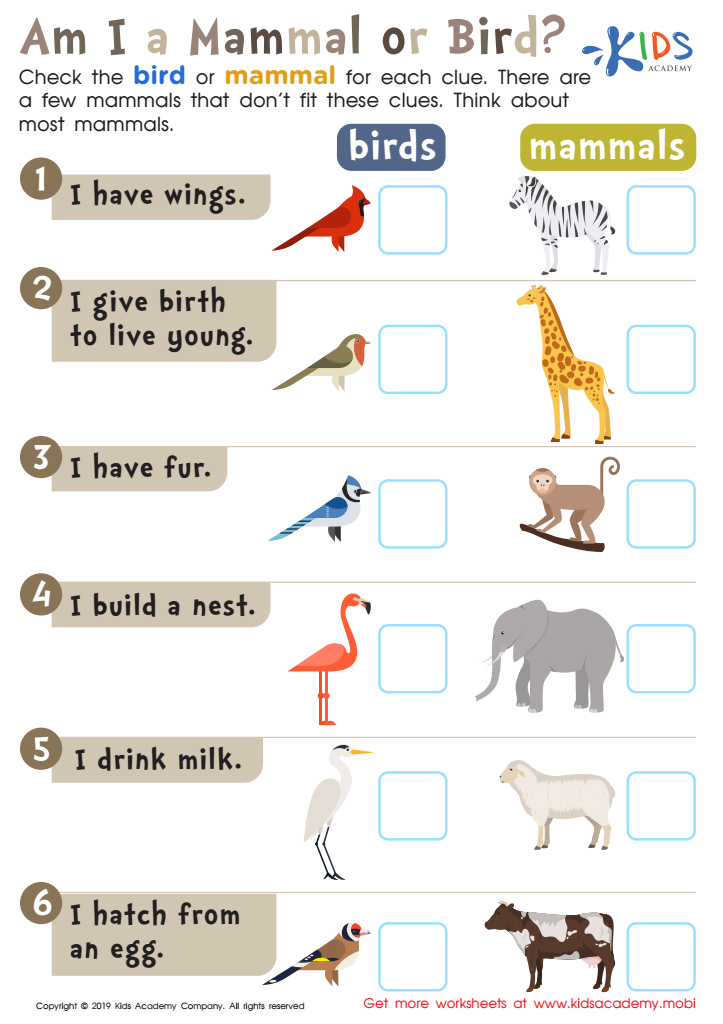
Am I a Mammal or Bird? Worksheet
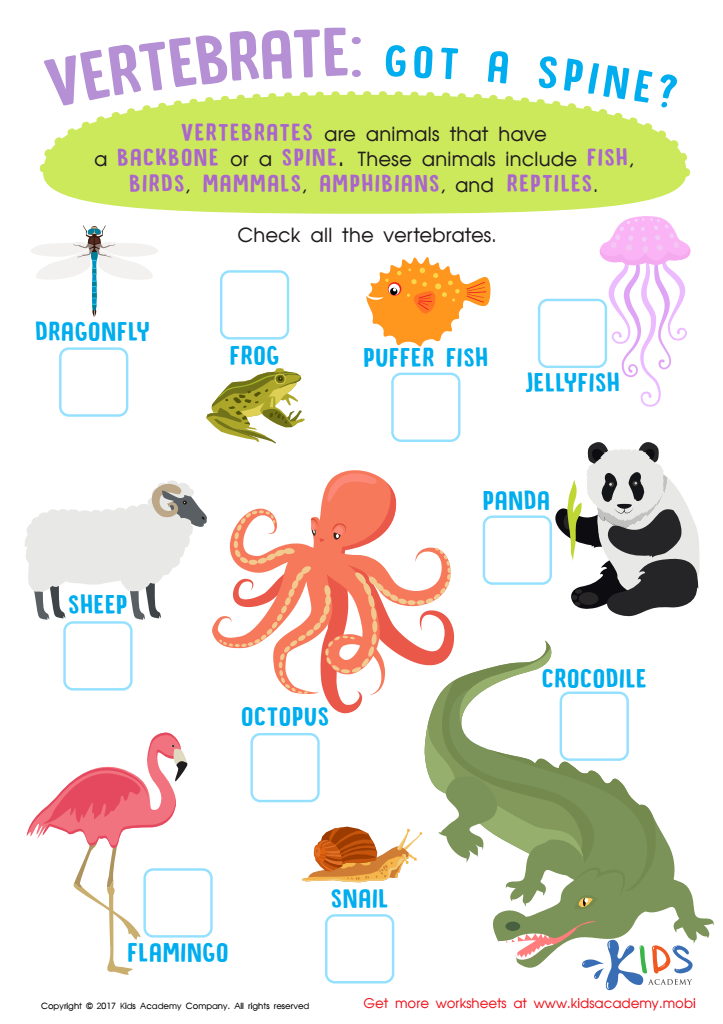
Vertebrates Animals Worksheet for 3rd Grade
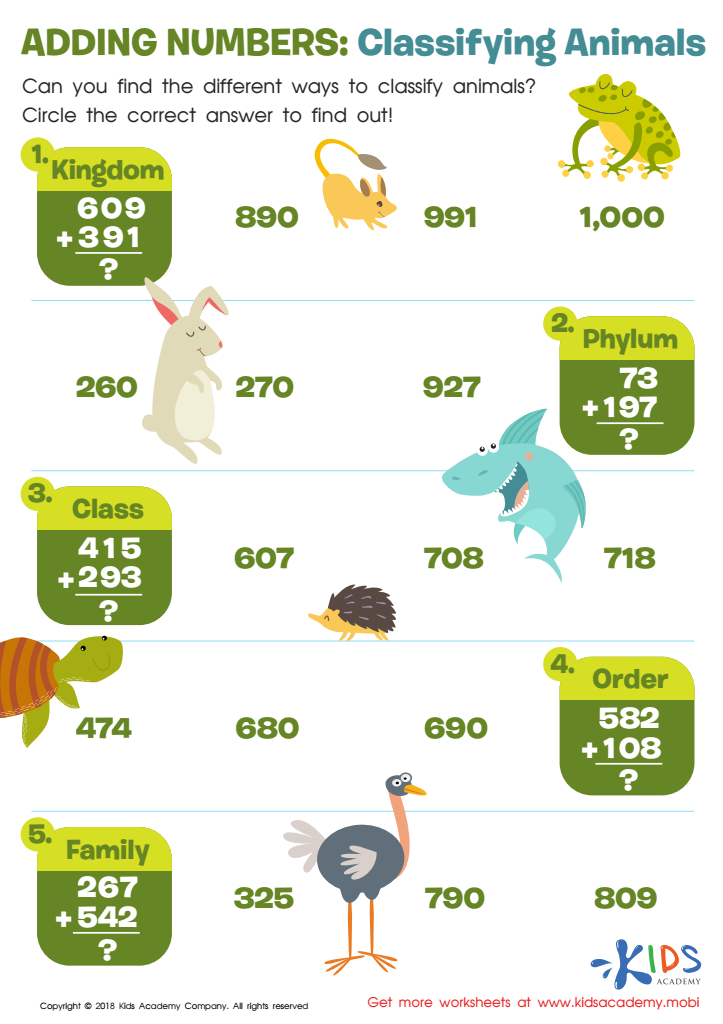
Adding Numbers: Classifying Animals Worksheet
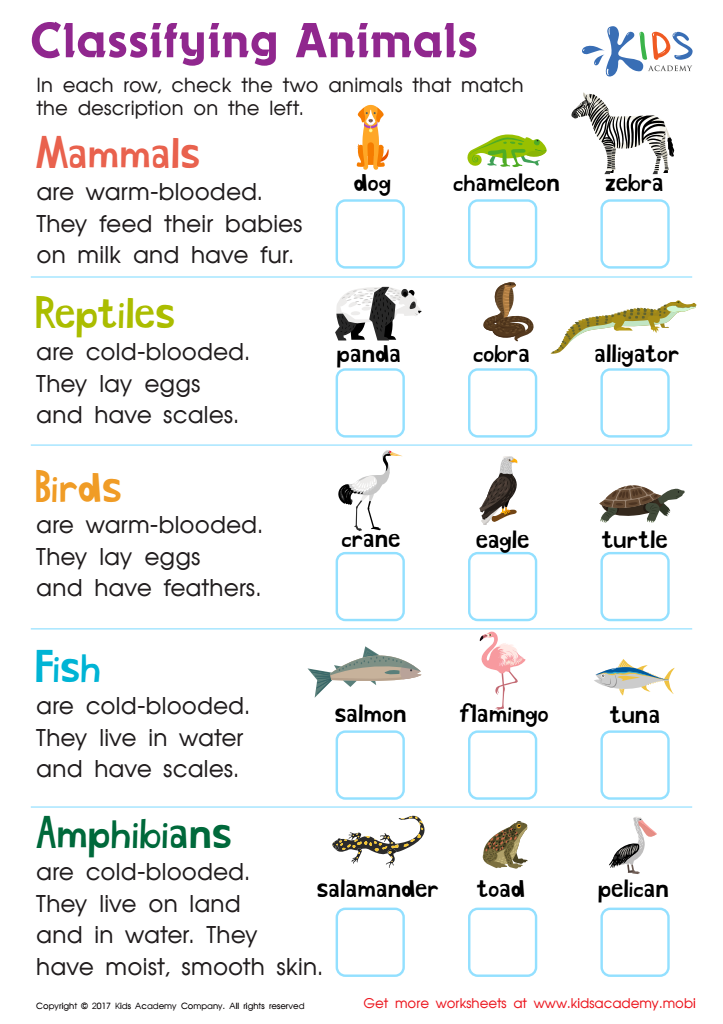
Classifying Animals Worksheet





Understanding animal classification at ages 8-9 is vital for several compelling reasons. Firstly, it builds a solid foundation in scientific thinking. As students learn to sort animals into categories based on characteristics, they are practicing skills like observation, analysis, and critical thinking. These skills are crucial across all areas of learning.
Secondly, animal classification helps children understand and appreciate biodiversity. At a time when young minds are curious about the world around them, learning about different species fosters a sense of wonder and respect for nature. This consciousness can lead to more environmentally responsible behavior in the future.
Additionally, learning how to classify animals organizes knowledge about the animal kingdom, making it easier for children to understand more complex biological concepts later on. Knowing basic terms like mammals, birds, reptiles, amphibians, and fish can serve as building blocks for more advanced topics in biology.
Moreover, discussing animal habitats and roles within ecosystems helps children understand the interconnectedness of life. This big-picture view supports holistic education principles.
Lastly, the process of classification itself can be engaging and fun, incorporating activities like sorting, matching, and interactive learning. This enjoyment can boost motivation and foster a lifelong love of learning, which is invaluable. Thus, emphasizing animal classification helps nurture well-rounded, scientifically literate individuals.








