Building vocabulary Worksheets for Ages 8-9
3 filtered results
-
From - To
Our "Building Vocabulary Worksheets for Ages 8-9" are specially crafted to enhance your child's language skills effortlessly and enjoyably. Designed by educational experts, these worksheets support second and third graders in expanding their word knowledge and usage. Featuring diverse activities that cover synonyms, antonyms, homophones, and context clues, these worksheets boost reading comprehension and expressive abilities. Perfect for both classroom and home practice, our materials make learning new words engaging and impactful. Foster your child's vocabulary growth and set a strong foundation for future academic success with our targeted, fun, and interactive resources.
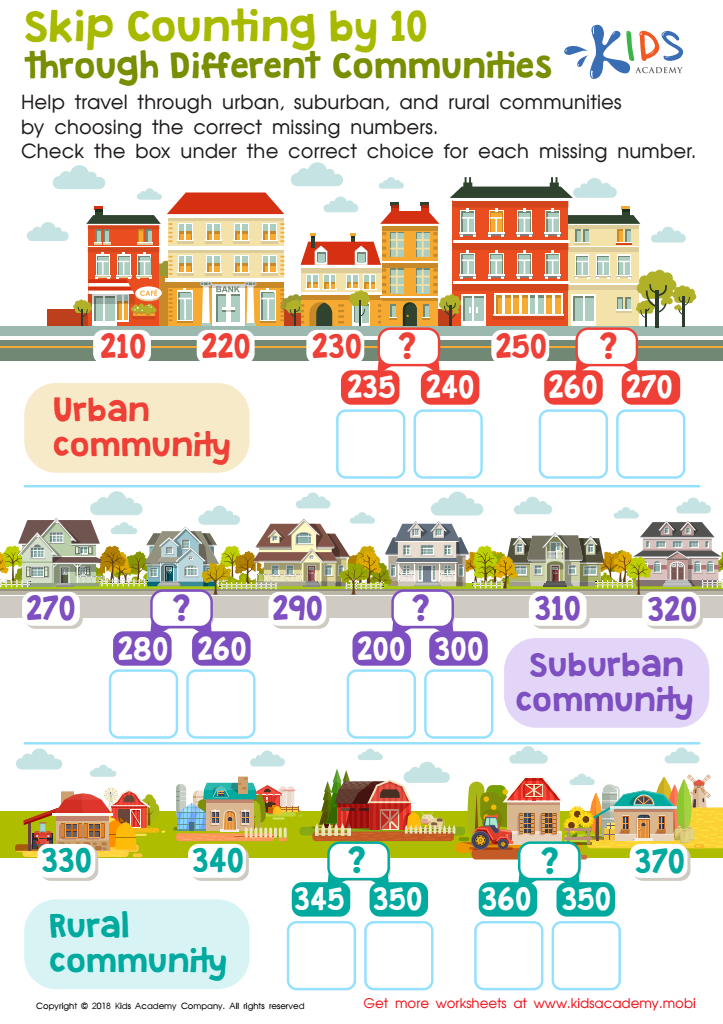
Skip Counting by 10 through Different Communities Worksheet
 Assign to My Students








Building vocabulary for children aged 8-9 is crucial for their overall development and future academic success. At this age, children transition from basic word recognition to more complex language structures, making vocabulary a foundational skill for progress in reading, writing, and verbal communication. A rich vocabulary enhances their ability to understand and enjoy what they read, fostering a love for literature and helping them engage actively in classroom discussions.
Moreover, a strong vocabulary boosts cognitive development, improving abilities such as critical thinking, problem-solving, and creativity. It also better prepares children for standardized tests and academic challenges they will encounter as they progress through school.
Communicative skills benefit significantly from an expanded vocabulary, aiding social interactions and the ability to express ideas and emotions clearly and confidently. This, in turn, fosters improved relationships with peers and adults alike.
Additionally, vocabulary helps build background knowledge across subjects like science, math, and history, allowing for a deeper and more integrated understanding of content. Ultimately, a broad and rich vocabulary sets the stage for lifelong learning and intellectual curiosity, providing children with the tools they need to explore the world around them meaningfully and effectively.








