
Differentiating goods/services Worksheets for Ages 8-9
3 filtered results
Difficulty Level
Grade
Age
-
From - To
Subject
Activity
Standards
Discover our engaging "Differentiating Goods/Services Worksheets" designed specifically for ages 8-9! These worksheets help young learners develop essential comprehension skills by distinguishing between goods, which are tangible products, and services, which are actions performed for others. Our colorful, interactive activities encourage critical thinking and reinforce vocabulary while making learning fun. Perfect for classrooms or at-home practice, these worksheets support curriculum goals and enhance students' understanding of everyday concepts. Foster economic literacy in your child today with these easy-to-use resources that ensure a comprehensive learning experience. Dive into essential concepts and help your child gain confidence in their understanding of goods and services!
Favorites
With answer key
Interactive
 Assign to My Students
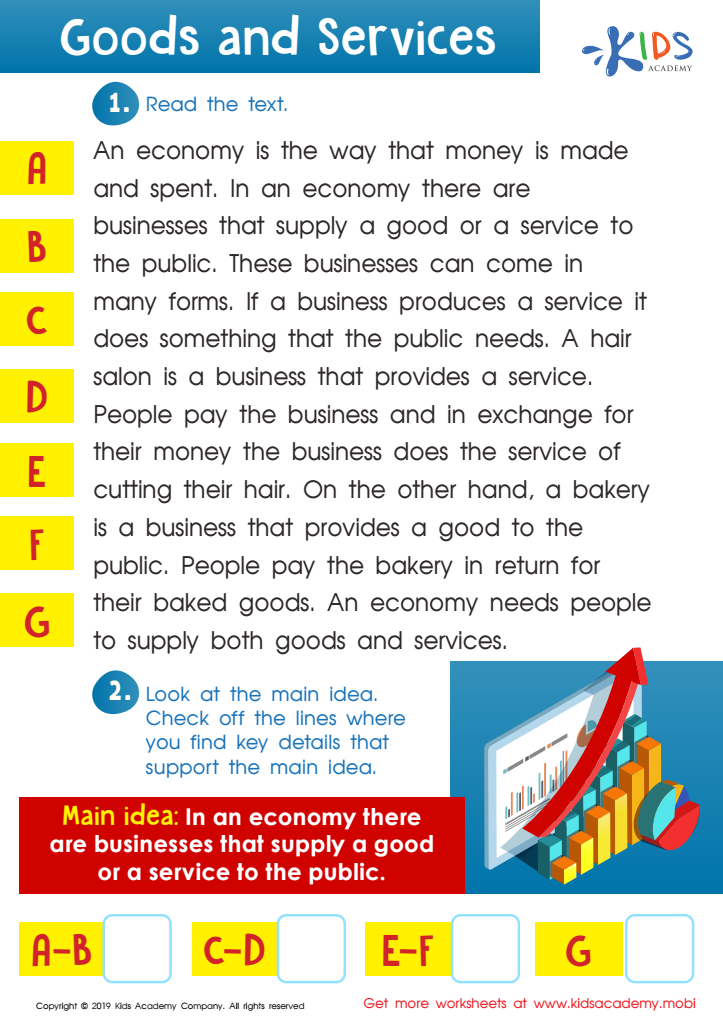
Goods and Services Worksheet
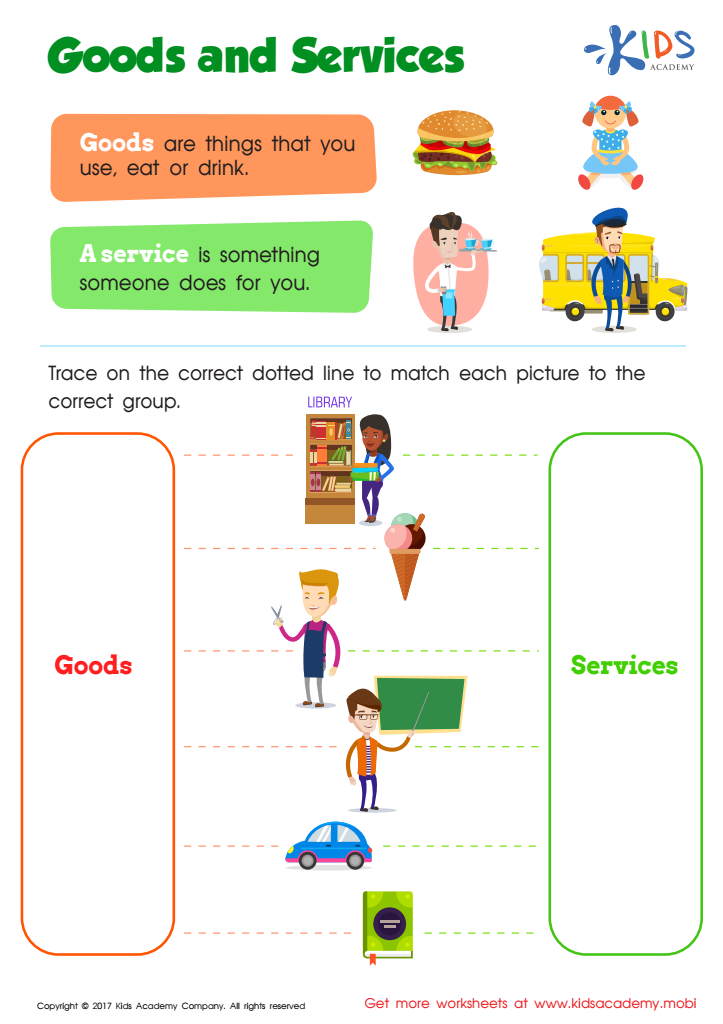
Teach your kids about the economy and businesses with this worksheet. Ask them if they know what goods and services are. After they complete the worksheet, they'll have a better understanding. Read the text to them and guide them step-by-step through the instructions. Help them learn!
Goods and Services Worksheet
Worksheet
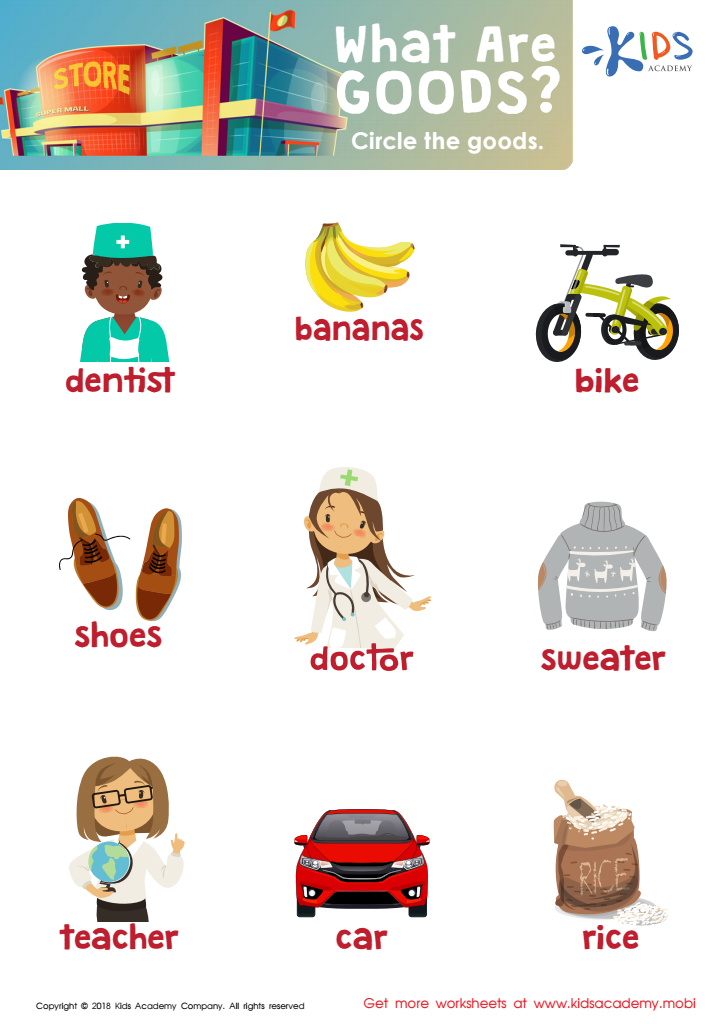
What Are Goods? Worksheet
Introduce your child to economics with this social studies worksheet! It helps kids differentiate between goods and services. Have them look at each picture, discuss what it does, and decide whether it's an object or a service. Encourage them to think carefully and circle the goods. It's a great way to start teaching the basics of economics.
What Are Goods? Worksheet
Worksheet
Join Kids Academy for Free
Who is primarily going to use this learning content?








Differentiating goods and services for children aged 8-9 is essential for several reasons. At this developmental stage, children are marked by diverse interests, learning styles, and abilities. Teachers and parents must recognize that a one-size-fits-all approach does not cater to these differences. Differentiation allows educators to tailor instruction and resources, ensuring that each child engages with material that resonates with them, thereby fostering a love for learning.
Additionally, differentiated goods and services can promote inclusivity, helping children at various skill levels to thrive. This practice provides challenges for advanced learners while supporting those who may struggle, enhancing both academic achievement and self-esteem. Furthermore, it encourages collaboration, small group interactions, and peer learning.
Moreover, introducing differentiated goods, such as educational games, books, and tools that cater to varied skill levels and interests, can motivate children to explore topics deeper. Parents can empower their children by selecting products that align with their needs, aiding in personal growth and development.
In summary, by prioritizing differentiation, parents and teachers can create a nurturing and supportive environment that allows children aged 8-9 to explore their full potential, paving the way for lifelong learning and adaptability in diverse scenarios.








