Enhancing analytical skills Worksheets for Ages 8-9
3 filtered results
-
From - To
Boost your child's analytical skills with our engaging worksheets designed specifically for ages 8-9! These fun, interactive activities encourage critical thinking and problem-solving through puzzles, logic games, and real-world scenarios. Each worksheet is crafted to challenge young minds, promoting curiosity and exploration while honing essential skills. Your child will enjoy uncovering patterns, analyzing data, and drawing conclusions as they work through each activity. Perfect for both classroom and home settings, our worksheets make learning enjoyable. Help your child build a strong foundation in analytical thinking that will benefit them across all subjects. Start enhancing their skills today!

Whole Shapes as Fractions Worksheet
 Assign to My Students

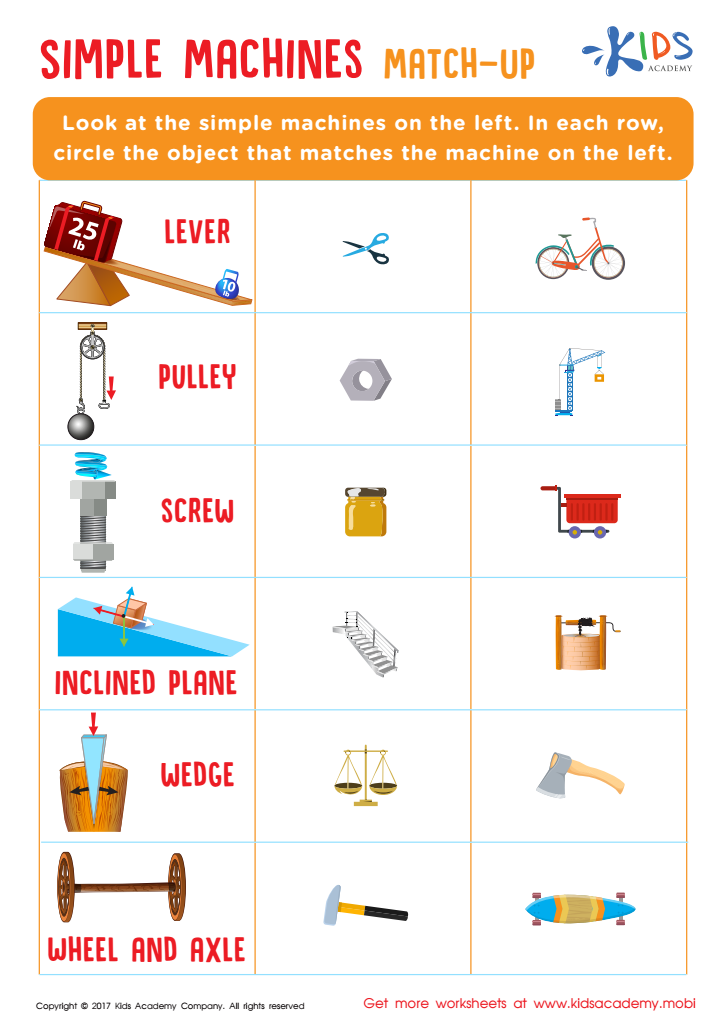
Simple Machines Worksheet


.jpg)





Enhancing analytical skills in children aged 8-9 is crucial for their overall development and future success. This age group is a pivotal time when cognitive abilities rapidly mature, and fostering analytical thinking can set the foundation for lifelong learning. Parents and teachers should care about this skill development for several reasons.
Firstly, analytical skills enable children to process information more effectively, promoting critical thinking. As they encounter complex concepts in subjects like math, science, and reading comprehension, the ability to analyze information helps them draw conclusions and solve problems independently. This confidence spills over into other areas of their lives, from peer interactions to making informed decisions.
Secondly, nurturing these skills cultivates curiosity and creativity. Children learn to ask questions, seek evidence, and think outside the box, equipping them to tackle challenges with an innovative mindset.
Finally, stronger analytical skills are linked to improved academic performance. When children can assess their work critically and self-correct, they engage more deeply with their studies, leading to a richer educational experience.
Overall, investing in the enhancement of analytical skills in early education empowers children to navigate and succeed in an increasingly complex world. Parents and teachers play a fundamental role in guiding this development.








