Identifying Animals Worksheets for Ages 8-9
4 filtered results
-
From - To
Welcome to our Identifying Animals Worksheets designed specifically for children aged 8-9! These engaging activities help young learners enhance their knowledge of various animal species through fun exercises and vibrant visuals. With worksheets focusing on classification, habitats, and characteristics, students will develop critical thinking and observational skills. Each worksheet encourages creativity while challenging them to identify and describe each animal, fostering a deeper appreciation for wildlife. Perfect for both classroom settings and at-home learning, our resources are crafted to make learning enjoyable and effective. Explore our collection today and watch your child's confidence soar as they master animal identification!
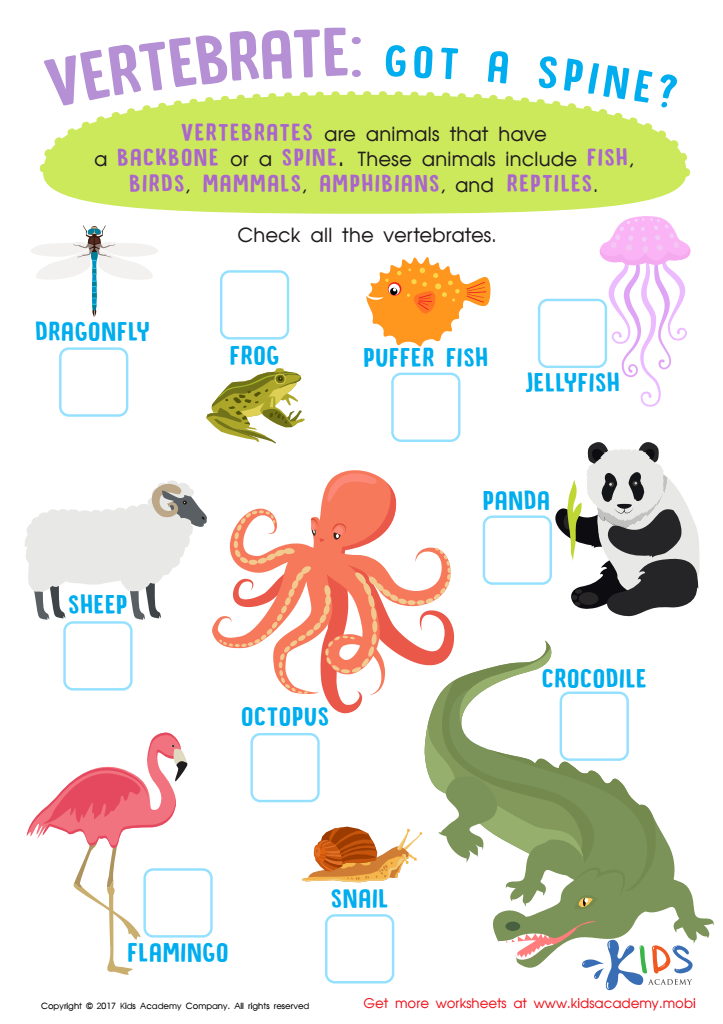
Vertebrates Animals Worksheet for 3rd Grade
 Assign to My Students









Identifying animals is essential for children ages 8-9, as it promotes curiosity and a deeper understanding of the natural world. At this age, children are naturally inquisitive, and learning about animals enhances their observational skills, fostering a sense of wonder about biodiversity.
For parents and teachers, engaging children in identifying animals cultivates essential skills such as critical thinking and classification abilities. It encourages children to categorize animals based on characteristics like habitat, diet, and physical traits, promoting cognitive development. Understanding animal diversity also fosters empathy and respect for all living beings, cultivating environmentally conscious attitudes.
Additionally, identifying animals serves as a gateway to broader scientific concepts, linking biology, ecology, and conservation. By teaching children about the importance of different species in ecosystems, we instill a sense of stewardship and responsibility towards the environment. This awareness can translate into lifelong habits of sustainable living and advocacy for wildlife conservation.
Furthermore, activities centered around animals can facilitate social interactions, cooperative learning, and communication skills through group projects and discussions. Ultimately, teaching children to identify animals enriches their education, develops emotional intelligence, and empowers them to be informed and responsible citizens in their communities.








