
Mathematical skills Worksheets for Ages 8-9
3 filtered results
Difficulty Level
Grade
Age
-
From - To
Subject
Activity
Standards
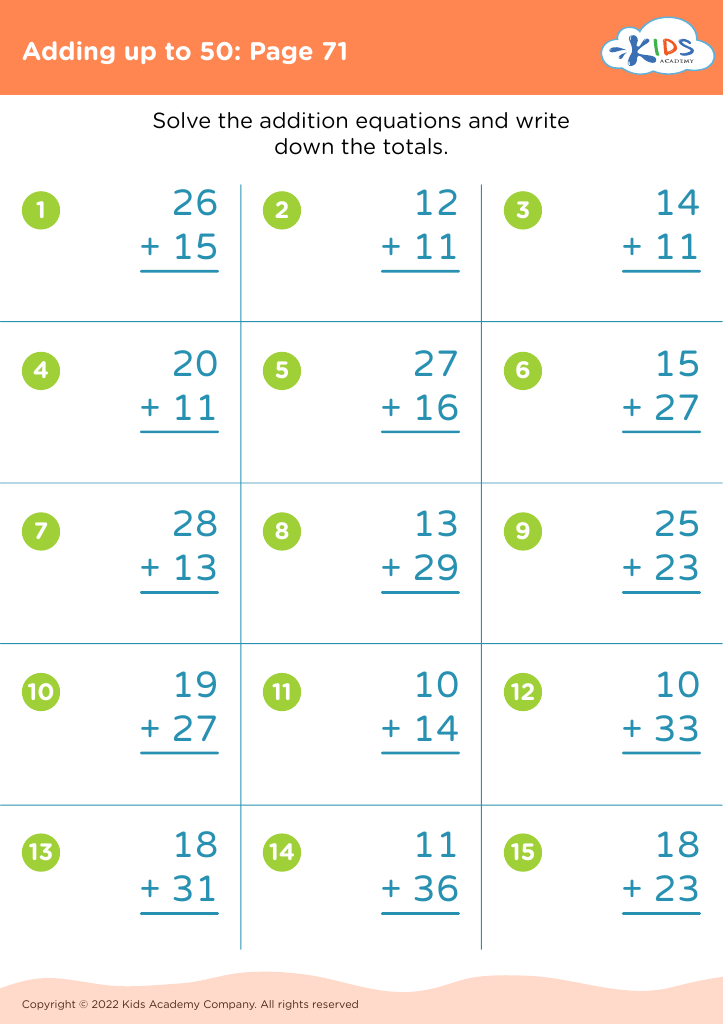
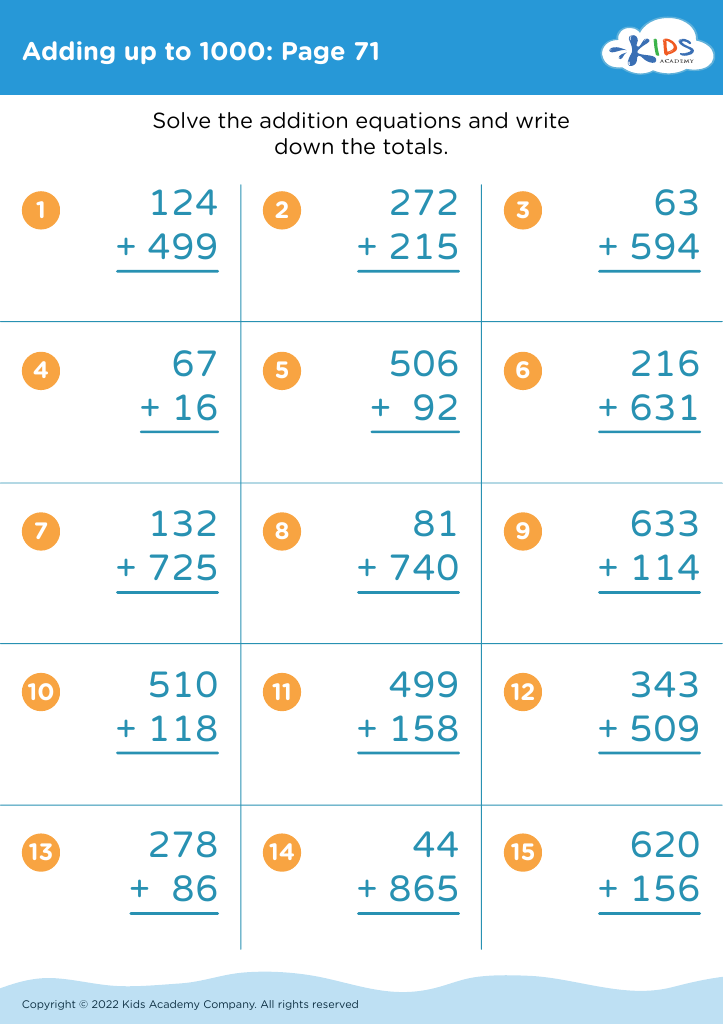
Discover our engaging Mathematical Skills Worksheets for ages 8-9! Tailored for young learners, these worksheets help reinforce essential math concepts like addition, subtraction, multiplication, and division through fun and interactive activities. Our resources are designed to enhance problem-solving abilities and critical thinking skills, ensuring your child builds a strong mathematical foundation. With colorful visuals and varying difficulty levels, these worksheets cater to every learner's needs. Whether at home or in the classroom, our printable resources make learning math enjoyable and effective. Boost your child's confidence in math today and watch them excel! Explore our collection now!
Favorites
With answer key
Interactive
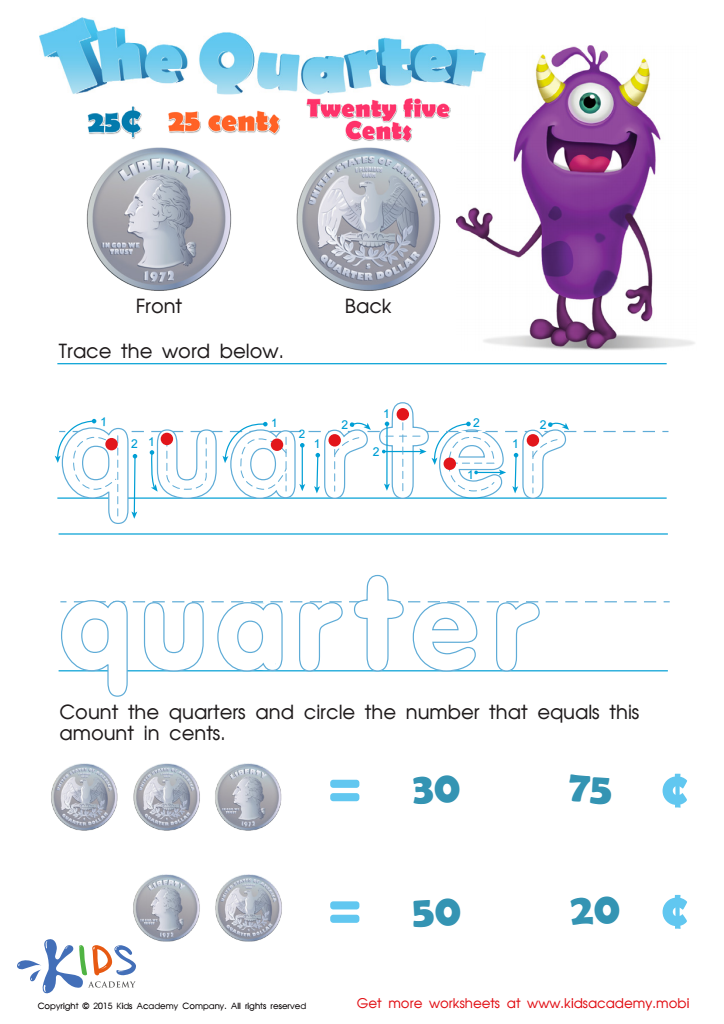
Twenty Five Cents or the Quarter Money Worksheet
Check out our new printable money games - learn to count money easily! With quarters, trace the word, count them and calculate the amount in cents. More worksheets at our website. Give it a try!
 Assign to My Students
Twenty Five Cents or the Quarter Money Worksheet
Worksheet
Join Kids Academy for Free
Who is primarily going to use this learning content?


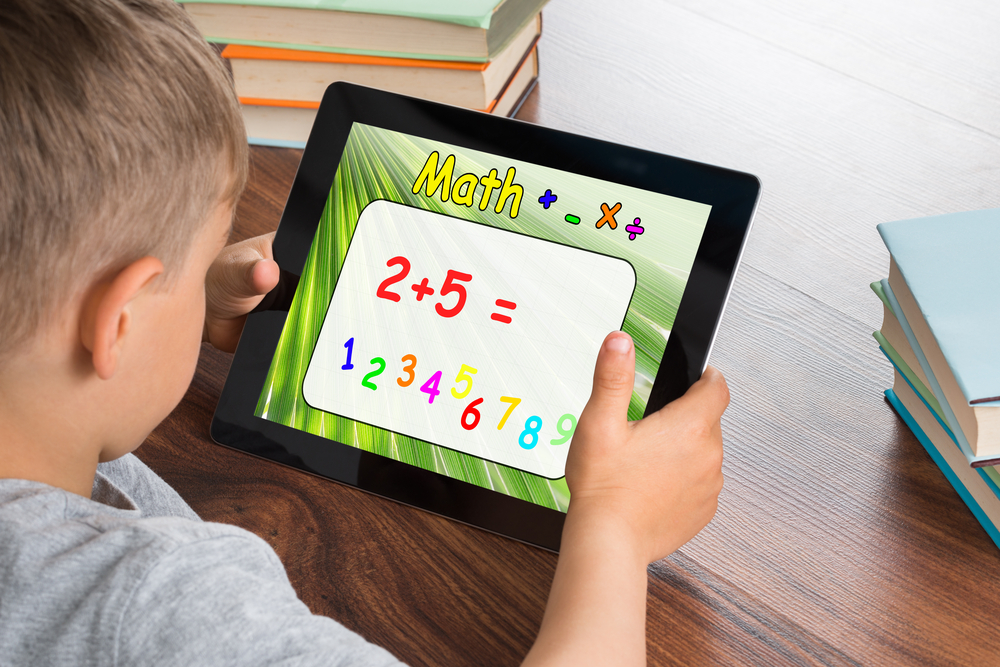




Parents and teachers should prioritize mathematical skills for children aged 8-9 because this period is crucial for developing foundational concepts that support future learning. At these ages, children transition from basic arithmetic to more complex ideas such as multiplication, division, and basic fractions. Mastery of these skills not only bolsters their confidence but also lays the groundwork for problem-solving abilities, logical reasoning, and critical thinking, which are vital in everyday life and various fields of study.
Moreover, strong mathematical skills correlate with improved performance in other subjects, as many disciplines – including science and technology – rely on mathematical understanding. Encouraging a positive attitude towards math can help counteract common anxieties and stereotypes that children may encounter as they advance in their education. Early experiences in math education shaped by enthusiasm and engagement can foster a lifelong appreciation and aptitude for the subject.
Ultimately, a solid grasp of math not only aids academic success but also equips children with skills they'll need in their future careers and personal endeavors. Therefore, fostering these abilities at an early age is essential for holistic development and helps prepare children for the complexities of the world around them.








