Unlock your child’s full potential with our Mental Math Practice Worksheets, designed specifically for ages 8-9! These engaging, curriculum-aligned worksheets strengthen critical thinking and problem-solving skills through fun, interactive exercises. Perfect for classroom or at-home practice, our mental math activities cover essential mathematical concepts, including addition, subtraction, multiplication, and division. Each worksheet boosts confidence and encourages a love for math by providing ample practice in a stress-free environment. Give your child the tools they need to excel in math and build a strong foundation for future success. Start exploring our collection today and watch your kid’s math skills soar!

Check out this FREE "Mental math practice" Trial Lesson for age 8-9!

More Word Problems

Favorites
With answer key
Interactive
  • 8-9
  • Mental math practice
Balancing addition equations worksheet

Raindrop Math Printable

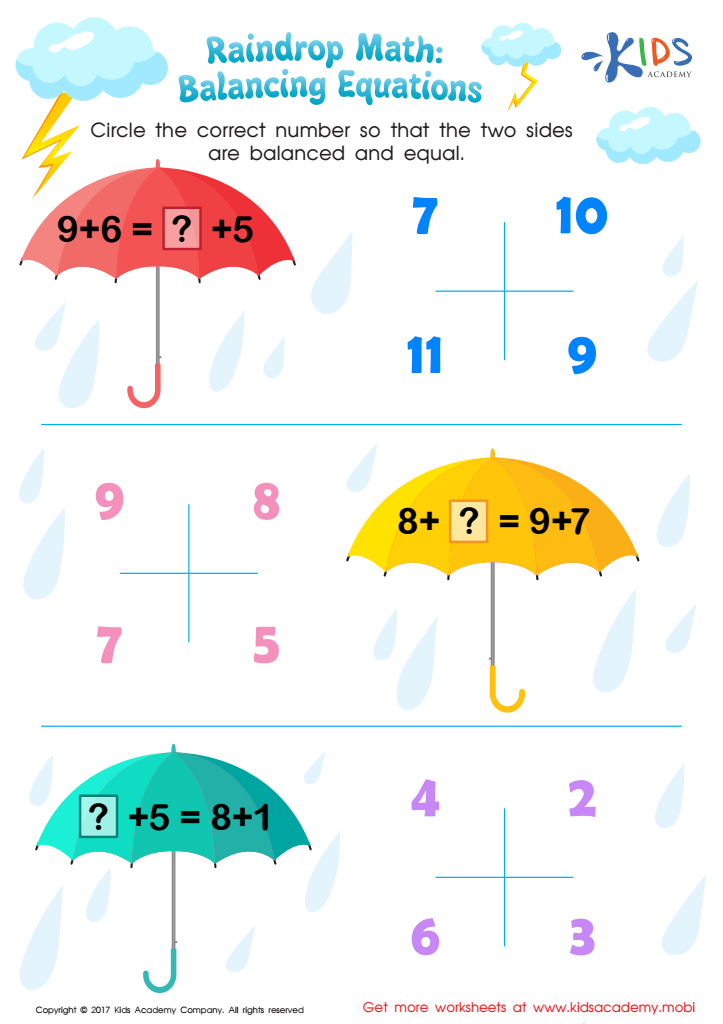
It will help them think deeper about equations, form a foundation for early algebraic thinking, and gain a better sense of numeracy. Plus, they get to practice simple addition skills.
Raindrop Math Printable
Worksheet
Subtraction with regrouping worksheets for 2nd grade

Subtraction With Regrouping for 2nd Grade Worksheet
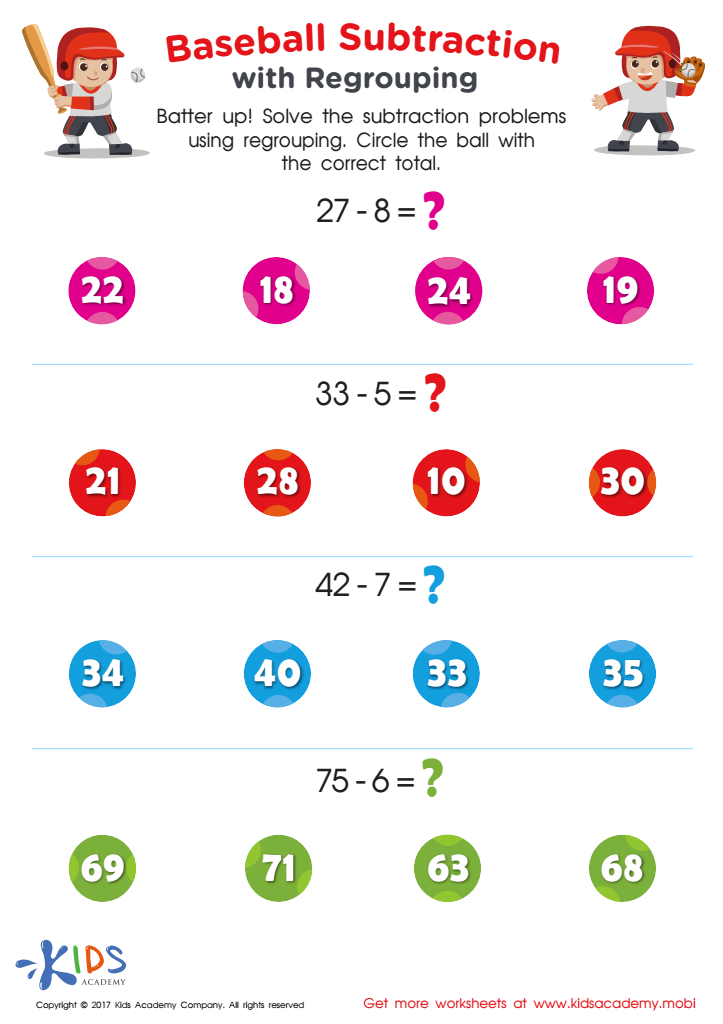
Kids solve two-digit subtraction problems using regrouping and color in the baseballs. 2nd graders may find regrouping for subtraction tricky, so give them a helping hand with this fun worksheet! They practice two-digit subtraction and regrouping by coloring in baseballs as they solve the problems. Let them practice the skill and enjoy the game at the same time.
Subtraction With Regrouping for 2nd Grade Worksheet
Worksheet
Adding Numbers: Landforms Worksheet

Adding Numbers: Landforms Worksheet

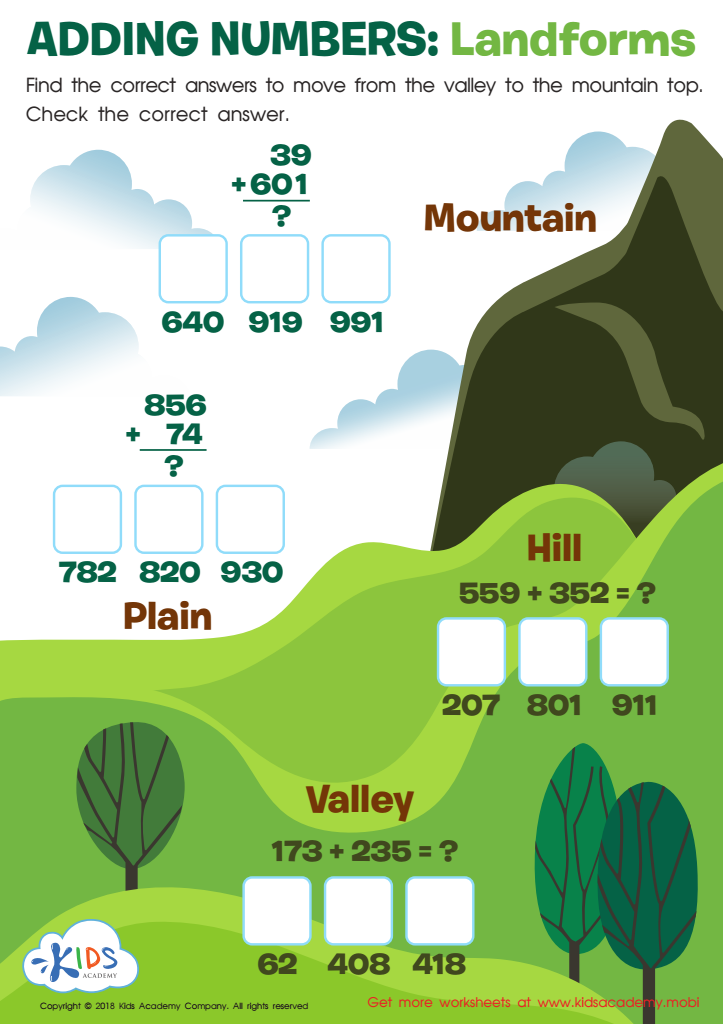
Help your kids solve simple equations and find the right answers to climb from valley to mountain top, then check the correct answer. Land on Earth is home to plants, animals and humans. It's not flat; there are mountains, valleys and hills.
Adding Numbers: Landforms Worksheet
Worksheet
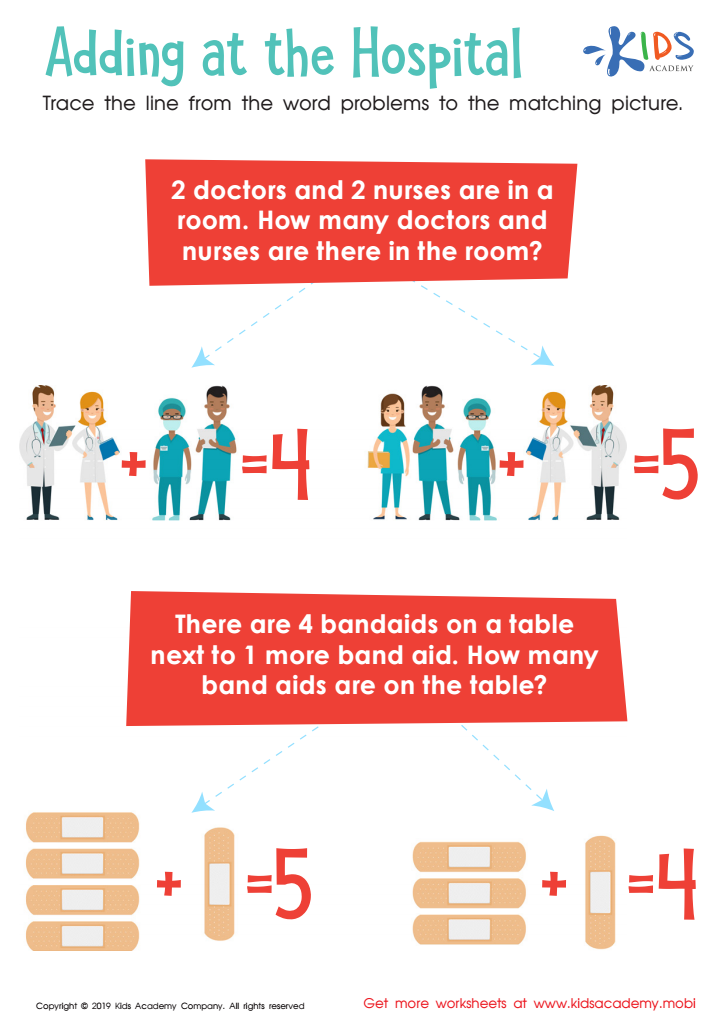
Adding at the Hospital Worksheet

Adding at the Hospital Worksheet

A hospital visit doesn't have to be scary for kids. With this worksheet, they can count along with doctors and nurses, by reading the word problems and tracing lines to the corresponding picture. Guide them through it and you'll help them have a fun experience.
Adding at the Hospital Worksheet
Worksheet
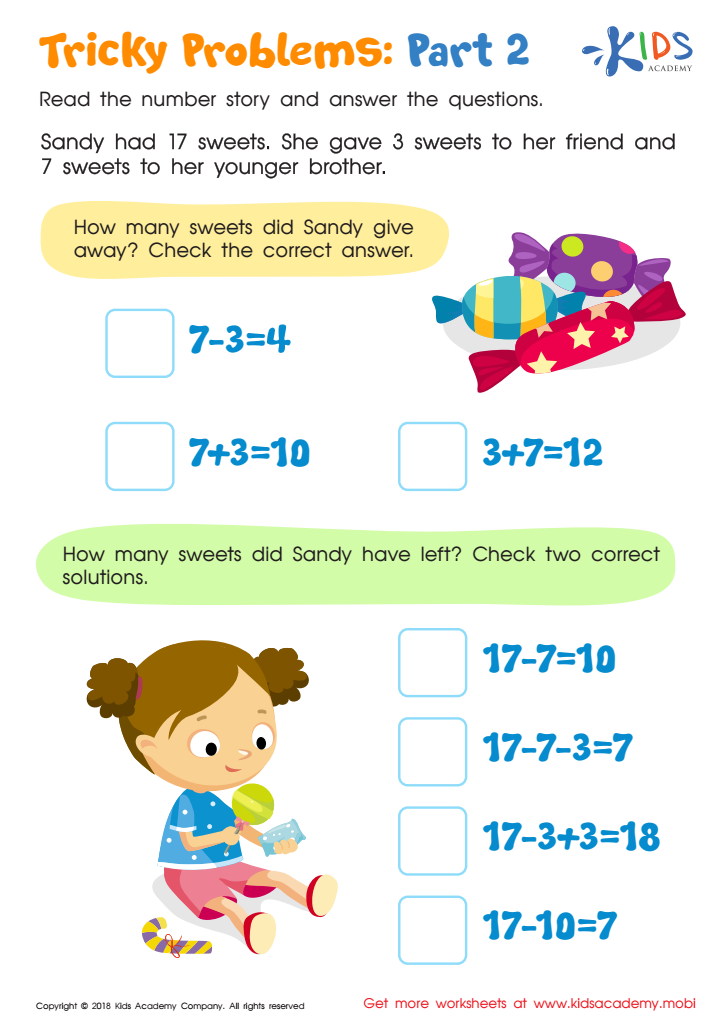
Tricky Problems Worksheet: Part 2

Tricky Problems Worksheet: Part 2

Help your little math learner visualize number stories with this engaging worksheet. They'll connect pictures to the story and use math facts to find the sums. After that, they'll be able to identify the correct number sentences to match. Let them practice and get better at problem solving!
Tricky Problems Worksheet: Part 2
Worksheet
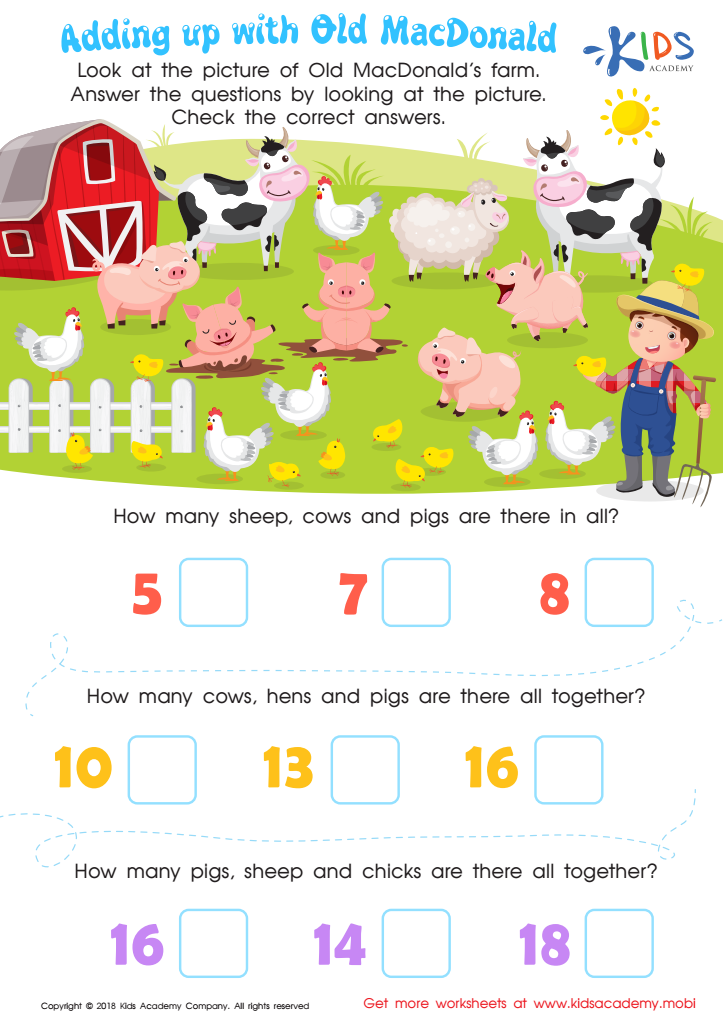
Adding Up with Old MacDonald Worksheet

Adding Up with Old MacDonald Worksheet

Old MacDonald needs help counting his animals! Give your little math whiz a fun challenge with a free PDF worksheet. They'll love counting the animals and doing basic addition with two or three addends. Who knew math could be so much fun on the farm?
Adding Up with Old MacDonald Worksheet

Worksheet
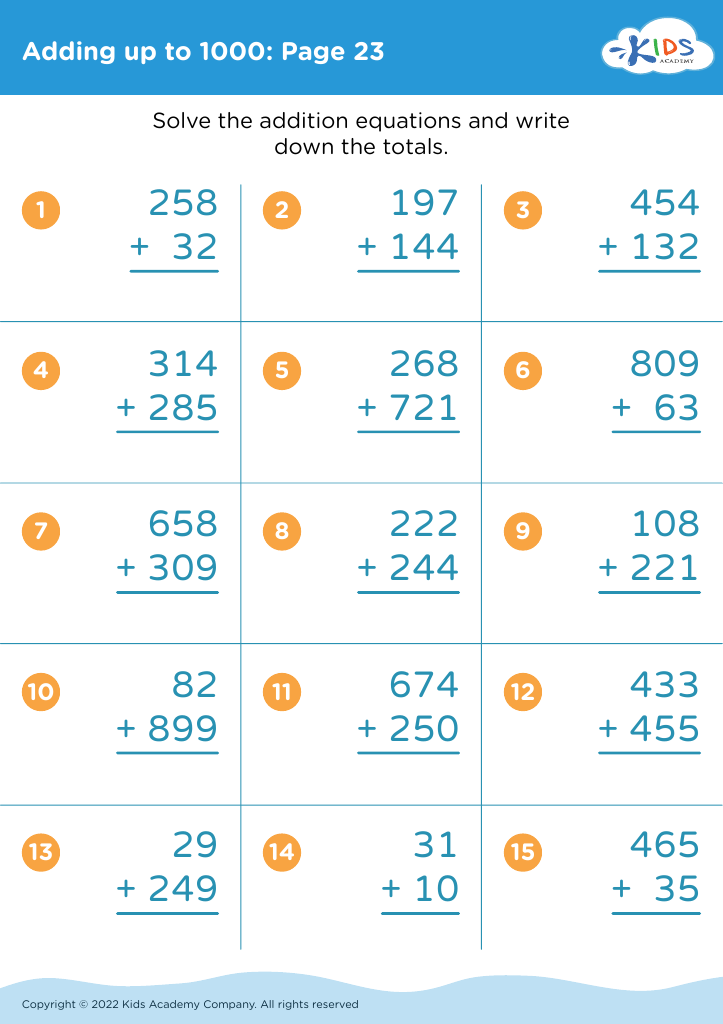
Adding up to 1000: Page 23

Adding up to 1000: Page 23

Adding up to 1000: Page 23
Worksheet


Mental math, the ability to perform arithmetic calculations in one's head without relying on external tools, is particularly crucial for children ages 8-9. At this developmental stage, children's brains are highly adaptable and capable of soaking up new skills swiftly. Parents and teachers should prioritize mental math practice because it enhances problem-solving abilities and sharpens cognitive skills such as memory, attention, and reasoning.

For one, mental math encourages flexibility in thinking. Children learn various strategies for solving math problems, which helps them approach challenges from different angles. This flexibility is not only crucial in math but in everyday life and other academic subjects.

Furthermore, competence in mental math builds a child's confidence. Being able to solve problems mentally provides a sense of accomplishment and encourages a positive attitude toward learning math. Confidence in math can prevent math anxiety, which can hinder a child's performance in school.

Lastly, mental math prepares children for real-world situations. From calculating change during shopping trips to splitting bills at a young age, being skillful in mental calculations is a valuable life skill. Prioritizing mental math practice ensures that children develop a strong mathematical foundation essential for future learning and everyday activities.