Noun identification Worksheets for Ages 8-9
3 filtered results
-
From - To
Unlock your child's language skills with our engaging Noun Identification Worksheets designed for ages 8-9! These interactive resources help young learners easily recognize and understand different types of nouns, including common, proper, singular, and plural nouns. Each worksheet features fun activities that promote critical thinking and support vocabulary development, making learning enjoyable. Perfect for classroom use or at-home practice, our worksheets cater to various learning styles, ensuring every child thrives. Foster a love of language in your child with our creative exercises that boost confidence in their reading and writing abilities. Download now and watch them excel in their grammar skills!
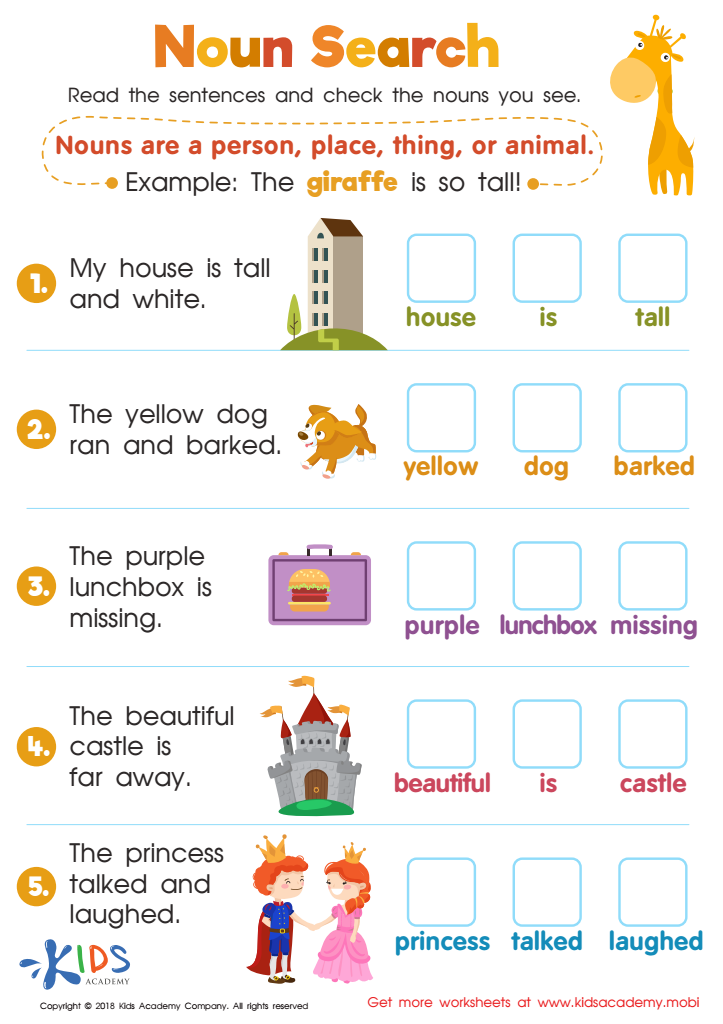
Noun Search Worksheet
 Assign to My Students
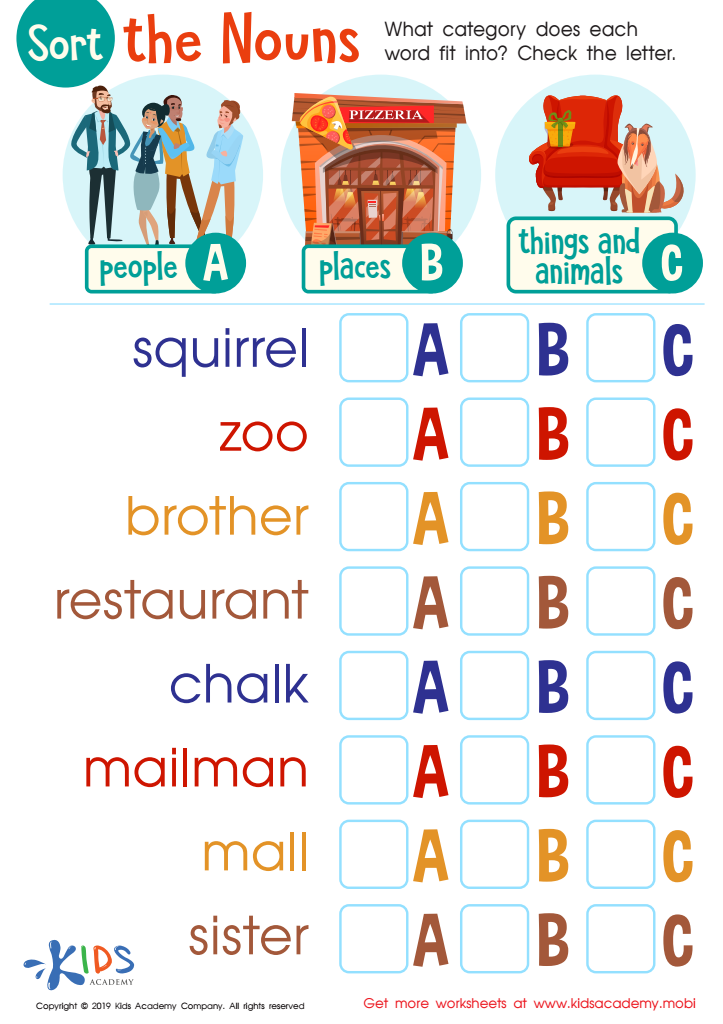
Sort the Nouns Worksheet
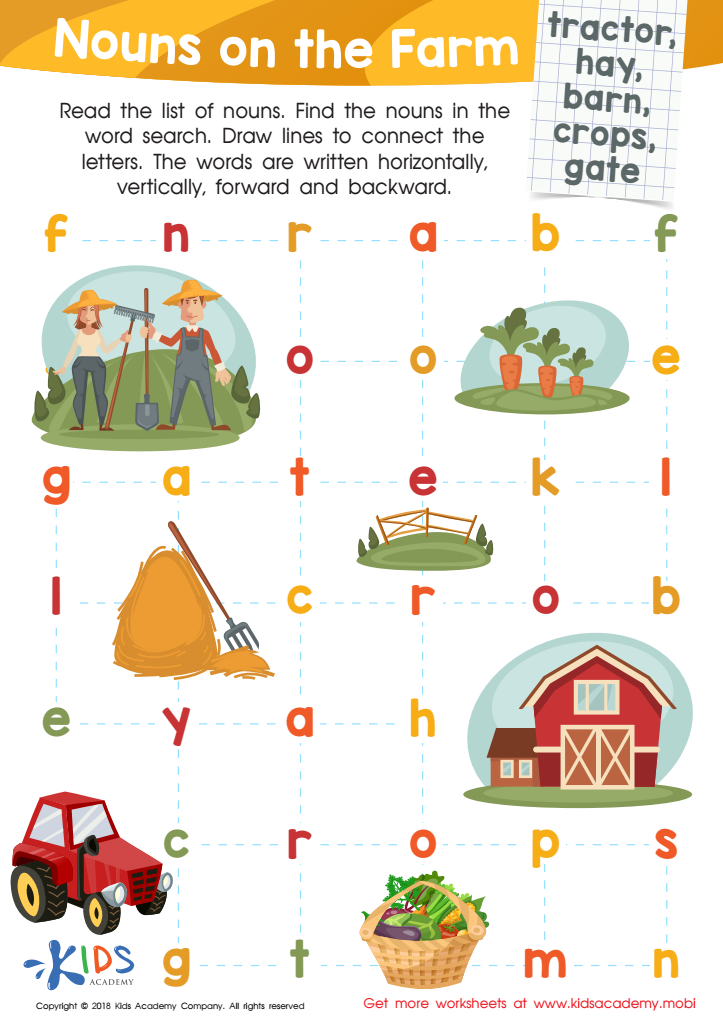
Nouns on the Farm Worksheet








Noun identification is a fundamental skill for children ages 8-9 that plays a crucial role in their language development and academic success. At this age, students are transitioning from basic sentence structure to more complex writing and reading comprehension. Understanding nouns—the names of people, places, things, and ideas—enables children to make sense of sentences and enhances their ability to express thoughts clearly.
When parents and teachers emphasize noun identification, they foster improved reading skills. Children who can identify nouns are better equipped to understand stories, draw connections between concepts, and infer meanings. This skill also forms the foundation for language arts activities, allowing students to construct grammatically correct sentences and engage in more sophisticated narrative and expository writing.
Furthermore, recognizing nouns can spark curiosity and improve vocabulary as children learn synonyms and antonyms, enriching their communication skills. In collaborative settings, discussing nouns within various contexts encourages social skills, allowing children to articulate ideas in group discussions or projects. Ultimately, promoting noun identification not only supports literacy development but also builds confidence in children’s overall communication abilities, equipping them with essential tools for lifelong learning. Parents and teachers' commitment to this foundational skill can yield lasting benefits in children’s education.








