Numerical reasoning Worksheets for Ages 8-9
3 filtered results
-
From - To
Boost your child's math skills with our engaging Numerical Reasoning Worksheets for Ages 8-9. Created to help kids master core concepts, these worksheets cover essential topics like addition, subtraction, multiplication, division, and problem-solving. Each activity is designed to enhance logical thinking and numerical fluency, ensuring your child develops a strong foundation in mathematics. Perfect for both classroom use and at-home practice, our worksheets are a fun and effective way to improve your child's numerical reasoning abilities. Download now to make learning math an enjoyable experience for your 8-9-year-old!
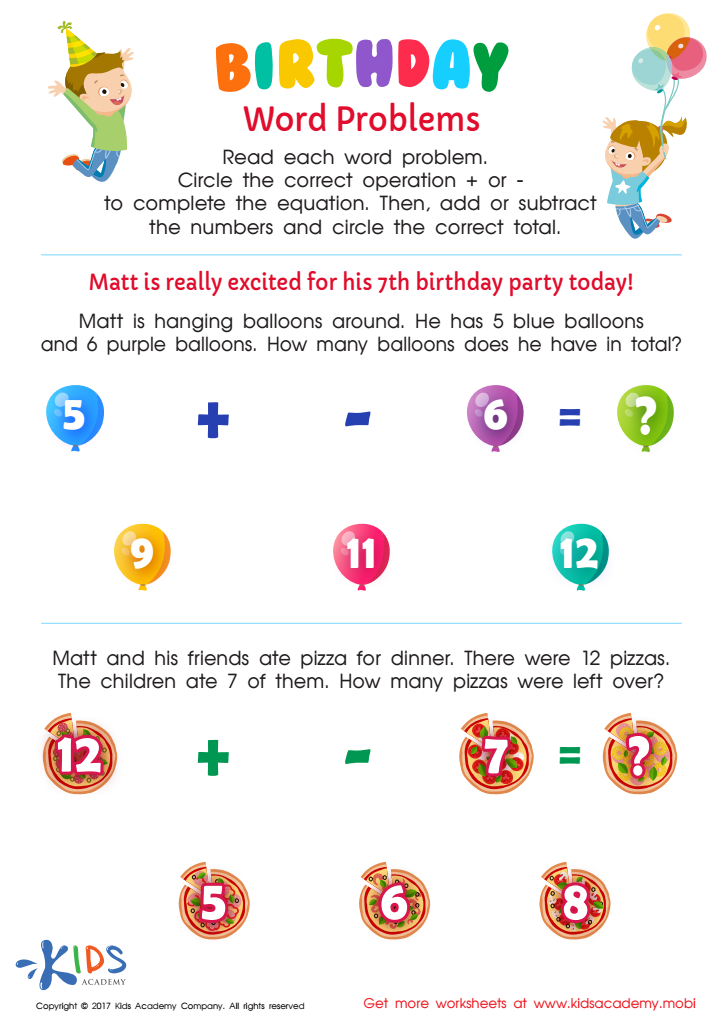
Birthday Word Problems Substraction Worksheet
 Assign to My Students








Numerical reasoning for children aged 8-9 is critical in laying the foundation for more advanced mathematical thinking and problem-solving skills, both essential for academic and everyday success. At this developmental stage, children transition from basic arithmetic to more complex concepts such as fractions, multiplication, and simple geometry. By nurturing numerical reasoning, parents and teachers help children understand how to analyze, interpret, and work with numbers, which is vital for their overall cognitive development.
Firstly, proficiency in numerical reasoning enhances a child’s ability to think logically and critically. These skills extend beyond math into other subjects like science and even everyday life, enabling them to approach problems methodically and make informed decisions. Secondly, strong numerical reasoning skills foster a positive attitude towards math, reducing anxiety and building confidence. This attitude is essential for long-term academic achievement, as confidence in math often translates to higher performance across multiple subjects.
Furthermore, early mastery of numerical reasoning lays the groundwork for future financial literacy. Understanding concepts such as money, spending, and saving can start at a young age, empowering children with practical life skills. In conclusion, investing time and effort in developing numerical reasoning for children aged 8-9 yields benefits that span cognitive development, academic achievement, and real-life applications.








