Enhance your child's critical thinking skills with our engaging Problem-Solving Practice Worksheets for Ages 8-9. Designed to challenge young minds, these worksheets offer a variety of puzzles and scenarios that encourage logical reasoning and creative solutions. As kids work through each problem, they strengthen their ability to analyze situations and think critically, all while having fun! Our printable resources come with clear instructions and visually appealing formats that capture children's attention. Perfect for classroom use or at-home learning, these worksheets are a valuable tool to help your child develop essential problem-solving skills for their academic journey. Discover the joy of learning today!
Check out this FREE "Problem-solving practice" Trial Lesson for age 8-9!

Standard Addition

Favorites
With answer key
Interactive
  • 8-9
  • Problem-solving practice
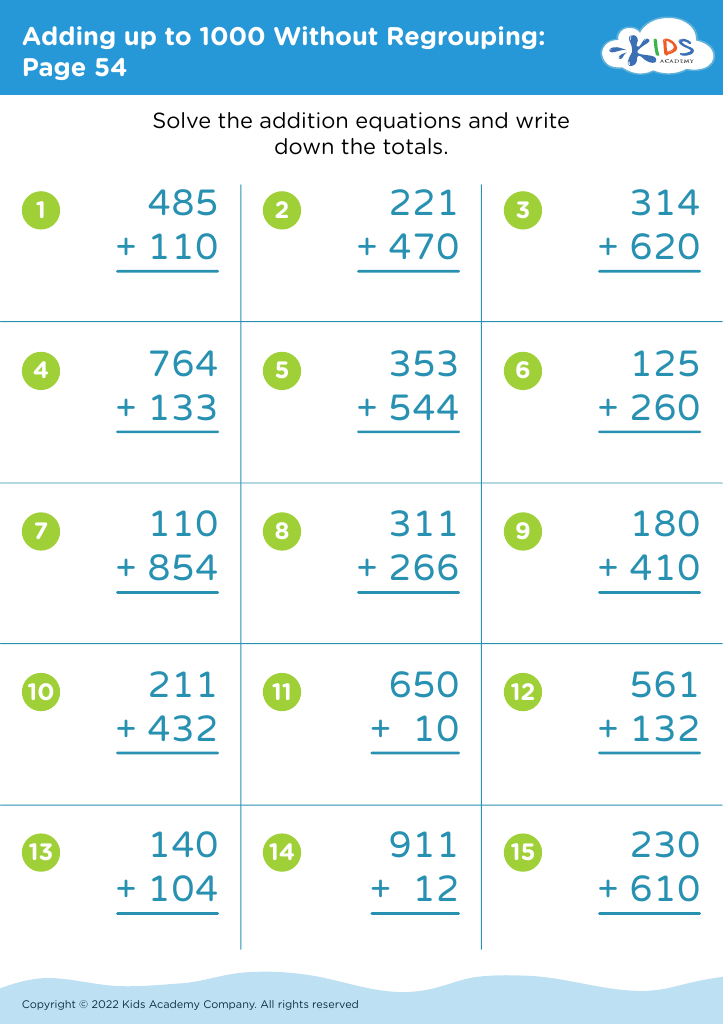
Adding up to 1000 Without Regrouping: Page 54
Worksheet
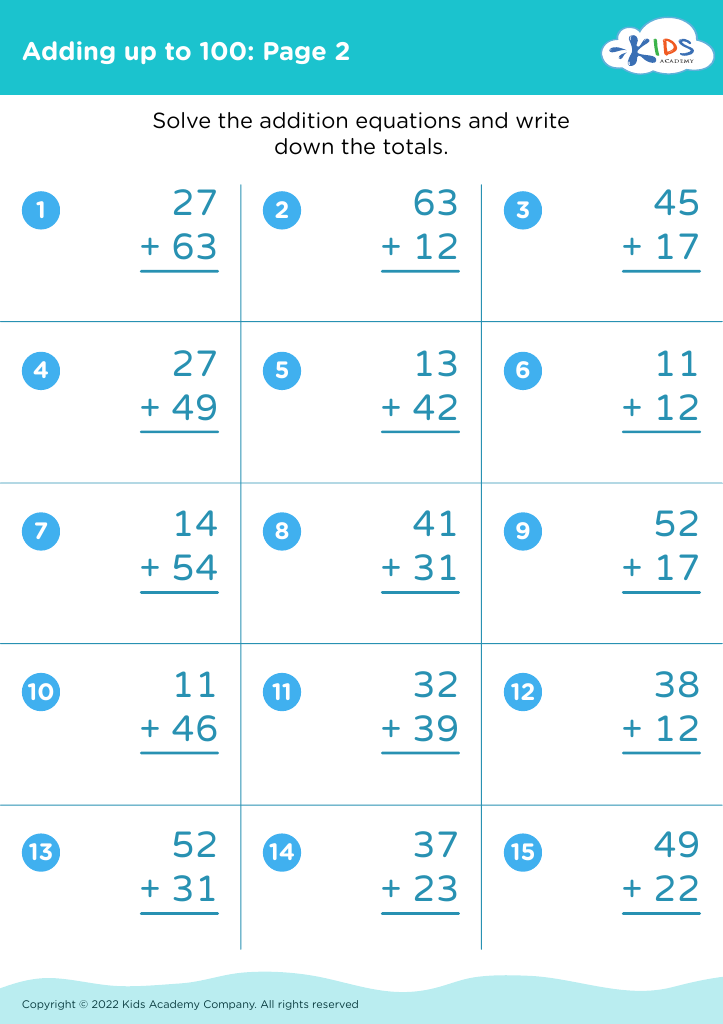
Adding up to 100: Page 2

Adding up to 100: Page 2

Adding up to 100: Page 2
Worksheet
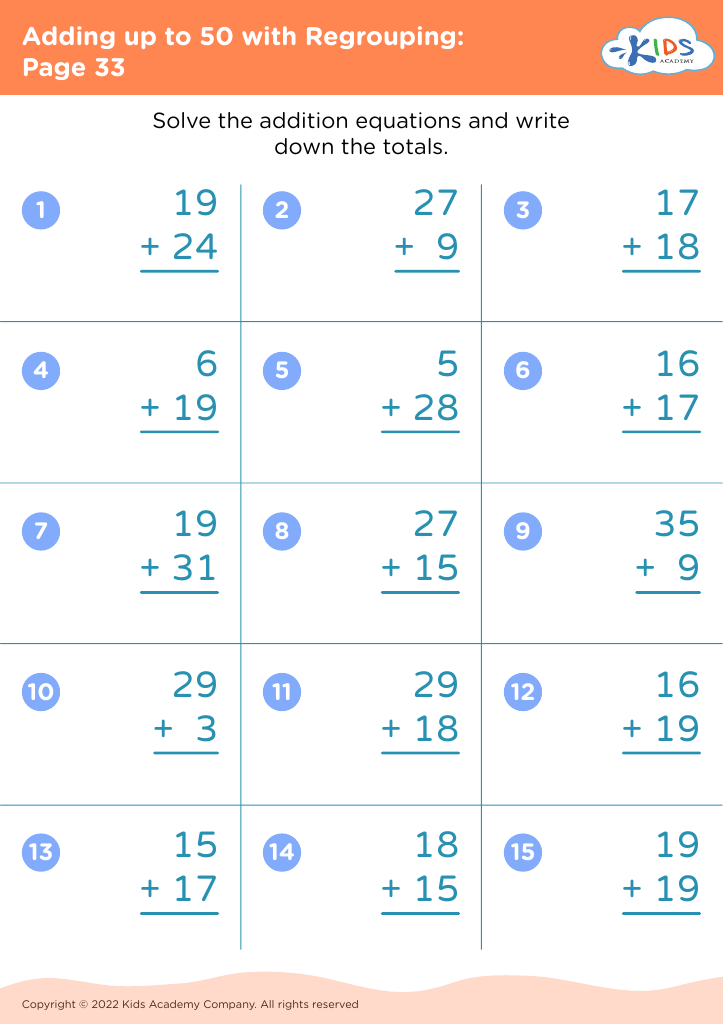
Adding up to 50 with Regrouping: Page 33
Worksheet
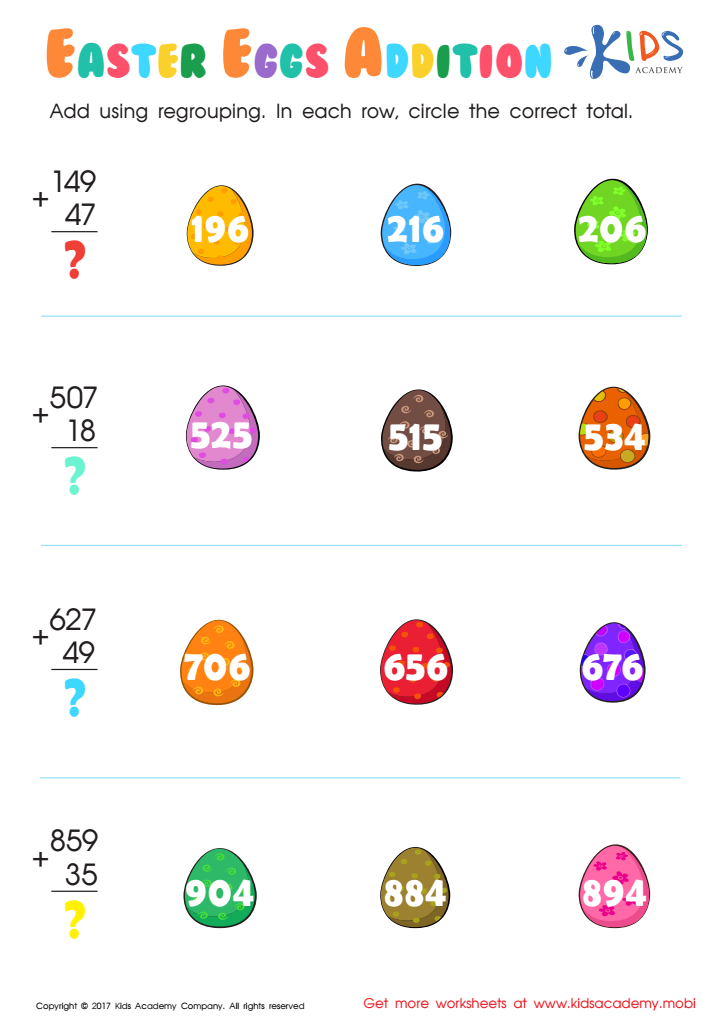
Addition with regrouping worksheet

Addition with Regrouping Worksheet

Try this fun holiday-themed addition with regrouping worksheet! Kids can practice adding while regrouping using bright, colorful holiday images. It's a great way to make math exciting, and keep their interest piqued!
Addition with Regrouping Worksheet
Worksheet
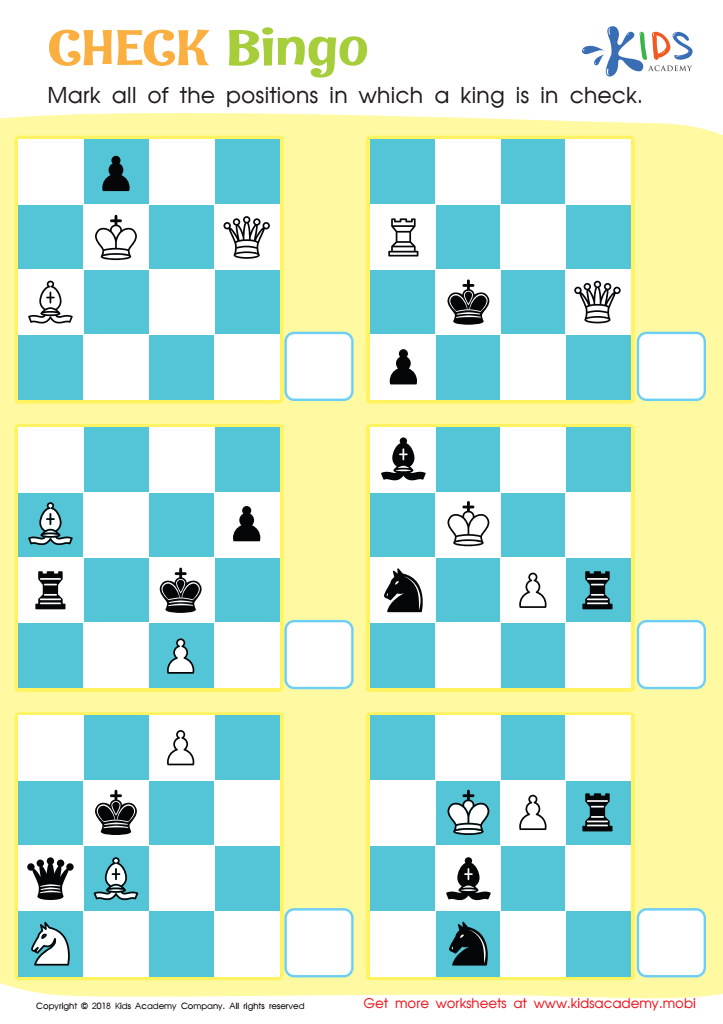
Check Bingo Worksheet

Check Bingo Worksheet

Chess helps young minds build critical thinking, problem-solving and logical reasoning skills. This free PDF worksheet is a fun way to teach these skills. It explains the concept of check and includes gameboards with kings in various positions. Students mark off the boards where a king isn't in check, and they're ready to move onto checkmate!
Check Bingo Worksheet
Worksheet
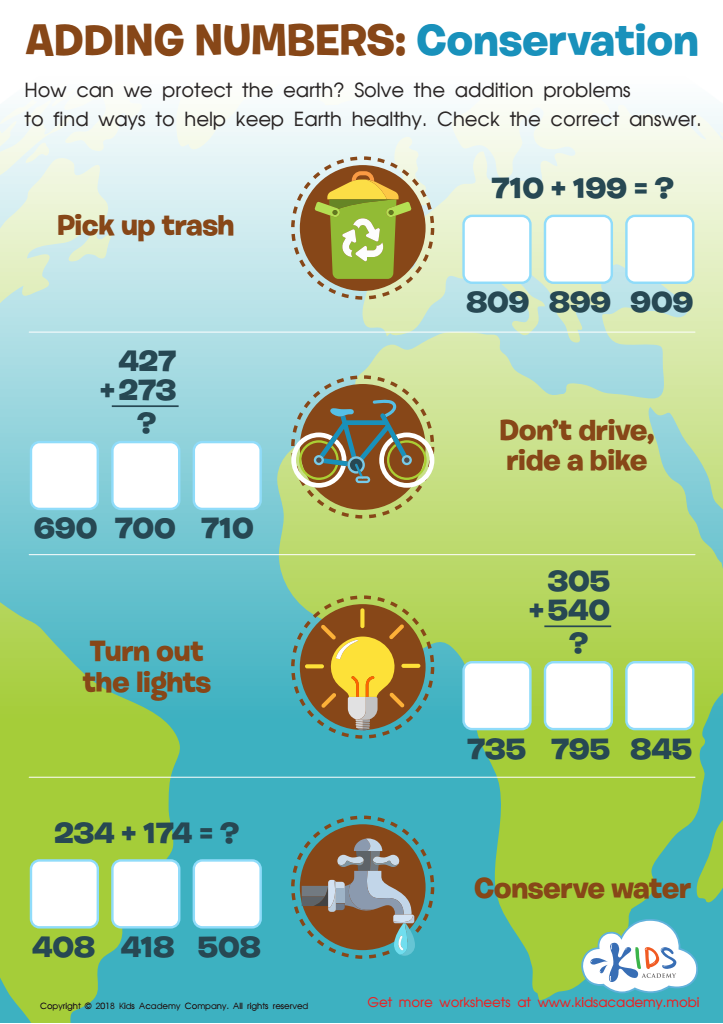
Adding Numbers: Conservation Worksheet
Adding Numbers: Conservation Worksheet
We all live on the Earth, which provides us with the vital necessities for survival. Unfortunately, we too often take advantage of this, causing pollution, water wastage and global warming. Help teach your kids how we can protect our planet - ask them to come up with good ideas and work together to find solutions. Challenge them to solve the subtraction problems to see what they can do to help keep the Earth healthy.
Adding Numbers: Conservation Worksheet
Worksheet
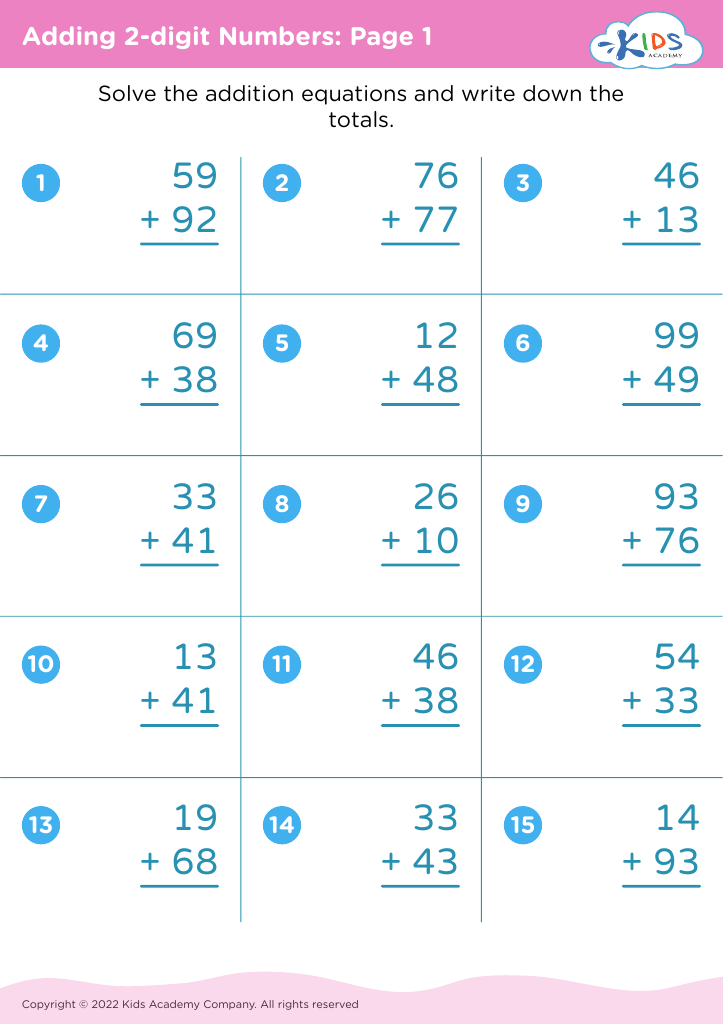
Adding 2-digit Numbers: Page 1

Adding 2-digit Numbers: Page 1

Adding 2-digit Numbers: Page 1
Worksheet
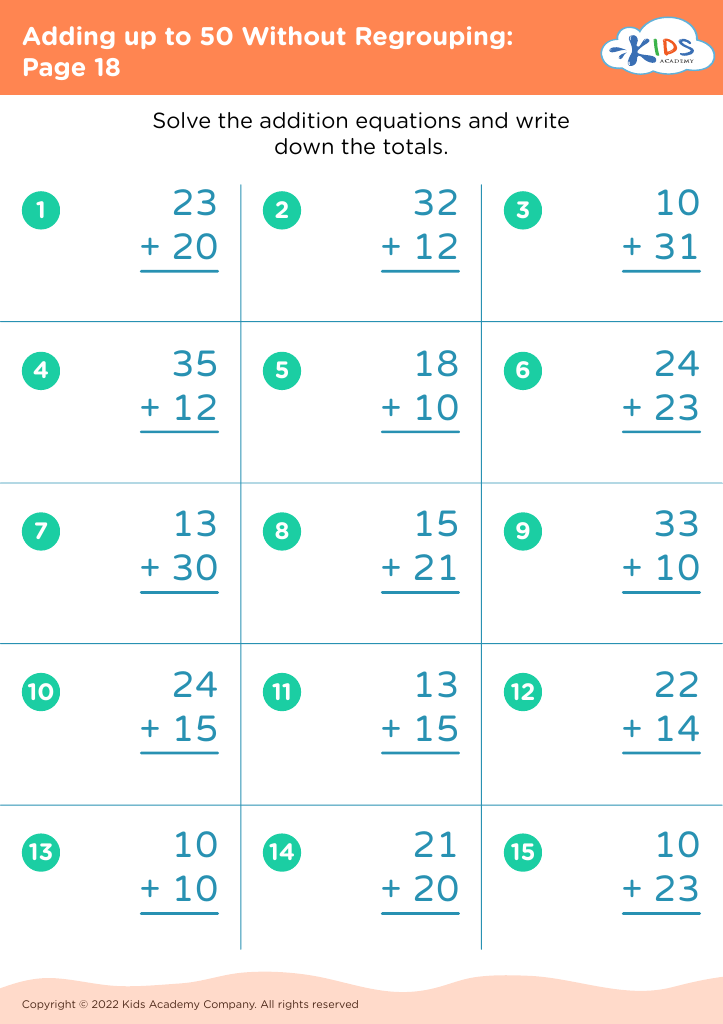
Adding up to 50 Without Regrouping: Page 18
Worksheet
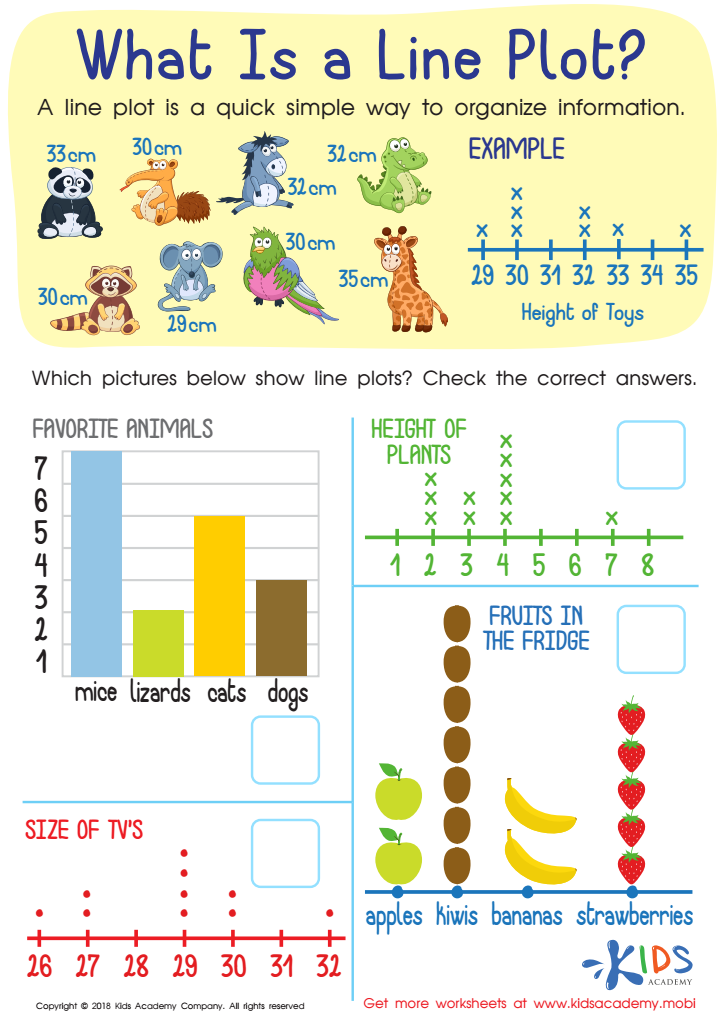
What Is a Line Plot? Worksheet
What Is a Line Plot? Worksheet

A line plot is an ideal method to organize data. For example, if your child needs to arrange objects for easy recognition, draw a line plot. This worksheet can help teach the skill. Kids must identify correct pictures that display line plots.
What Is a Line Plot? Worksheet
Worksheet
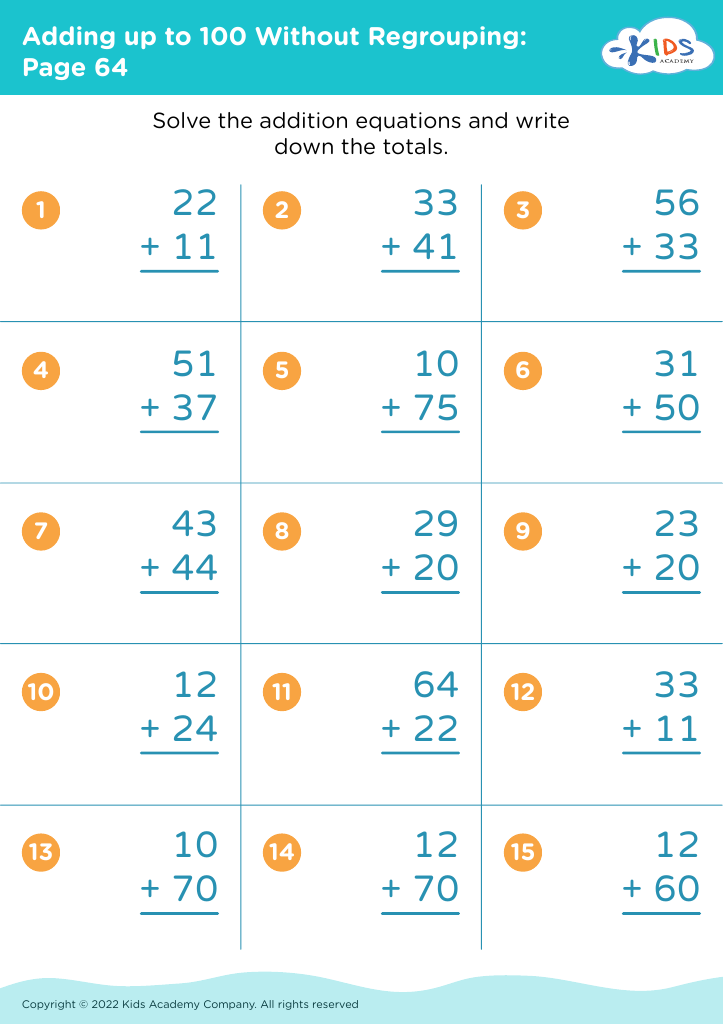
Adding up to 100 Without Regrouping: Page 64
Worksheet
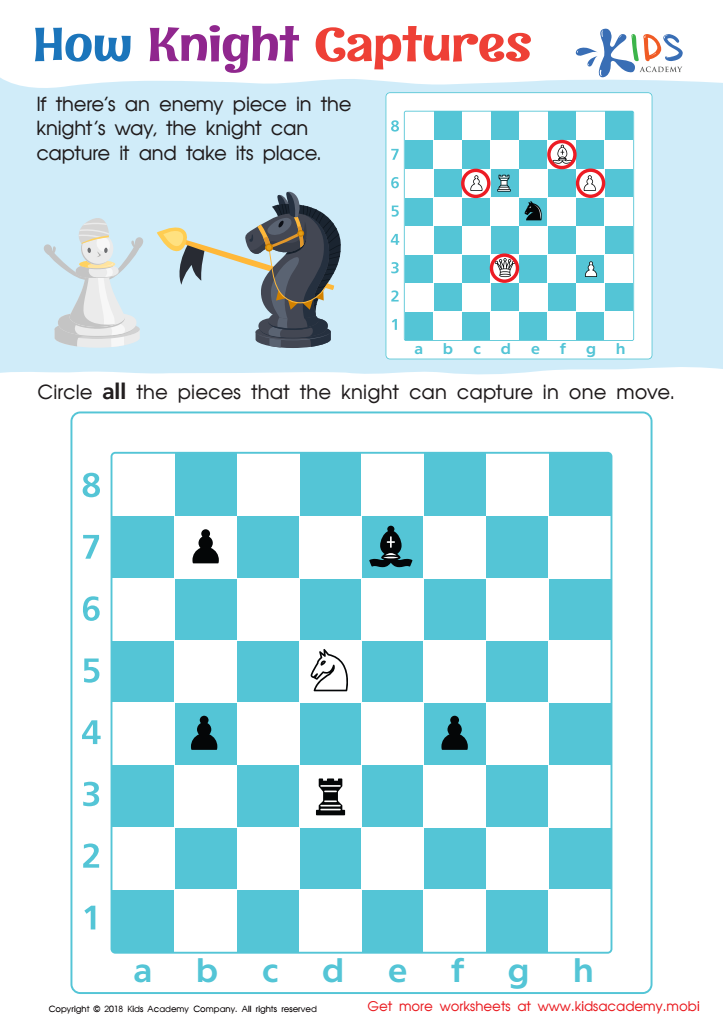
How Knight Captures Worksheet

How Knight Captures Worksheet

Test your child's knowledge of chess pieces by asking them to identify the knight. It is shaped like a horse and its goal is to capture the enemy king in order to win the game. The knight has the advantage of being able to jump over other pieces, taking them out and taking their place. See how many pieces the knight can capture in one move with this worksheet.
How Knight Captures Worksheet
Worksheet
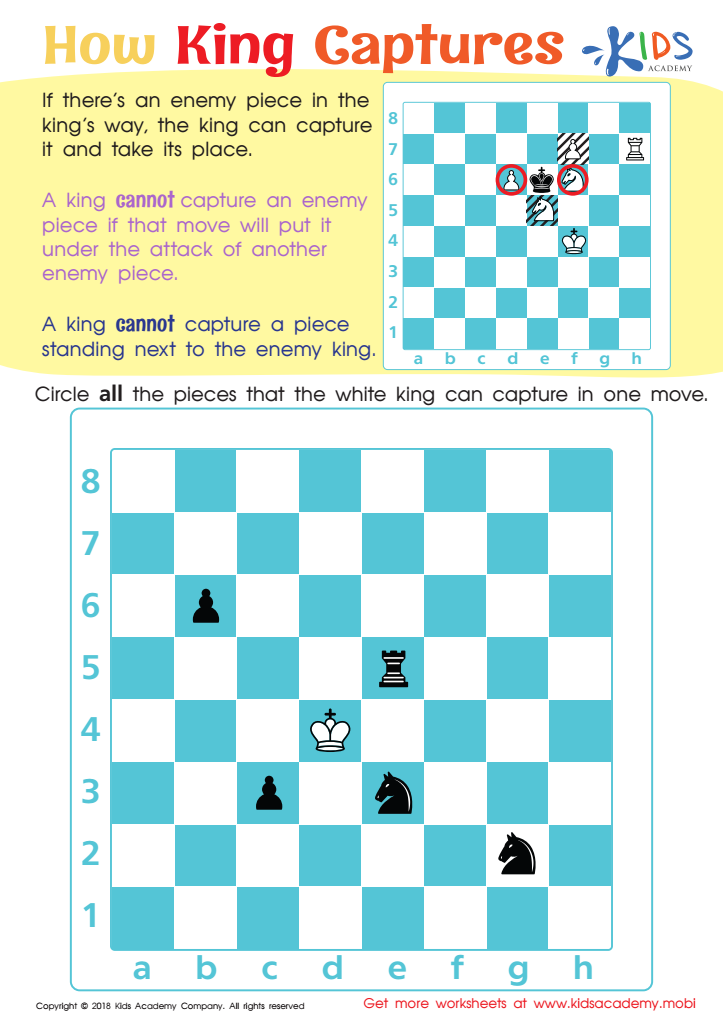
How King Captures Worksheet
How King Captures Worksheet
The king can capture an enemy piece by taking its place. But it cannot move if the action will put it at risk of attack, or if it's next to the enemy king. On this worksheet, circle the places the white king can capture in one move. (80 words)
How King Captures Worksheet

Worksheet
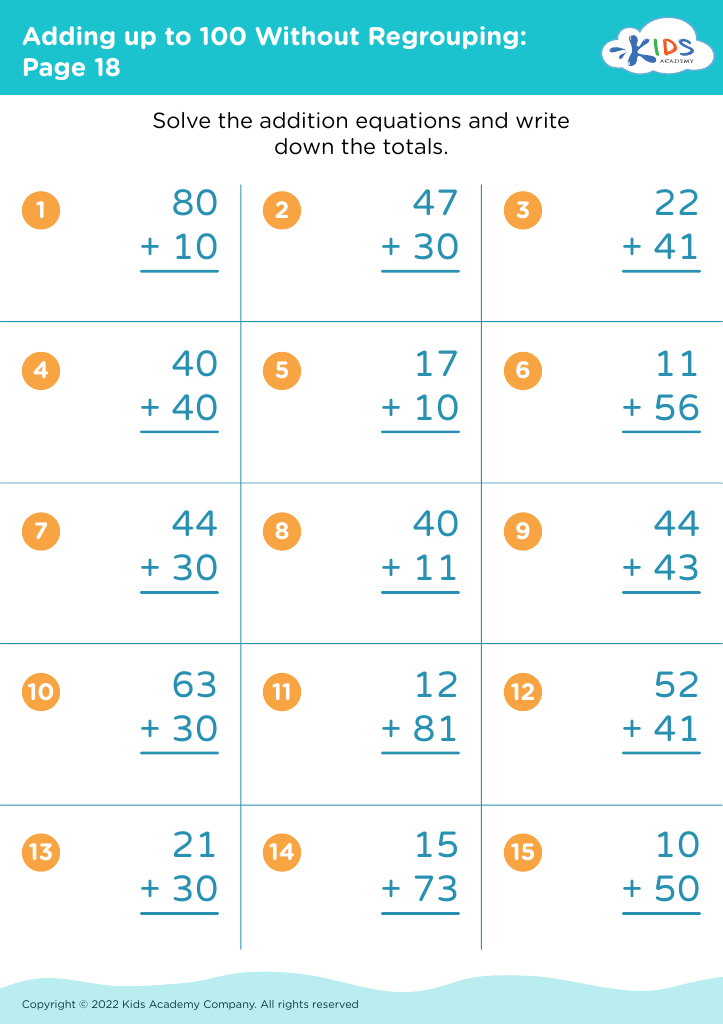
Adding up to 100 Without Regrouping: Page 18
Worksheet
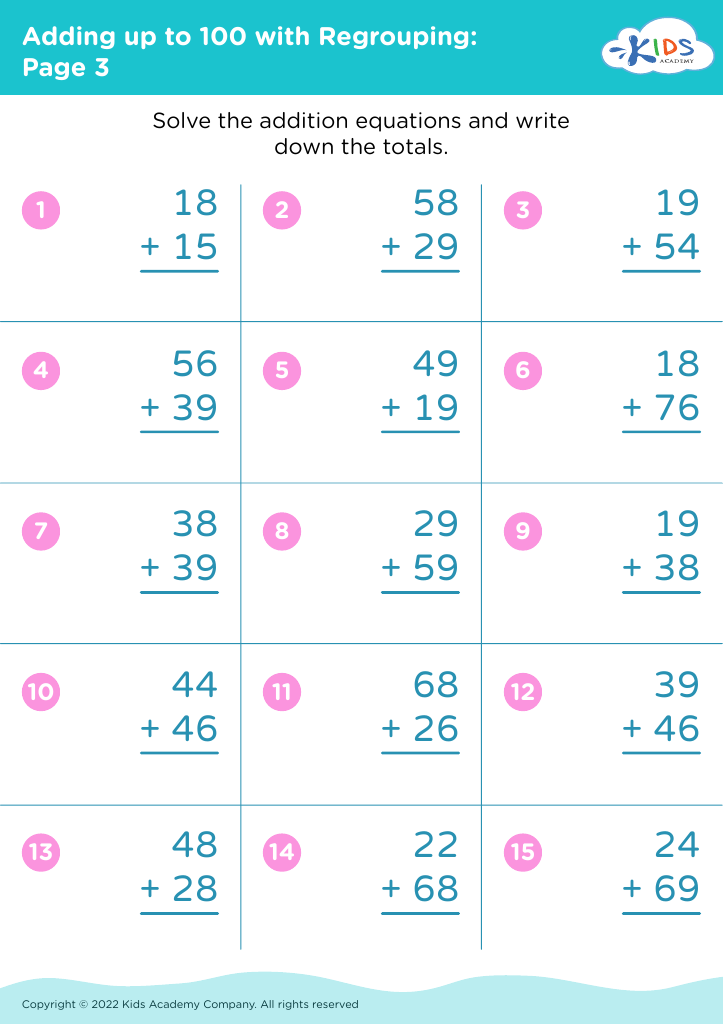
Adding up to 100 with Regrouping: Page 3
Worksheet
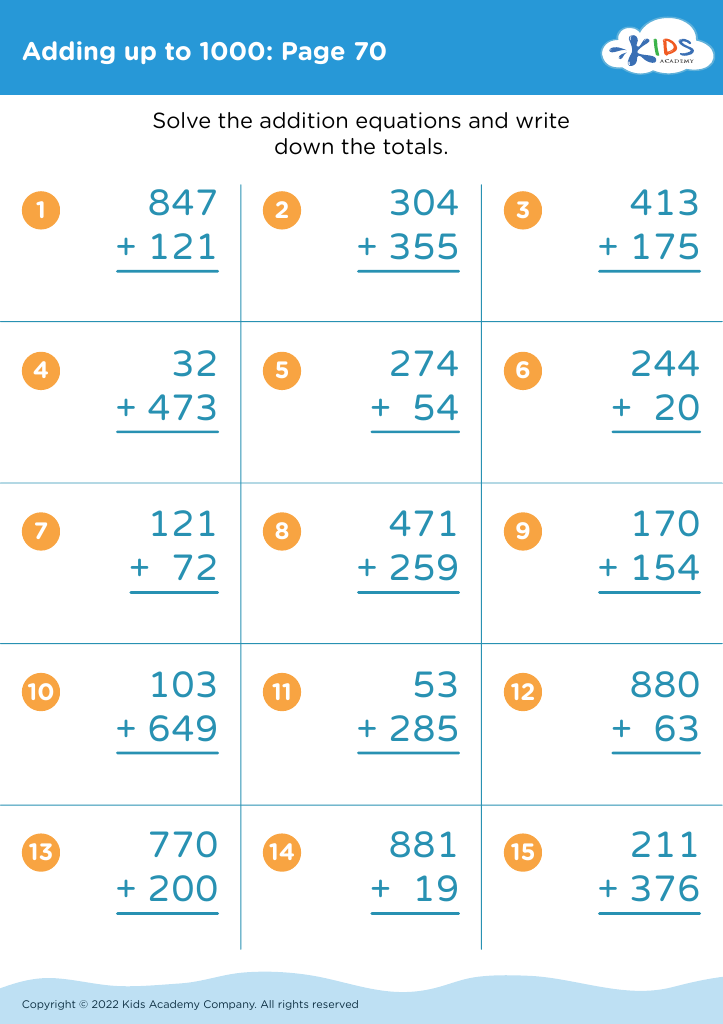
Adding up to 1000: Page 70

Adding up to 1000: Page 70

Adding up to 1000: Page 70
Worksheet
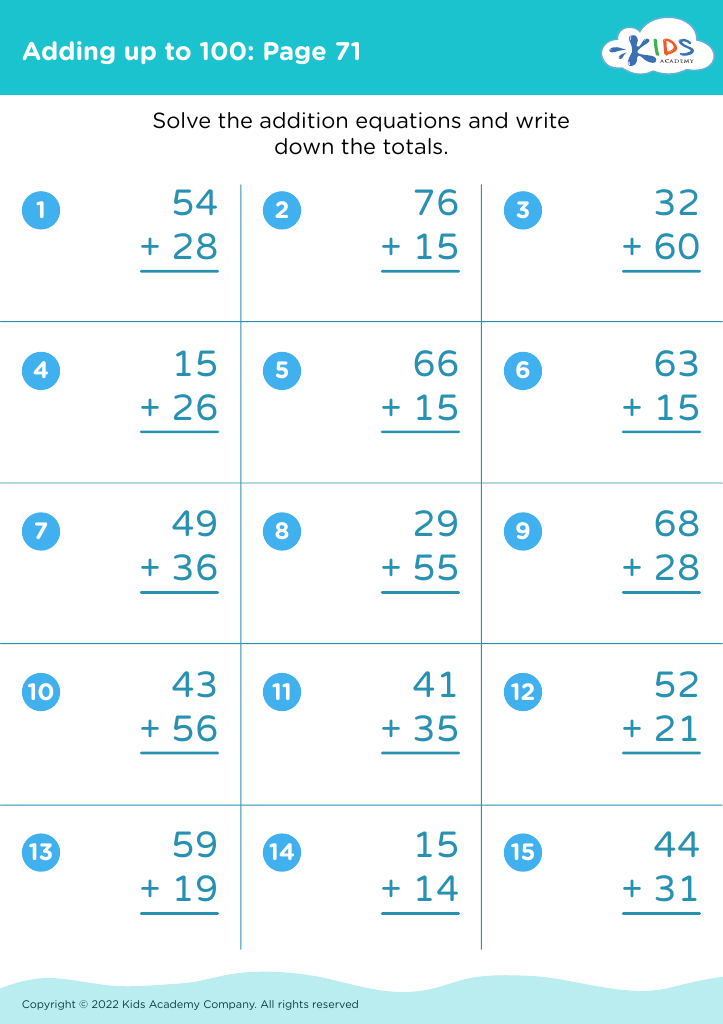
Adding up to 100: Page 71

Adding up to 100: Page 71

Adding up to 100: Page 71
Worksheet
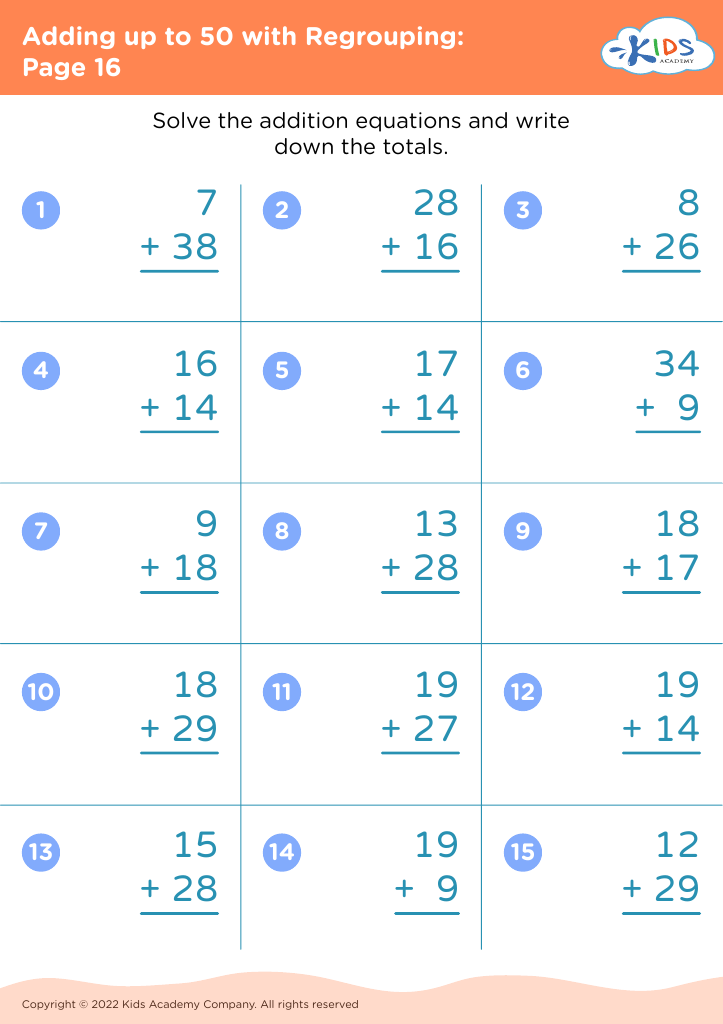
Adding up to 50 with Regrouping: Page 16
Worksheet
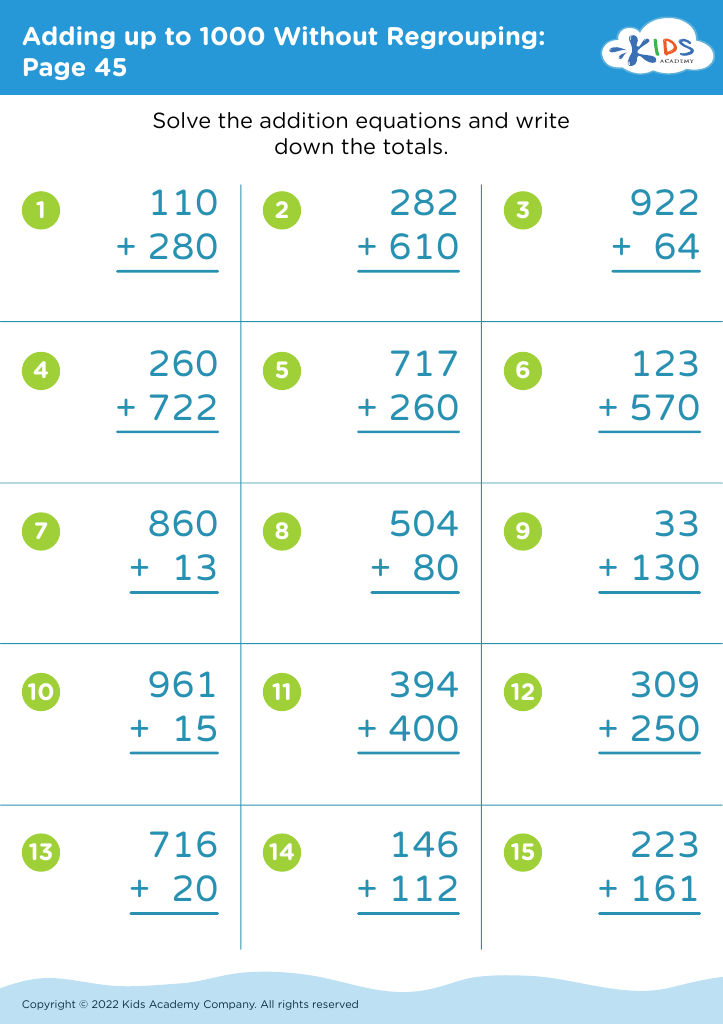
Adding up to 1000 Without Regrouping: Page 45
Worksheet


Problem-solving practice for children aged 8-9 is crucial for their cognitive and social development. At this stage, children are developing critical thinking skills that will serve as the foundation for more complex problem-solving in the future. Engaging in problem-solving activities teaches them how to approach challenges methodically, analyze situations, and think creatively. These skills are not only applicable in mathematics but also in real-life scenarios, from resolving conflicts with peers to tackling academic hurdles.

Parents and teachers should care about this as it fosters resilience and independence in children. By learning to navigate difficulties, children build confidence in their abilities, which encourages a growth mindset. Furthermore, problem-solving practice enhances collaborative skills, as kids often work in teams, sharing ideas and finding solutions together. This collaborative aspect nurtures communication skills and promotes empathy.

In today's rapidly changing world, equipping children with robust problem-solving skills prepares them for future academic pursuits and eventual careers. It can lead to better decision-making, greater creativity, and improved emotional intelligence. Therefore, encouraging problem-solving practice is essential for nurturing well-rounded, capable individuals who can thrive both inside and outside the classroom.