Pronunciation practice Worksheets for Ages 8-9
3 filtered results
-
From - To
Enhance your child's speaking skills with our engaging Pronunciation Practice Worksheets designed for ages 8-9! These interactive materials help improve phonetic awareness and articulation through fun and effective exercises. Featuring a variety of activities, including word lists, matching games, and sentence repetition tasks, students will gain confidence in their pronunciation abilities. Perfect for classroom use or at-home learning, our worksheets cater to diverse learning styles and can be easily integrated into any curriculum. Encourage clarity and expression in your child's communication—download our free printable resources today and watch them blossom into effective speakers!
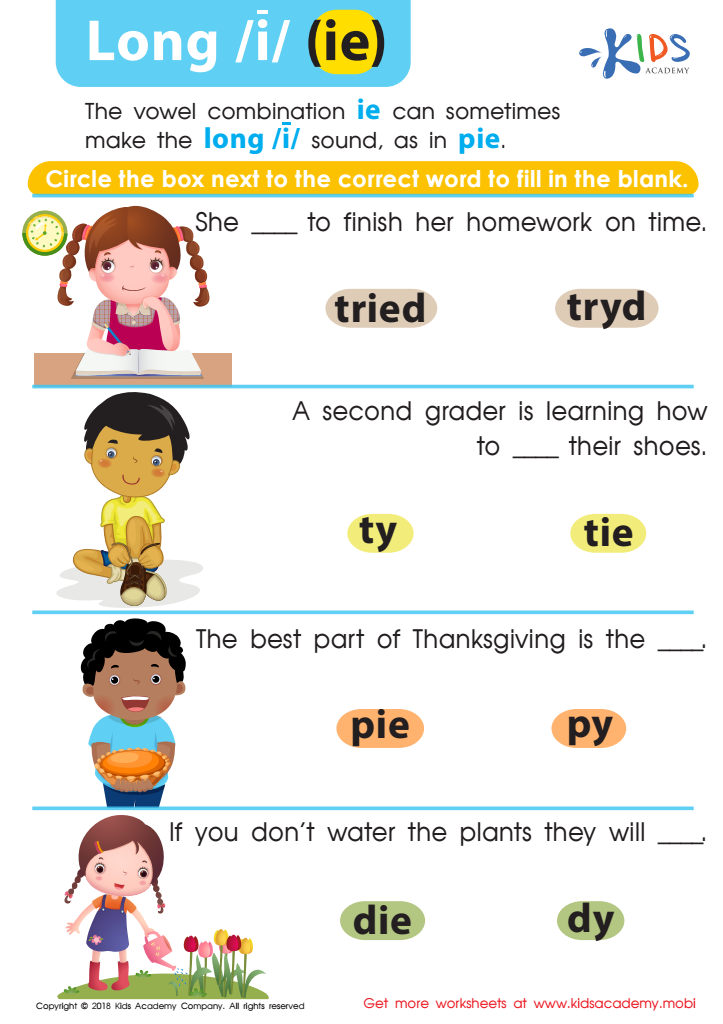
Reading: Long I and IE Worksheet
 Assign to My Students
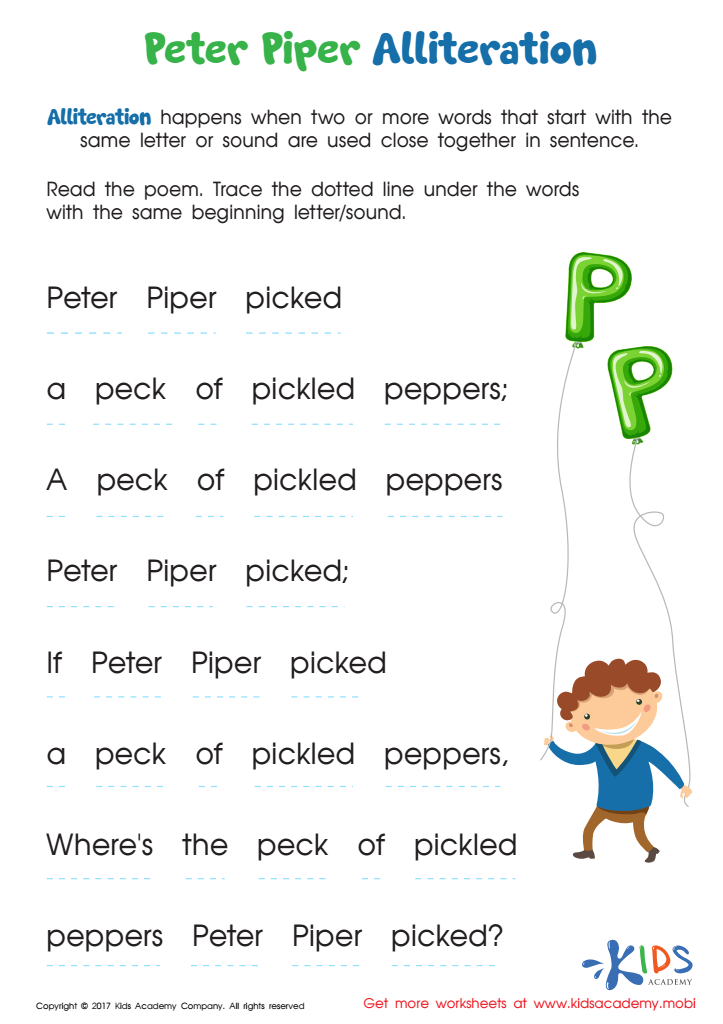
Peter Piper Alliteration Worksheet







Pronunciation practice is crucial for children aged 8-9, as it significantly impacts their overall language development, academic success, and social interactions. At this age, students are building on their foundational language skills, and clear pronunciation enhances their ability to communicate effectively. When children pronounce words correctly, they convey their messages more clearly, which boosts their confidence when speaking in class discussions, presentations, or social situations.
Moreover, improving pronunciation helps in their reading skills. Correct pronunciation aids in decoding unfamiliar words and enhances comprehension, making reading more enjoyable and less frustrating. It reinforces phonetic awareness, which is fundamental for spelling and vocabulary building.
Additionally, pronunciation practice fosters positive communication habits and lays the groundwork for effective interpersonal relationships. As children interact with peers and adults, good pronunciation helps them be better understood, minimizing the chances of miscommunication and fostering stronger connections.
Finally, in an increasingly multicultural world, awareness of pronunciation affects empathy and inclusivity. Teaching children to appreciate different accents and dialects promotes respect for diversity. Therefore, prioritizing pronunciation practice is essential in nurturing confident, competent communicators in school and beyond.








