Recognizing number patterns Worksheets for Ages 8-9
4 filtered results
-
From - To
Boost your child's math skills with our "Recognizing Number Patterns Worksheets" designed for ages 8-9! These engaging worksheets help students identify and analyze various number sequences, enhancing their problem-solving and critical thinking abilities. By working through fun, interactive exercises, kids will learn to spot arithmetic patterns, understand sequences, and predict the next numbers in a series. Ideal for classroom or at-home practice, our worksheets support curriculum standards and provide a solid foundation for more advanced math concepts. Visit Kids Academy to download and spark your child’s love for math today!
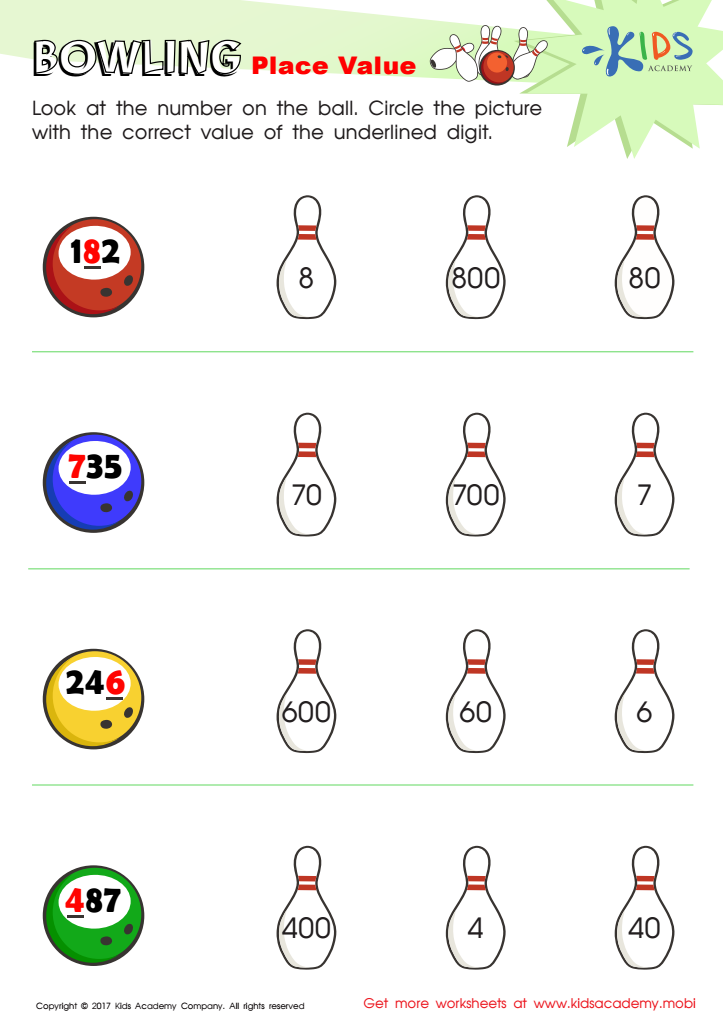
Place Value Worksheet
 Assign to My Students
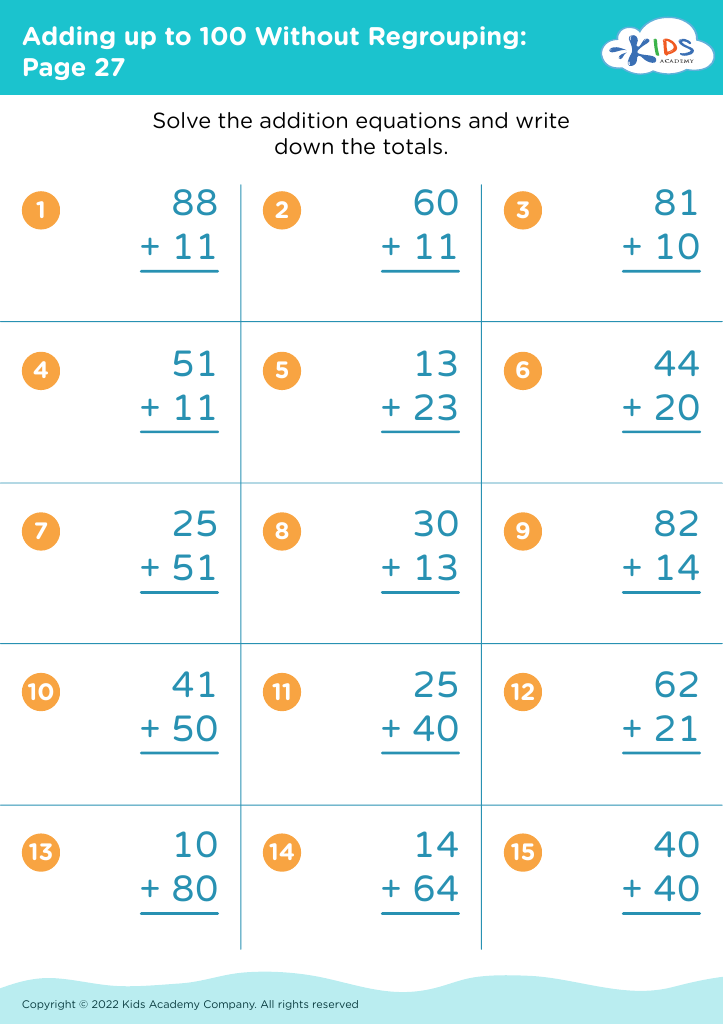
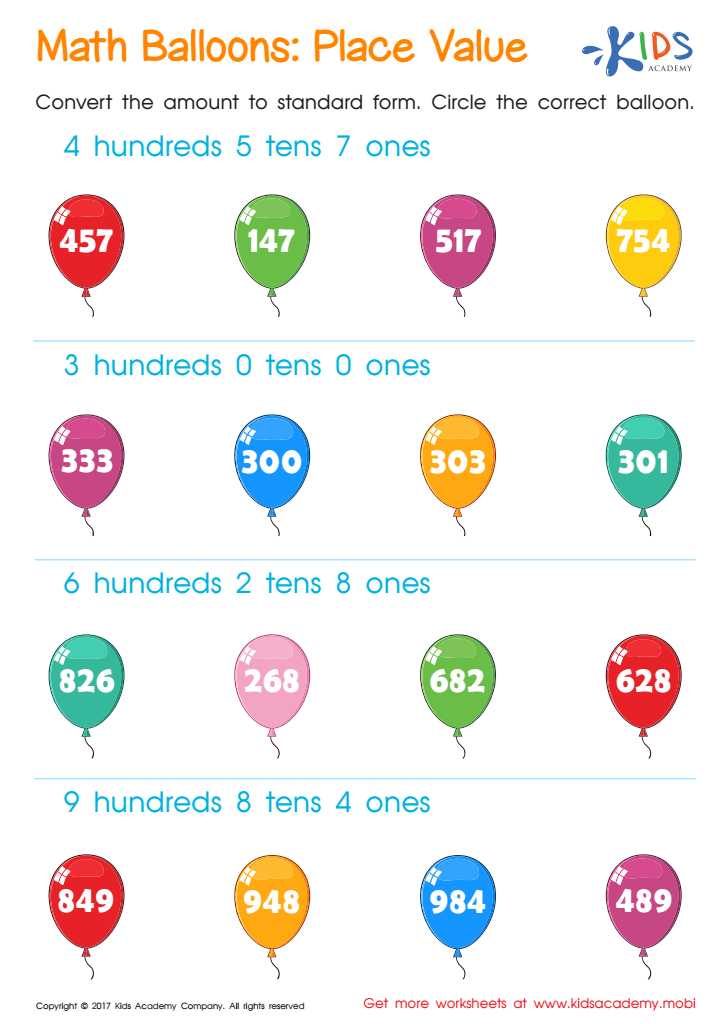
Place Value Printable Worksheet
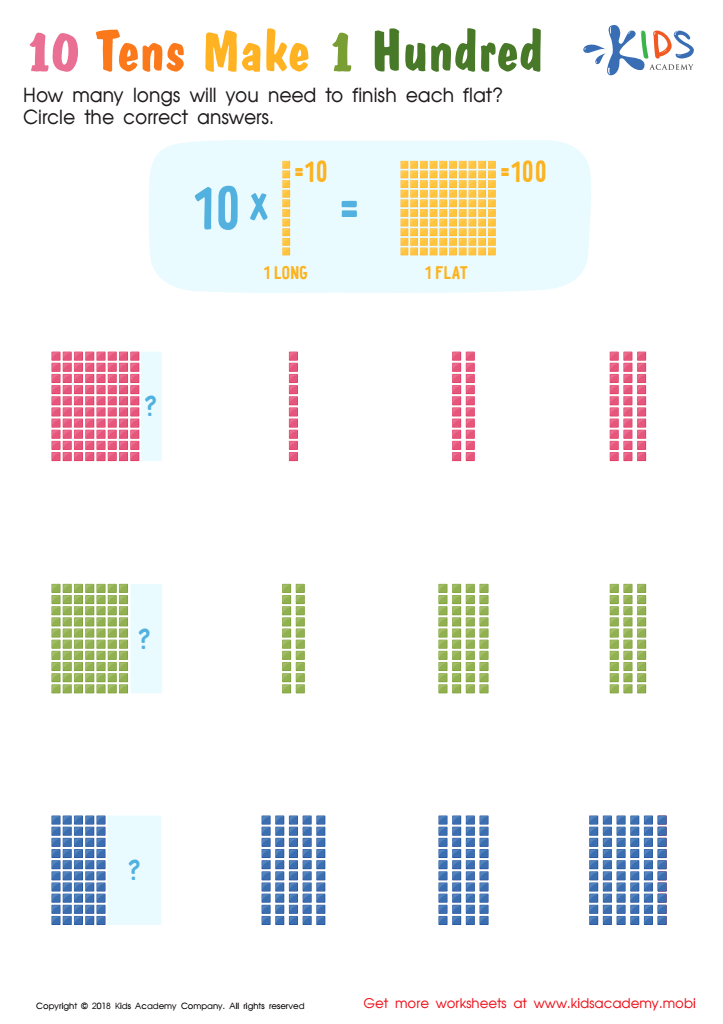
10 Tens Make 1 Hundred Worksheet






.jpg)
Recognizing number patterns is a crucial skill for children aged 8-9 for several reasons. At this stage, children are just beginning to understand more complex mathematical concepts. Recognizing patterns helps them develop critical thinking and problem-solving skills, which are foundational for future mathematical learning. When children identify and predict patterns, they become better at understanding number relationships and operations, such as addition, subtraction, multiplication, and division. This paves the way for learning more advanced topics like algebra and geometry.
Furthermore, recognizing number patterns boosts confidence and enhances overall cognitive development. As children make connections and see relationships between numbers, their ability to think logically and sequentially improves. This skill is not just limited to mathematics; it extends to everyday life, including time management, organization, and strategizing. Parents and teachers should thus integrate pattern-recognition activities into their teaching practices.
Engaging in fun activities, such as games, puzzles, and practical exercises that include patterns, can make learning enjoyable and more effective. By paying attention to number patterns, parents and teachers can assist children in creating a strong mathematical foundation that will benefit their academic and personal growth, encouraging a lifelong interest in math and logical reasoning.








