
Sound discrimination Worksheets for Ages 8-9
3 filtered results
Difficulty Level
Grade
Age
-
From - To
Subject
Activity
Standards
Enhance your child's auditory skills with our Sound Discrimination Worksheets designed for ages 8-9. These engaging worksheets focus on helping children differentiate between similar sounds, an essential component for improving reading and language skills. With a variety of interactive activities, your child will practice identifying and distinguishing sounds through fun exercises, including matching, sorting, and sound recognition games. Ideal for independent study or guided practice, these worksheets support essential learning objectives in an enjoyable way. Empower your young learner to gain confidence in their listening abilities and build a strong foundation for literacy with our comprehensive sound discrimination resources!
Favorites
With answer key
Interactive
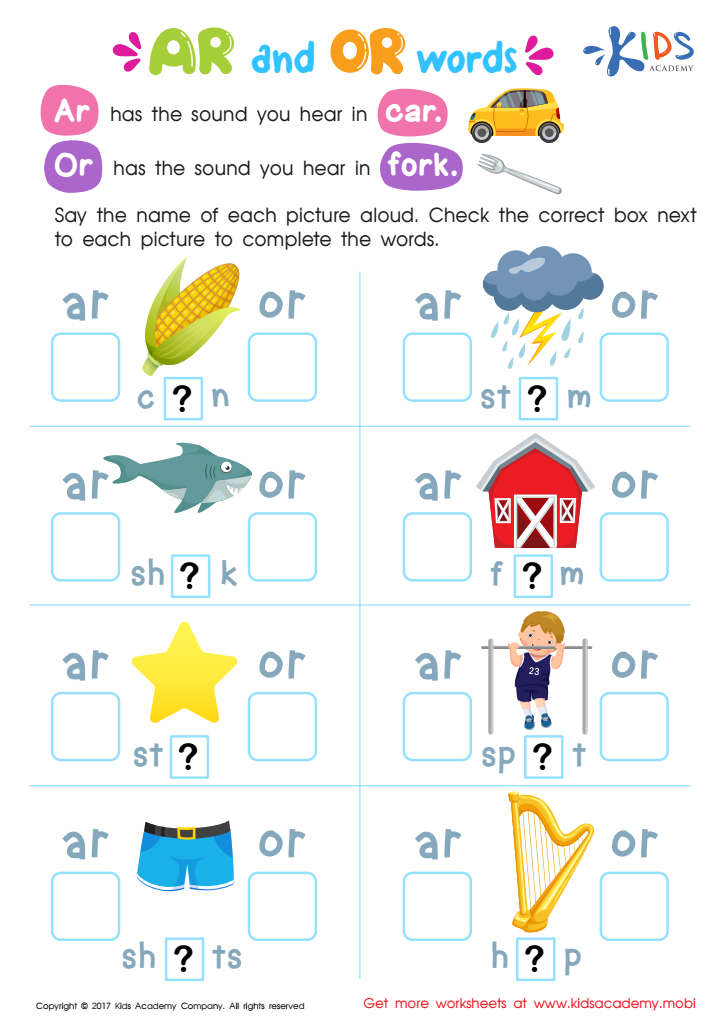
Ar and Or Words Phonics Worksheet
Master the distinct digraphs 'ar' and 'or' with this fun phonics worksheet from Kids Academy! With meaningful illustrations, it'll guide your child to choose the right one. Get ready for the great results!
 Assign to My Students
Ar and Or Words Phonics Worksheet
Worksheet
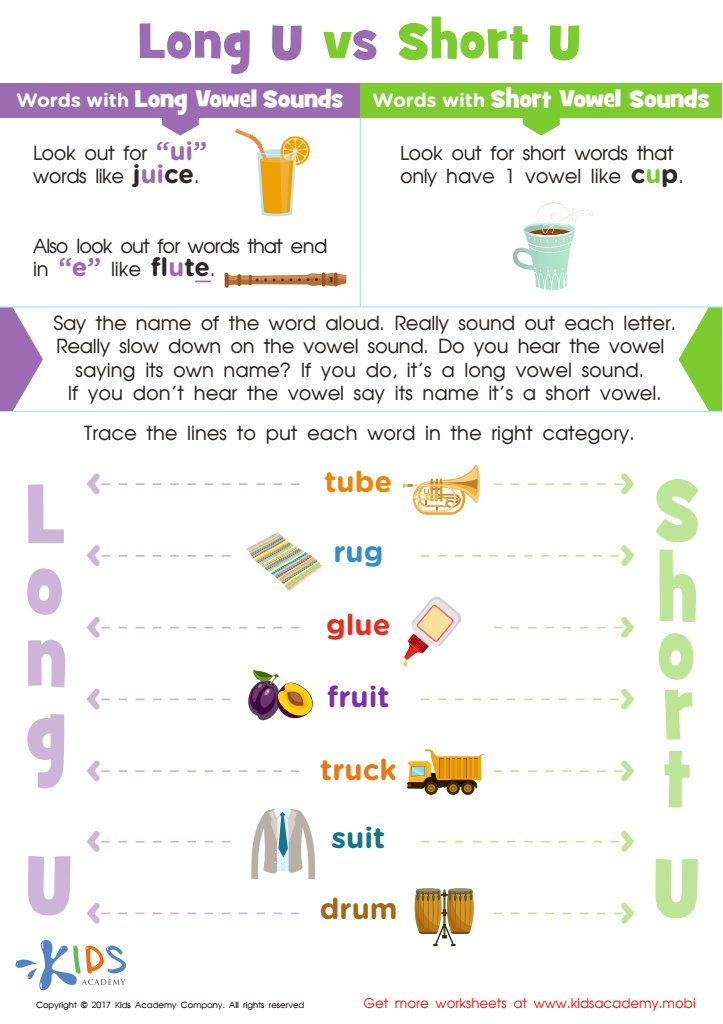
Long and Short Vowel U Spelling Worksheet
Help your child learn long and short vowel sounds with this fun long and short vowel U worksheet! Kids can become proficient spellers by mastering simple spelling tricks and sounding out letters.
Long and Short Vowel U Spelling Worksheet
Worksheet
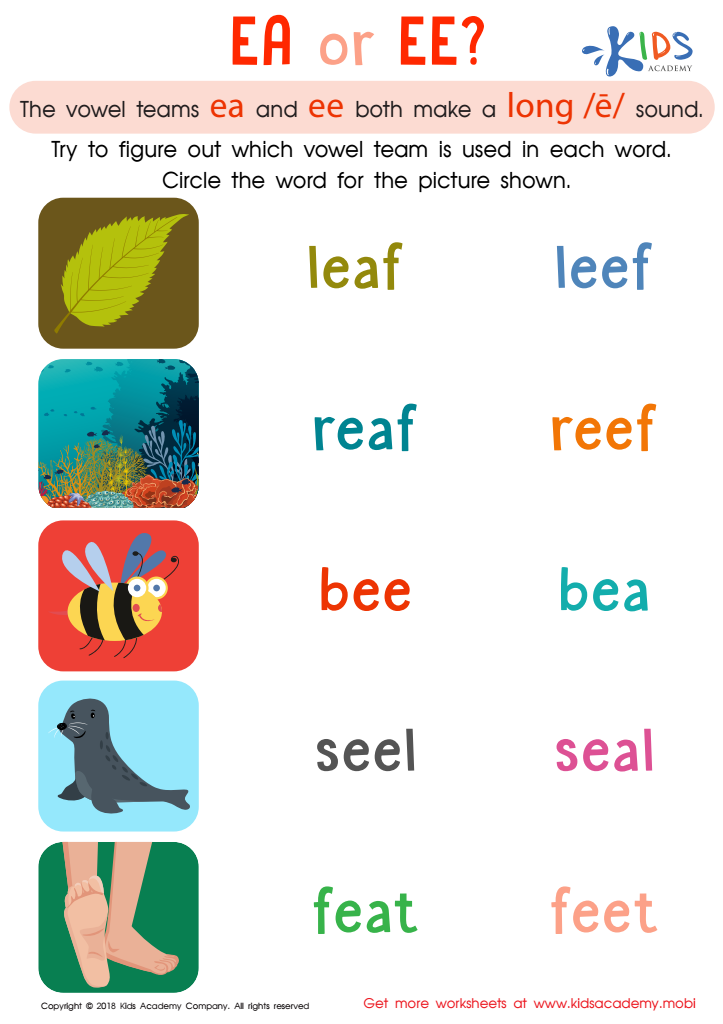
Reading: EA and EE Worksheet
Confused by the long E sound's varying spellings? Give students practice with this printable. It will improve their reading and spelling skills by helping them identify the correct spellings for words with the /ee/ and /ea/ vowel teams. Clear up the confusion and sharpen their skills.
Reading: EA and EE Worksheet
Worksheet
Join Kids Academy for Free
Who is primarily going to use this learning content?








Sound discrimination is crucial for children aged 8-9 as it lays the foundation for essential literacy skills and effective communication. At this stage, students are developing reading fluency, vocabulary, and comprehension, which are all significantly influenced by their ability to perceive and differentiate sounds in spoken language.
When children can discriminate between similar sounds, they become better equipped to decode words, recognize subtle differences in pronunciation, and understand the nuances of language. This skill directly relates to reading success; children who struggle with sound discrimination may face challenges in phonemic awareness, making it harder for them to master reading and spelling.
Moreover, sound discrimination promotes effective listening and speaking abilities. In a world that emphasizes collaboration and communication, well-developed auditory skills enable kids to understand instructions, follow conversations, and express their ideas clearly.
Parents and teachers should prioritize sound discrimination activities, such as engaging in rhyme games, playing listening games, and incorporating phonics exercises. Supporting children in this developmental area can lead to long-term academic success and boost their overall confidence in their communication skills. By recognizing its significance, adults can foster a more holistic learning environment where children thrive.








