Spatial awareness Worksheets for Ages 8-9 - Page 2
27 filtered results
-
From - To
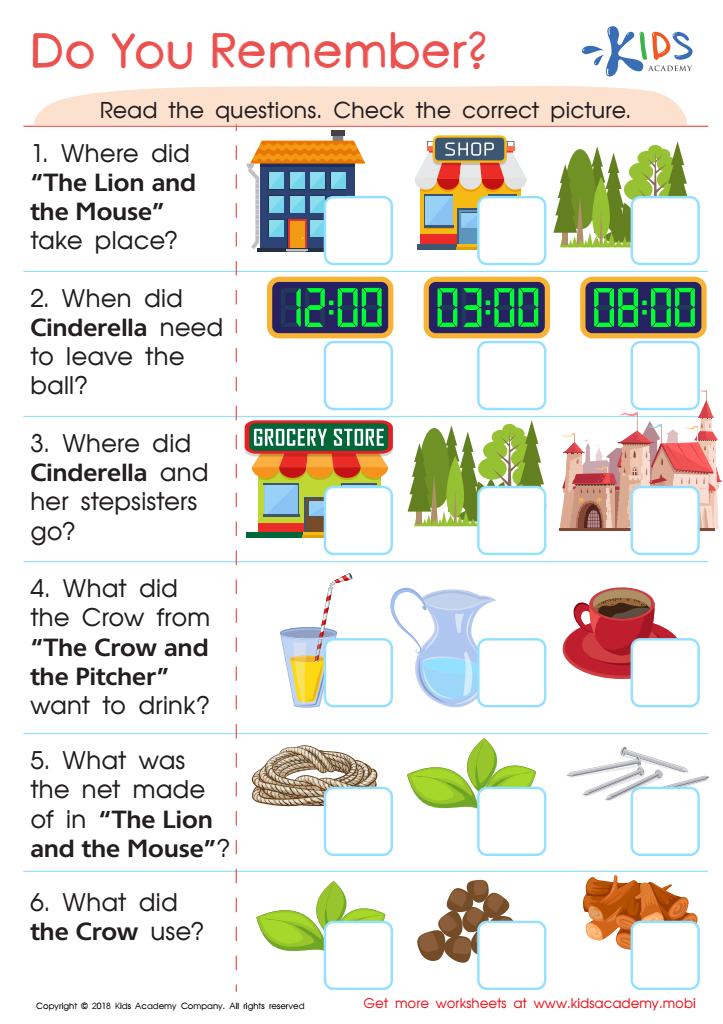
Do You Remember? Worksheet
 Assign to My Students
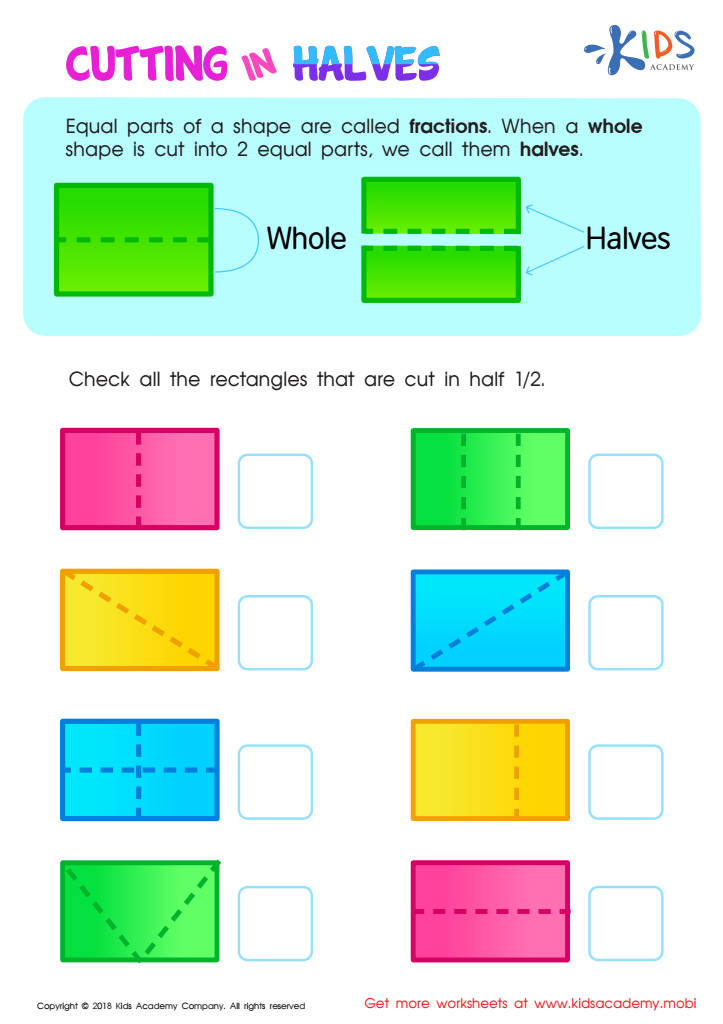
Cutting in Halves Worksheet







.jpg)
Spatial awareness is a crucial cognitive skill for children ages 8-9, impacting their physical and academic development. It refers to understanding how objects relate to one another in space, an ability that underpins activities such as reading, mathematics, and everyday interactions. For parents and teachers, nurturing spatial awareness can lead to enhanced problem-solving abilities and improved coordination, which are vital for academic success and physical activities.
At this age, spatial awareness can facilitate learning in geometry and measurement, as children begin to encounter shapes, angles, and three-dimensional understanding. Engaging children in activities like building blocks, puzzles, or map reading can enhance their spatial reasoning, making it easier for them to grasp complex concepts in math and science later on.
Moreover, strong spatial skills can boost a child's confidence and independence, enabling them to navigate their environment effectively. Parents and teachers should prioritize these skills through games, spatial vocabulary, and hands-on activities, recognizing that a well-rounded approach to learning promotes creativity alongside cognitive growth. By fostering spatial awareness, adults can better prepare children to meet the challenges of academic achievement and everyday problem-solving as they continue to grow.








