Understanding context Worksheets for Ages 8-9
5 filtered results
-
From - To
Enhance your child's reading comprehension with our "Understanding Context Worksheets for Ages 8-9." These specially designed resources help young learners grasp the meaning of texts by teaching them how to infer information from context. Each worksheet provides engaging exercises that encourage children to use neighboring words, sentences, and overall passage content to deduce unfamiliar words and ideas. With captivating themes and age-appropriate challenges, these worksheets bolster critical learning skills, preparing kids for more advanced reading tasks. Ideal for classroom use or at-home practice, our worksheets make mastering context both effective and enjoyable. Explore a new dimension of reading mastery today!
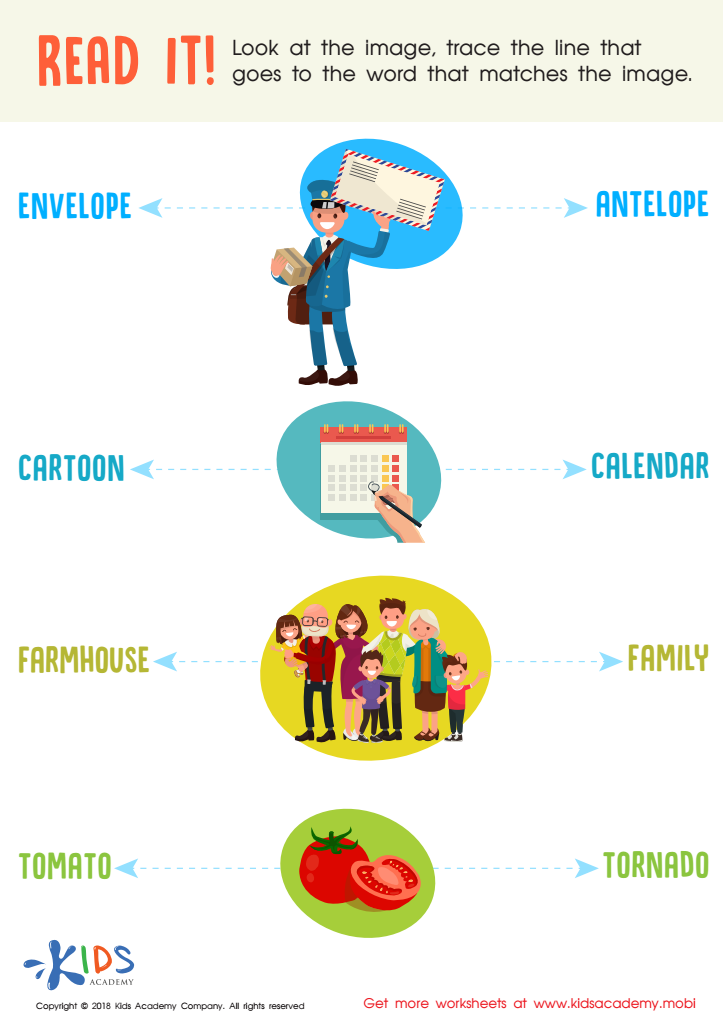
Read It! Worksheet
 Assign to My Students
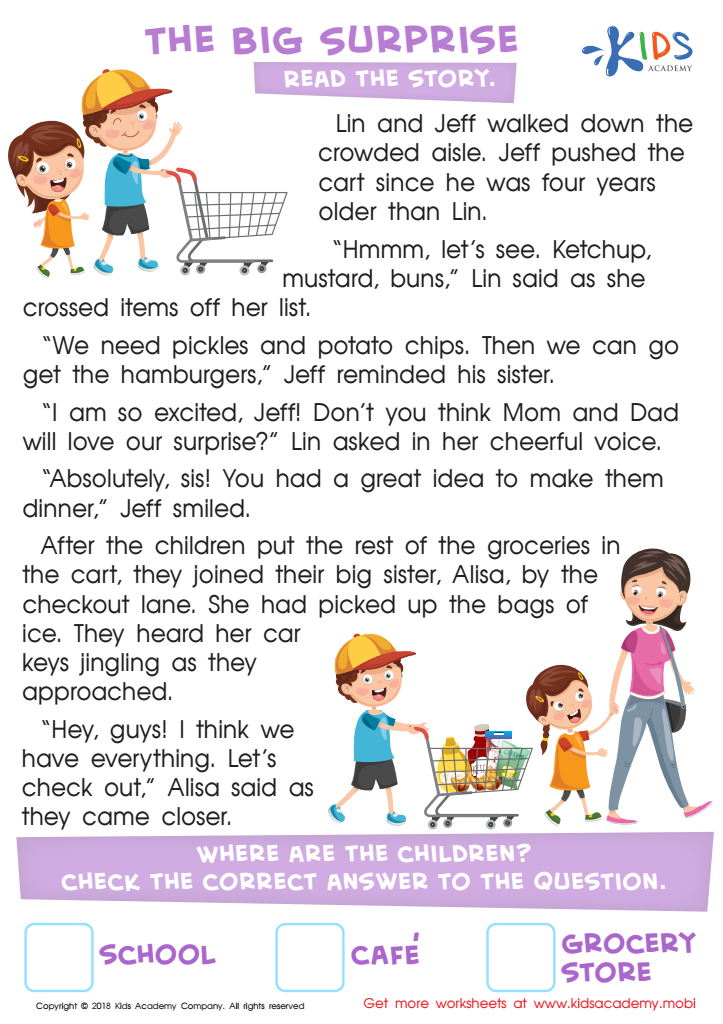
The Big Surprise Worksheet






Understanding context is vital for children aged 8-9 as it underpins their ability to grasp meanings beyond literal interpretations. At this developmental stage, children's cognitive abilities are expanding, enabling them to better comprehend and interact with their environment. This period is crucial for developing skills such as reading comprehension, critical thinking, and social intelligence.
When children understand context, they can make connections between ideas, predict outcomes, and infer meaning from text or speech, which enhances their academic success. For instance, recognizing the context of a story allows them to understand underlying themes and moral lessons, transforming simple reading into a more enriching experience.
In social settings, context helps children navigate interpersonal interactions and comprehend social cues, which are essential for building healthy relationships. They learn to discern tone, intention, and subtext, reducing misunderstandings and fostering empathy.
Parents and teachers play a pivotal role in guiding children through this learning process. By encouraging the exploration of different scenarios and asking thought-provoking questions, they help children practice contextual thinking. This not only boosts intellectual growth but also equips children with the tools necessary for effective communication and problem-solving in everyday life. Understanding context is thus a foundational skill that supports overall development and future success.








