Discover our engaging Visual Interpretation Worksheets designed specifically for children aged 8-9, perfect for enhancing their critical thinking and analytical skills. These interactive worksheets encourage kids to interpret visual information, such as charts, graphs, and illustrations, fostering a deeper understanding of data representation. With a variety of fun and challenging exercises, your child will develop essential skills in comprehension and reasoning. Tailored to align with educational standards, our worksheets are a wonderful resource for both classroom settings and at-home learning. Unlock your child's potential and build a strong foundation in visual literacy today! Fun, educational, and perfect for young learners!

Check out this FREE "Visual interpretation" Trial Lesson for age 8-9!

Read with Sufficient Accuracy and Fluency to Support Comprehension

Favorites
With answer key
Interactive
  • 8-9
  • Visual interpretation
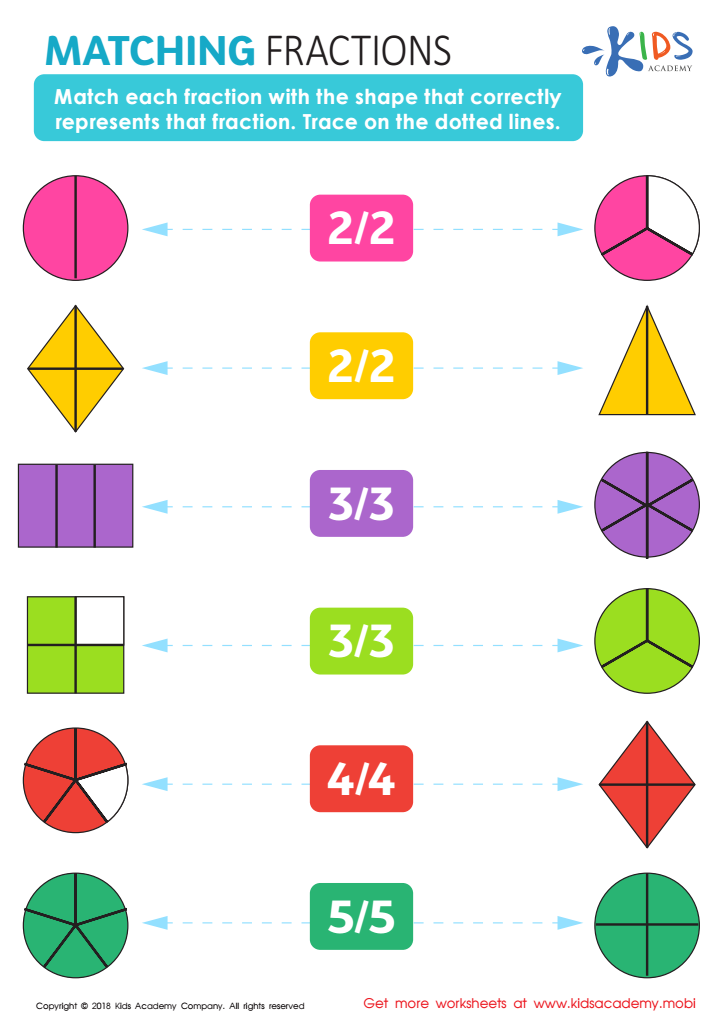
Matching Fractions Worksheet

Matching Fractions Worksheet

This worksheet uses colorful images to engage students. On the left are six shapes, mirrored on the right, with fractions in the middle. Students must match up the fraction with the right shape. It's a fun way to sharpen fractions skills!
Matching Fractions Worksheet
Worksheet
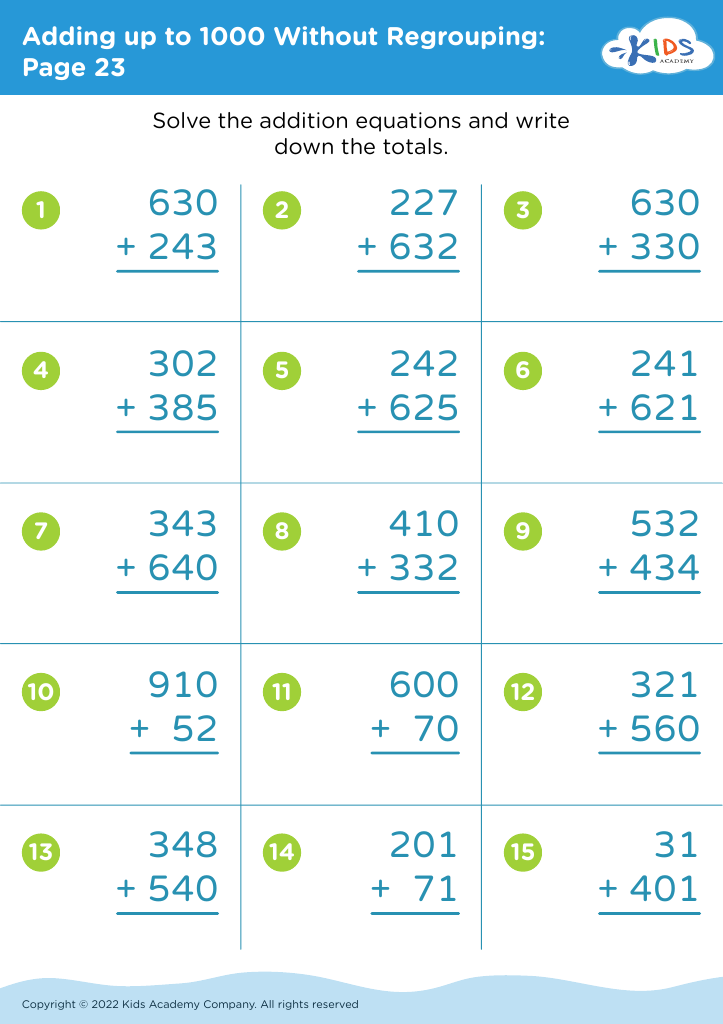
Adding up to 1000 Without Regrouping: Page 23
Worksheet
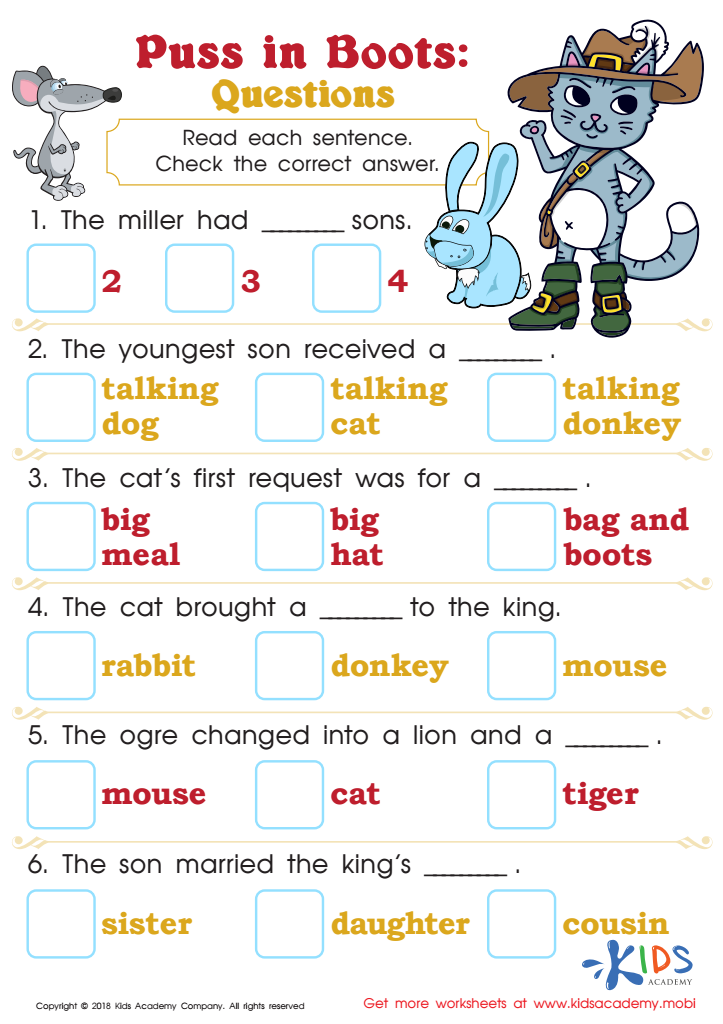
Puss in Boots: Questions Worksheet

Puss in Boots: Questions Worksheet

This worksheet contains questions to be checked with boxes for the correct answers. It also has pictures of animals; ask kids to identify them, noting the objects with them. Read the questions and have kids provide the answers. Help them check the boxes for the right answer.
Puss in Boots: Questions Worksheet
Worksheet
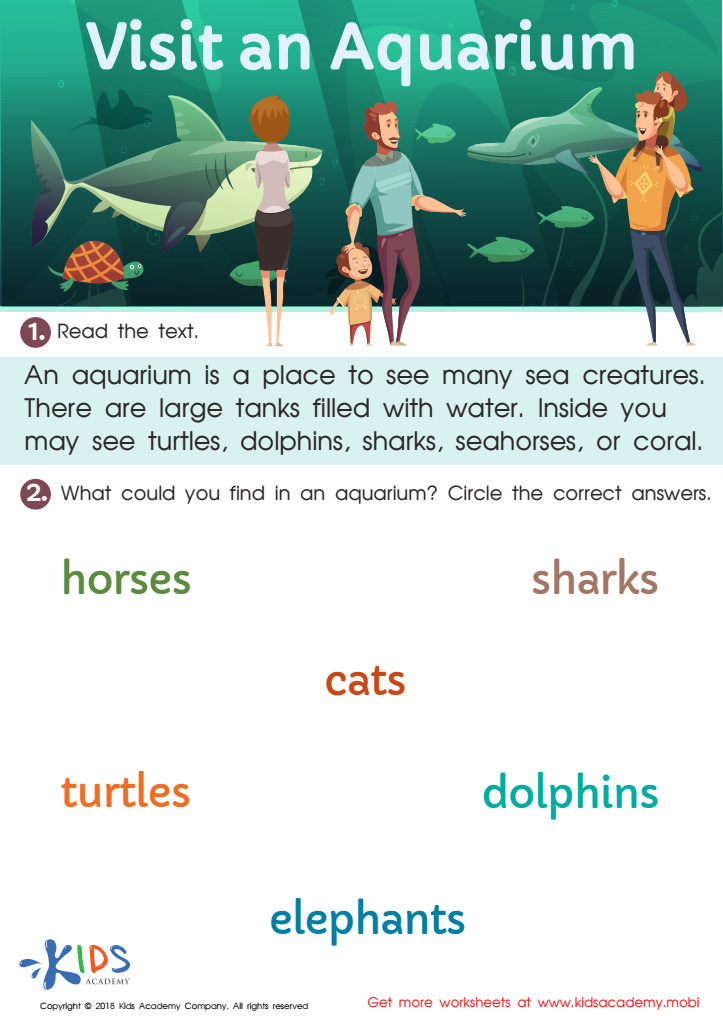
Visit an Aquarium Worksheet
Visit an Aquarium Worksheet

Have your kids ever been to an aquarium? It's a great place to see a variety of sea creatures, like turtles, dolphins, sharks and fish. If they're fascinated by sea life, this worksheet is perfect! Help them circle the aquarium animals among the words in the picture.
Visit an Aquarium Worksheet
Worksheet
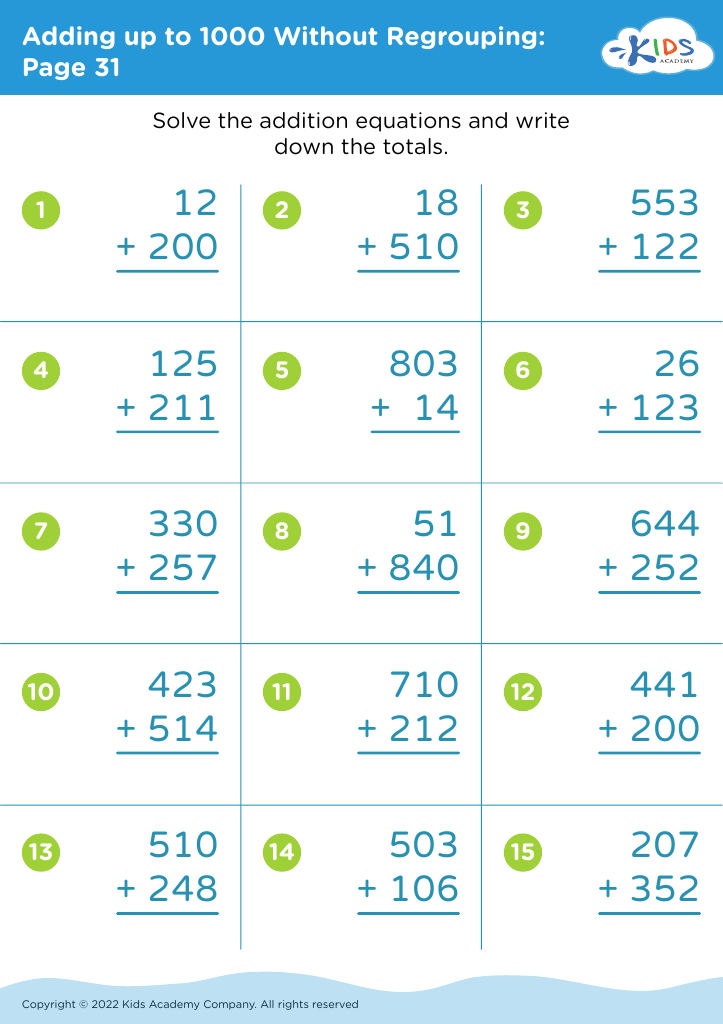
Adding up to 1000 Without Regrouping: Page 31
Worksheet
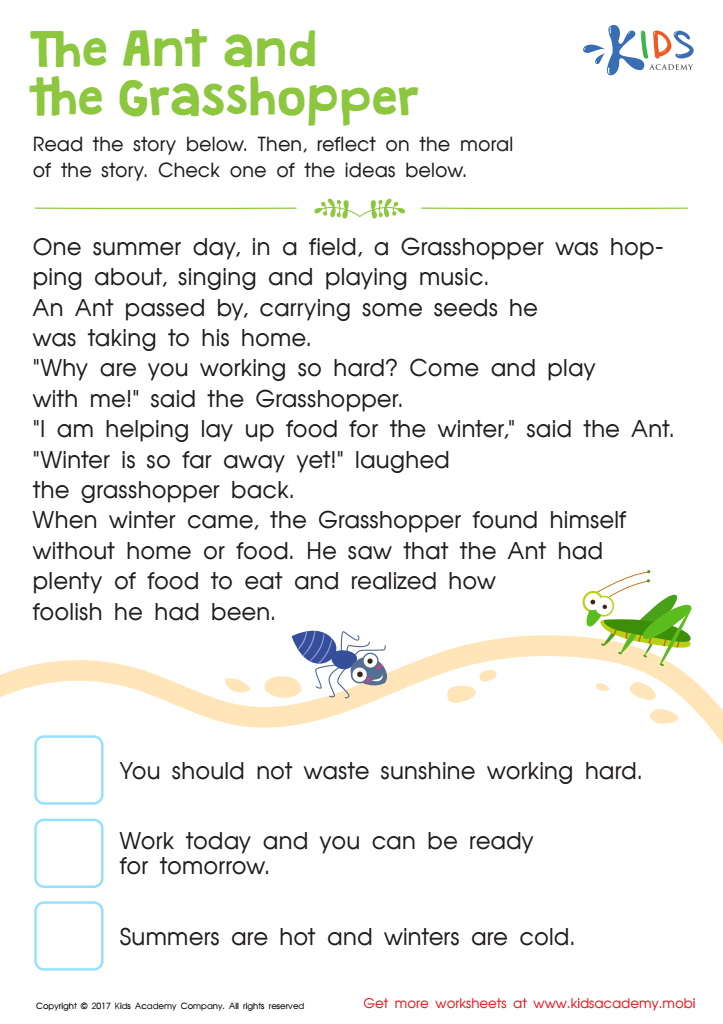
The Ant and the Grasshopper worksheet PDF

The Ant and The Grasshopper Printable
Aesop's fables have clear messages, which make them memorable and loved by children and adults. Use Kids Academy's ant and grasshopper worksheet to help your child reflect on stories and discover the life lesson.
The Ant and The Grasshopper Printable
Worksheet
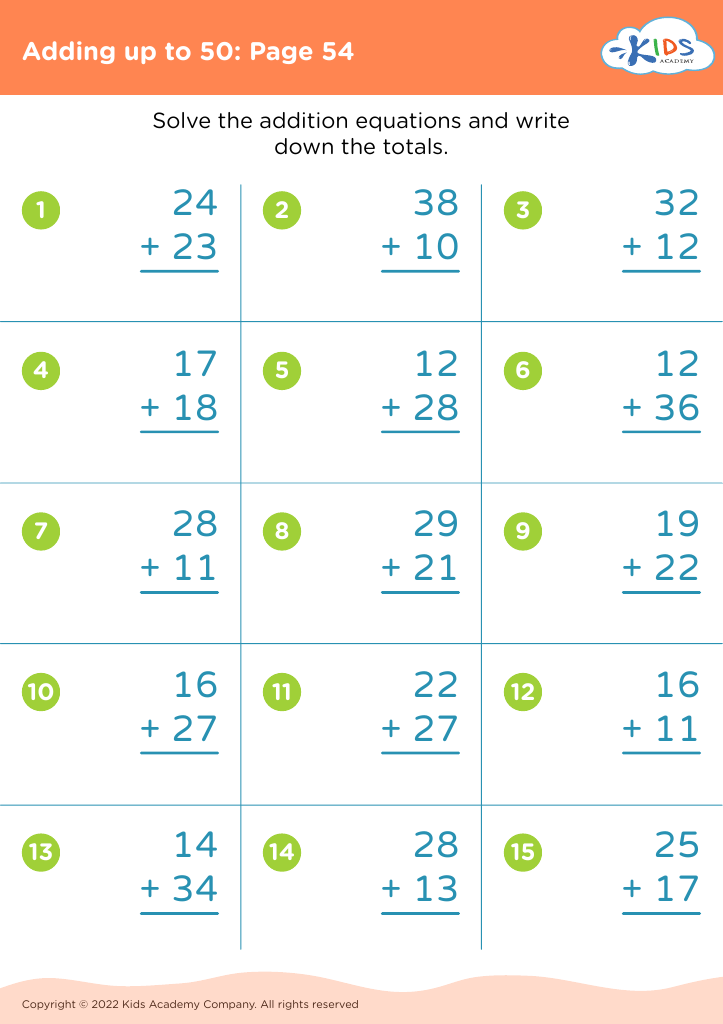
Adding up to 50: Page 54

Adding up to 50: Page 54

Adding up to 50: Page 54
Worksheet
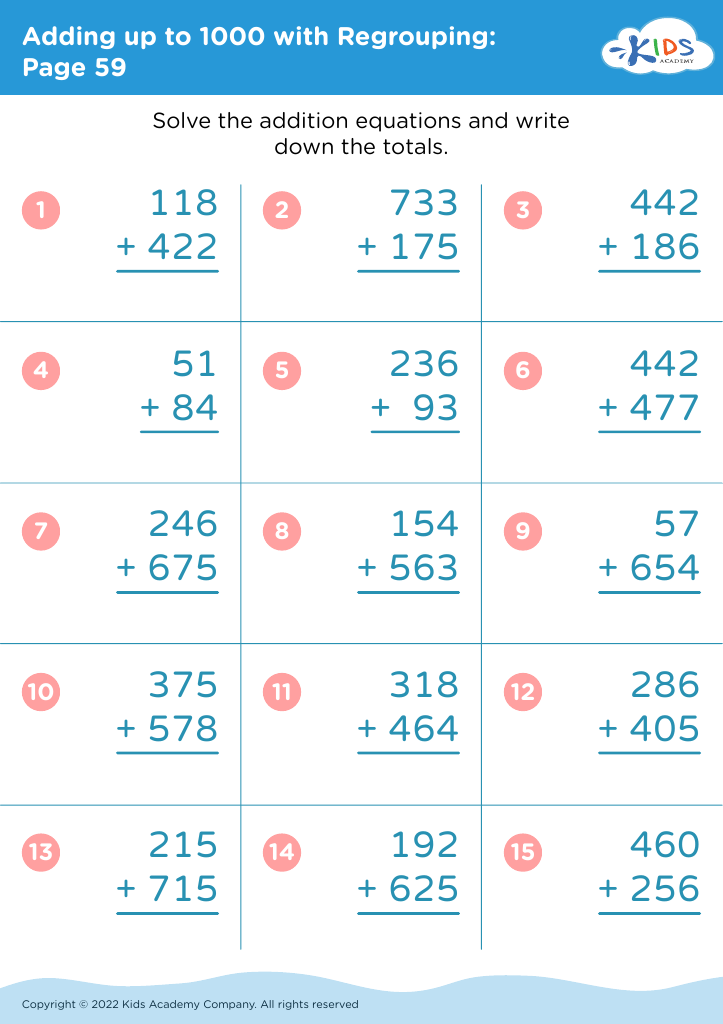
Adding up to 1000 with Regrouping: Page 59
Worksheet
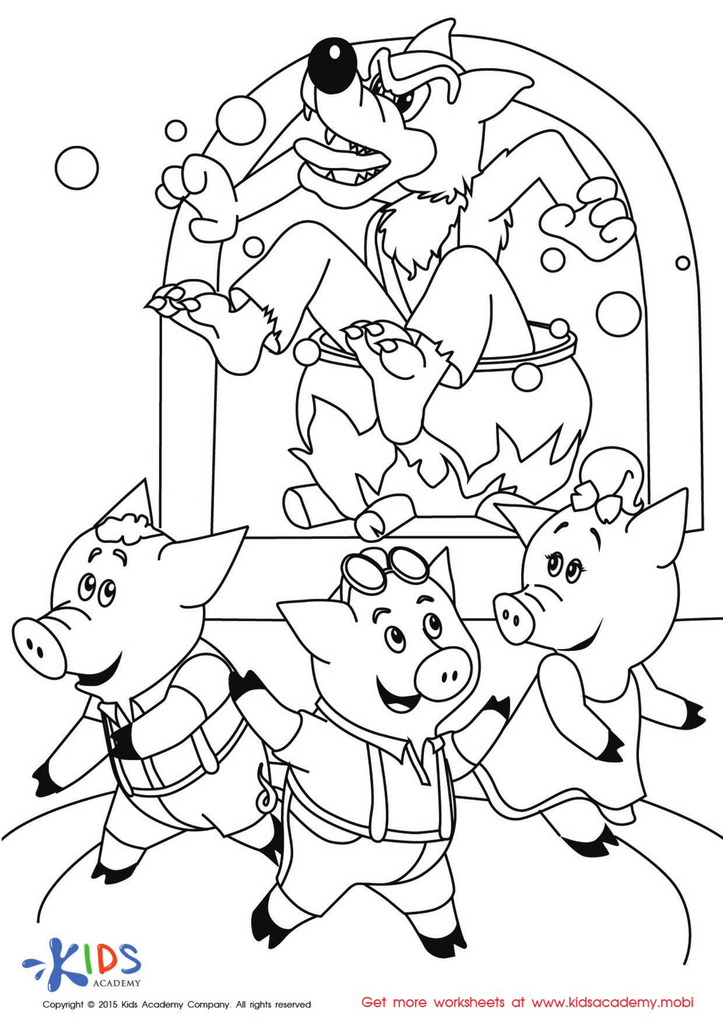
The Three Little Pigs and The Big Bad Wolf

The Three Little Pigs and The Big Bad Wolf Printable

The Big Bad Wolf has learned his lesson: never bully little pigs! This free printable worksheet shows him falling into boiling water, while the three little pigs are safe and happy. Let your kids bring this scene to life by coloring it in whatever way they like. When they're done, ask them if they think the Big Bad Wolf will ever return.
The Three Little Pigs and The Big Bad Wolf Printable

Worksheet


Visual interpretation is crucial for children aged 8-9 as it plays a significant role in their cognitive and academic development. At this age, children begin to develop critical thinking skills and the ability to analyze information from various sources. By fostering visual interpretation abilities, parents and teachers can help children understand and engage with the world around them more effectively.

Visual interpretation enhances literacy, enabling children to comprehend graphs, charts, maps, and illustrations that are essential in subjects like science and social studies. It is also foundational for developing artistic skills, as children learn to express themselves creatively through visual means.

Moreover, the ability to interpret visuals contributes to higher-order thinking skills, such as reasoning and problem-solving. It encourages children to make connections between ideas and synthesize information from different perspectives.

As children navigate a visually rich environment, equipping them with effective visual interpretation skills helps in reducing confusion and misinformation. Overall, supporting children's visual literacy paves the way for their academic success, boosts their confidence, and prepares them for a future where visual communication is increasingly important. Therefore, it is essential for parents and teachers to prioritize this aspect of learning.