Addition Practice Adding 2-digit Numbers Worksheets for Ages 8-9
5 filtered results
-
From - To
Boost your child’s math confidence with our engaging Addition Practice Adding 2-digit Numbers Worksheets for ages 8-9. Designed to strengthen arithmetic skills, these worksheets offer a variety of addition problems that challenge young learners while keeping them motivated. Through clear instructions and fun, interactive exercises, kids will develop their ability to add two-digit numbers accurately and efficiently. Ideal for both classroom and home use, these printable worksheets provide valuable practice tailored to your child’s grade level. Watch as your child’s mathematical abilities flourish with our expertly crafted resources, making learning enjoyable and effective.
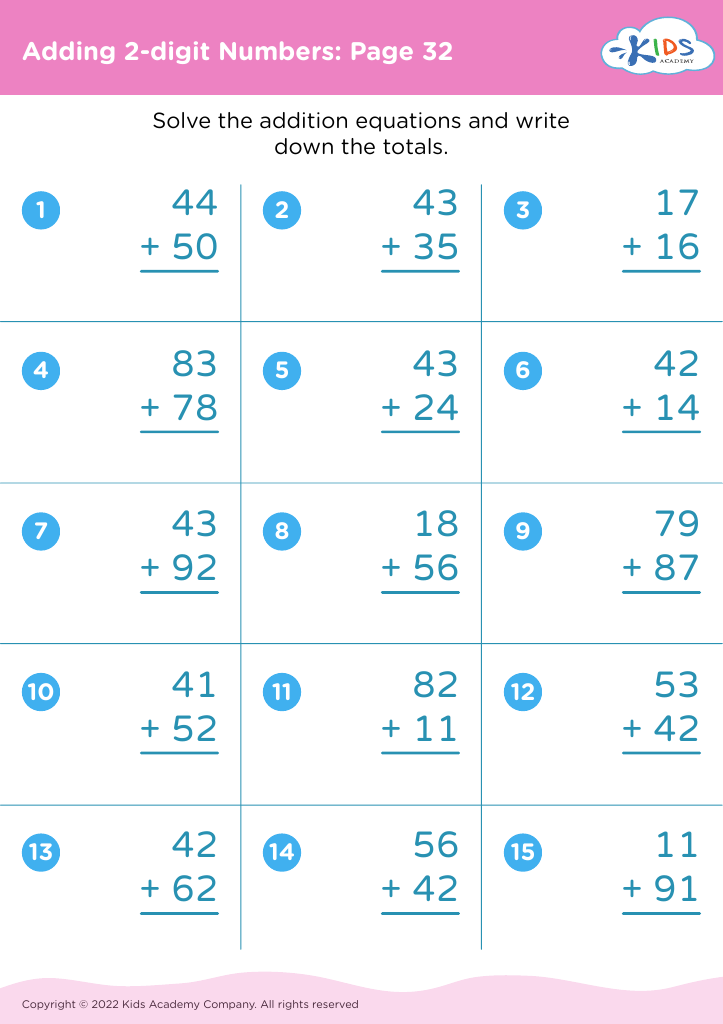
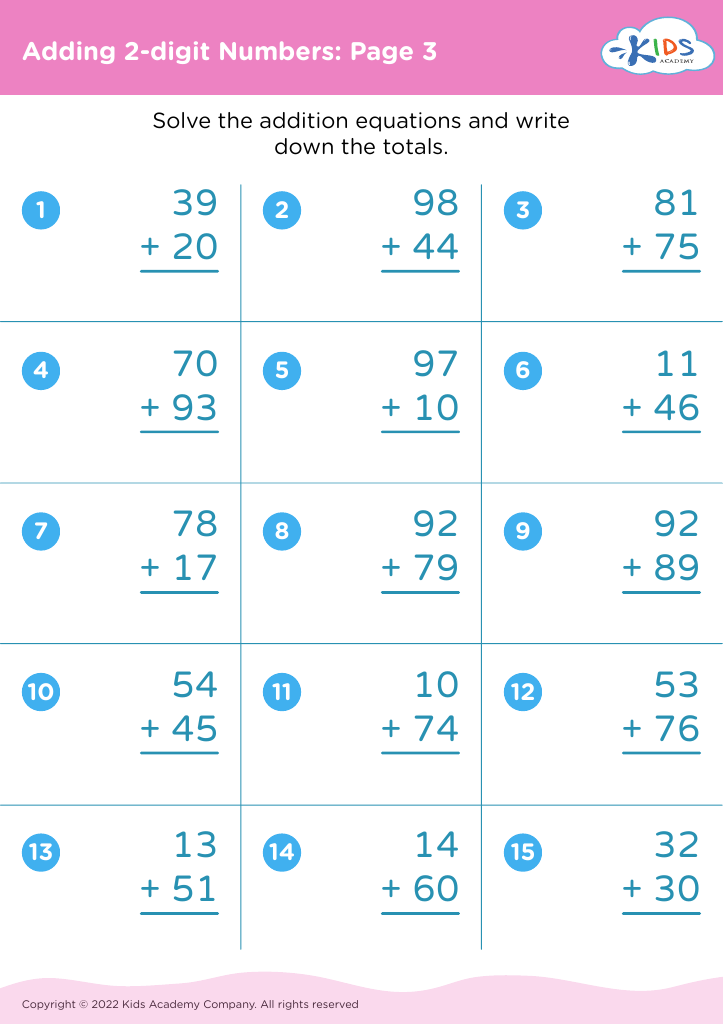
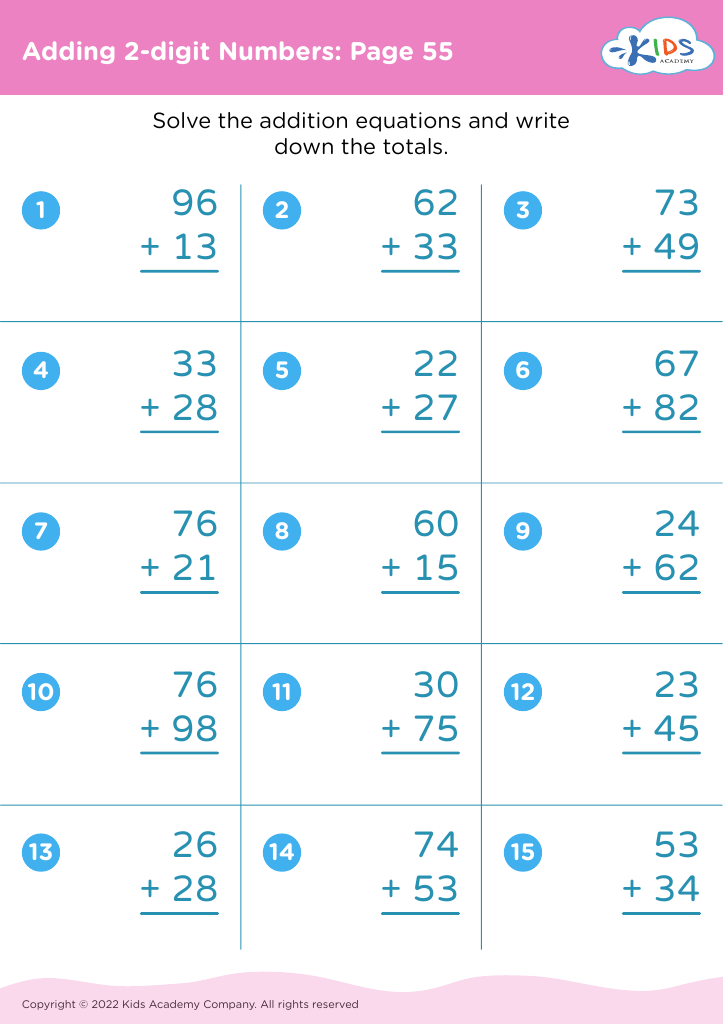
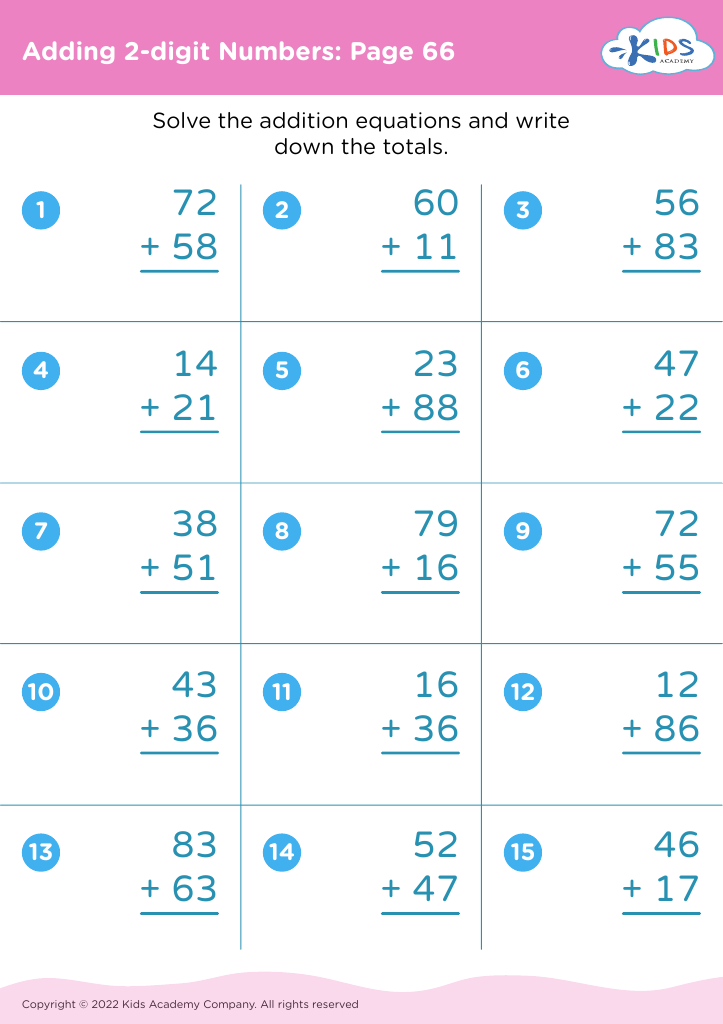
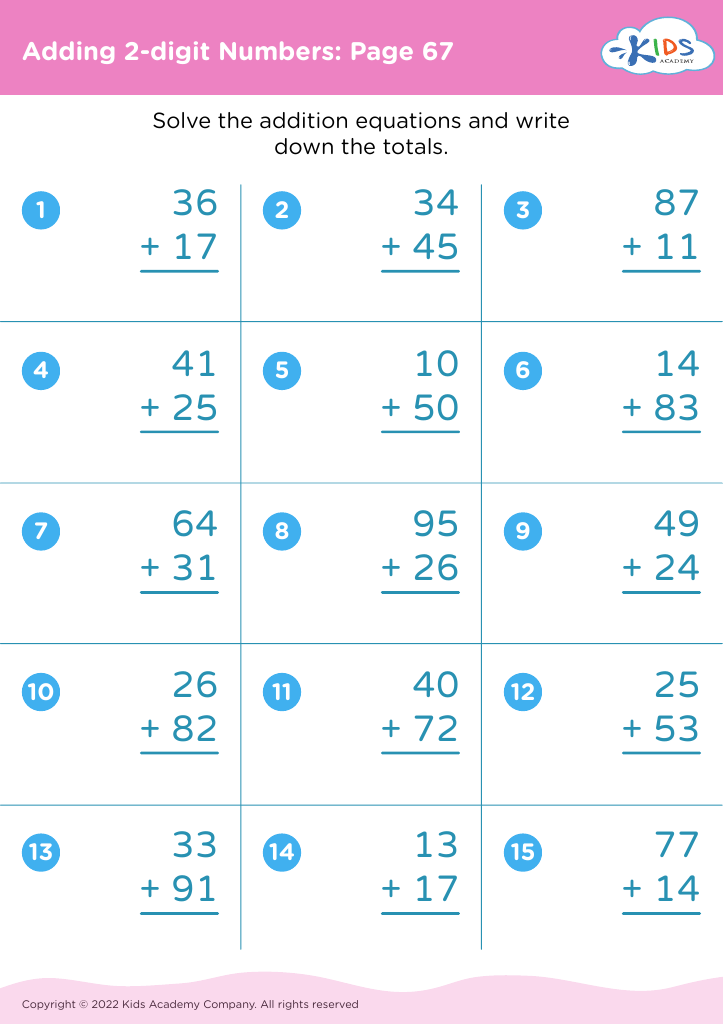








Teaching addition with 2-digit numbers is crucial for children aged 8-9 for several reasons. Firstly, it lays the foundation for more complex mathematical operations, such as subtraction, multiplication, and division. Mastering 2-digit addition helps kids build confidence and improve their problem-solving skills. This form of arithmetic is not just a mathematical skill – it fosters logical thinking and the ability to sequence and structure their thoughts, which are essential cognitive abilities in various aspects of life.
Additionally, being adept at addition aids in real-world applications. Tasks such as handling money, measuring ingredients for recipes, planning travel times, and many other daily activities require a good understanding of basic math.
For educational standards, the curriculum usually intensifies around these ages, introducing fractions, estimations, and more elaborate word problems. Ensuring children grasp 2-digit addition means they will be better prepared to tackle higher learning challenges without feeling overwhelmed.
Lastly, consistent practice in a supportive environment enhances focus, perseverance, and memory retention. Praise and encouragement during this practice motivate children, turning learning into a positive experience. Engaging with interactive tools, games, or group activities even makes math enjoyable, fostering a lifelong appreciation and understanding of numbers.








