Basic Math Skills Adding 2-digit Numbers Worksheets for Ages 8-9
3 filtered results
-
From - To
Enhance your child's math proficiency with our engaging Basic Math Skills Adding 2-Digit Numbers Worksheets, designed specifically for ages 8-9. These interactive worksheets provide a structured approach to mastering two-digit addition, featuring a variety of fun exercises that promote critical thinking and problem-solving. Perfect for reinforcing classroom learning or practicing at home, each worksheet is tailored to gradually increase in difficulty, helping to build confidence and competence in math. Foster a love for numbers while ensuring your young learner develops essential arithmetic skills. Explore our collection today and watch your child's mathematical abilities soar!
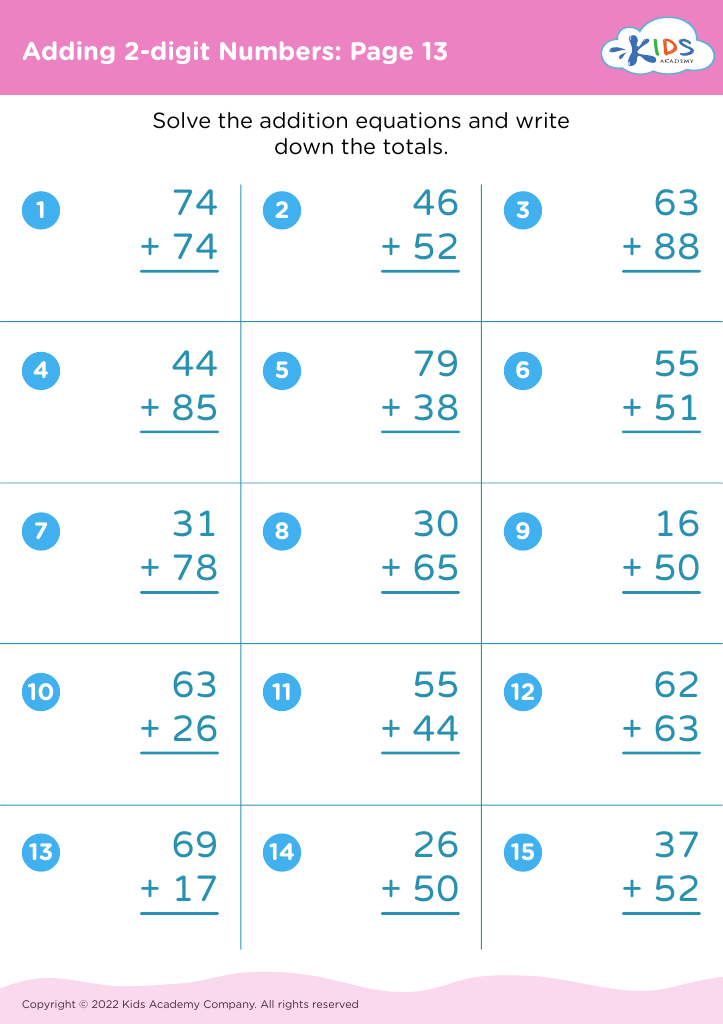
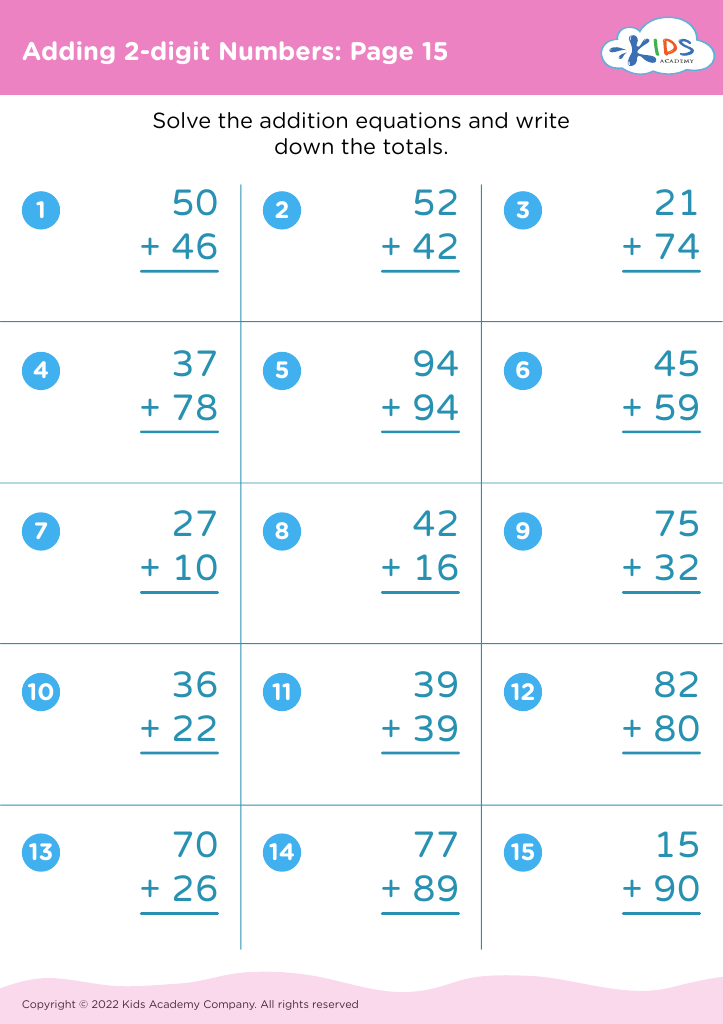
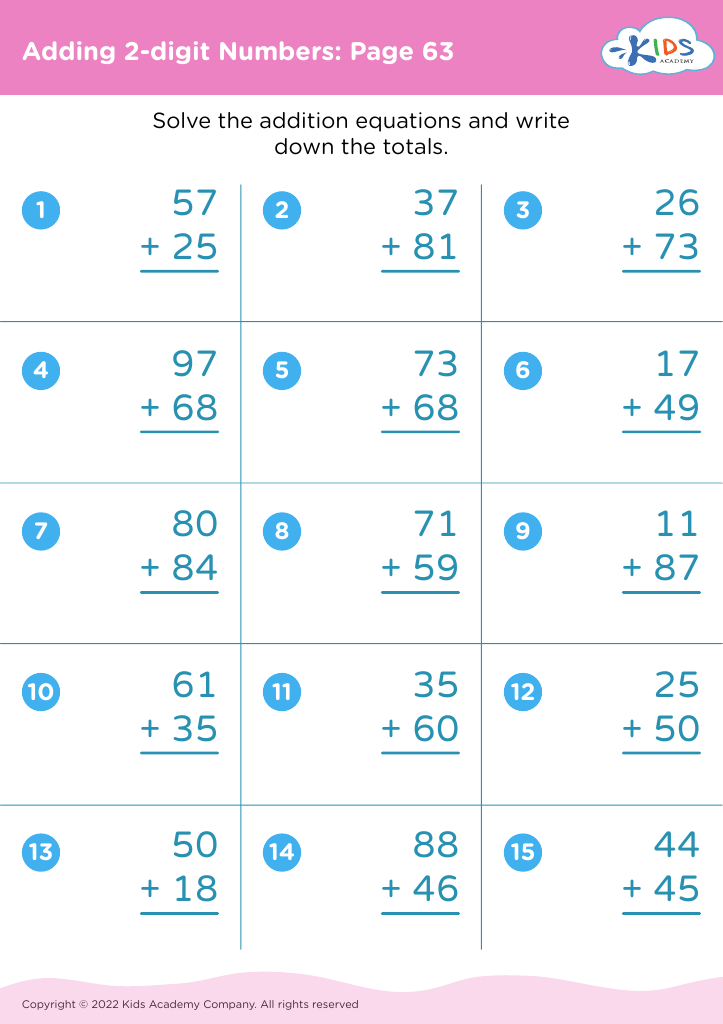








Basic math skills, particularly the ability to add 2-digit numbers, are crucial for children aged 8-9 as they form the foundation for more complex mathematical concepts. At this age, children transition from understanding basic arithmetic to developing more advanced computational thinking necessary for future academic success.
Mastering 2-digit addition helps enhance children's problem-solving abilities. As they learn to combine numbers effectively, they improve their critical thinking skills, fostering confidence in handling math-related challenges. This skill also parallels real-world applications, such as budgeting, shopping, and time management, making it vital for practical life skills.
Moreover, building a strong mathematical foundation can positively impact children's overall academic growth. It lays the groundwork for understanding operations, fractions, and even more advanced algebraic concepts they will encounter in later years. By investing time in reinforcing these skills through engaging activities and practice, parents and teachers cultivate a love for learning and help build a resilient mindset.
Additionally, strong math skills can alleviate anxiety related to the subject. When children feel competent, they approach math with a positive attitude, paving the way for future success. Therefore, fostering basic math skills at this developmental stage is essential for both academic excellence and personal growth.








