Recognizing shapes Adding 2-digit Numbers Worksheets for Ages 8-9
4 filtered results
-
From - To
Introduce your 8-9-year-old to the exciting world of math with our specially designed worksheets focused on recognizing shapes and adding 2-digit numbers. These engaging, interactive sheets support crucial math skills by helping children identify geometric shapes and enhance their arithmetic abilities. Through vibrant visuals and fun activities, learners gain confidence in essential math concepts while enjoying their practice. Ideal for both classroom and home use, these worksheets ensure that learning remains enjoyable. Watch your child thrive as they master addition and shape recognition, setting the foundation for future math success! Explore our offerings at Kids Academy today.
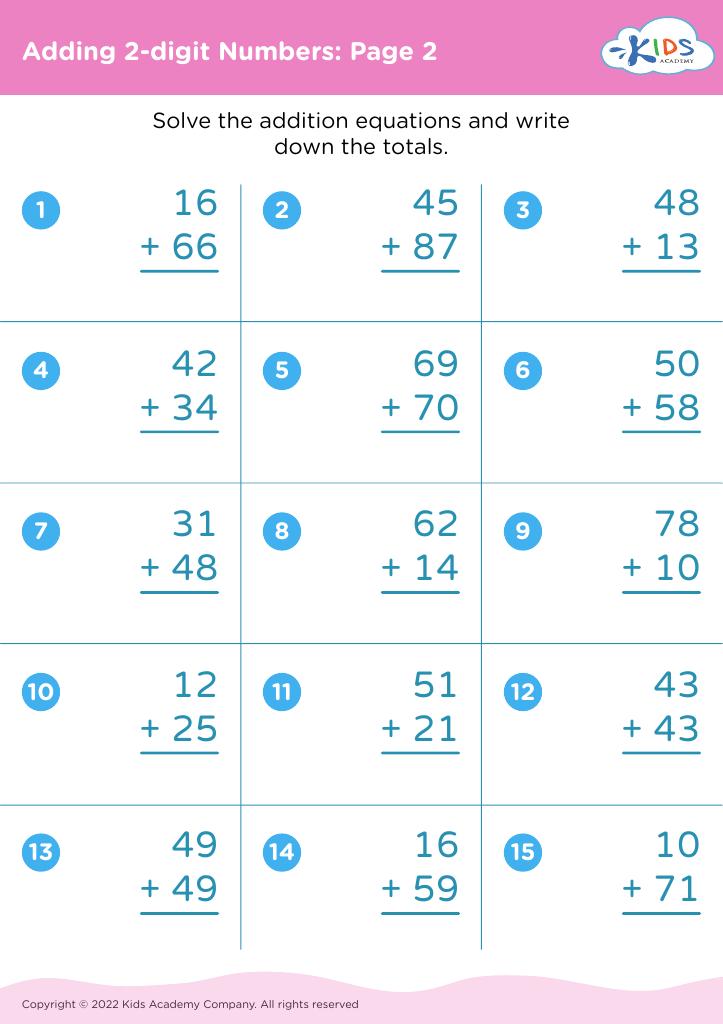
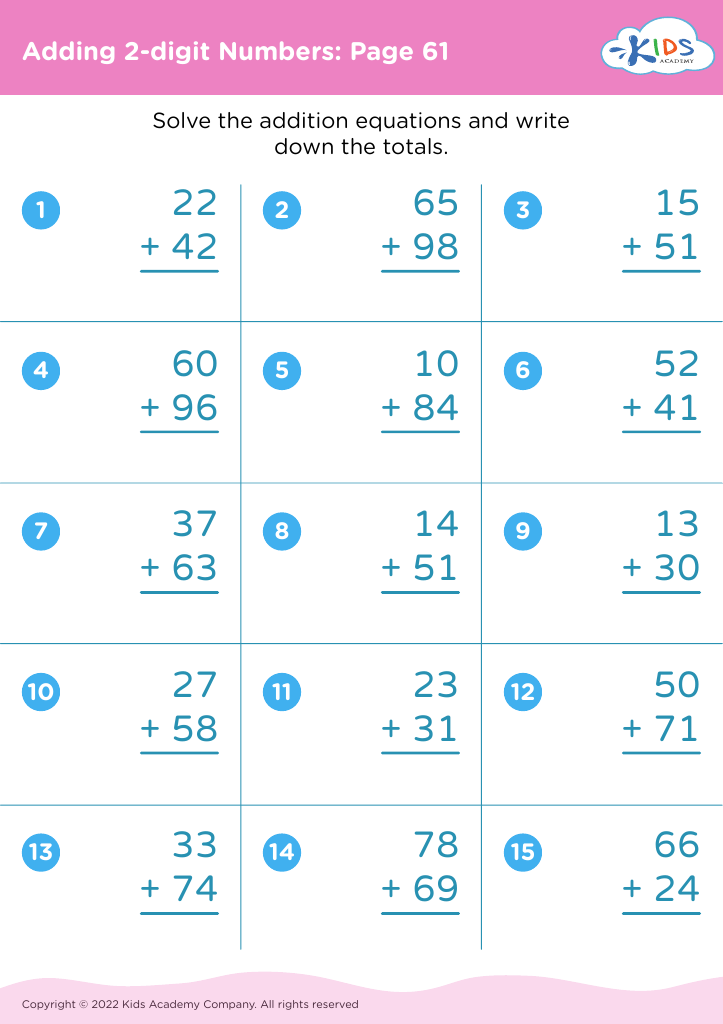
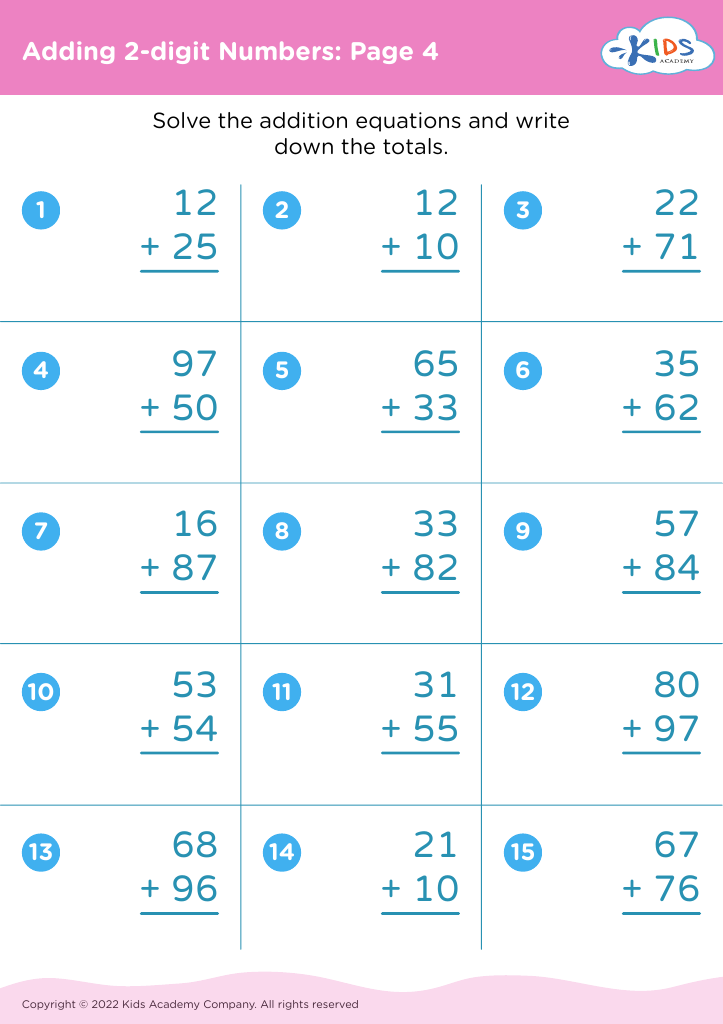
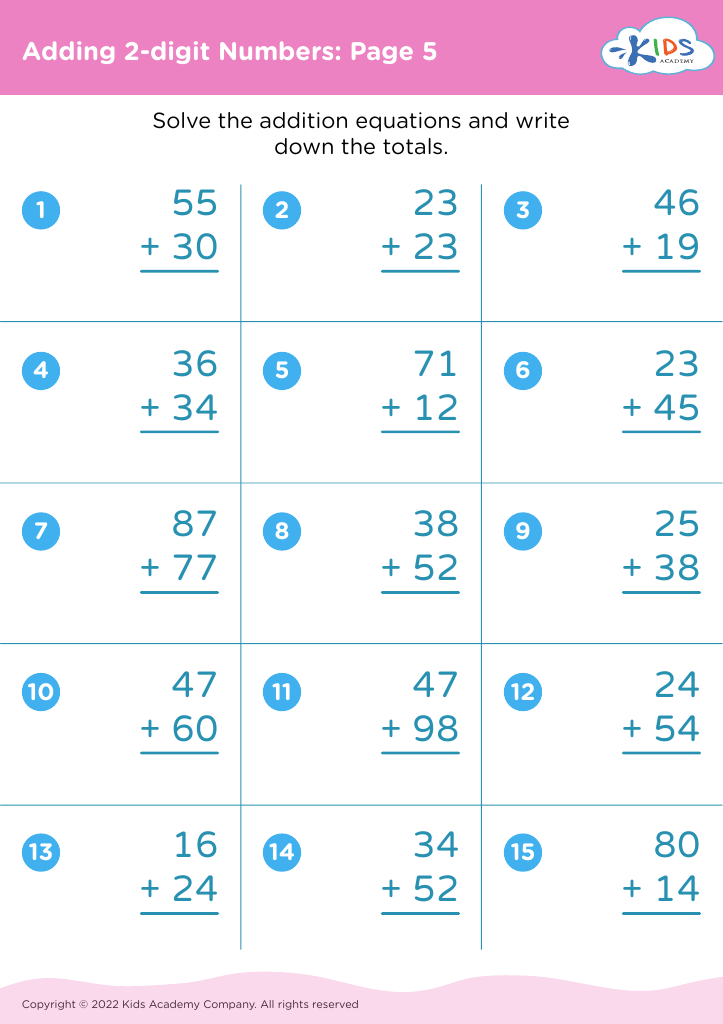








Recognizing shapes and adding 2-digit numbers are foundational skills essential for the cognitive development of children aged 8-9. Firstly, recognizing shapes enhances spatial awareness, which is vital for daily life and later academic subjects like geometry. It teaches children how to distinguish and categorize objects based on their physical properties. This ability can extend beyond math, aiding in literacy by helping kids identify different letters and symbols.
Adding 2-digit numbers is one of the introductory steps towards grasping more complex math concepts. Mastery in this area not only boosts mathematical confidence but also underpins future skills such as multiplication and division. It helps children develop logical thinking and problem-solving abilities. Additionally, the practice supports procedural fluency, enabling quicker and more accurate calculations in the future.
Both skills build a solid academic foundation while improving critical thinking and analytical skills that children will rely on throughout their education. Moreover, these competencies develop perseverance and a growth mindset by encouraging children to tackle progressively challenging problems. Parents and teachers should focus on these areas to not just adhere to curriculum requirements, but to cultivate a robust skill set that empowers their children's academic and daily life, setting them up for continued success.








