Develop fine motor skills Adding up to 100 Misc Worksheets for Ages 8-9
4 filtered results
-
From - To
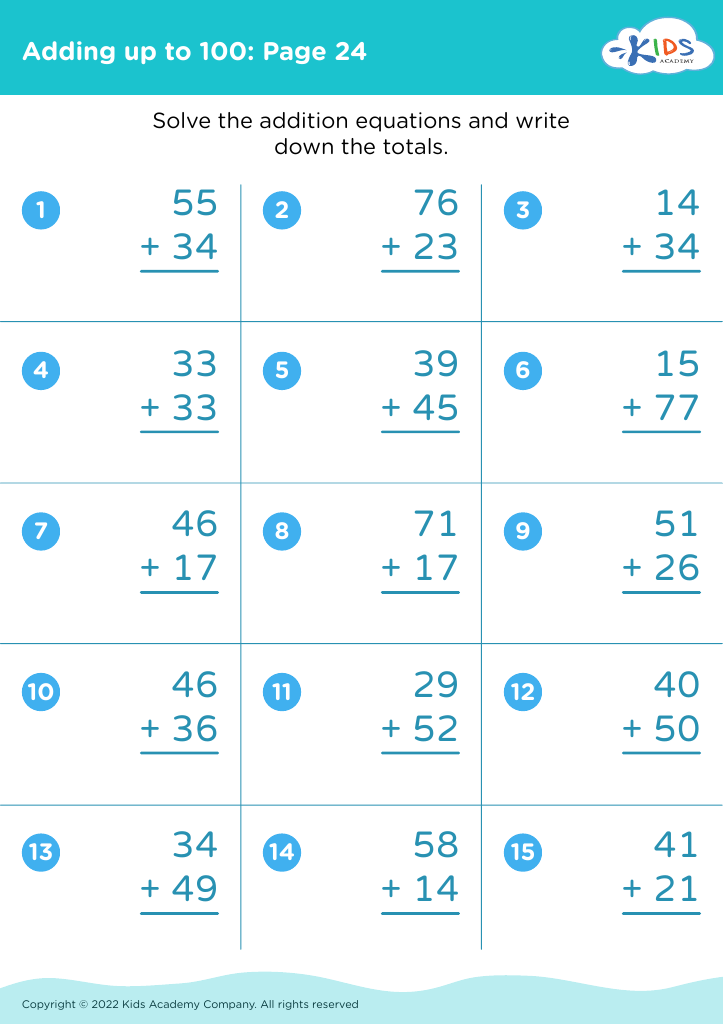
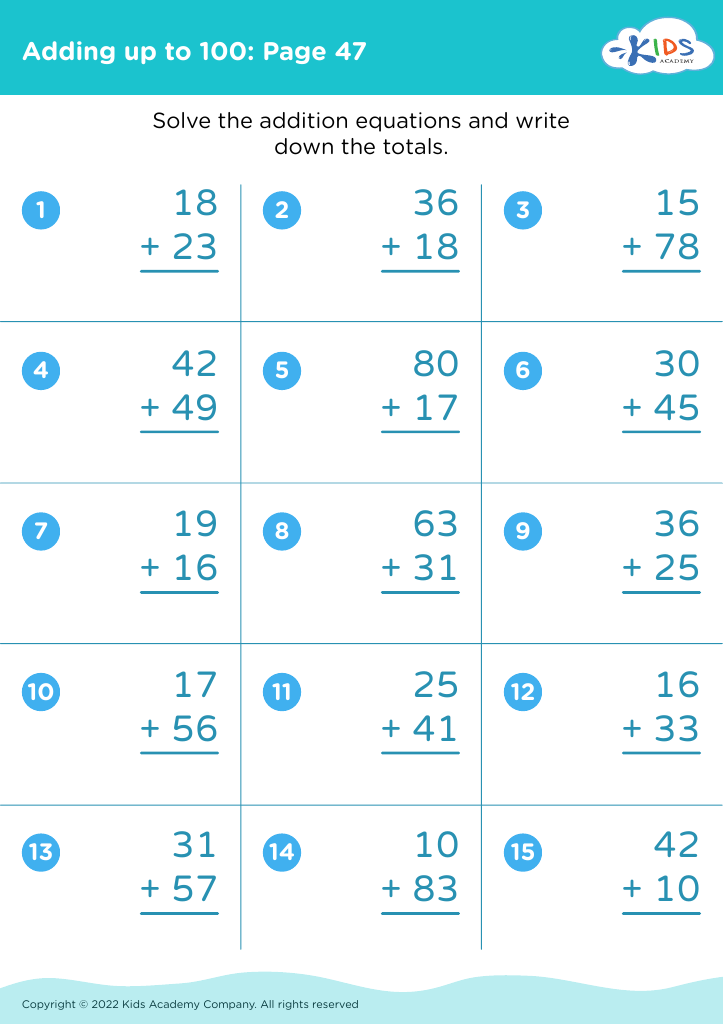
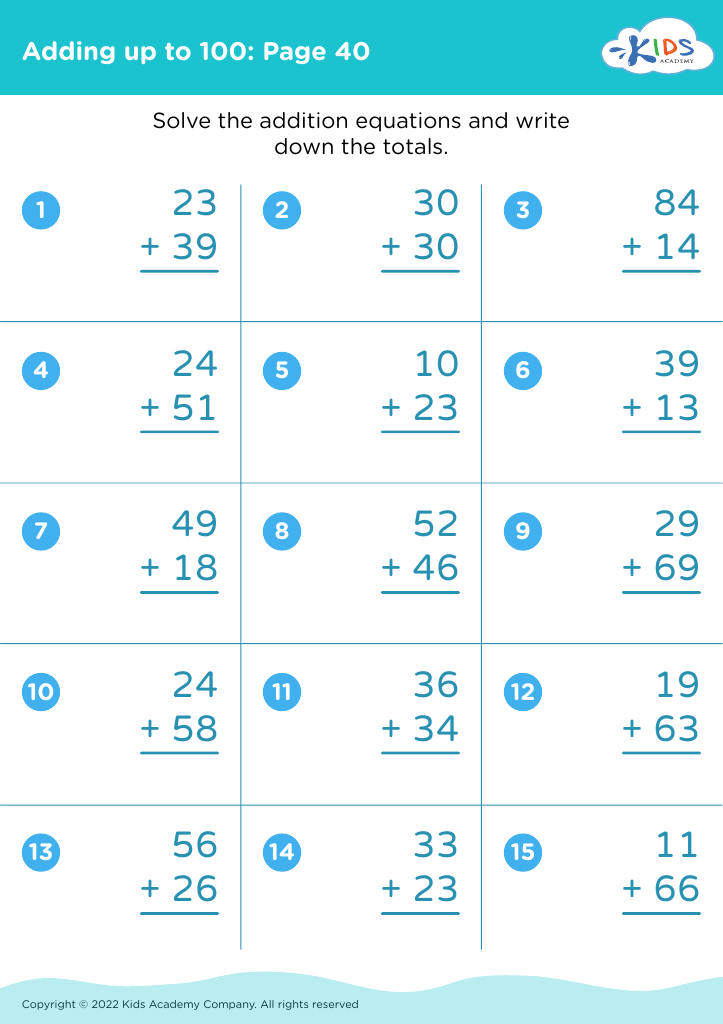
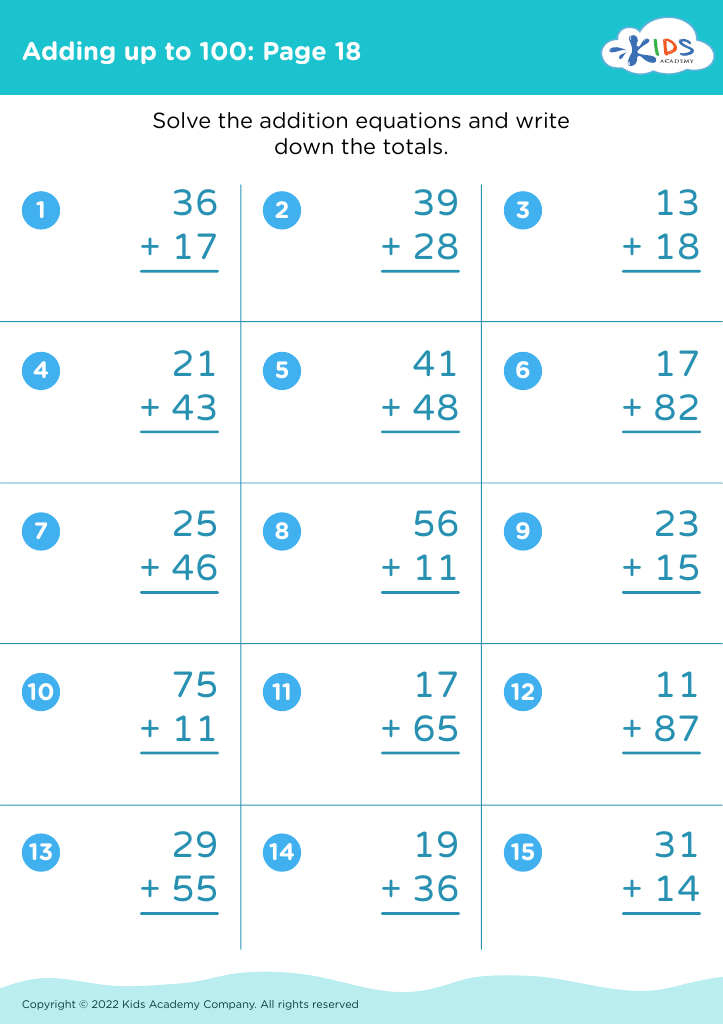
Enhance your child's fine motor skills with our comprehensive collection of worksheets designed for ages 8-9! Featuring 100 engaging activities, these resources integrate fun and learning while boosting addition skills up to 100. Each worksheet encourages precision and control through tracing numbers, cutting activities, and colorful illustrations. Our carefully curated materials make learning enjoyable, helping your child improve their dexterity and coordination seamlessly. As they solve problems and practice math concepts, they'll also develop essential hand-eye coordination and manipulation skills. Explore our diverse worksheet options today to support your child's growth and confidence in both math and fine motor development!


Developing fine motor skills is crucial for children aged 8-9, impacting various aspects of their education and daily life. Fine motor skills involve using small muscles in the hands and fingers to perform tasks like writing, cutting, and manipulating objects. These skills directly influence a child's ability to complete schoolwork effectively and participate in activities that require precision.
As children at this age transition from early elementary skills to more complex assignments, strong fine motor skills contribute to improved handwriting, art projects, and even computer skills. Additionally, these capabilities foster independence, allowing children to manage their personal belongings, complete homework, and engage in self-care activities without reliance on adults.
Furthermore, fine motor development plays a crucial role in cognitive growth and hand-eye coordination, which are fundamental for sports, music, and daily tasks. Parents and teachers should prioritize activities that enhance these skills, such as crafting, playing with building toys, or engaging in games that require dexterity. Encouraging practice in a supportive environment helps pave the way for academic success, social interactions, and lifelong skills, all of which enhance a child's confidence and overall well-being. Thus, investing time and resources in fine motor skill development is vital.