Addition Practice Adding up to 100 with Regrouping Worksheets for Ages 8-9
4 filtered results
-
From - To
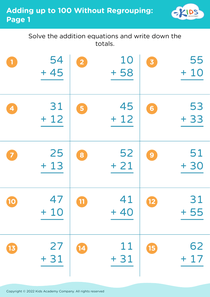
Boost your child's math skills with our engaging addition practice worksheets focused on adding up to 100 with regrouping, tailored for ages 8-9. These worksheets provide a variety of fun, interactive problems that challenge young learners to apply their addition skills while mastering the concept of regrouping. Ideal for reinforcing classroom learning or supporting at-home study, these worksheets encourage critical thinking and enhance number sense. With appealing designs and clear instructions, your child will enjoy improving their math abilities in no time. Explore our collection to help your child confidently conquer addition challenges and build a strong mathematical foundation!
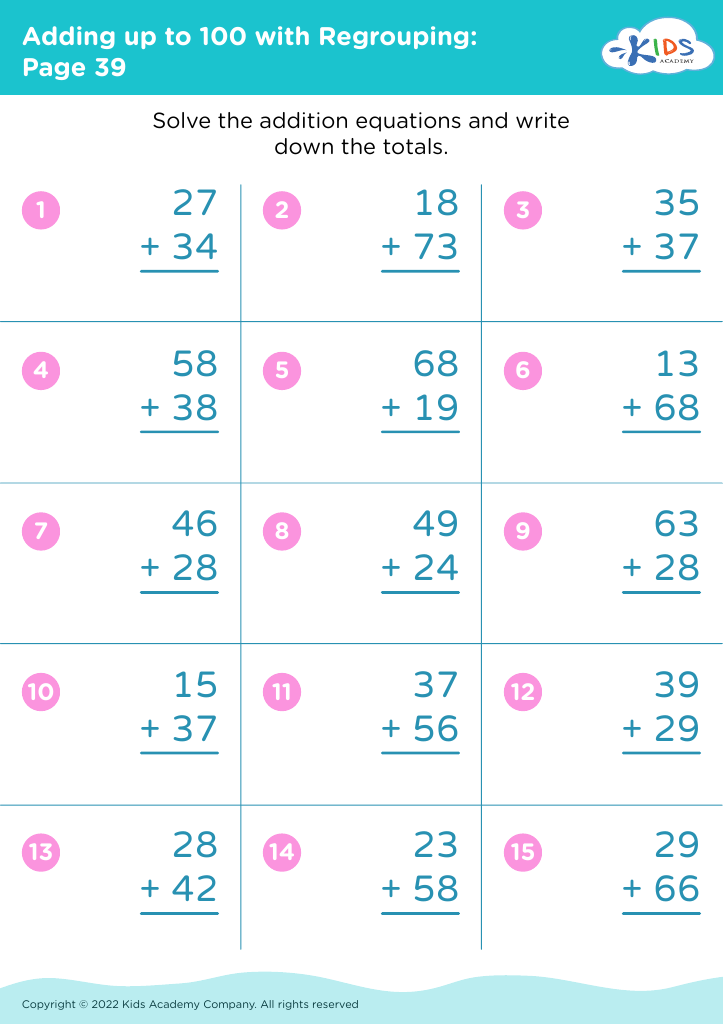
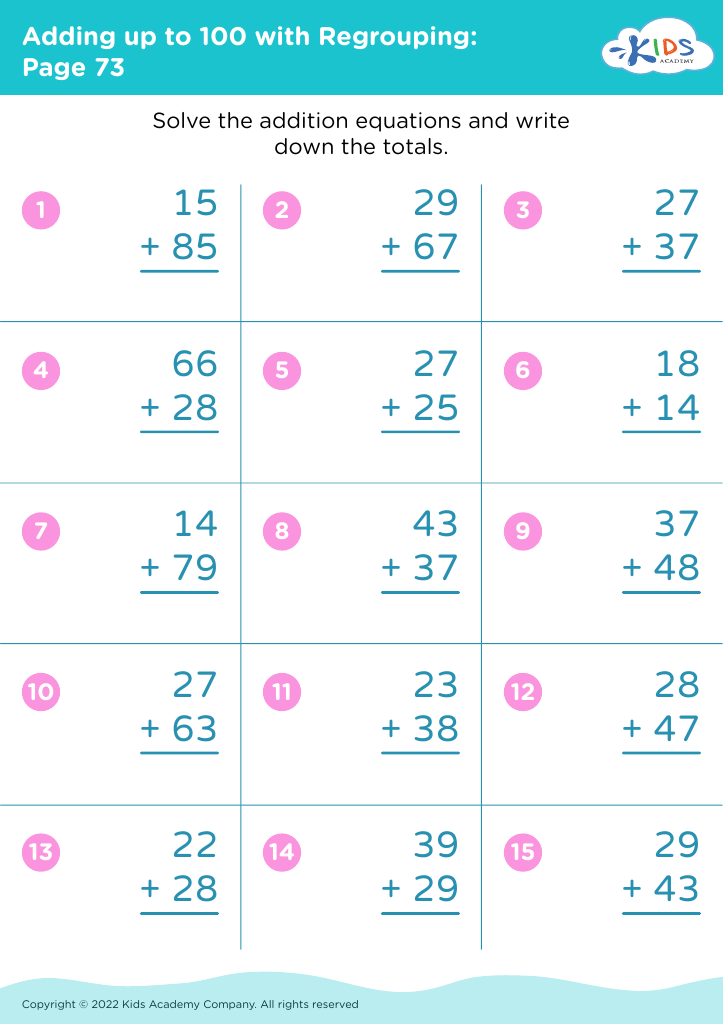
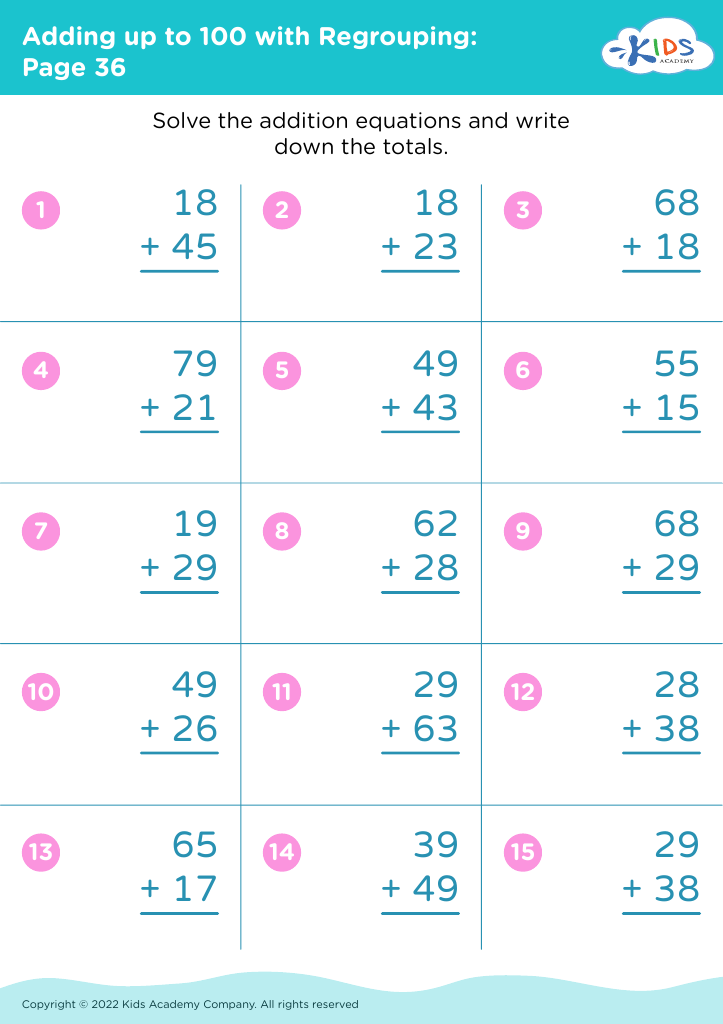
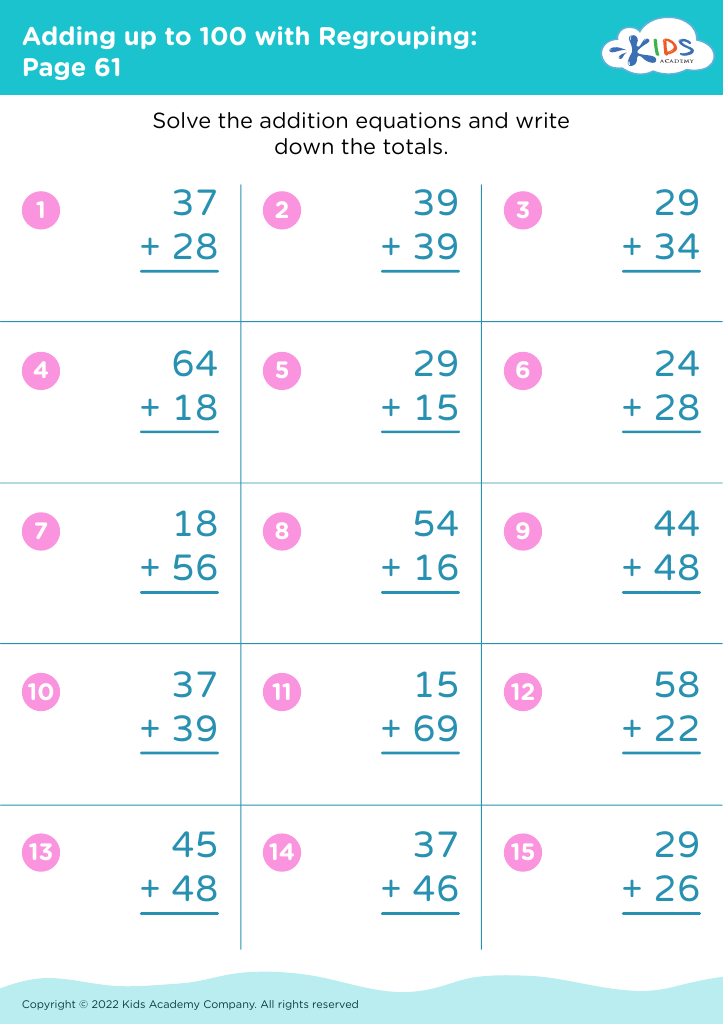




Addition practice, particularly addition up to 100 with regrouping, is crucial for children aged 8-9 for several reasons. Firstly, this foundational skill is essential not just for academic success but for everyday problem-solving. Mastering addition with regrouping prepares students for more complex mathematical concepts, such as subtraction and multi-digit operations which they will encounter later in their schooling.
Engaging in structured practice helps improve number sense and enhances cognitive skills, allowing students to recognize patterns and relationships among numbers. It also fosters confidence and independence in math, reducing anxiety particularly for students who may struggle. When teachers and parents emphasize this practice, they show the value of perseverance and effort, nurturing a growth mindset.
Moreover, the collaboration between parents and teachers in supporting math education builds a holistic learning environment. Practical activities can turn routine calculations into fun exercises, fostering a love for numbers. Involving parents in this process also strengthens their insight into their child’s learning journey, ensuring the student feels well-supported both at home and in school. Ultimately, consistent addition practice equips children with essential skills for future learning, setting a positive trajectory in their education and everyday applications of math.