Comparing Fractions Adding up to 100 with Regrouping Worksheets for Ages 8-9
9 filtered results
-
From - To
Explore our engaging "Comparing Fractions Adding up to 100 with Regrouping Worksheets" designed for children ages 8-9. These printables provide a fun and interactive way for young learners to grasp the concepts of fractions and addition with regrouping. Through a variety of exercises, kids learn to compare and equivalently convert fractions, preparing them for more advanced math skills. With colorful and age-appropriate activities, our worksheets effectively reinforce classroom learning, nurture problem-solving abilities, and build confidence in math. Perfect for home or school use, these resources are essential tools for enhancing your child's mathematical journey.
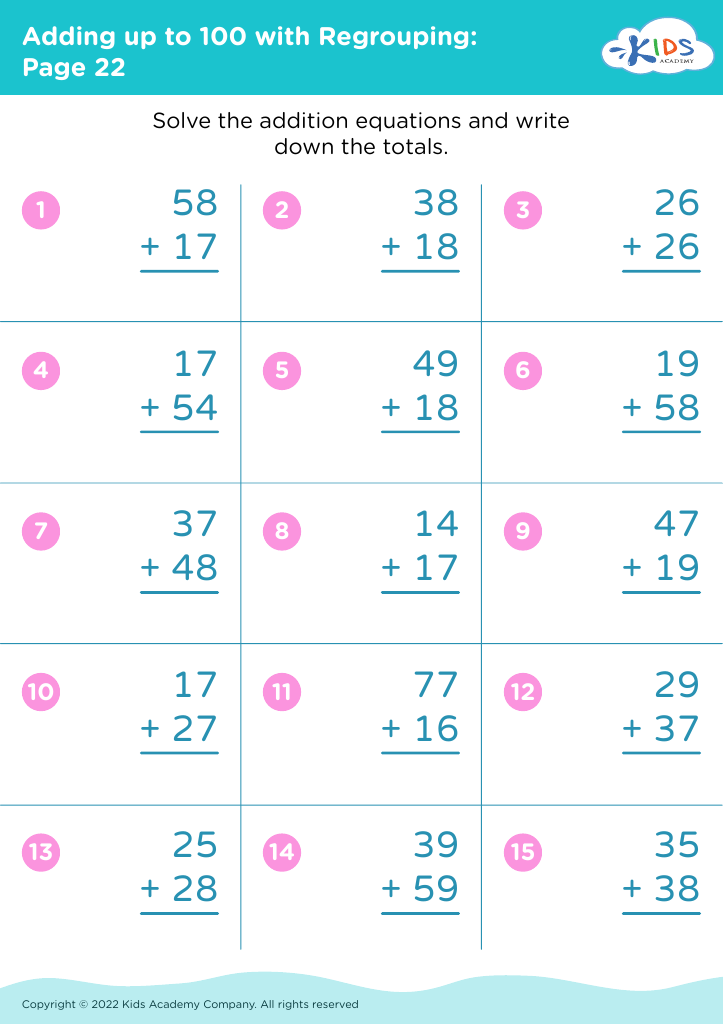
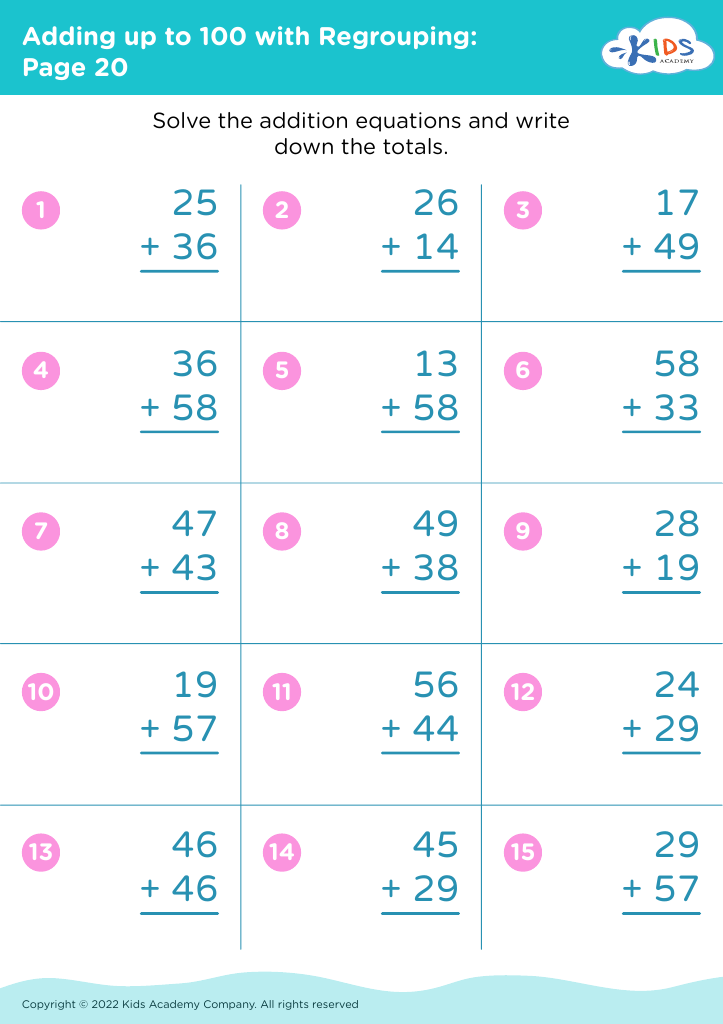
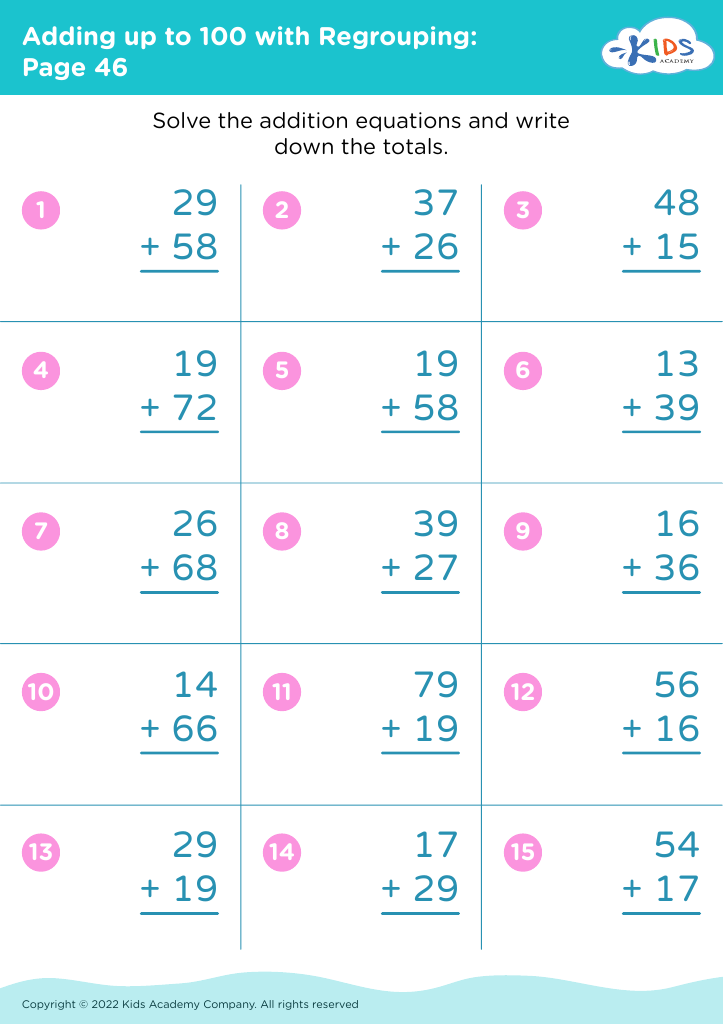
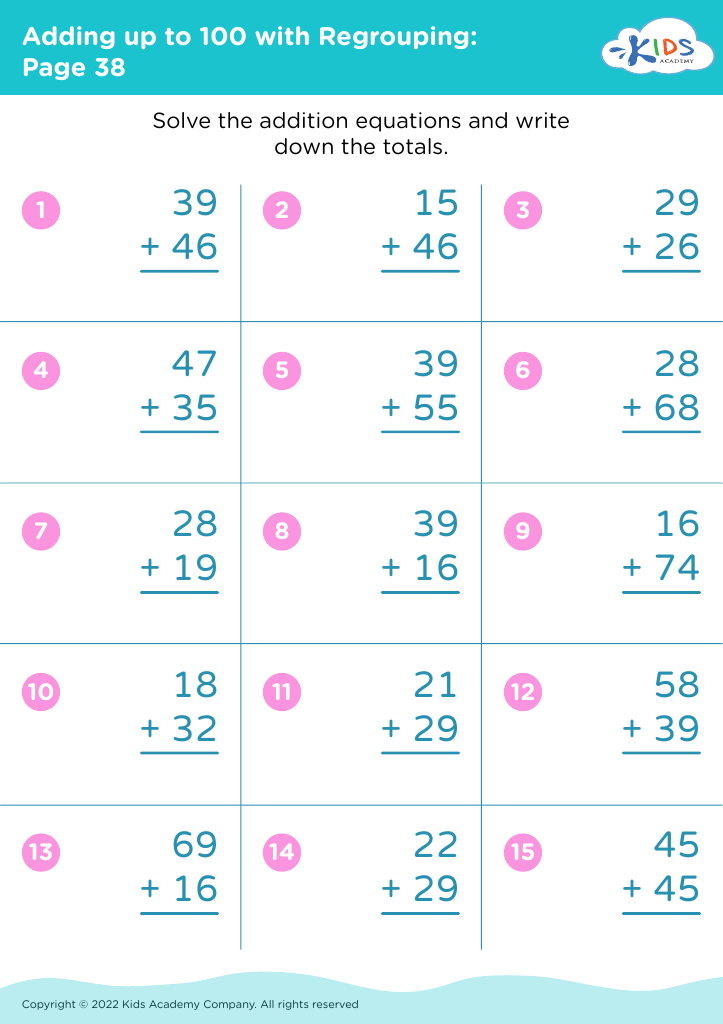
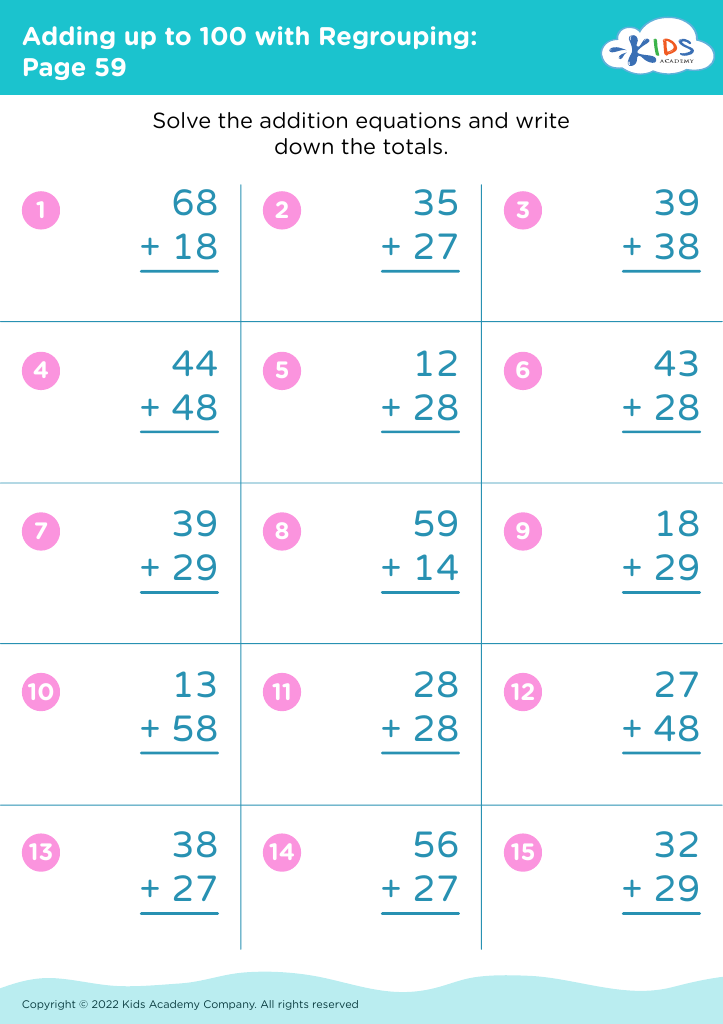
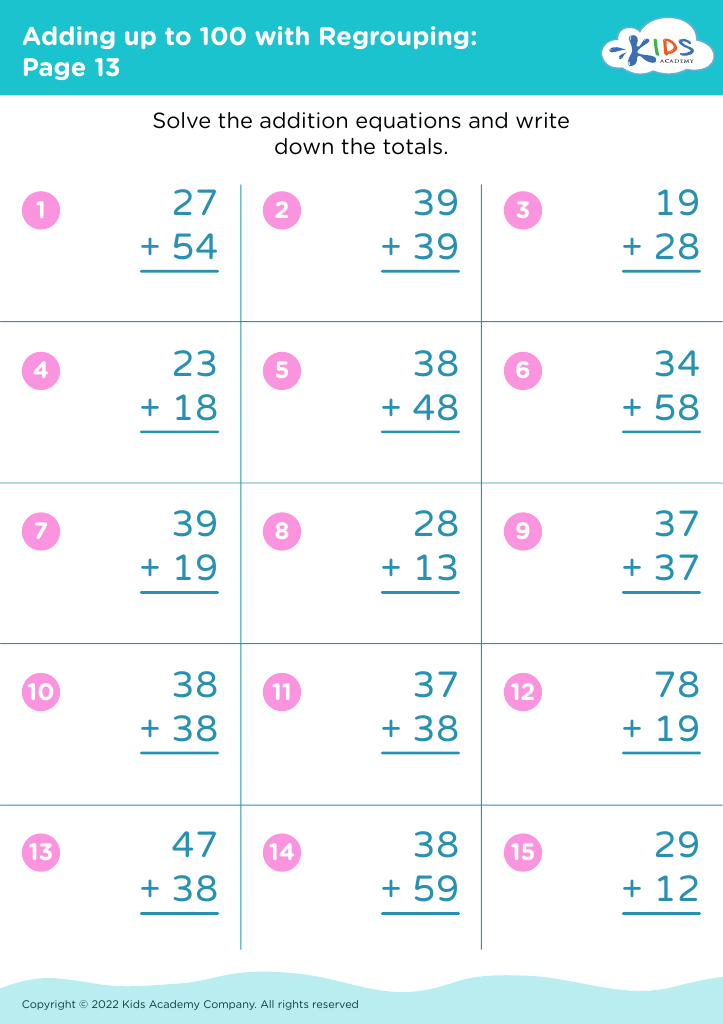
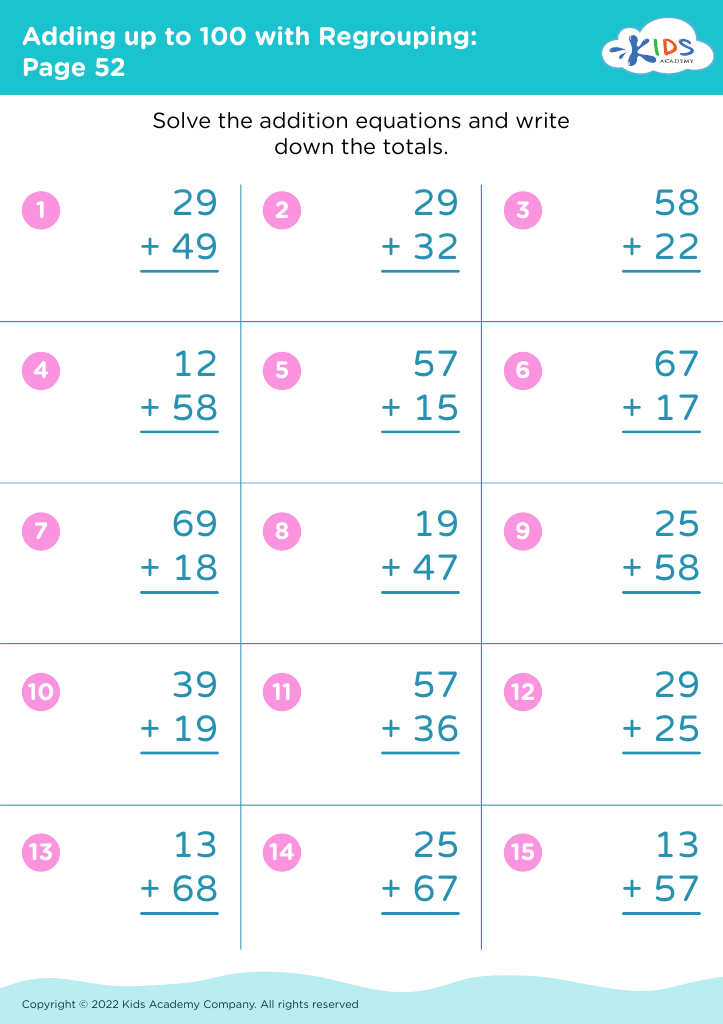
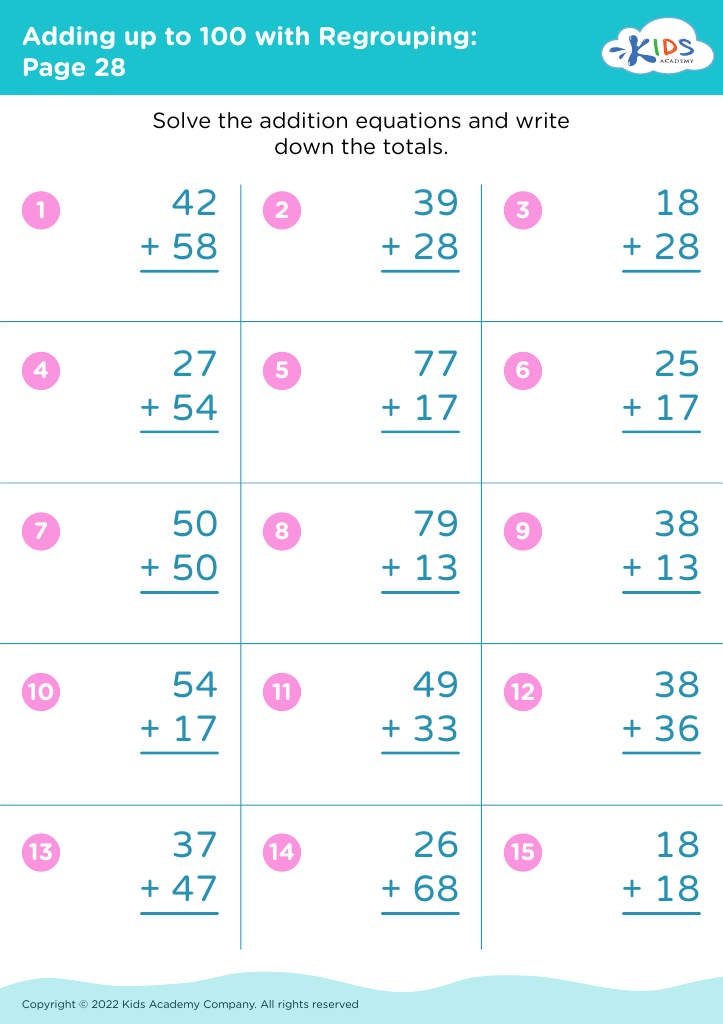
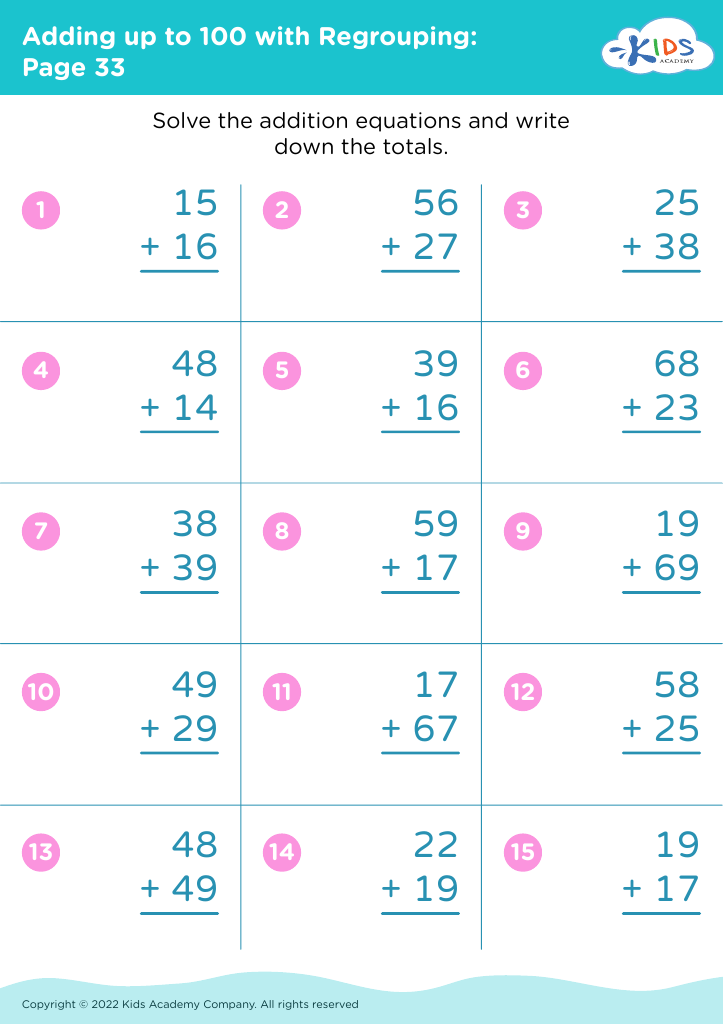




Understanding how to compare fractions and add numbers up to 100 with regrouping is crucial for children aged 8-9, as these skills lay the foundation for more advanced mathematical concepts. For parents and teachers, fostering proficiency in these areas is important for several reasons.
Firstly, comparing fractions helps children grasp the concept of parts of a whole, which is essential for understanding ratios, proportions, and even percentages later on. This skill promotes logical thinking and problem-solving, as children learn to reason about numerical relationships.
Adding numbers up to 100 with regrouping (carrying over numbers) is another critical skill. It ensures that children are comfortable working with larger numbers and understand place value deeply. Regrouping teaches strategic thinking and enhances computational fluency, allowing children to tackle more complex operations with confidence.
Early mastery of these topics also builds a child’s confidence in their mathematical abilities, which can positively influence their overall attitude toward the subject. Mathematics is cumulative by nature; the skills learned at a young age will be built upon year after year. Therefore, ensuring strong foundational skills in comparing fractions and regrouping sets children up for future success in mathematics and other subjects that rely on quantitative analysis.