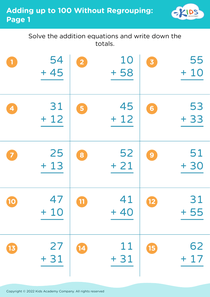
Counting practice Adding up to 100 with Regrouping Worksheets for Ages 8-9
5 filtered results
-
From - To
Enhance your child's math skills with our engaging Counting Practice: Adding Up to 100 with Regrouping Worksheets, designed specifically for ages 8-9. These comprehensive worksheets help students master addition techniques, including regrouping, through interactive exercises. Young learners will explore various strategies to solve addition problems, reinforcing their understanding of place value and improving their number sense. Each worksheet encourages practicing critical thinking and problem-solving skills, making math fun and accessible. Perfect for classroom use or homework assignments, our counting practice resources empower children to gain confidence in their math abilities. Download our worksheets today and watch your child's skills flourish!
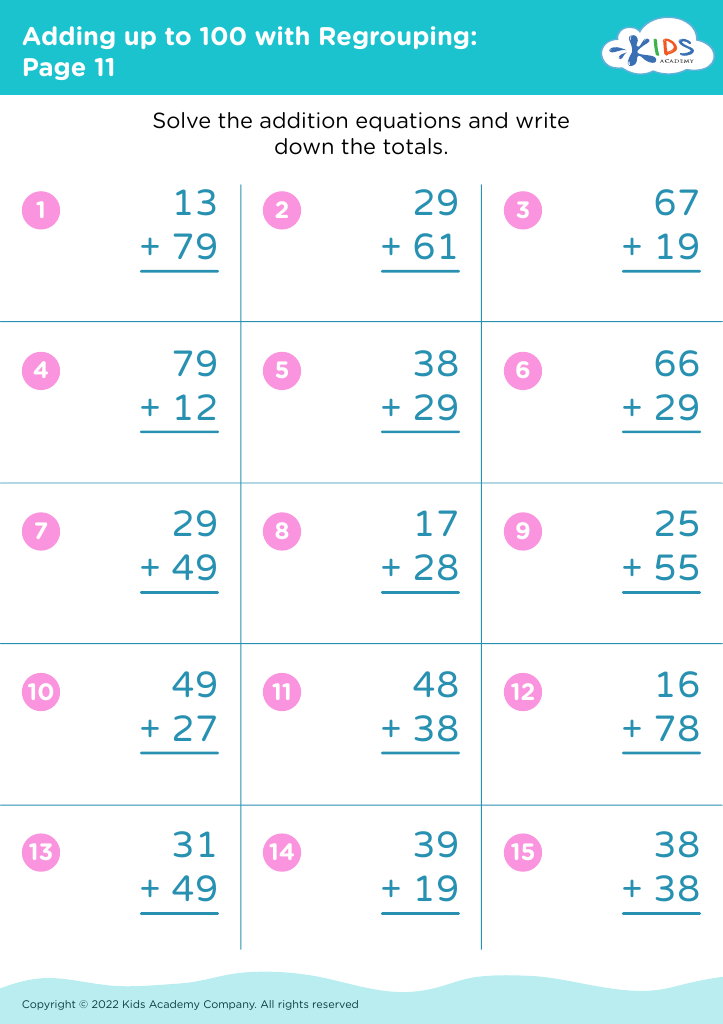
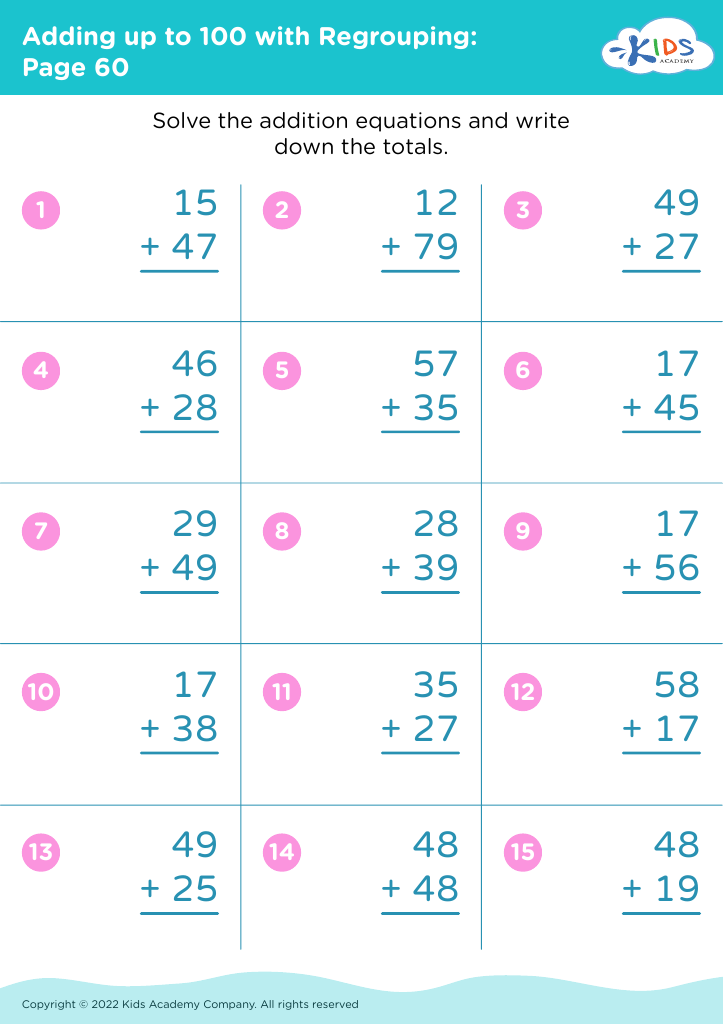
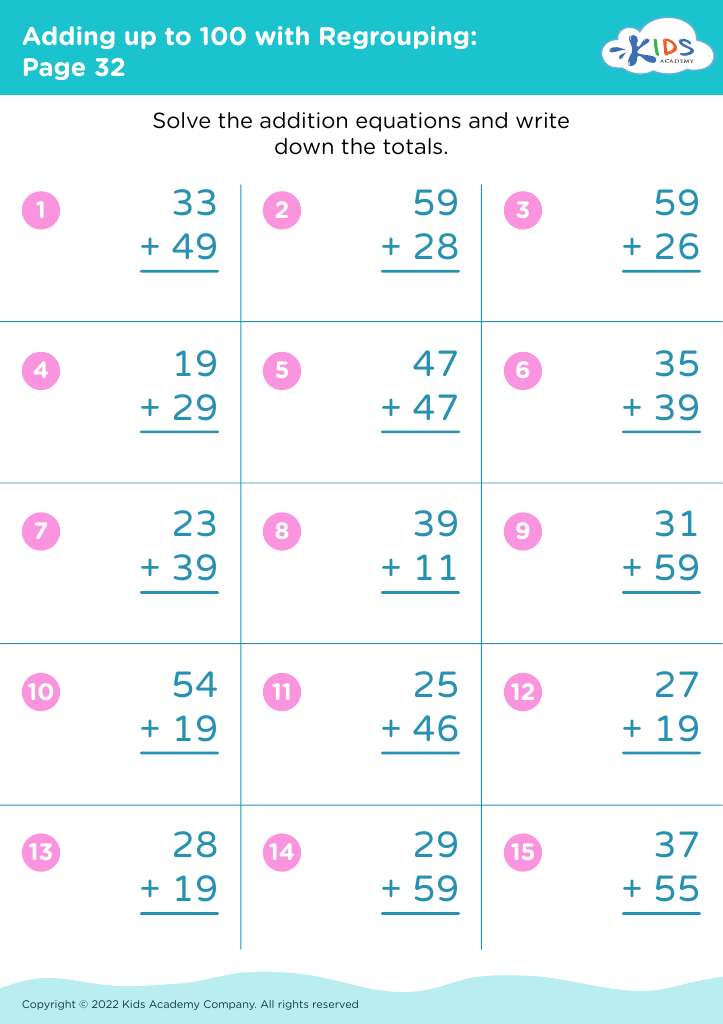
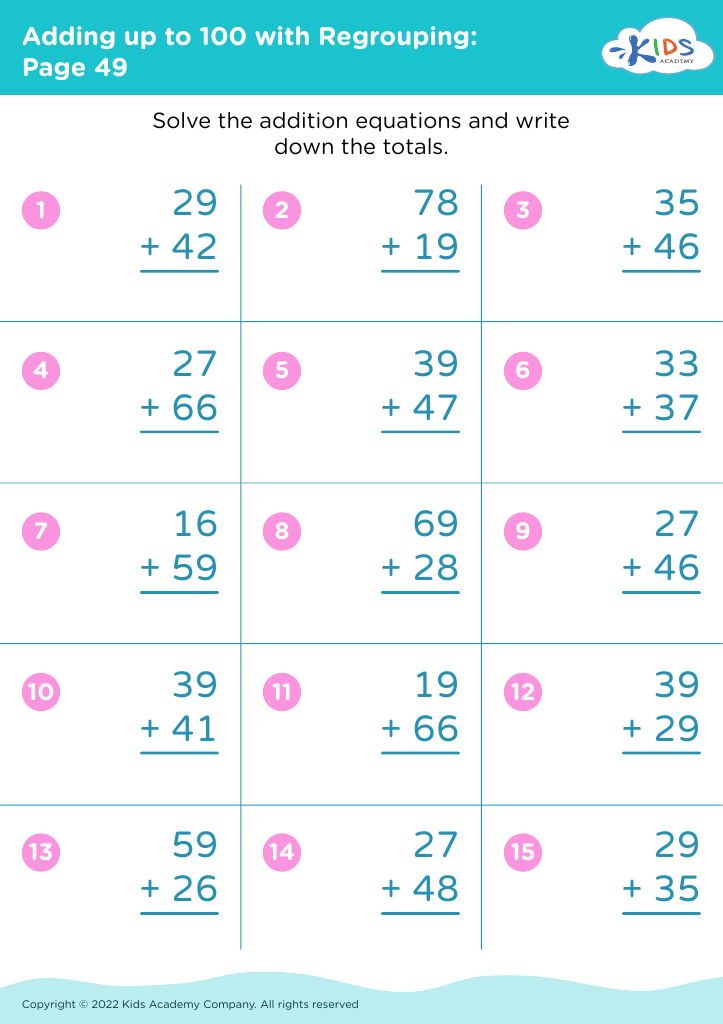
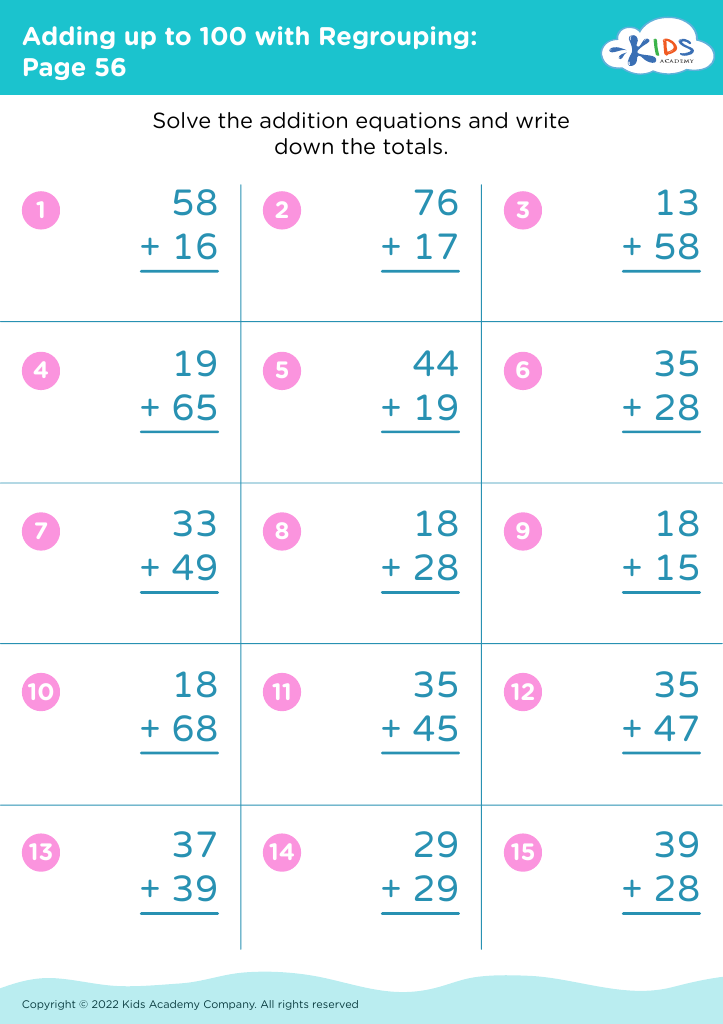




Counting practice, particularly "Adding up to 100 with Regrouping," is an essential skill for children aged 8-9. During these formative years, students typically transition from basic arithmetic to more complex mathematical concepts. Mastery of regrouping fosters a strong mathematical foundation, enhancing problem-solving skills and critical thinking.
When children learn to regroup, they develop an understanding of place value and the ability to manage larger numbers. This practice not only facilitates addition but also lays the groundwork for subtraction, multiplication, and division. Proficiency in these skills builds confidence, allowing children to approach more challenging math concepts without fear.
Moreover, proficiency in this area can influence a child's academic trajectory. A solid grasp of regrouping helps students perform better on assessments, which often underpin a student's overall assessment and opportunities for advanced study. Parents and teachers should prioritize this skill due to its pervasive impact on children's academic success.
Fostering joy and interest in math through engaging, hands-on activities can significantly motivate children. Involving them in counting games or real-life scenarios strengthens their skills while making learning enjoyable. Thus, supporting students in mastering counting and regrouping is vital for their academic growth and lifelong learning in mathematics.