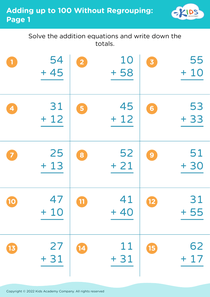
Fraction comparison Adding up to 100 with Regrouping Worksheets for Ages 8-9
3 filtered results
-
From - To
Explore our engaging "Fraction Comparison Adding Up to 100 with Regrouping" worksheets designed for ages 8-9! With a focus on enhancing young learners' math skills, these worksheets offer various exercises that encourage students to compare, manipulate, and regroup fractions. Each activity supports hands-on practice, allowing children to master the concepts of fraction comparison while reinforcing their understanding of addition up to 100. Our worksheets are visually appealing and age-appropriate, fostering both comprehension and confidence in young mathematicians. Help your child develop critical thinking skills and a solid foundation in mathematics—perfect for classroom use or home study! Get started today!
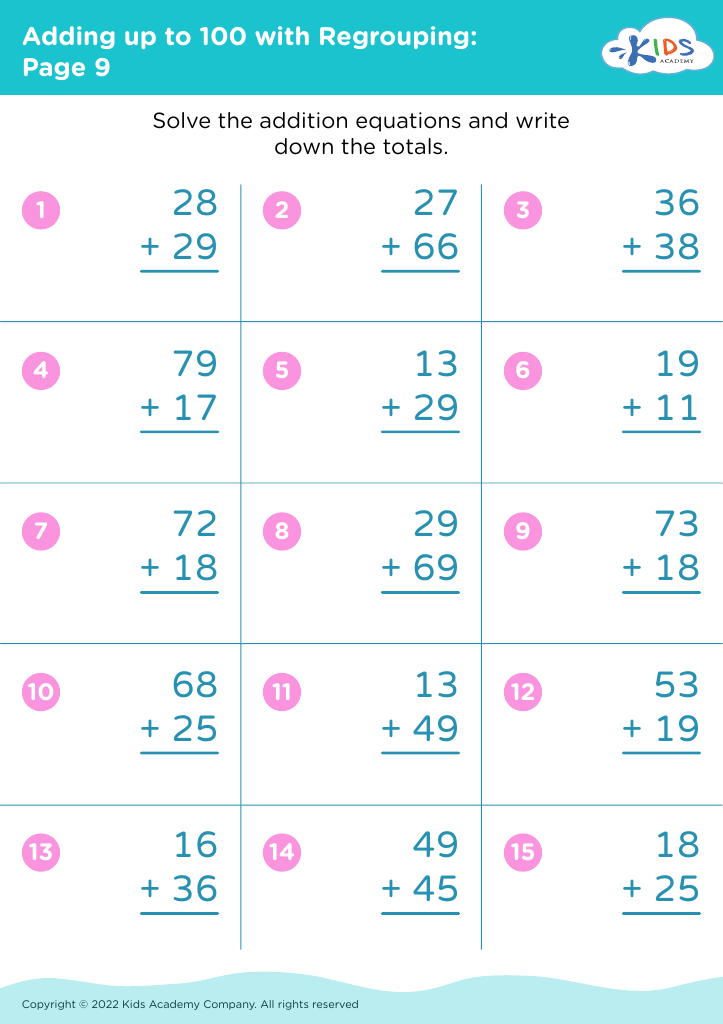
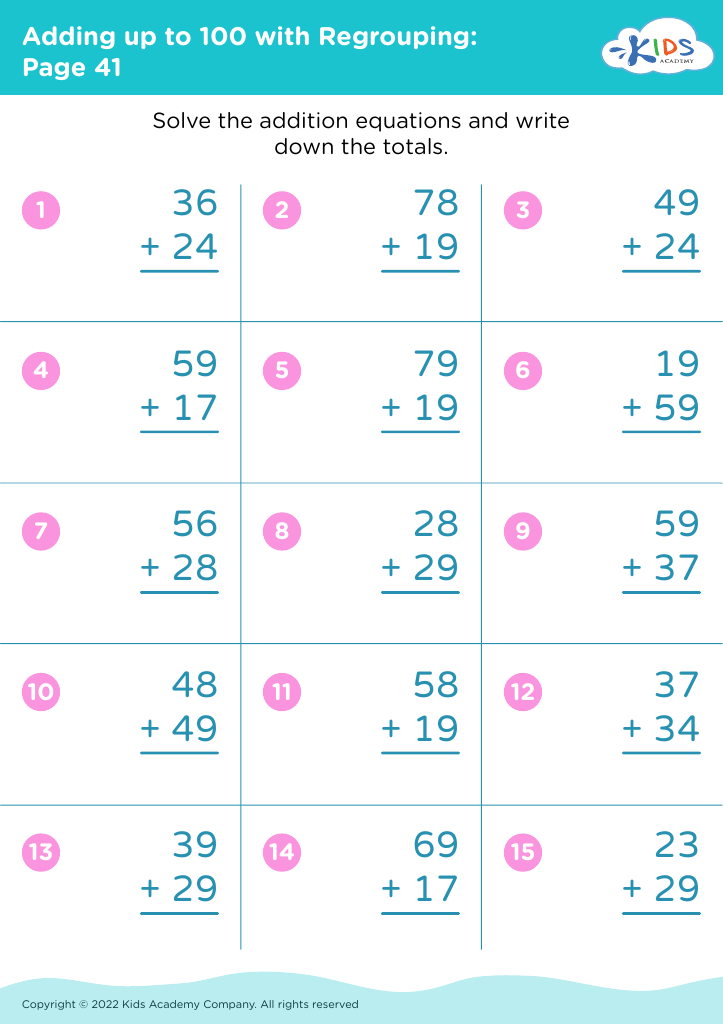
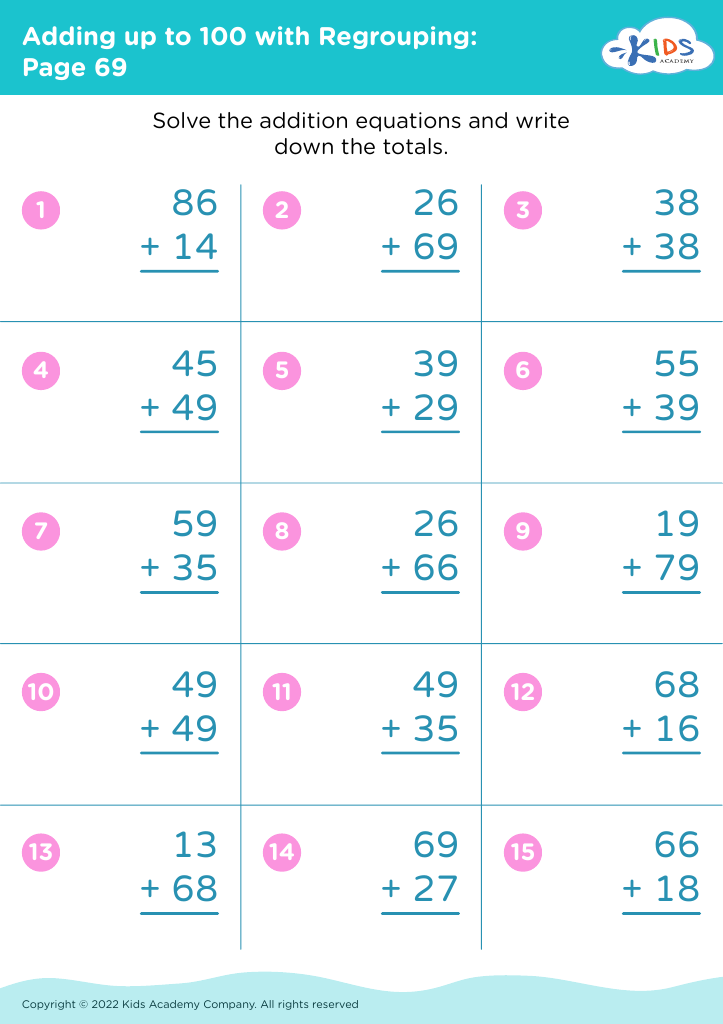




Understanding fraction comparison and regrouping in addition is essential for children aged 8-9 as it lays a crucial foundation for their mathematical skills. At this age, children begin to encounter more complex concepts that are vital for their future academic success.
First, mastering fraction comparison equips children with the ability to make sense of quantities, which is fundamental in everyday decision-making, such as measuring ingredients in cooking or splitting a bill. Understanding fractions also enhances their number sense.
Secondly, regrouping during addition teaches flexibility in thinking and problem-solving skills. It encourages students to explore different pathways to a solution and fosters perseverance and resilience in tackling challenging problems. When children learn to regroup, they gain a deeper comprehension of place value and numerical relationships.
Moreover, these concepts directly align with real-life scenarios, making learning more applicable and engaging. Parents and teachers should prioritize these topics to cultivate students' critical thinking and boost their confidence in mathematics. Ultimately, solid fractional and addition skills contribute to lifelong mathematical understanding, benefiting children not just academically but in everyday situations, preparing them for more advanced topics in high school and beyond.