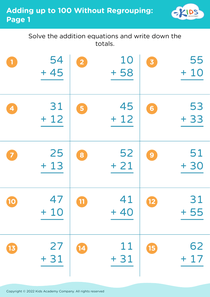
Fraction simplification Adding up to 100 with Regrouping Worksheets for Ages 8-9
7 filtered results
-
From - To
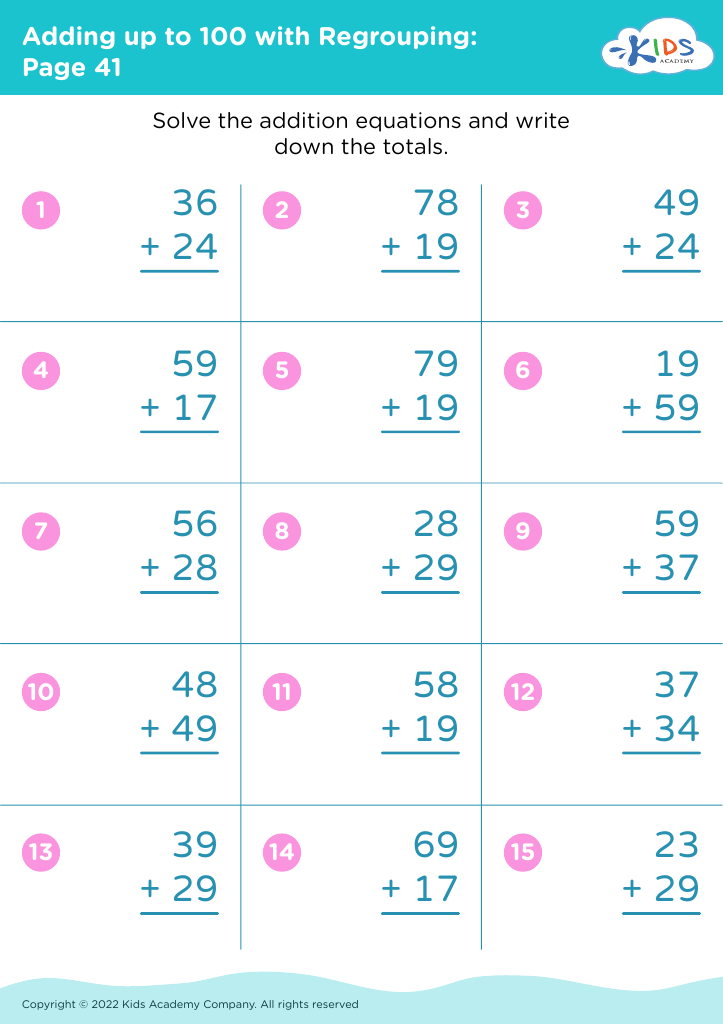
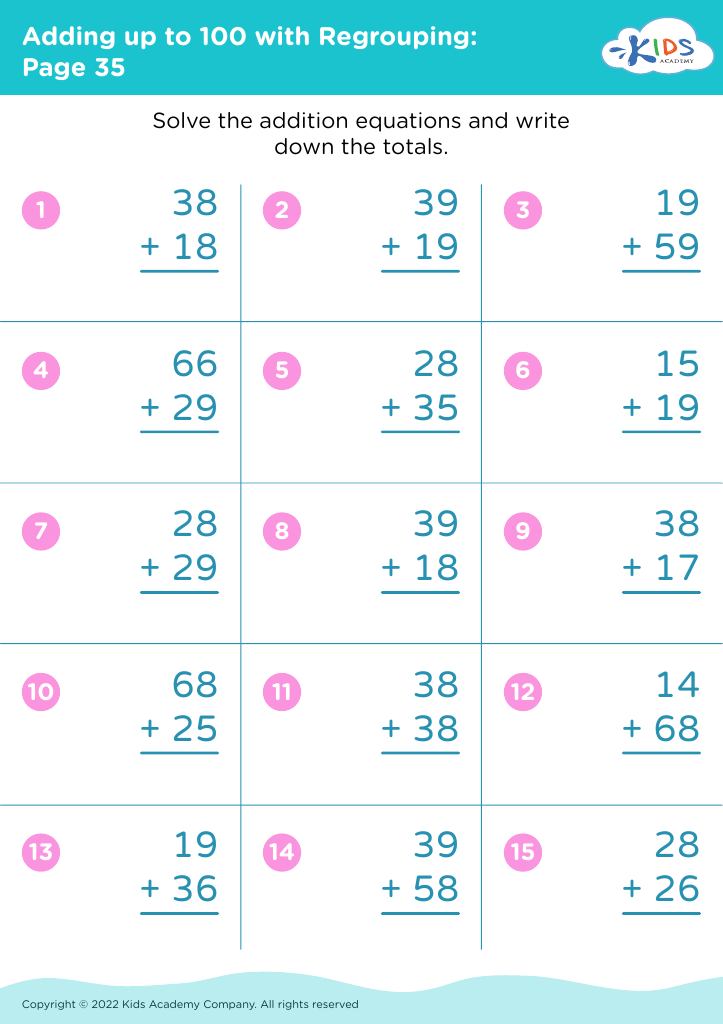
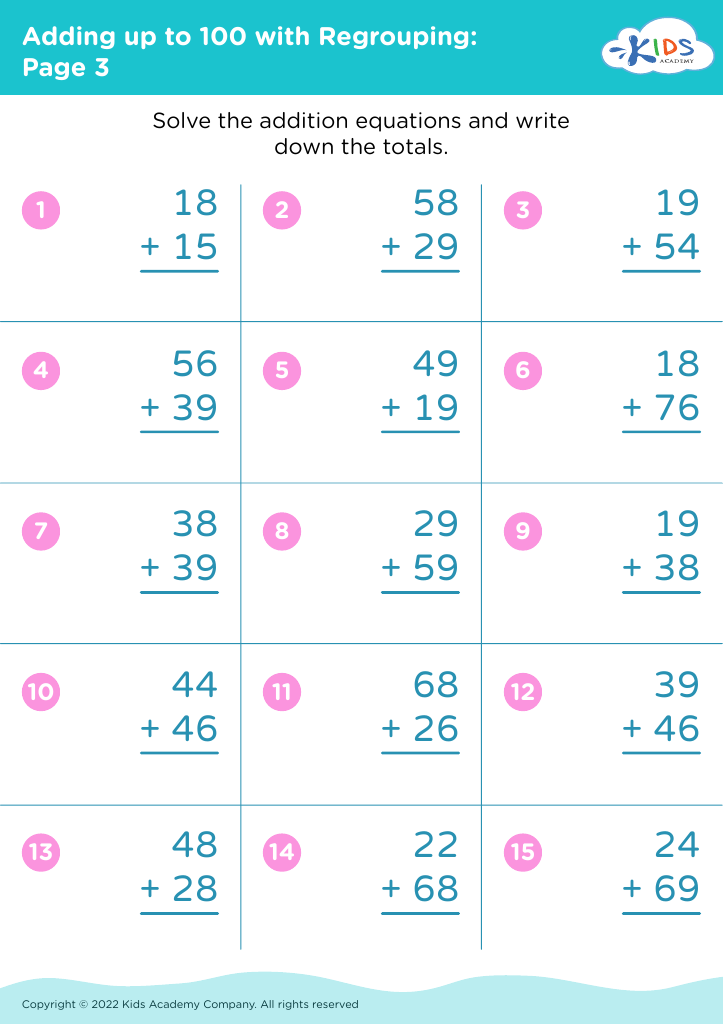
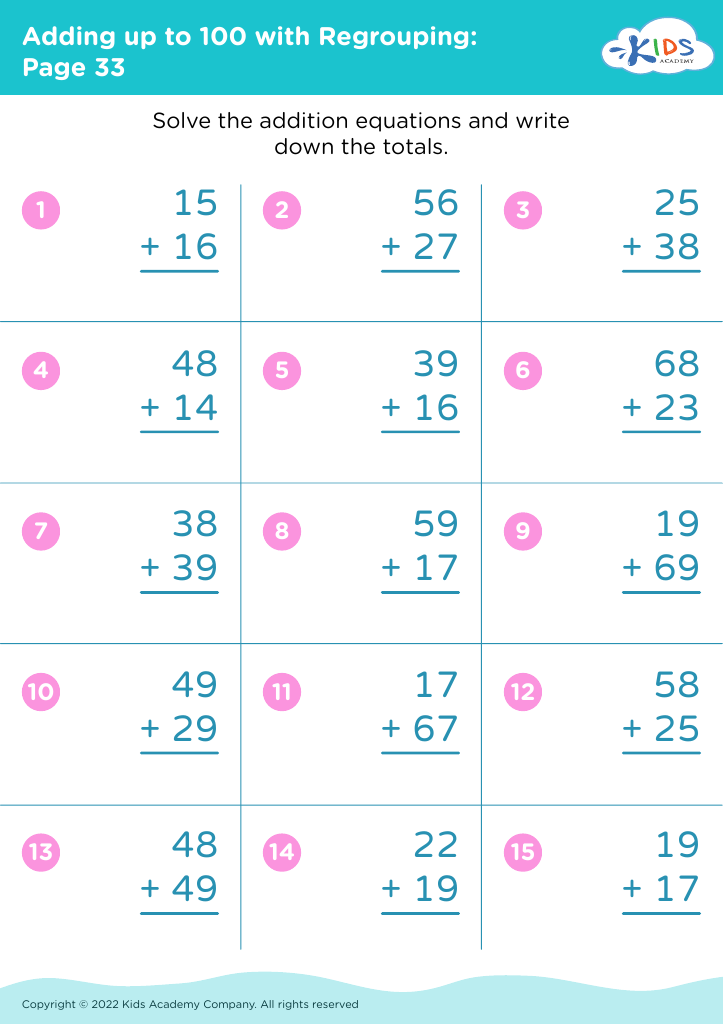
Foster your child's mathematical development with our "Fraction Simplification with Addition up to 100 and Regrouping Worksheets" designed for ages 8-9. Perfect for third graders, these worksheets offer engaging activities to simplify fractions and practice addition with regrouping. By focusing on both concepts simultaneously, kids deepen their understanding of fractions and honing their addition skills. Each worksheet is crafted to build confidence and encourage independent problem-solving. Ideal for classroom use or extra practice at home, these printable resources provide a solid foundation in critical math skills essential for future success. Start your child's journey in mastering fractions and addition today!
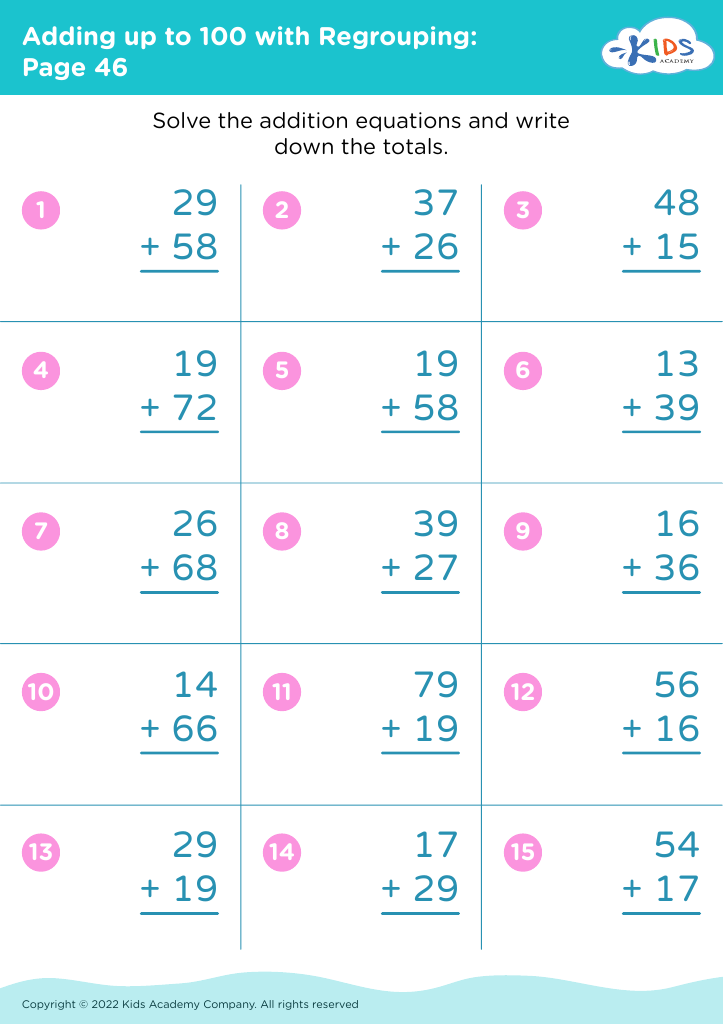
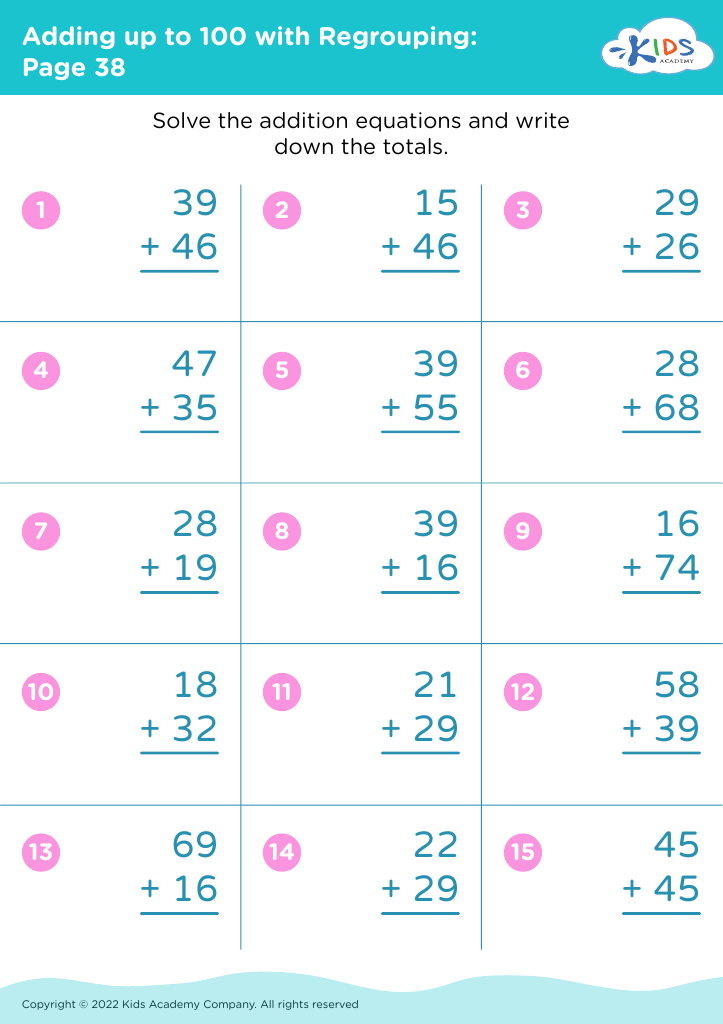
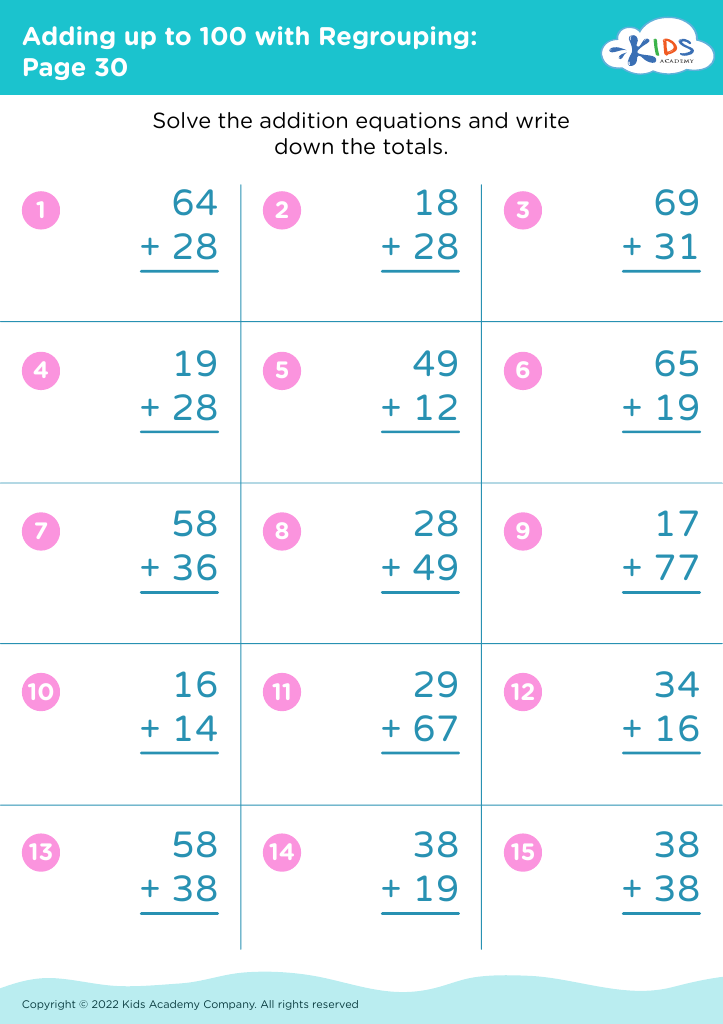




Fraction simplification and addition with regrouping are foundational skills that pave the way for future success in mathematics and everyday problem-solving. By ensuring that children, aged 8-9, master these concepts, parents and teachers lay the groundwork for more complex operations that students will encounter in higher grades.
Fraction simplification minimizes fractions to their simplest form, making them easier to work with and understand. This skill is crucial as it forms the basis for performing more advanced operations with fractions, such as addition, subtraction, multiplication, and division. Simplifying fractions enhances a child's ability to recognize equivalence, improving their number sense and making complex calculations more intuitively manageable.
Addition with regrouping complements fractional understanding by reinforcing fundamental arithmetic skills. Regrouping is necessary for adding larger numbers without confusion, fostering an ability to mentally manage problems efficiently. When young students practice adding up to 100 with regrouping, they enhance their comprehension of place value, an essential concept that supports future mathematical learning, from fractions to algebra.
By integrating these skills at an early age, parents and teachers boost children's confidence and proficiency in math. This not only helps them excel academically but also equips them with critical thinking capabilities that are valuable in everyday life. Prioritizing these fundamental skills ensures a strong mathematical foundation that will support continuous learning and academic achievement.