Practice problem-solving Adding up to 100 with Regrouping Worksheets for Ages 8-9
3 filtered results
-
From - To
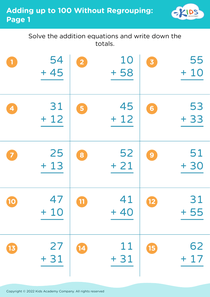
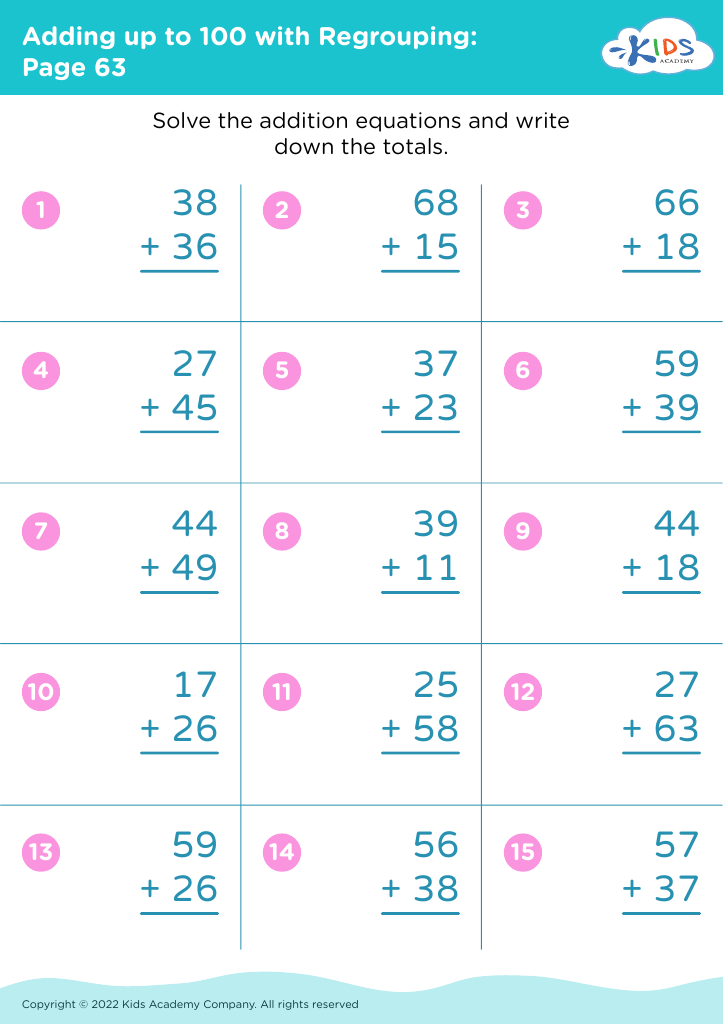
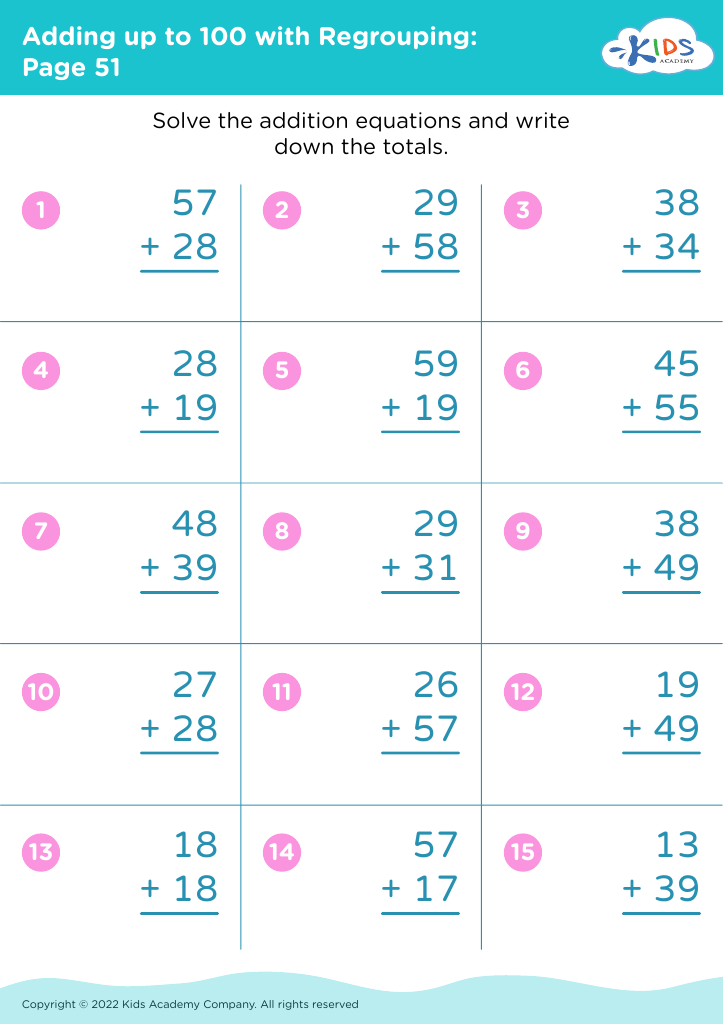
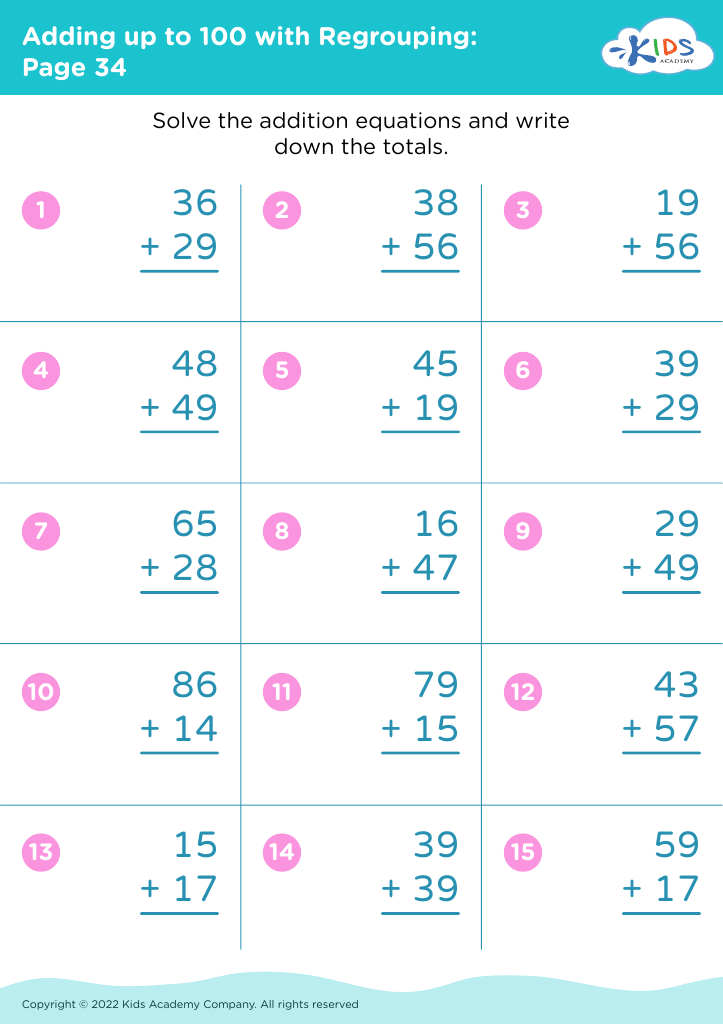
Enhance your child's math skills with these engaging "Practice Problem-Solving Adding up to 100 with Regrouping Worksheets" designed for ages 8-9. Each worksheet provides targeted exercises to help students master addition with regrouping, an essential component of early math education. Through practical problem-solving scenarios, kids will develop their ability to add two-digit numbers efficiently while improving their confidence in handling more complex arithmetic tasks. These worksheets are perfect for classroom use or additional home practice, helping young learners solidify their understanding and achieve math success. Download now and empower your child to excel in basic mathematical operations!




Encouraging children aged 8-9 to practice problem-solving with addition up to 100, including regrouping, is crucial for several reasons. First, it builds a solid mathematical foundation. Mastering this skill sets the stage for more advanced arithmetic, including subtraction, multiplication, and division, as well as problem-solving strategies they'll encounter in higher grades.
Second, it helps develop critical thinking and analytical skills. As children solve problems involving regrouping, they learn to approach complex tasks methodically, break them down into manageable parts, and practice patience and persistence—all valuable life skills beyond mathematics.
Third, it boosts confidence. When children achieve success in these tasks, it fosters a positive attitude towards learning and builds their self-esteem. This increased confidence makes them more willing to tackle new and challenging concepts.
Additionally, understanding addition with regrouping is a practical life skill. It underpins many everyday activities, such as handling money, measuring quantities, and following recipes.
Finally, early proficiency in mathematics, particularly in essential operations like addition with regrouping, has been linked to better academic performance and greater success in future STEM (science, technology, engineering, and mathematics) pursuits. By focusing on this fundamental skill now, parents and teachers can ensure children are well-equipped for future academic and personal success.