Shape Recognition Adding up to 100 with Regrouping Worksheets for Ages 8-9
5 filtered results
-
From - To
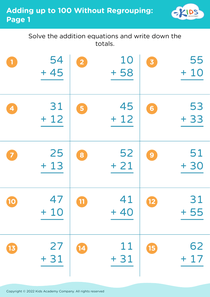
Discover our engaging "Shape Recognition Adding up to 100 with Regrouping Worksheets" tailored for children aged 8-9. These worksheets seamlessly blend math and art, enhancing students' understanding of addition and shape identification in a fun, interactive way. Perfect for reinforcing concepts of regrouping while promoting critical thinking skills, these activities encourage children to recognize and classify various shapes as they practice adding numbers up to 100. Each worksheet provides clear instructions and vibrant illustrations to captivate young learners. Empower your students with these educational tools designed to foster a love for mathematics while developing essential shape recognition skills!
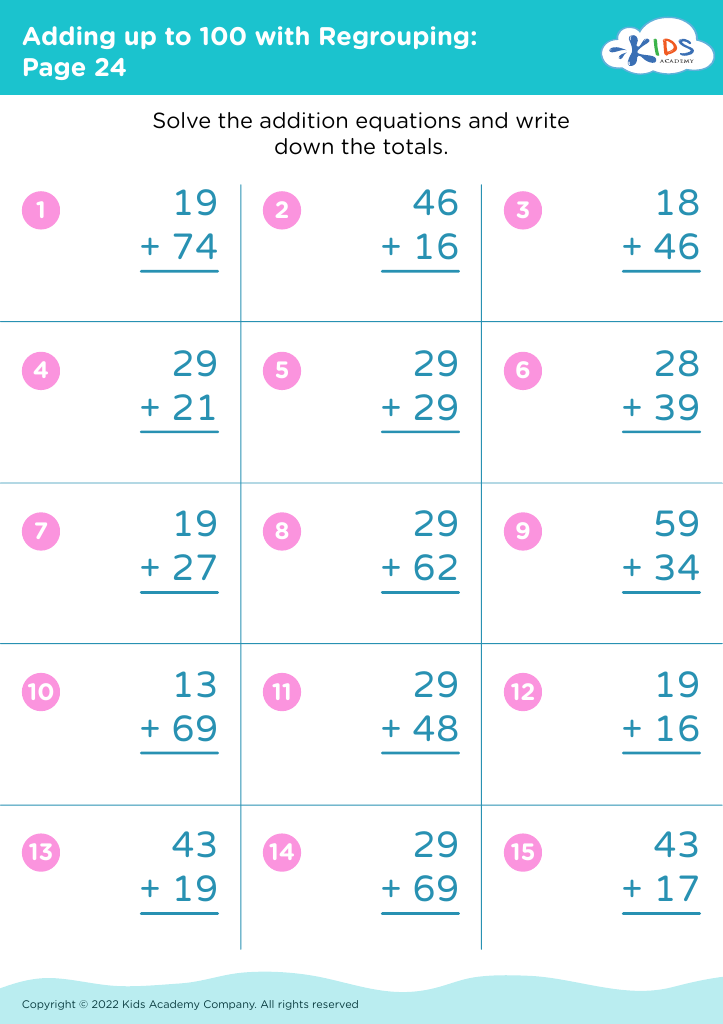
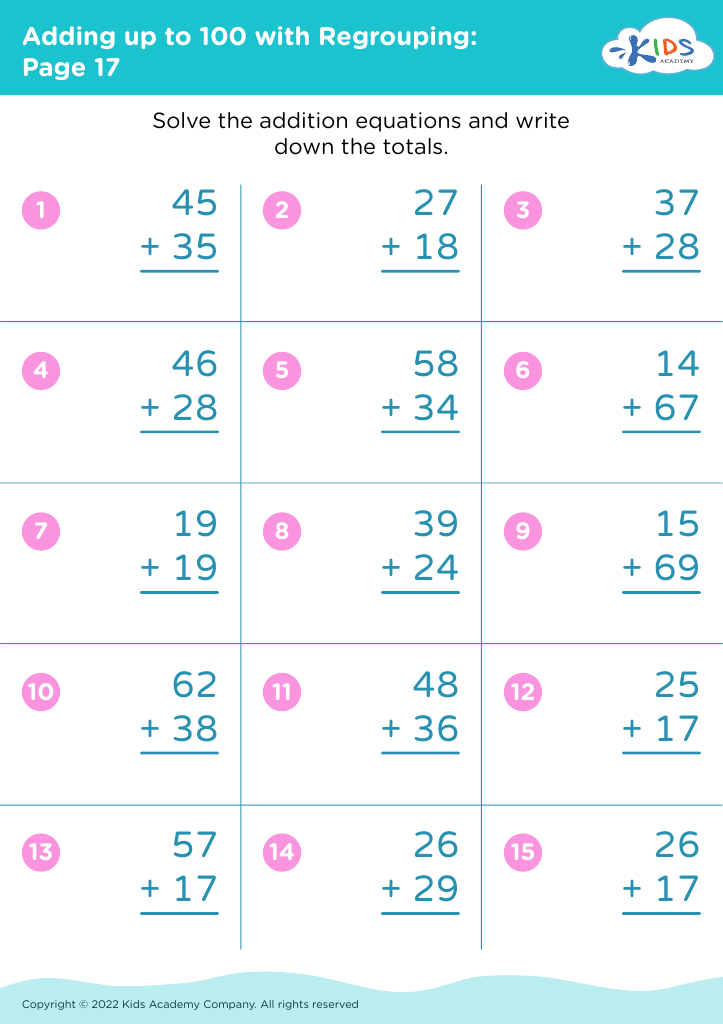
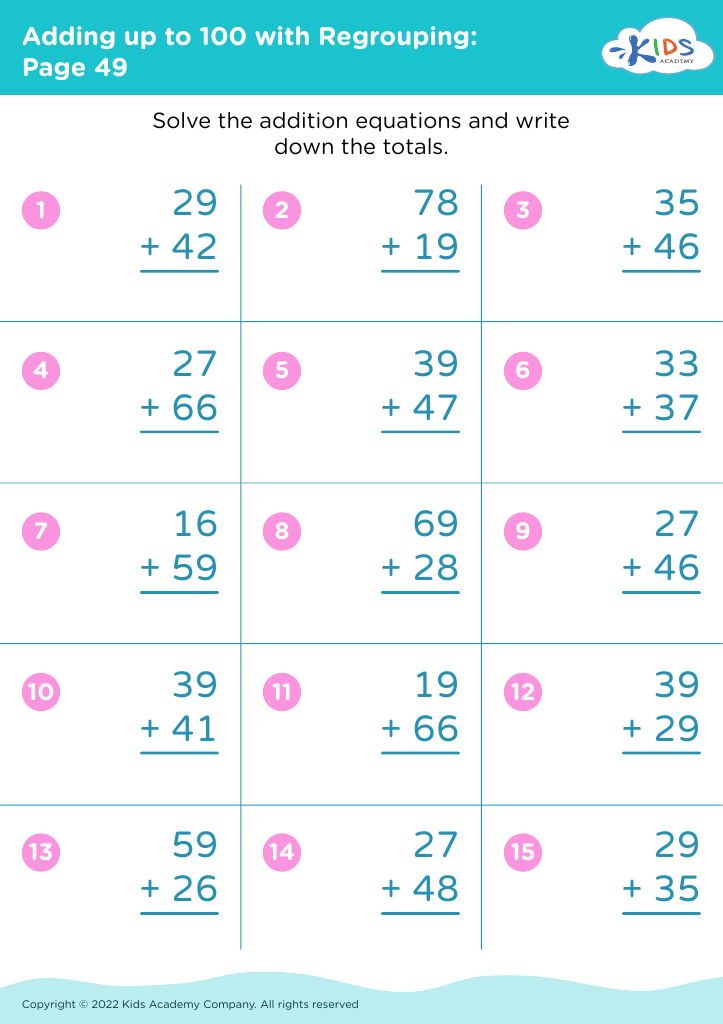
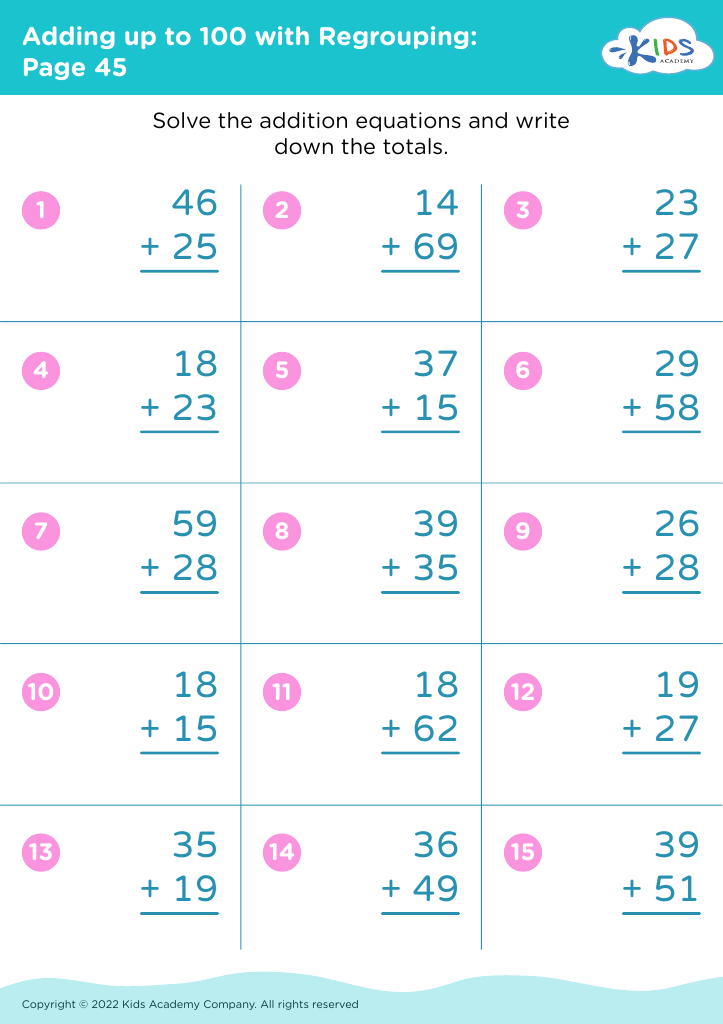
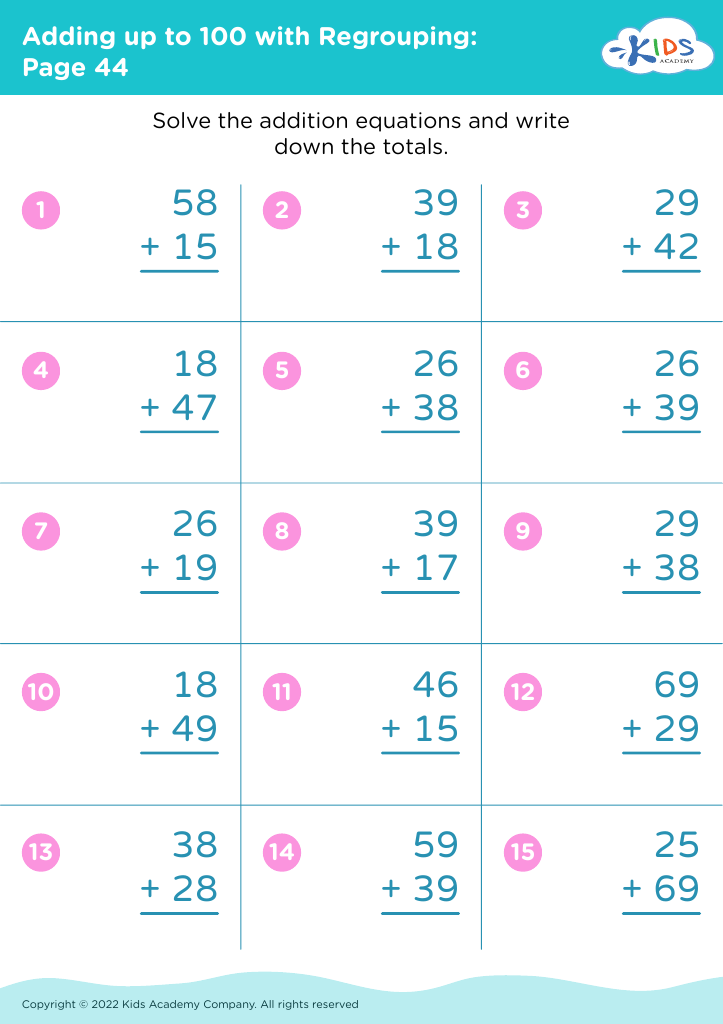




Shape recognition and the ability to add up to 100 with regrouping are fundamental skills for children ages 8-9, bridging geometry and arithmetic, both crucial for their education and cognitive development. Understanding shapes fosters spatial awareness, a skill that lays the groundwork for advanced mathematics and problem-solving. Recognizing shapes in different contexts—like everyday objects—enhances critical thinking and observational skills, beneficial for overall learning.
On the other hand, mastering addition with regrouping enables children to tackle more complex mathematical problems with confidence. It fosters numerical fluency, which is essential not just for math classes but also for everyday financial literacy an important life skill. Familiarity with regrouping strengthens their understanding of the base-ten system, enhancing their ability to work with larger numbers in the future.
Furthermore, these skills promote cooperative learning when parents and teachers create supportive environments for practice. Engaging students in activities that integrate shape recognition with math strengthens their understanding through hands-on experiences. By prioritizing both skills, parents and teachers can help children build a strong foundation in critical thinking, problem-solving, and confidence in their abilities—features that are indispensable in their academic journey and future endeavors.