Filters

16 filtered results

Clear all filters
Favorites
With answer key
Interactive

16 filtered results

Difficulty Level

Grade


Enhance your child's math skills with our "Understanding Fractions Adding up to 100 with Regrouping" worksheets, designed for ages 8-9. These engaging resources help young learners grasp the concept of fractions while practicing addition up to 100 with regrouping. By using colorful visuals and interactive exercises, children will build a solid foundation in fraction comprehension and addition strategies. Our worksheets promote critical thinking and problem-solving skills, making math fun and accessible. Perfect for classroom use or home study, these worksheets will encourage your child to explore numbers confidently. Start fostering a love for math today with our easy-to-follow, skill-building materials!
Check out this FREE Trial Lesson on Adding up to 100 with Regrouping for age 8-9!

Match Exactly the Same

Favorites
With answer key
Interactive
  • 8-9
  • Understanding fractions
  • Adding up to 100 with Regrouping
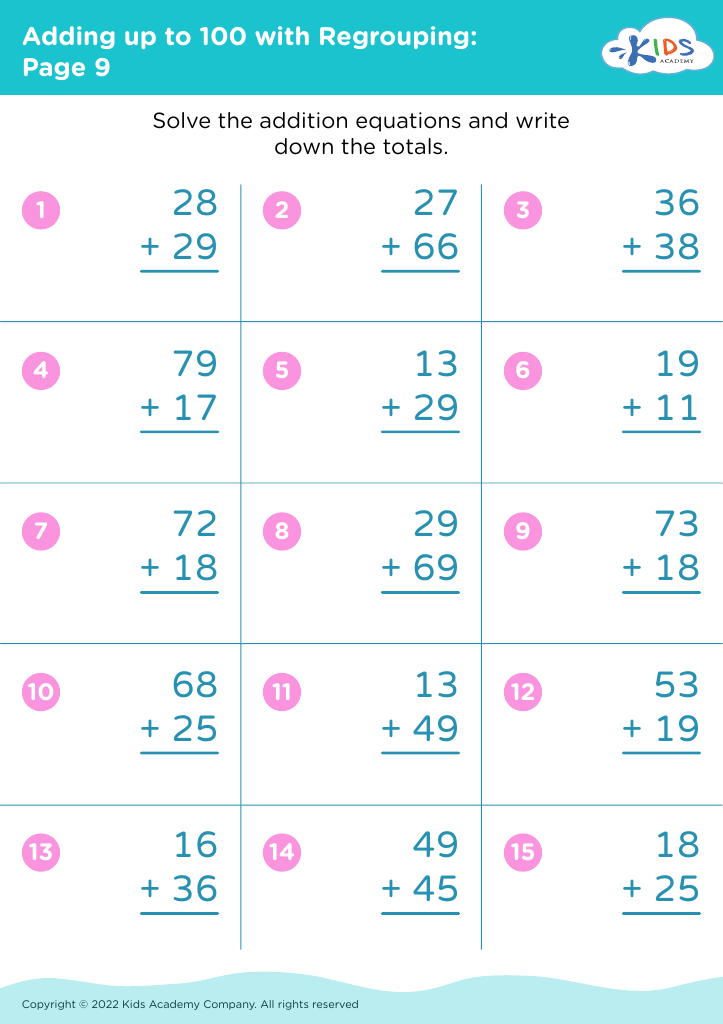
Adding up to 100 with Regrouping: Page 9
Worksheet
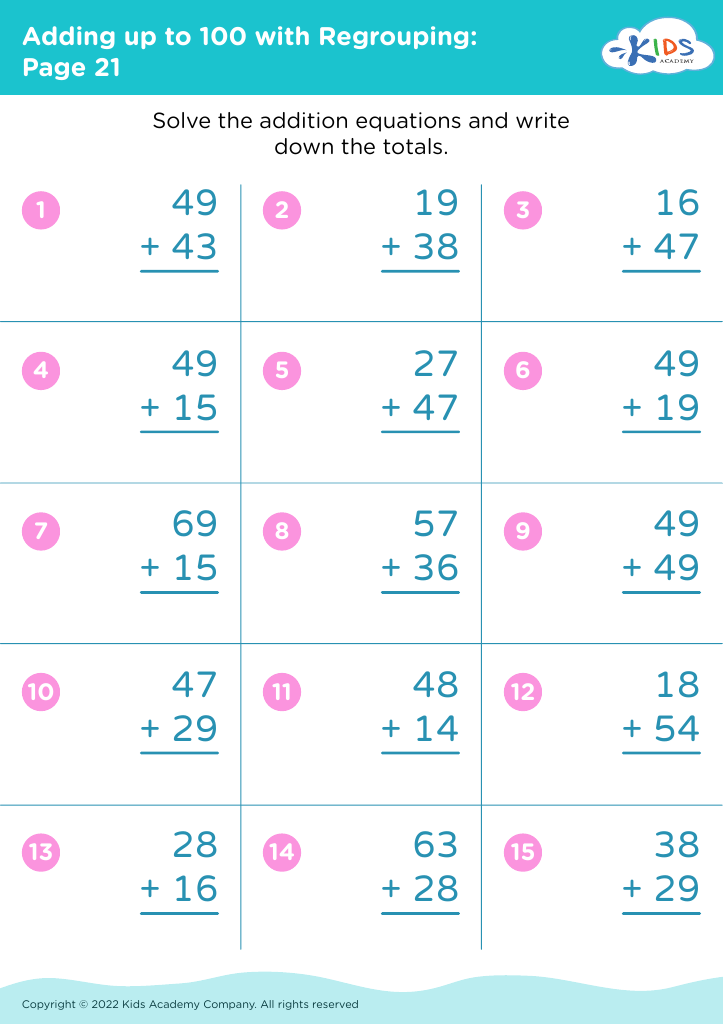
Adding up to 100 with Regrouping: Page 21
Worksheet
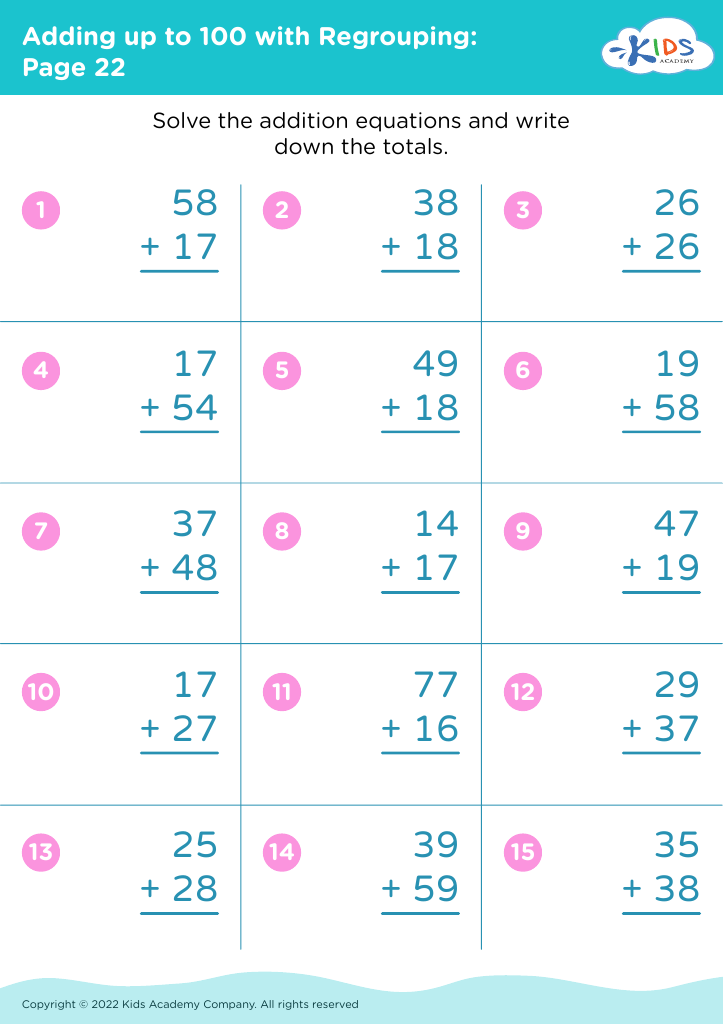
Adding up to 100 with Regrouping: Page 22
Worksheet
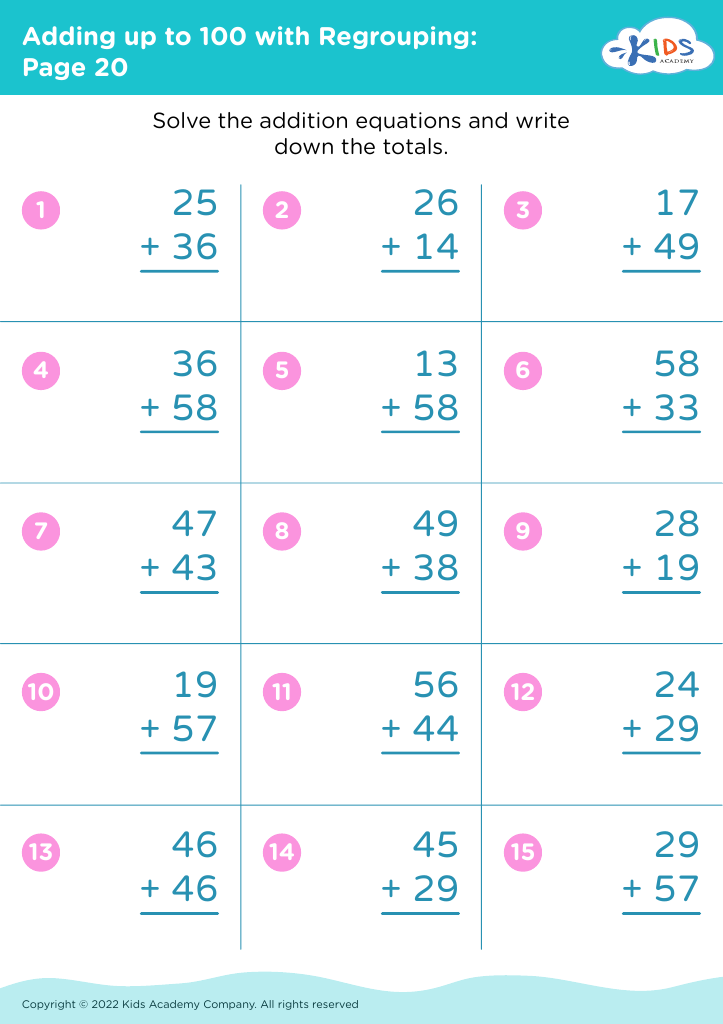
Adding up to 100 with Regrouping: Page 20
Worksheet
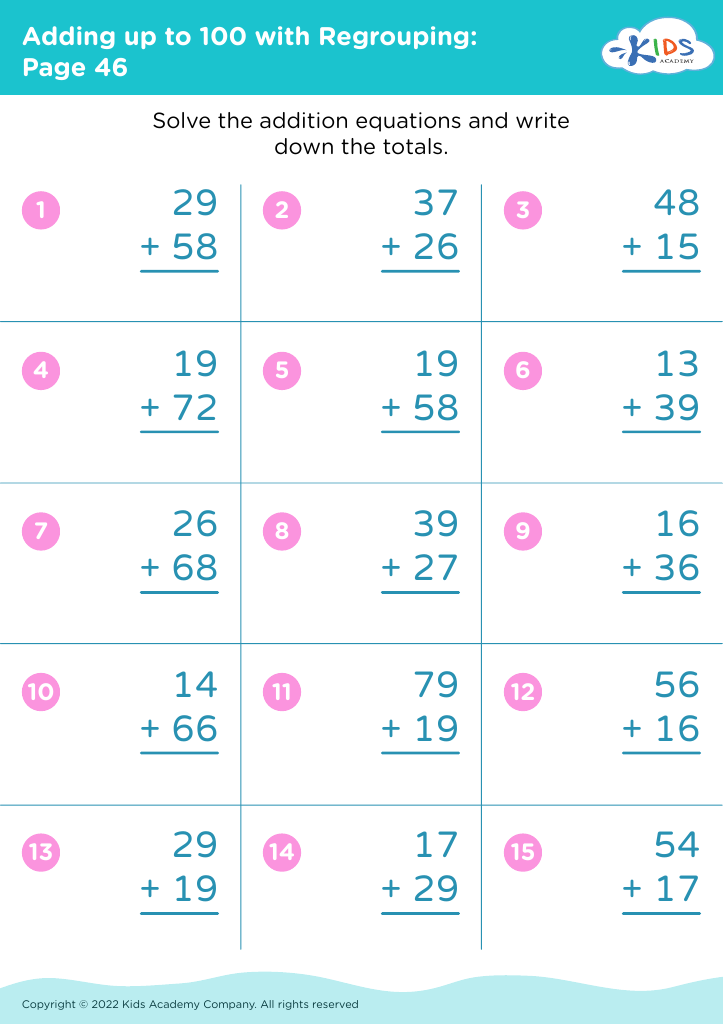
Adding up to 100 with Regrouping: Page 46
Worksheet
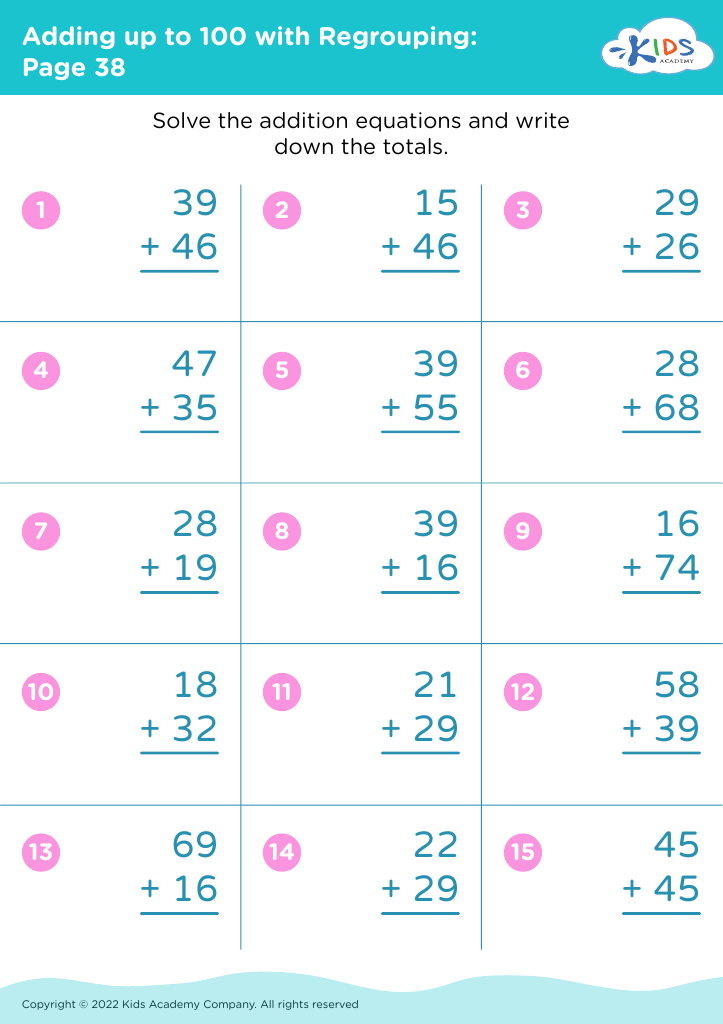
Adding up to 100 with Regrouping: Page 38
Worksheet
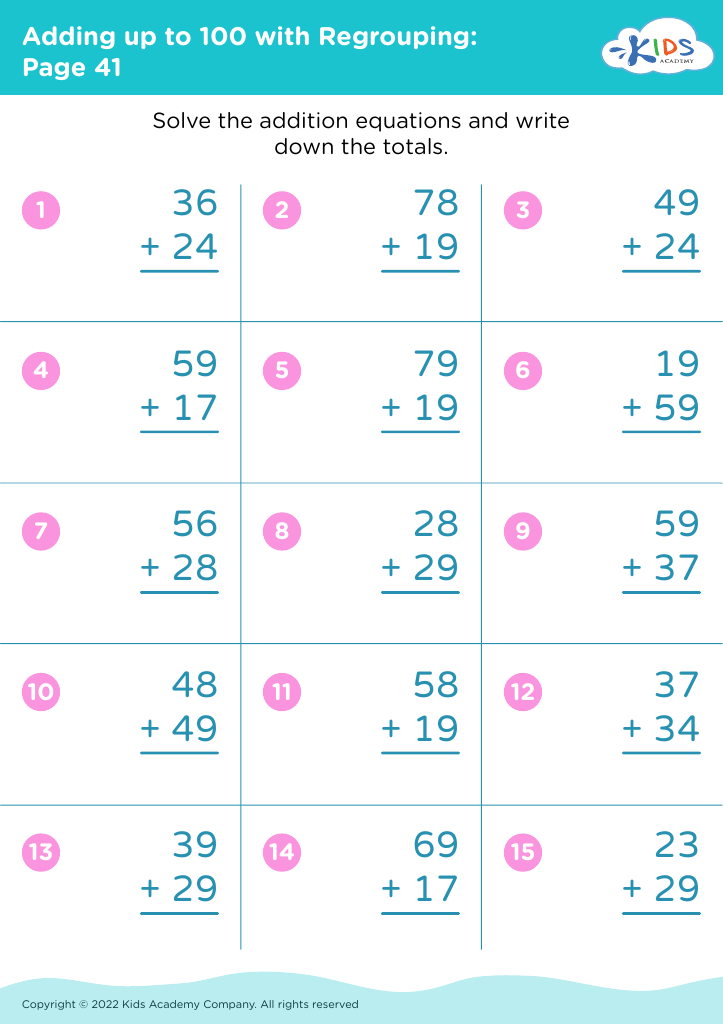
Adding up to 100 with Regrouping: Page 41
Worksheet
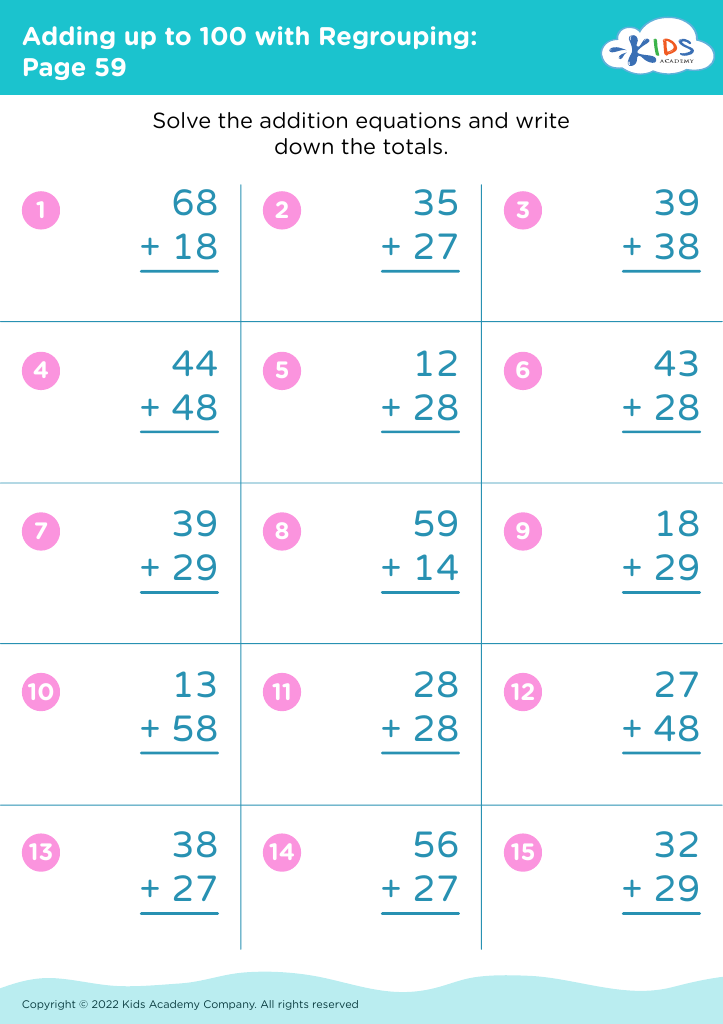
Adding up to 100 with Regrouping: Page 59
Worksheet
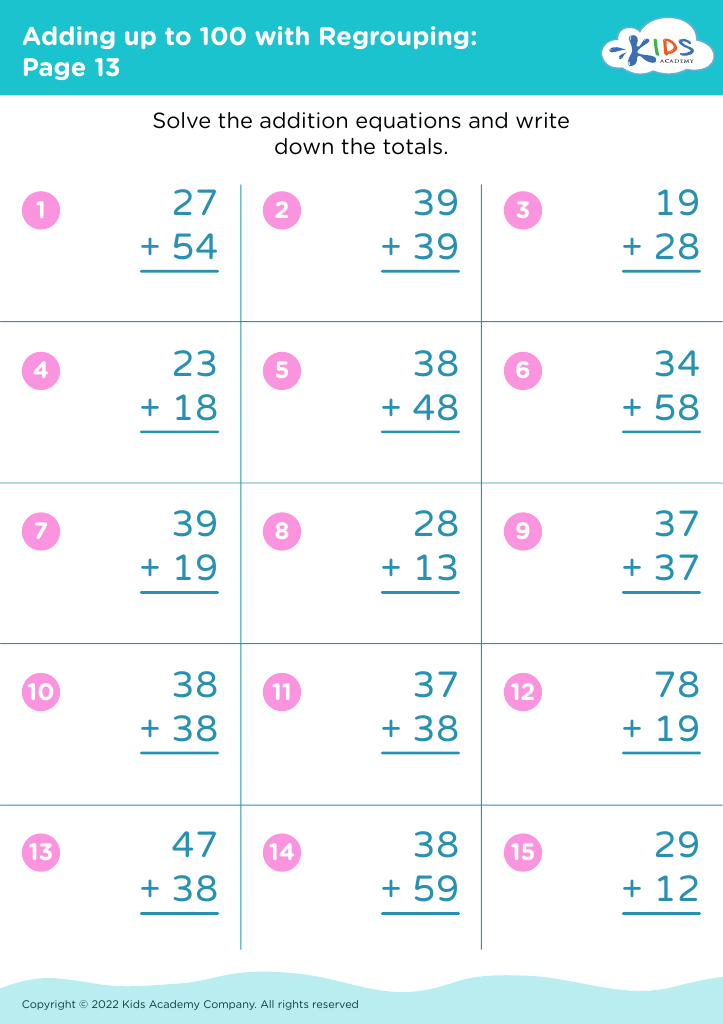
Adding up to 100 with Regrouping: Page 13
Worksheet
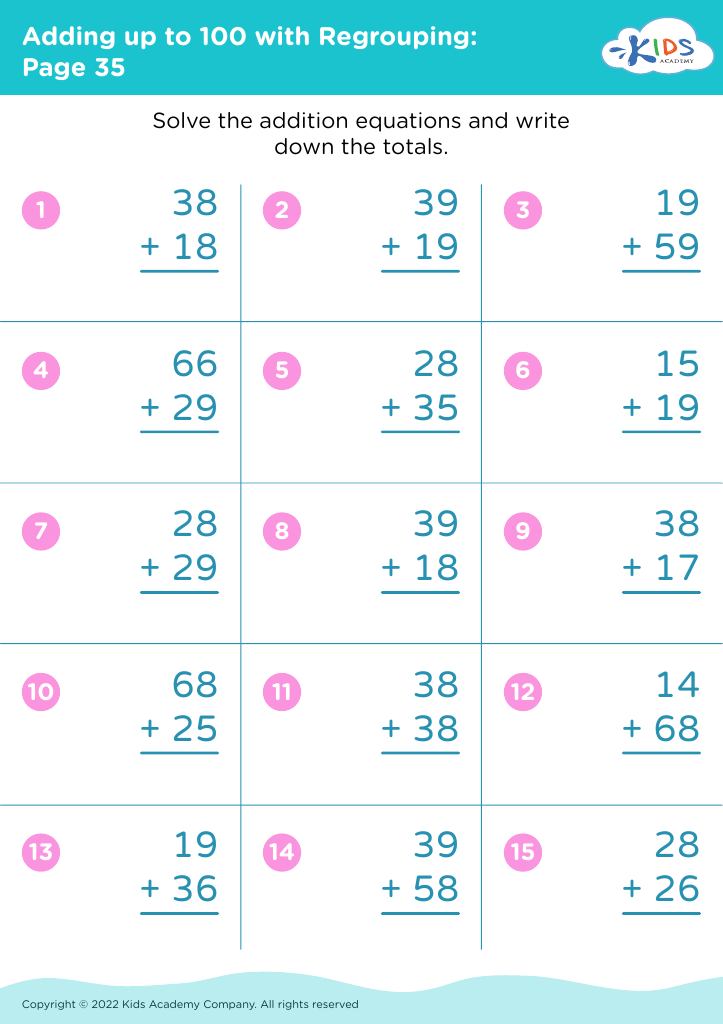
Adding up to 100 with Regrouping: Page 35
Worksheet
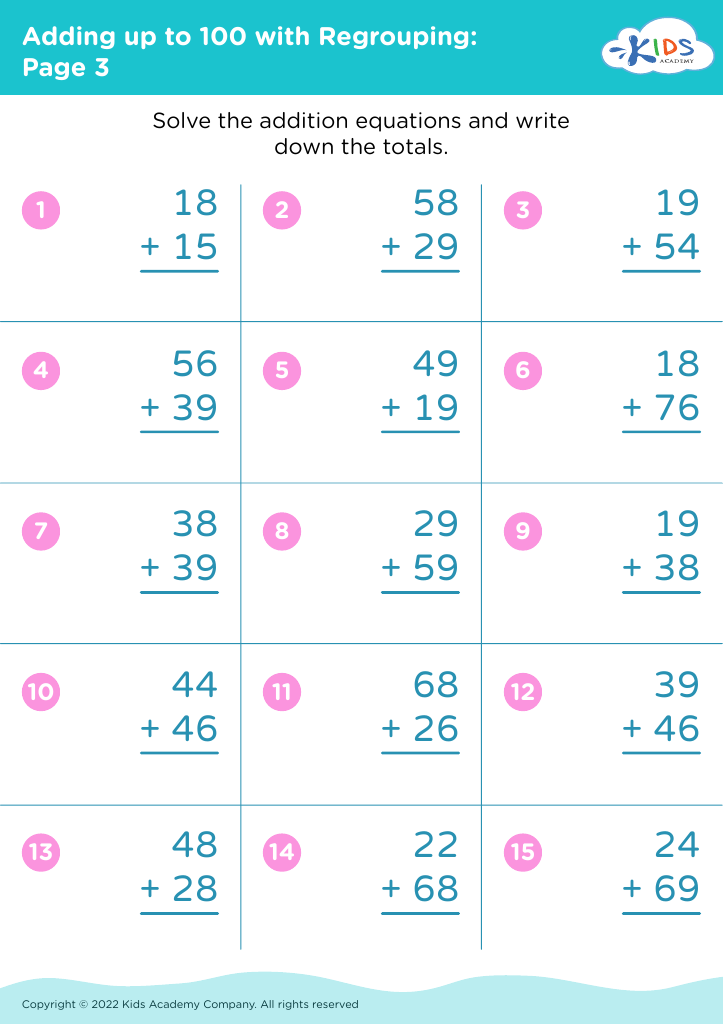
Adding up to 100 with Regrouping: Page 3
Worksheet
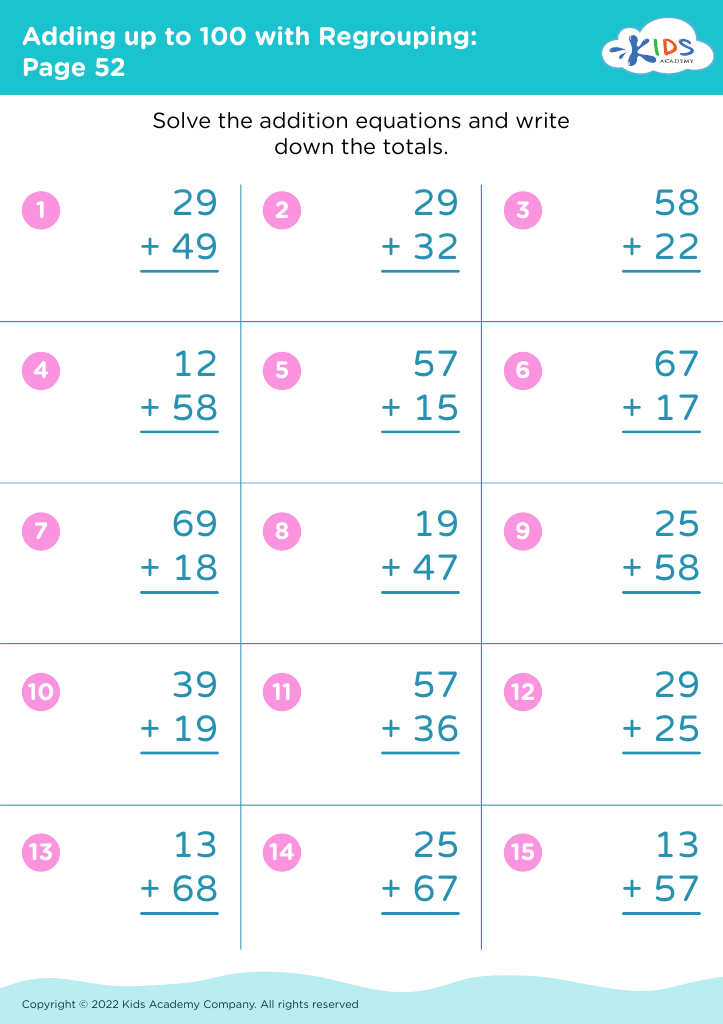
Adding up to 100 with Regrouping: Page 52
Worksheet
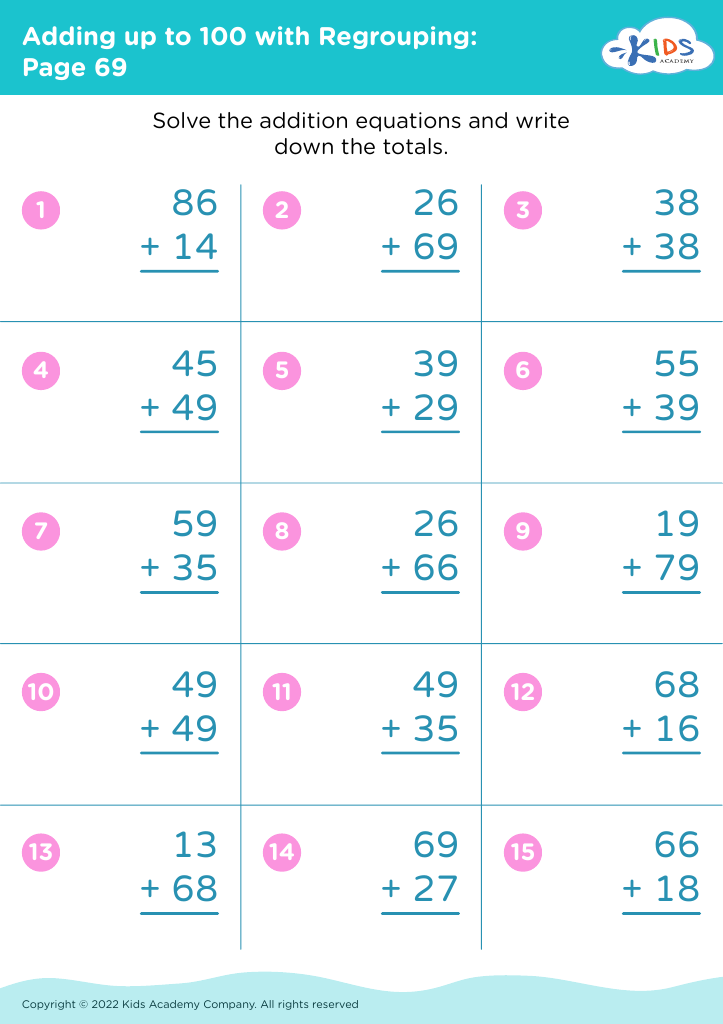
Adding up to 100 with Regrouping: Page 69
Worksheet
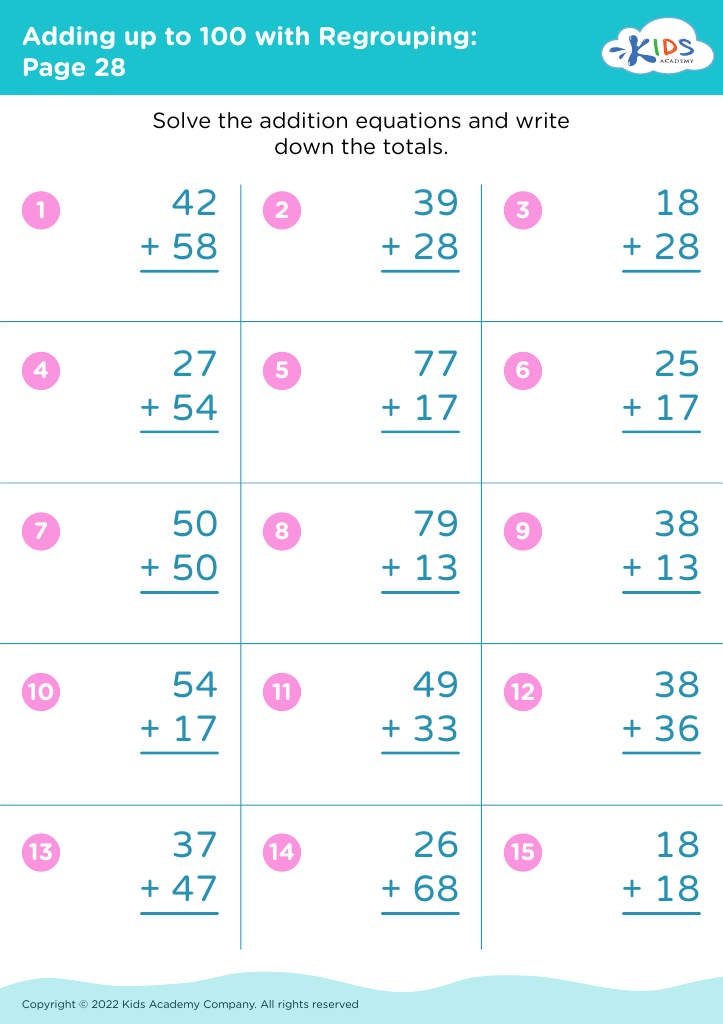
Adding up to 100 with Regrouping: Page 28
Worksheet
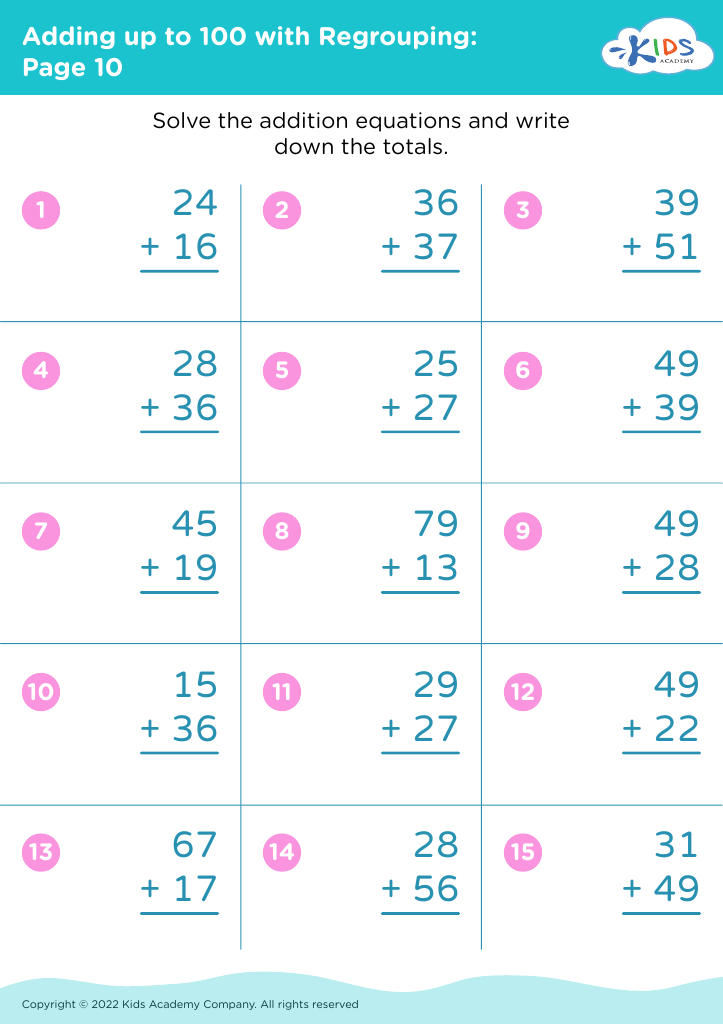
Adding up to 100 with Regrouping: Page 10
Worksheet
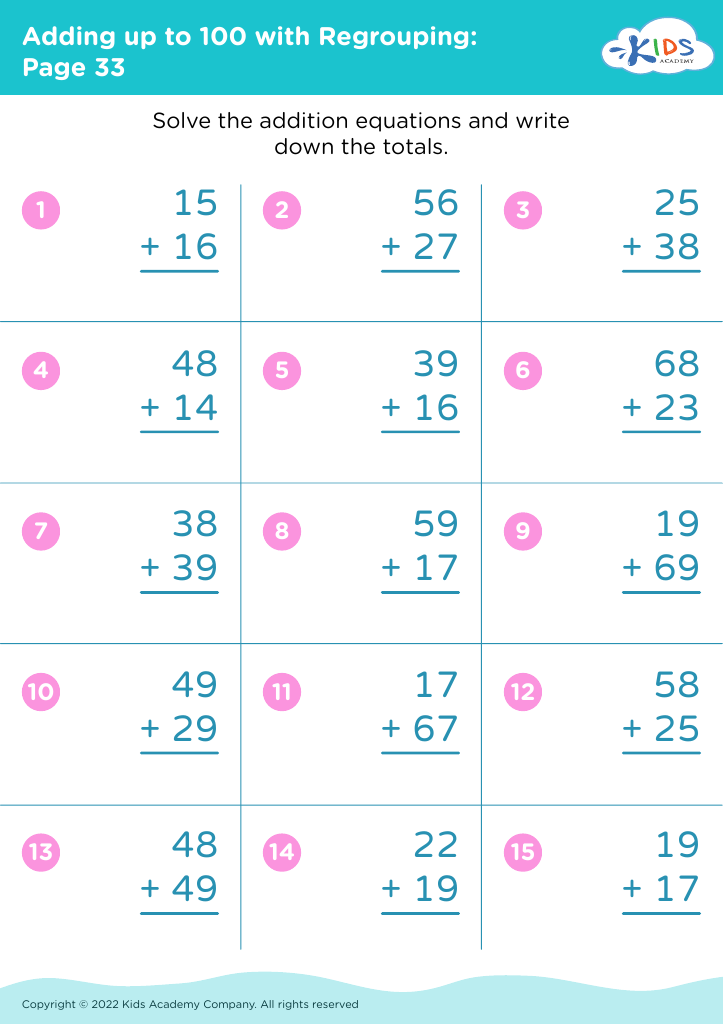
Adding up to 100 with Regrouping: Page 33
Worksheet


Understanding fractions and the concept of adding up to 100 with regrouping is critical for children aged 8-9, as it forms a foundation for more complex mathematical concepts. At this age, students are honing their skills in not just basic arithmetic but also in understanding how numbers work together, setting the stage for future learning in fractions, decimals, and percentages.

Learning to add fractions through regrouping teaches students essential problem-solving skills and promotes logical thinking. It helps them understand why and how numbers can change forms—such as converting improper fractions into whole numbers—which is crucial as they progress in math. Additionally, proficiency in fractions enhances a student's confidence in mathematics and encourages a positive mindset towards the subject.

Furthermore, the skills acquired in adding fractions have real-world applications, from cooking and measuring to budgeting and dividing resources. Mastery of these concepts can ignite a child's interest in math-related areas, such as science and technology. As parents and teachers, nurturing this understanding supports cognitive development and prepares children for abstract concepts they will encounter in higher education. In short, grasping fractions and regrouping enriches a child's mathematical toolkit and lays the groundwork for future academic success.