Understanding symmetry Adding up to 100 with Regrouping Worksheets for Ages 8-9
3 filtered results
-
From - To
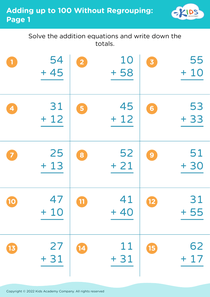
Explore the world of symmetry with our "Understanding Symmetry: Adding Up to 100 with Regrouping" worksheets designed for children aged 8-9. These engaging exercises help students grasp the concept of symmetry while practicing addition using regrouping skills. By identifying symmetrical patterns and solving problems, learners will not only enhance their math abilities but also develop critical thinking and problem-solving skills. The visually appealing worksheets incorporate fun activities that make learning enjoyable. Perfect for classroom or at-home use, our resources encourage independent practice and build a strong foundation in math. Discover the joy of learning symmetry today!
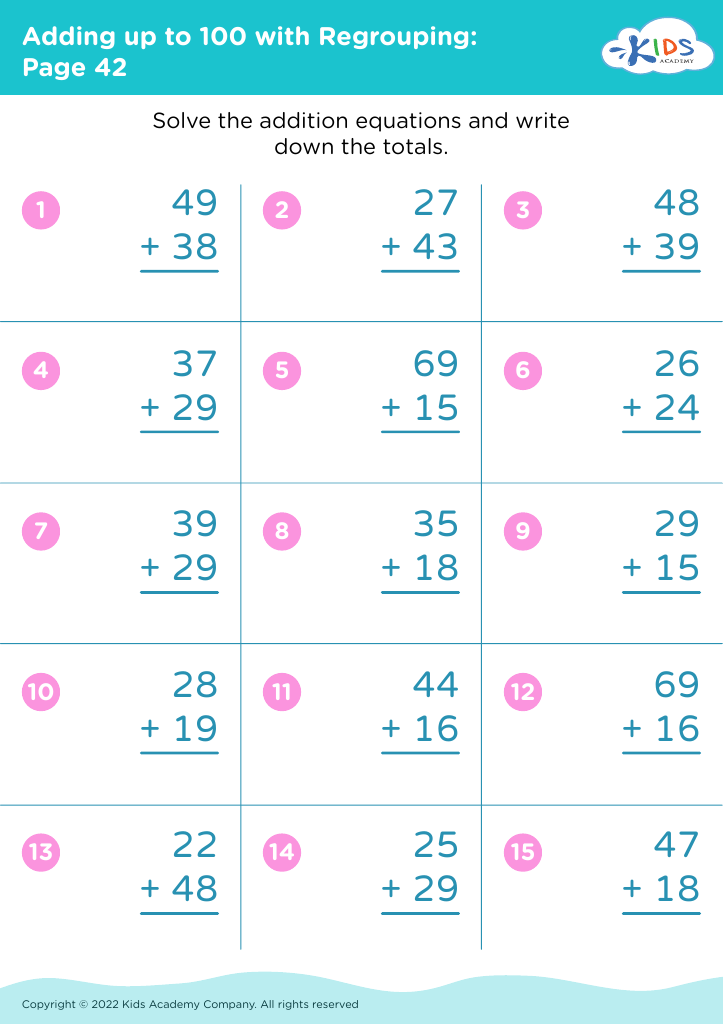
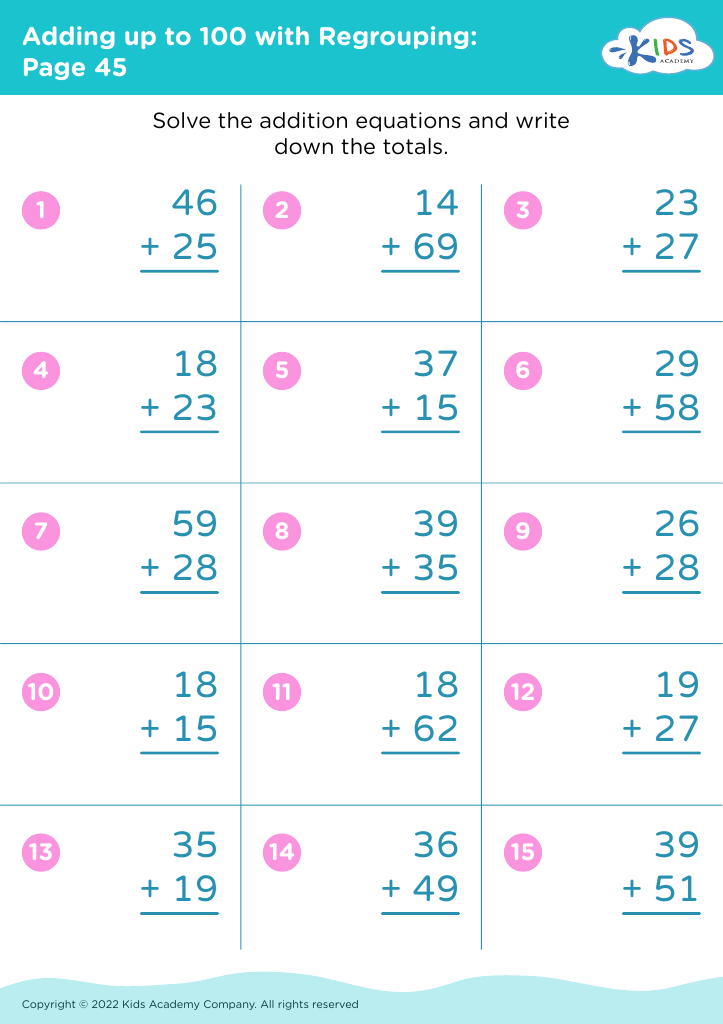
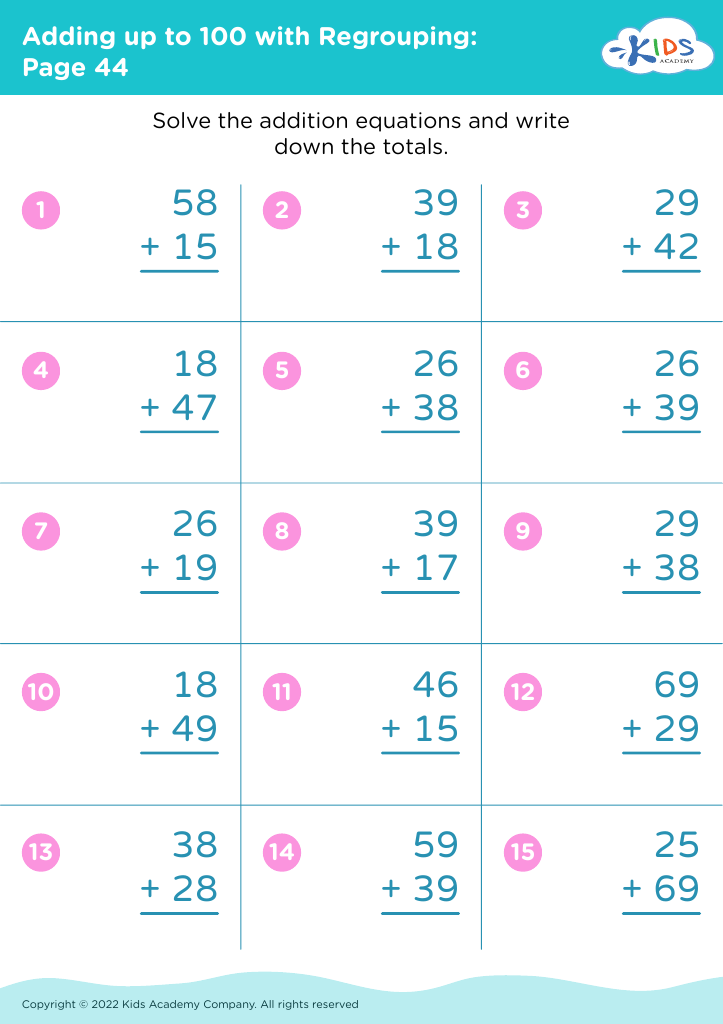




Parents and teachers should prioritize understanding symmetry and the concept of adding up to 100 with regrouping for children aged 8-9 because these foundational skills support critical mathematical thinking and problem-solving abilities.
Firstly, grasping symmetry helps children develop spatial awareness and enhances their ability to recognize patterns. This concept extends beyond mathematics and connects to art and nature, fostering a well-rounded cognitive development. Recognizing symmetrical patterns lays the groundwork for understanding concepts like geometry, essential in higher mathematics.
Secondly, mastery of adding to 100 with regrouping builds a strong number sense. It encourages children to break down numbers into manageable parts, reinforcing addition, subtraction, and place value concepts. This skill is crucial as the curriculum becomes more complex, such as in multi-digit addition and subtraction problems.
Furthermore, these concepts encourage critical thinking and reasoning—skills that are pivotal for lifelong learning. By mastering symmetry and regrouping, children develop confidence in their problem-solving abilities, instilling a positive attitude toward mathematics that can influence their future academic pursuits. Ultimately, supporting these learning objectives empowers children to thrive academically and builds a solid foundation for more advanced mathematical concepts.