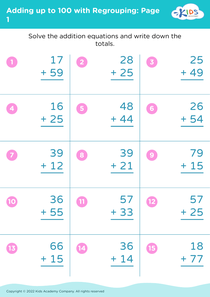
Comparing Fractions Adding up to 100 Without Regrouping Worksheets for Ages 8-9
11 filtered results
-
From - To
Explore our “Comparing Fractions Adding up to 100 Without Regrouping” worksheets, specially designed for children ages 8-9! These engaging resources provide young learners with valuable practice in comparing fractions while reinforcing their understanding of addition without regrouping. Each worksheet features visually appealing problems that challenge students to analyze and compare fractions effectively. Through these exercises, children cultivate critical thinking skills and gain confidence in their mathematical abilities. Perfect for classroom use or at-home learning, our worksheets support early math education in a fun and interactive way. Enhance your child’s learning experience and make mastering fractions a delightful adventure today!
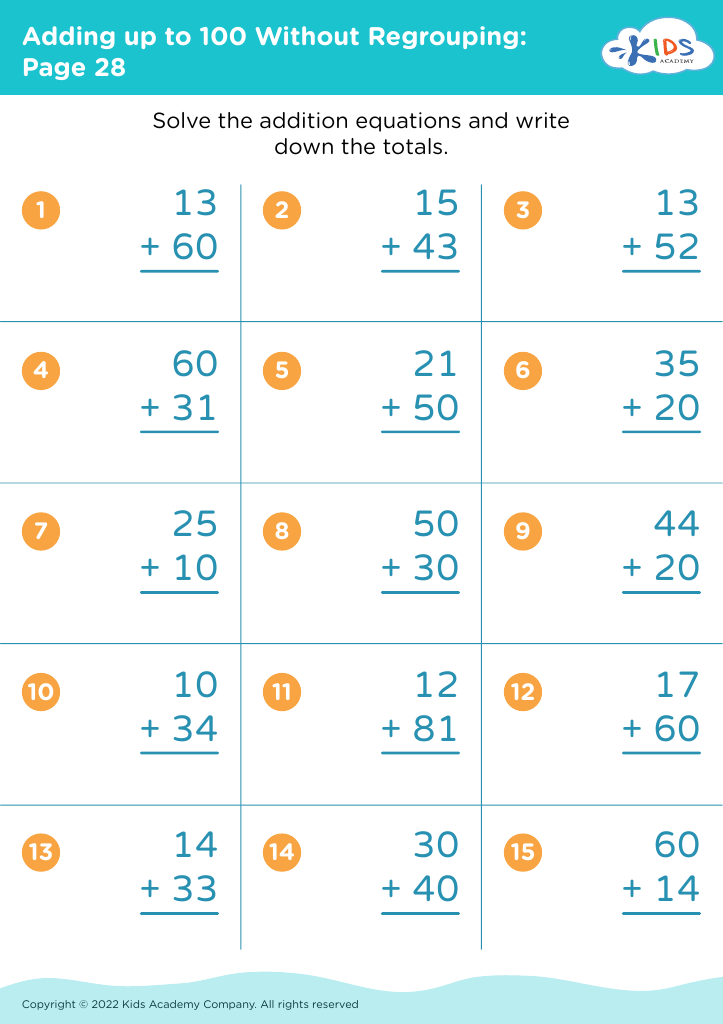
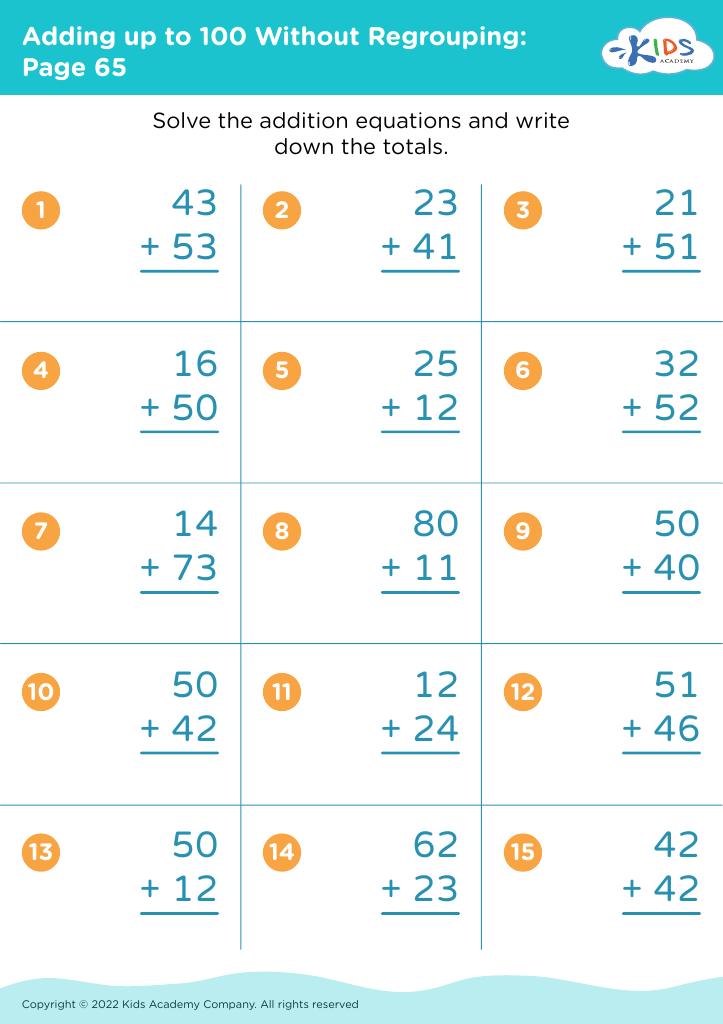
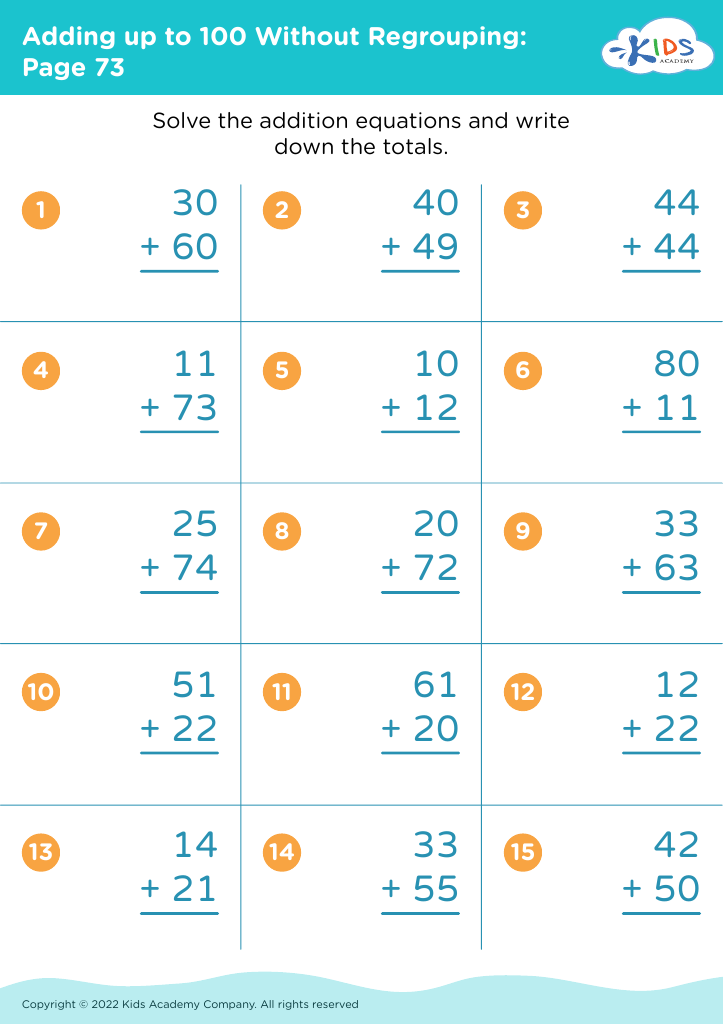
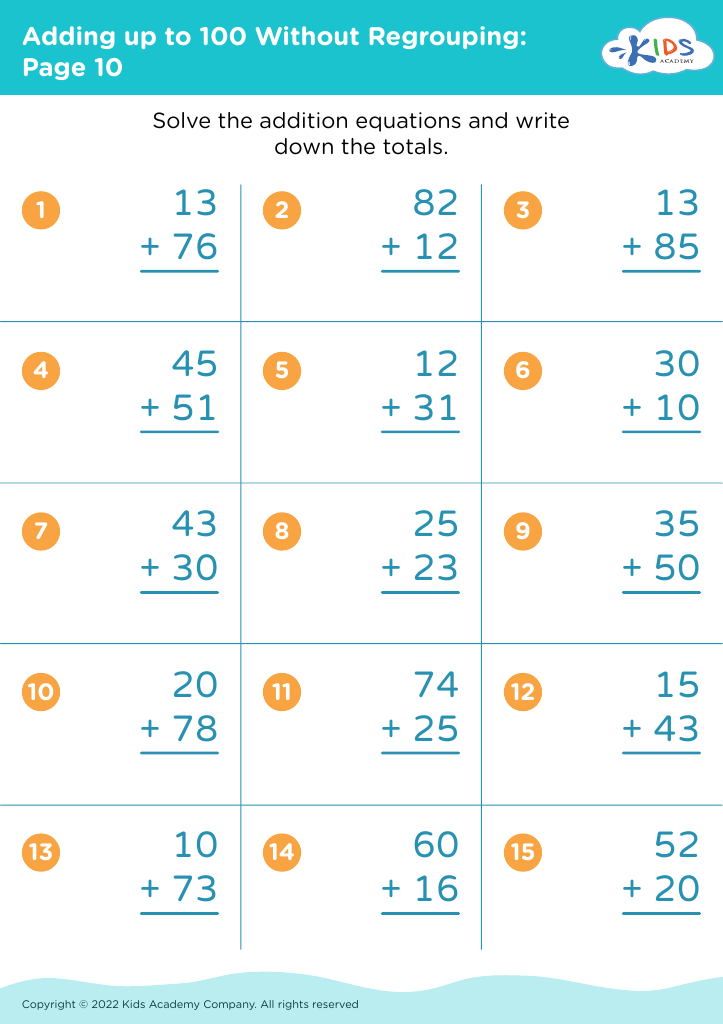
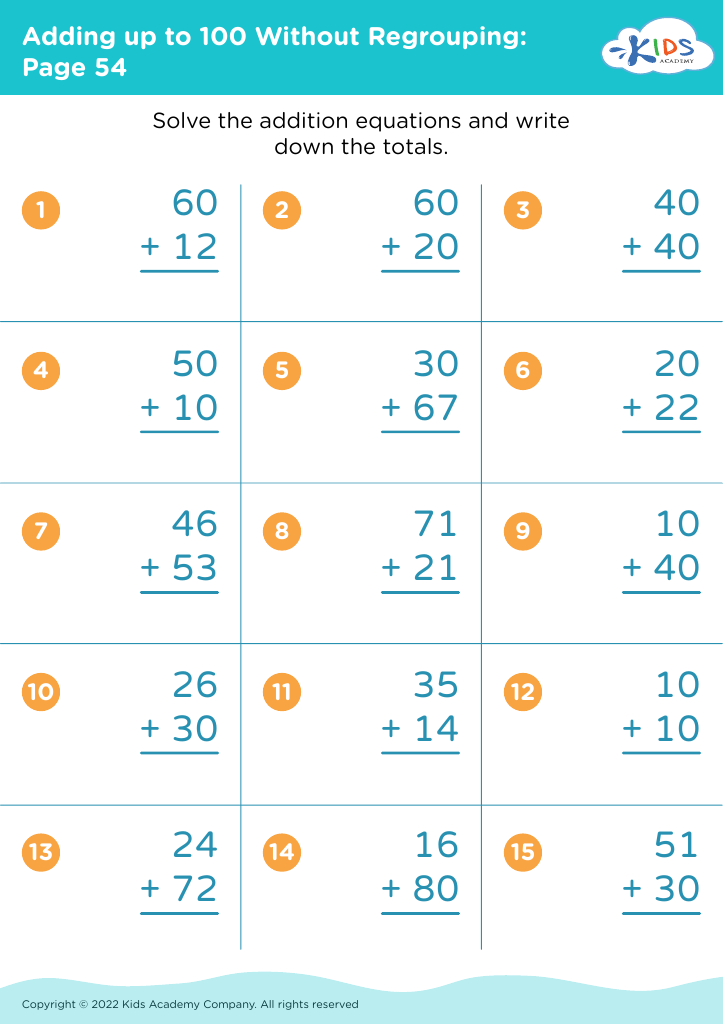
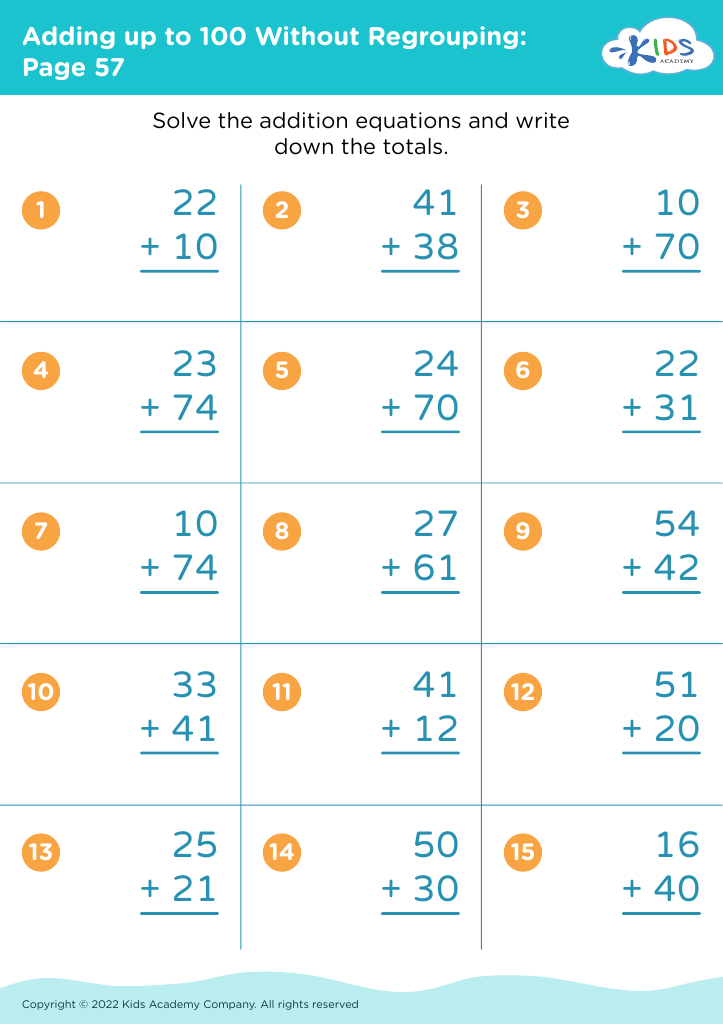
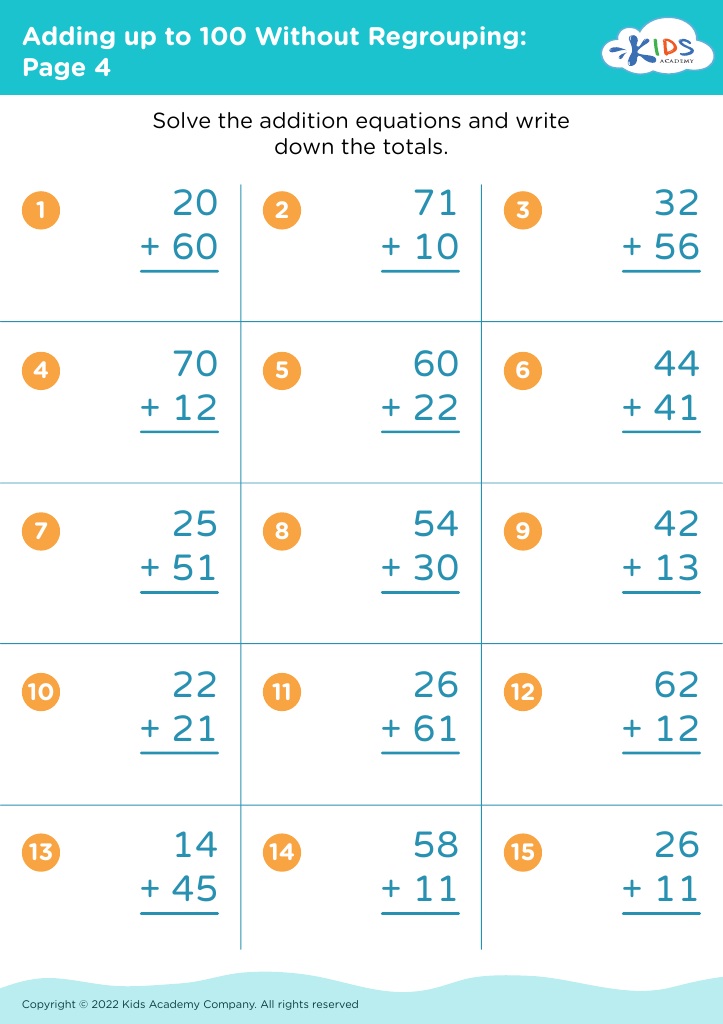
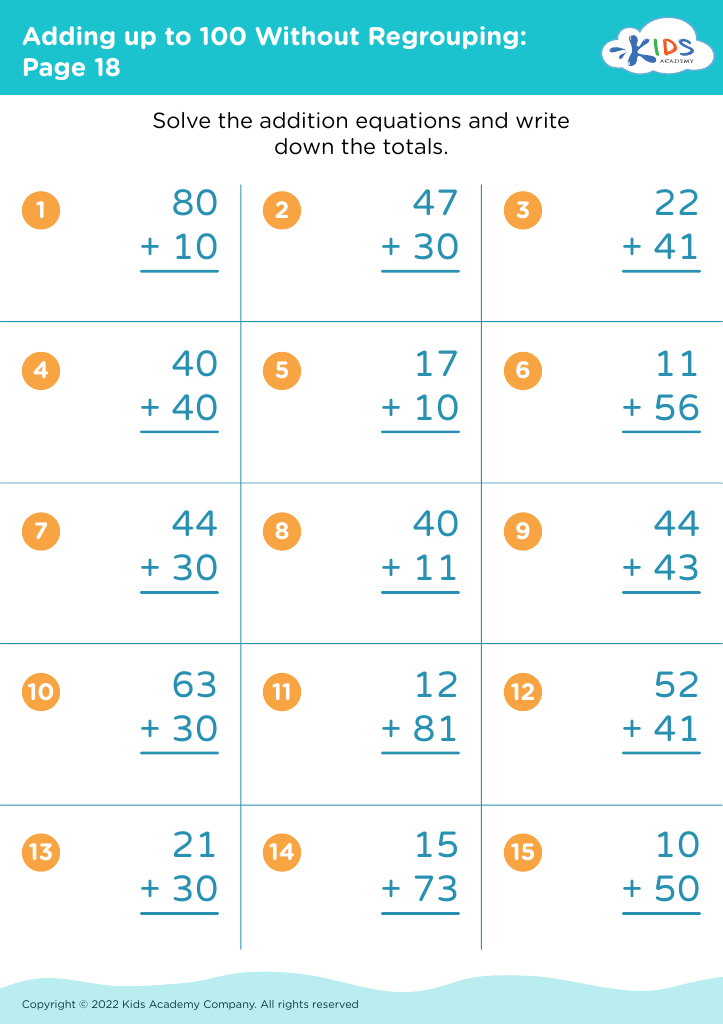
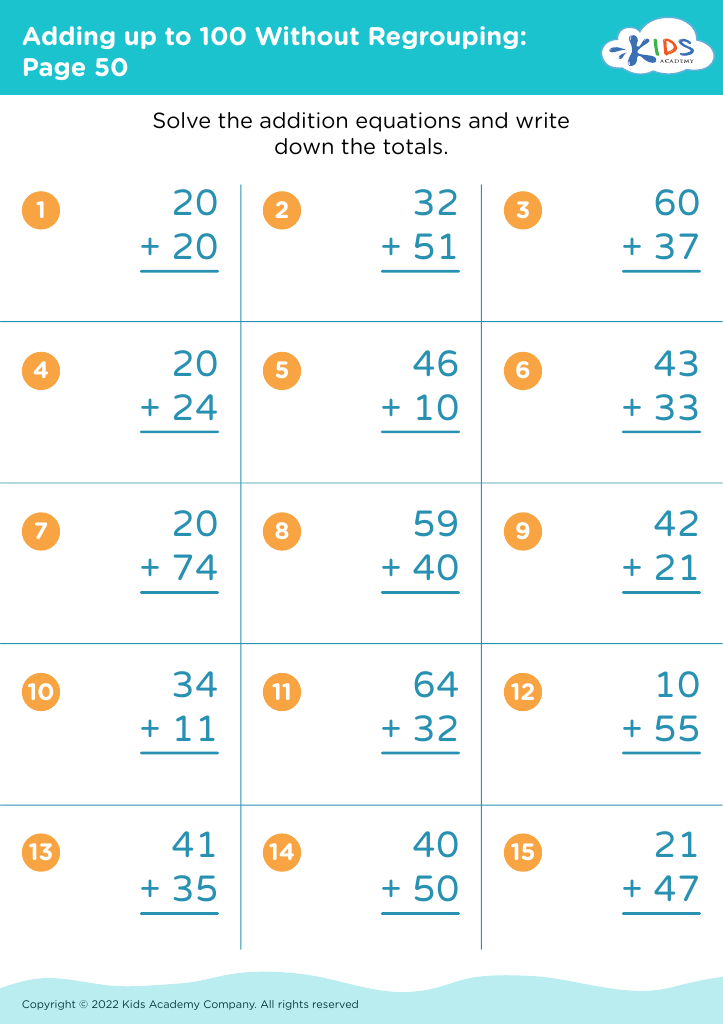
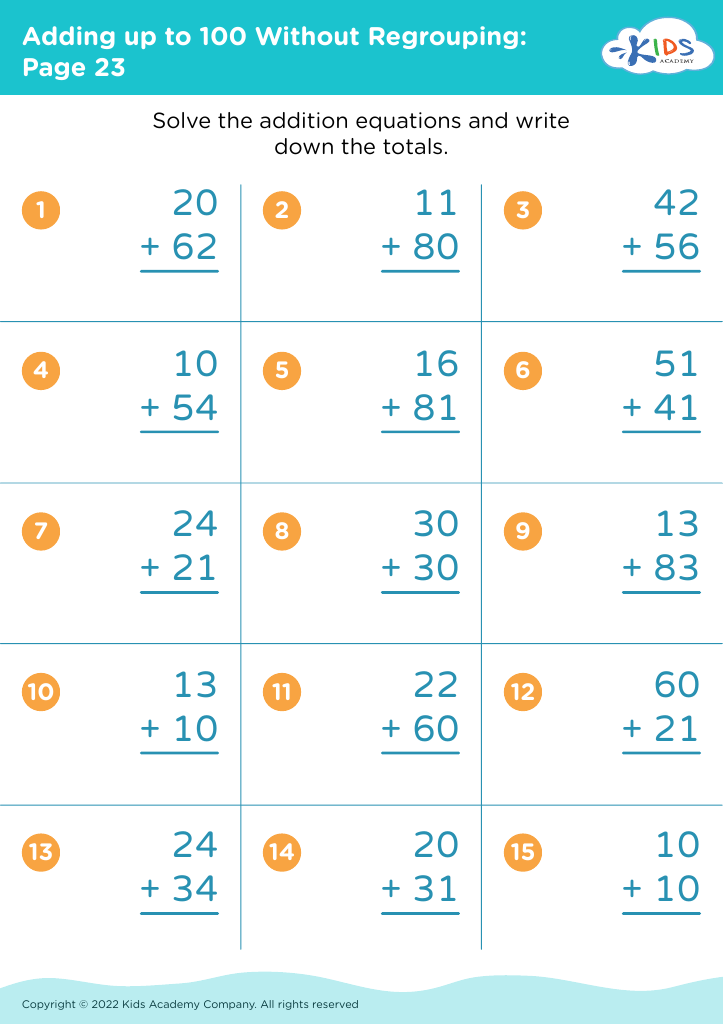
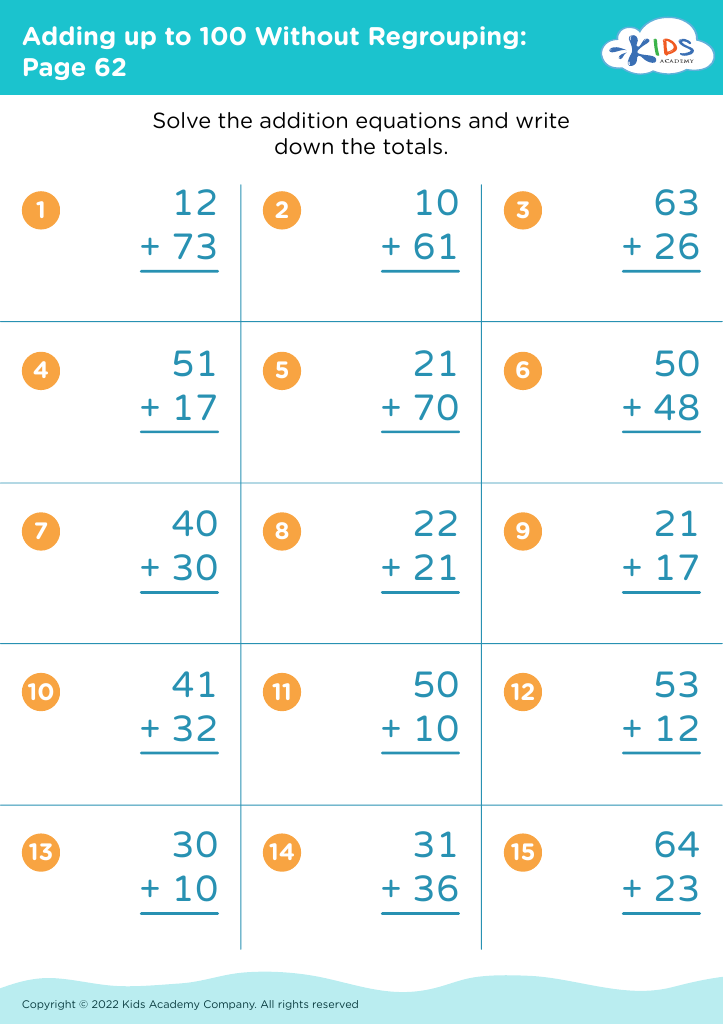




Parents and teachers should care about teaching children ages 8-9 how to compare fractions that add up to 100 without regrouping because this foundational skill is essential for their mathematical development and everyday problem-solving. At this age, children transition from intuitive understandings of numbers to more formal mathematical reasoning. Comparing fractions helps students grasp concepts of equivalence, which are crucial for understanding proportions and ratios in the future, including in real-life scenarios like cooking, budgeting, and shopping.
Additionally, learning to compare fractions paves the way for more complex operations, such as addition and subtraction of fractions, leading to a stronger overall math foundation. By focusing on fractions that add to 100, educators can present these concepts in a relatable context, reinforcing the idea that fractions are parts of a whole, making it more tangible for young learners.
Furthermore, mastering this skill builds confidence in mathematical reasoning, fostering a positive attitude toward math. When parents and teachers engage with students in this area, they not only enhance academic performance but also encourage critical thinking and problem-solving skills that are vital beyond the classroom, preparing them for future challenges in technology and daily life.