Critical Thinking Adding up to 100 Without Regrouping Worksheets for Ages 8-9
3 filtered results
-
From - To
Elevate your child's math skills with our "Critical Thinking Adding up to 100 Without Regrouping Worksheets" designed specifically for ages 8-9. These engaging activities focus on enhancing arithmetic abilities while fostering critical thinking through problem-solving. Each worksheet provides step-by-step exercises where kids can practice adding numbers up to 100 without the complexity of regrouping. Through vibrant visuals and thoughtful problems, your child will gain confidence in their math abilities and develop essential skills for academic success. Perfect for both classroom settings and at-home learning, these worksheets are a fun and effective way to nurture a love for mathematics. Explore today!
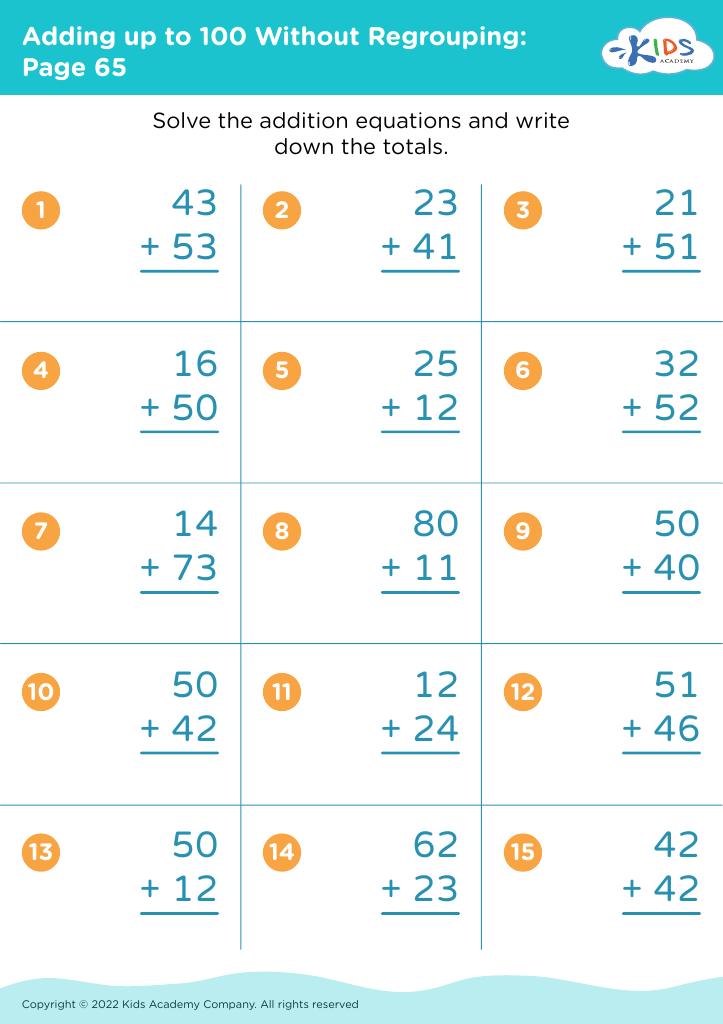
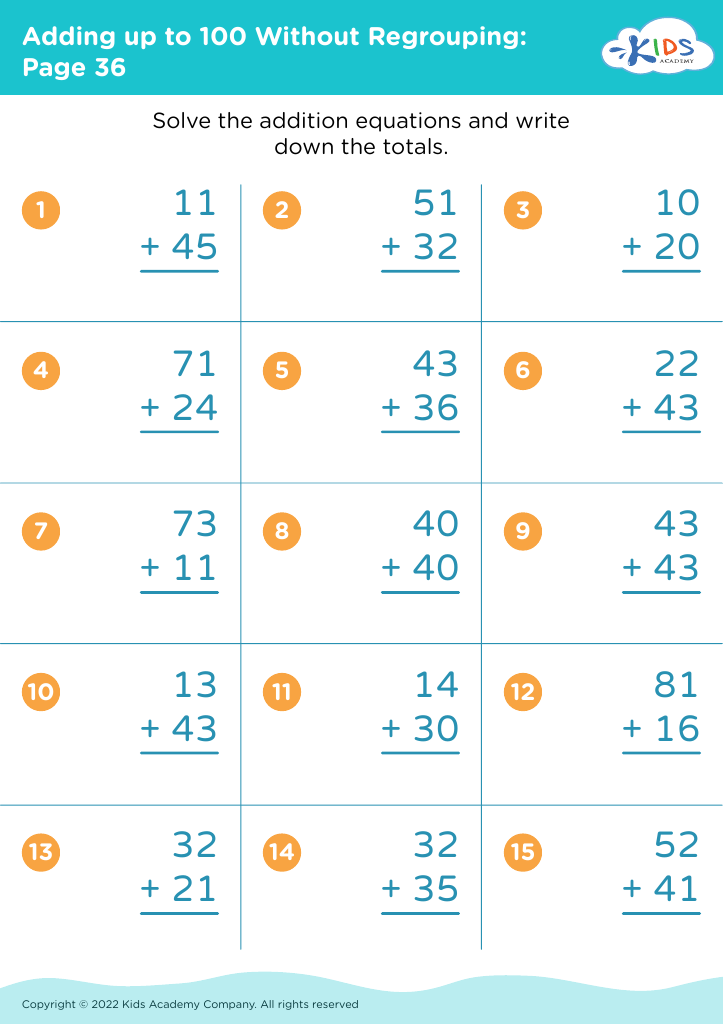
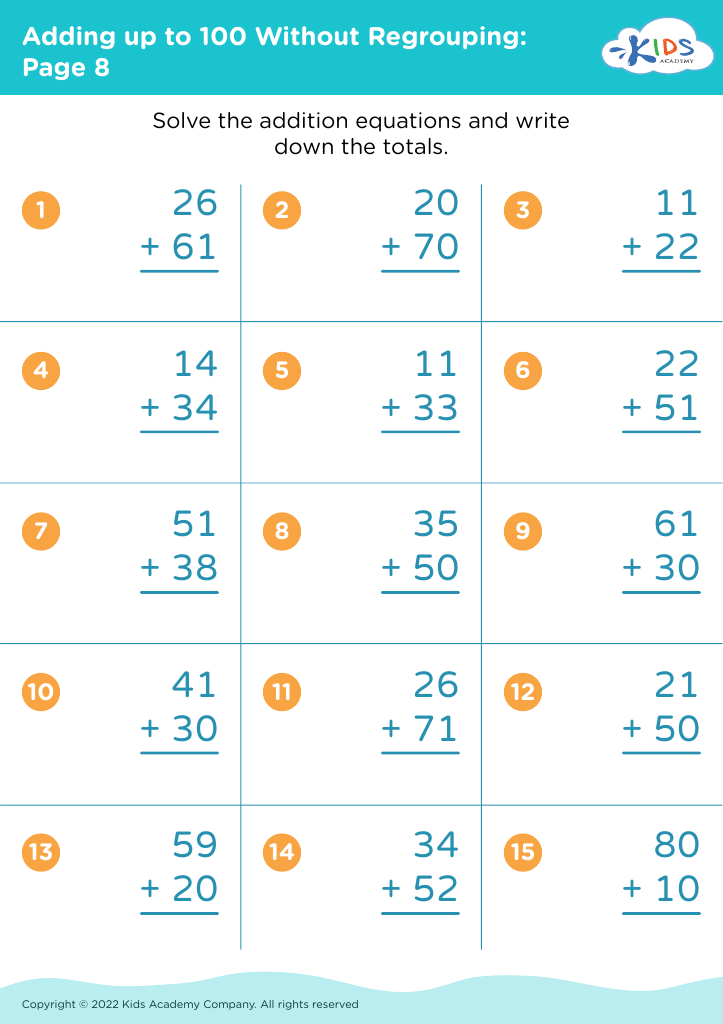




Critical thinking is a fundamental skill that underpins successful learning and development. When children in the 8-9 age group practice adding numbers that sum up to 100 without regrouping, they aren't just learning basic math. This exercise builds critical thinking skills, which are essential for problem-solving and decision-making. At this developmental stage, children begin to grasp more complex concepts; thus, it's crucial they learn methods that encourage logical thinking and independent reasoning.
Addition without regrouping involves numbers that are simpler to handle and helps children strengthen their fundamental arithmetic skills. It teaches them to quickly recognize number patterns, enhances mental math capabilities, and boosts confidence in their ability to solve problems. These skills are transferable to other areas, facilitating more comprehensive cognitive development.
Moreover, activities that incorporate critical thinking in math help children develop persistence and patience. These qualities are important for tackling more complex problems later on, not just in mathematics but across all subjects and in real-life situations. Parents and teachers play a pivotal role in fostering these skills by emphasizing exercises that balance simplicity and challenge, ensuring that the child remains engaged and motivated to learn. Overall, critical thinking enhances a child's ability to navigate, understand, and interact with the world in meaningful ways.