Identifying shapes Adding up to 100 Without Regrouping Worksheets for Ages 8-9
4 filtered results
-
From - To
Explore our engaging worksheets designed for children ages 8-9, focusing on identifying shapes while mastering addition up to 100 without regrouping! These thoughtfully crafted exercises integrate geometric shape recognition into math skills, ensuring that your child not only practices addition but also develops spatial awareness. With fun illustrations and clear instructions, our worksheets make learning enjoyable and effective, fostering both confidence and competence in young learners. Perfect for at-home practice or classroom activities, these resources will help your child shine in math. Discover the joys of learning and watch their skills soar with our interactive shape and addition worksheets!
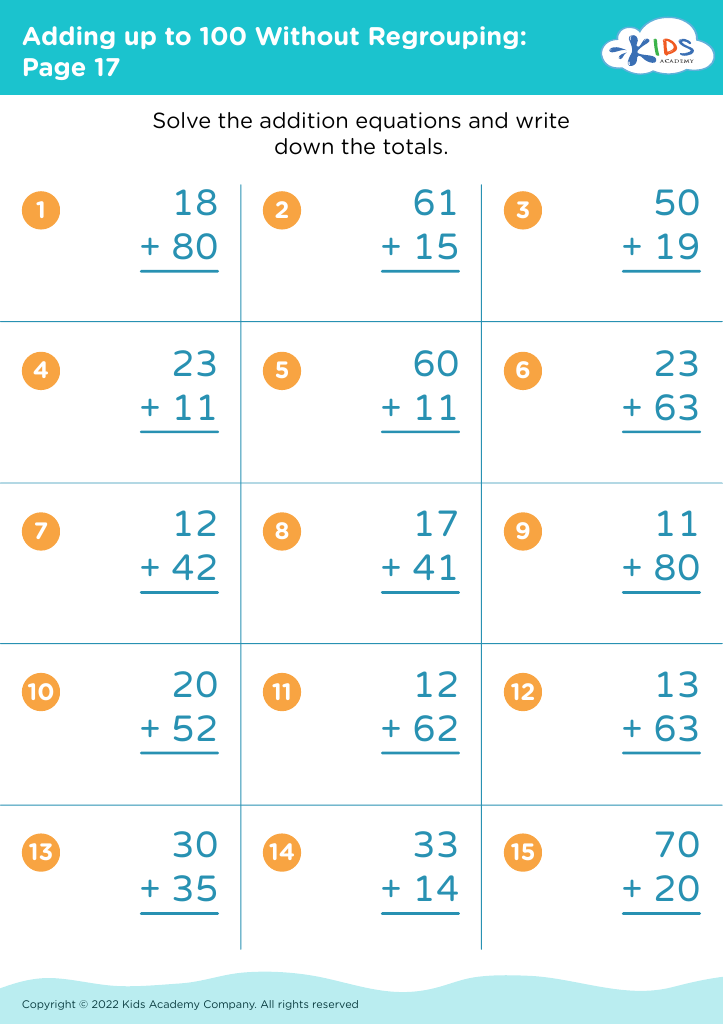
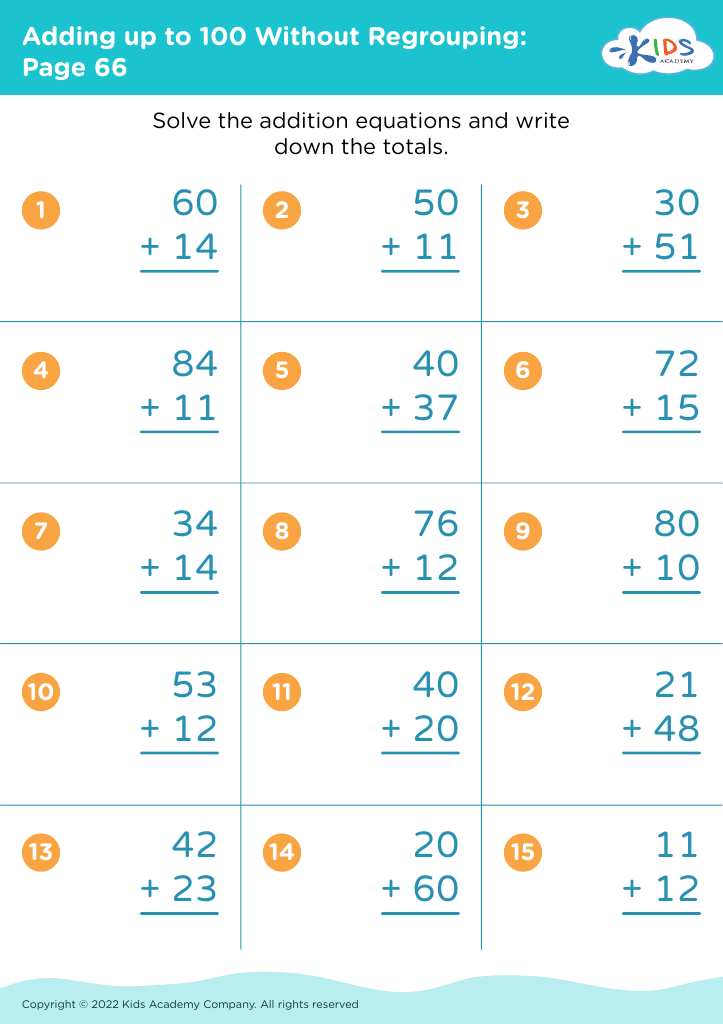
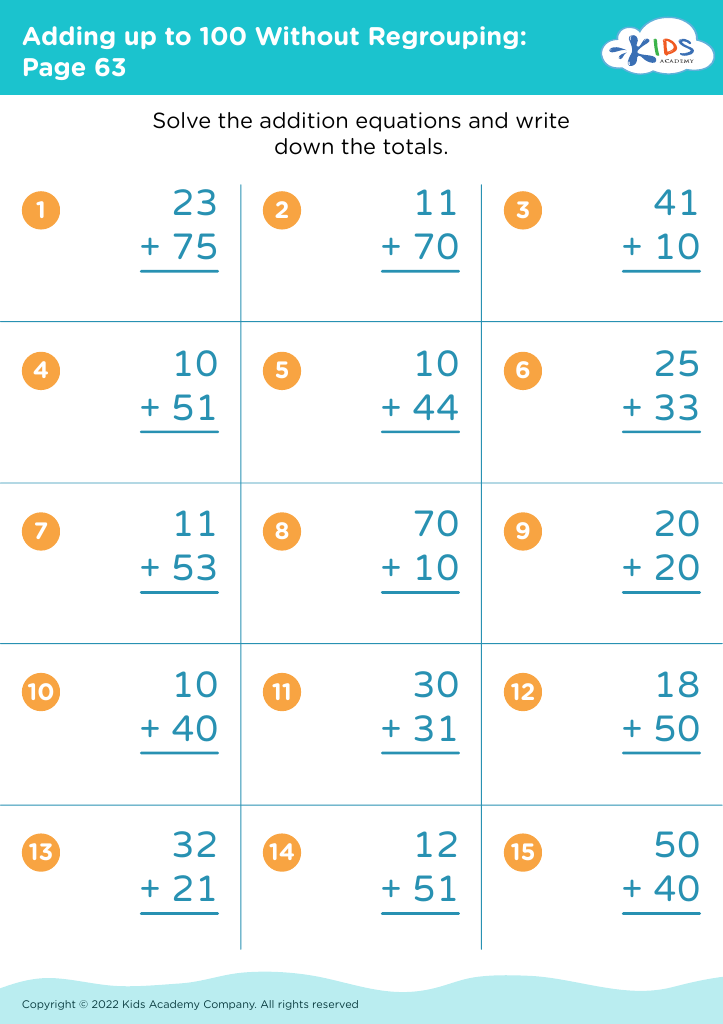
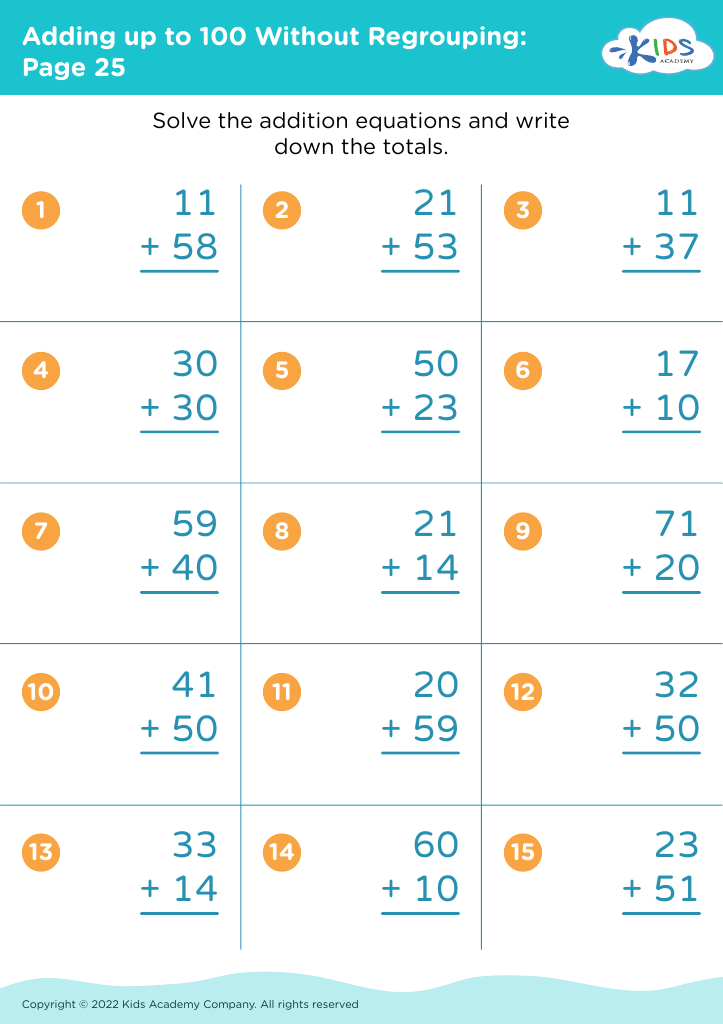




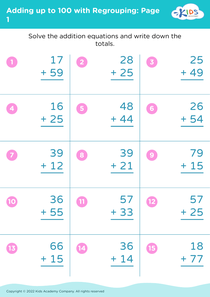
Identifying shapes and mastering addition without regrouping are foundational skills for children aged 8-9 that significantly contribute to their overall mathematical development. Understanding shapes enhances spatial reasoning, which is crucial for future learning in geometry and helps children recognize patterns and structures in their environment. This skill not only fosters critical thinking but also boosts creativity, as children begin to see connections in art, architecture, and nature.
On the other hand, successfully adding numbers up to 100 without regrouping builds a solid base for arithmetic fluency. At this age, children are transitioning from basic math to more complex operations, and proficiency in addition aids their confidence and competence in handling not just addition, but also subtraction, multiplication, and later, division. Moreover, these skills are vital for everyday activities, such as shopping or cooking, and prepare children for advanced math challenges in higher grades.
Ultimately, by prioritizing the mastery of these skills, parents and teachers are equipping children with confidence and abilities that extend beyond the classroom, encouraging a positive attitude towards mathematics and fostering life-long learning. Investing in these foundational skills ensures academic success and promotes a rich understanding of the world around them.