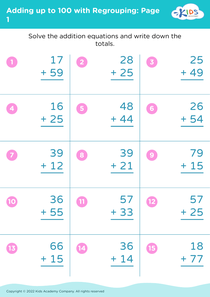
Improve reading comprehension Adding up to 100 Without Regrouping Worksheets for Ages 8-9
3 filtered results
-
From - To
Enhance your child’s reading comprehension while mastering addition with our "Adding Up to 100 Without Regrouping Worksheets" tailored for ages 8-9. These worksheets not only simplify math concepts but also promote critical reading skills as children analyze instructions and problem statements. Engaging and age-appropriate, our activities ensure kids develop confidence in math while honing their ability to comprehend and respond to written material. Perfect for use in the classroom or at home, these worksheets foster a well-rounded educational experience that combines numeracy and literacy. Explore our resources today and empower your child with essential skills for academic success!
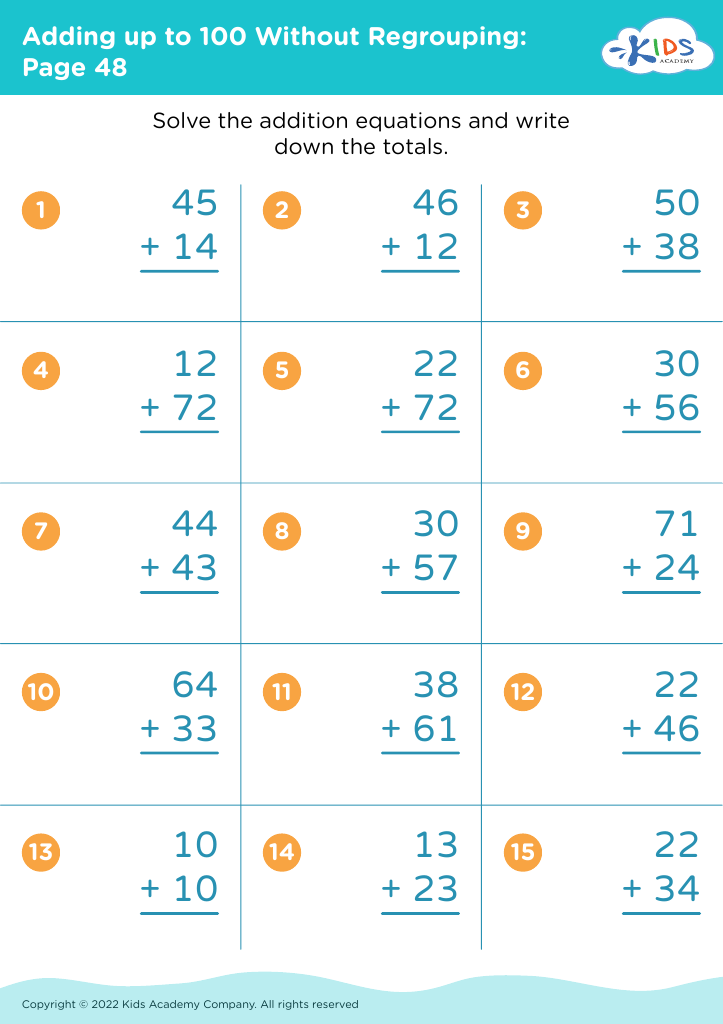
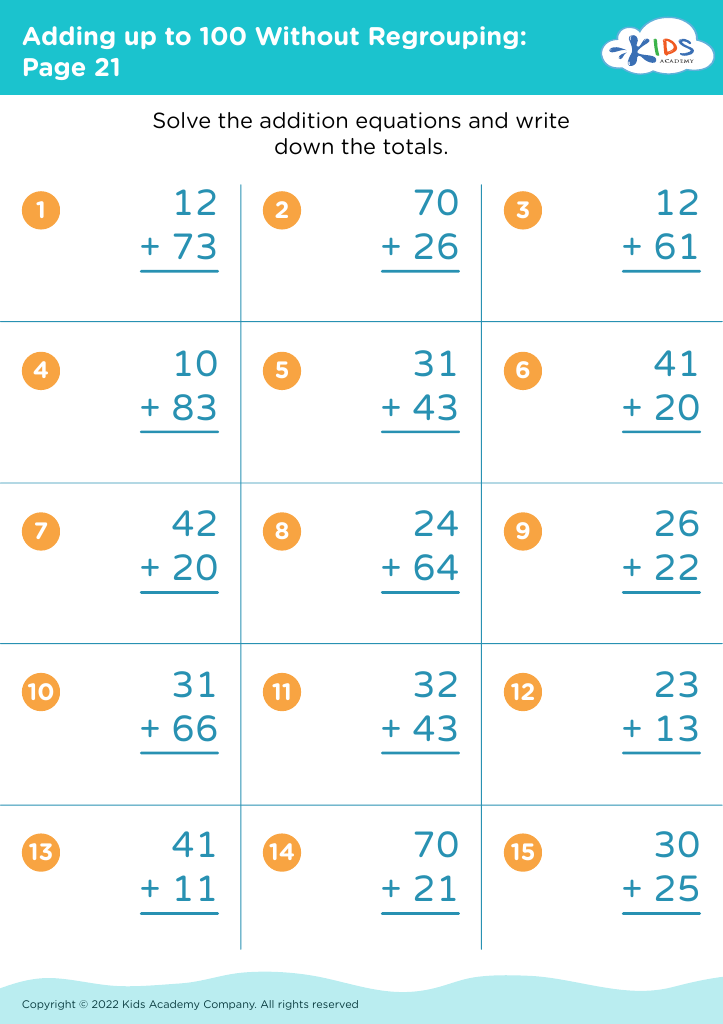
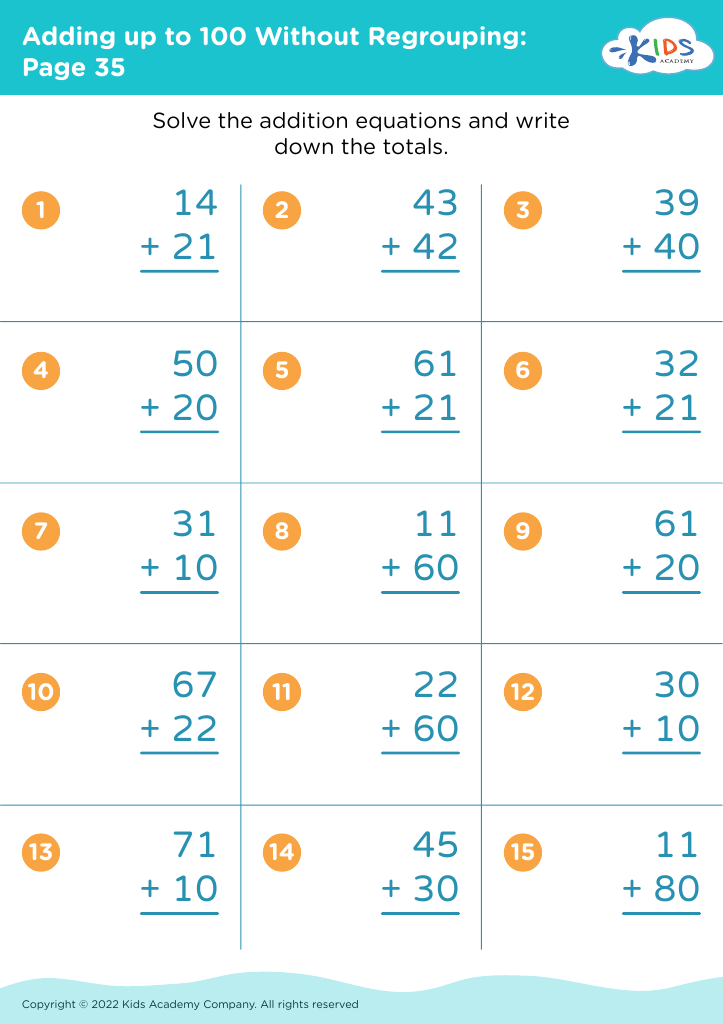




Improving reading comprehension and math skills, such as adding up to 100 without regrouping, is crucial for children aged 8-9 for several reasons. Firstly, strong reading skills form the foundation for learning in all subjects. Comprehension allows children to understand instructions, engage with texts, and analyze information, fostering critical thinking and problem-solving abilities. This skill enhances their academic performance and lays the groundwork for future learning.
Similarly, mastering basic math skills, like adding without regrouping, builds confidence and fluency in math. It helps children feel secure in their ability to handle calculations, which is essential as math concepts become more complex. Furthermore, math skills are integrated within many real-life scenarios; thus, being proficient in quick mental calculations supports children in everyday situations, such as budgeting or measuring.
When parents and teachers focus on these fundamental skills, they cultivate a supportive learning environment that promotes overall academic confidence. Enhancing literacy and numeracy at this age not only helps students succeed academically but also encourages a love for learning that can last a lifetime. Understanding and progressing in both areas will empower children with the essential tools they need to navigate their educational journey effectively.