Improve reading skills Adding up to 100 Without Regrouping Worksheets for Ages 8-9
3 filtered results
-
From - To
Boost your child’s reading skills while mastering addition with our engaging "Improve Reading Skills: Adding Up to 100 Without Regrouping Worksheets" for ages 8-9. These worksheets combine fundamental math concepts with reading comprehension exercises, helping students sharpen both skills simultaneously. Each worksheet features age-appropriate problems that encourage critical thinking and enhance vocabulary through contextual math scenarios. Designed for young learners, this resource fosters confidence in reading and arithmetic by providing clear instructions and fun, interactive challenges. Perfect for classroom activities or homeschooling, our worksheets ensure kids enjoy a balanced learning experience that promotes academic success and builds essential skills for the future.
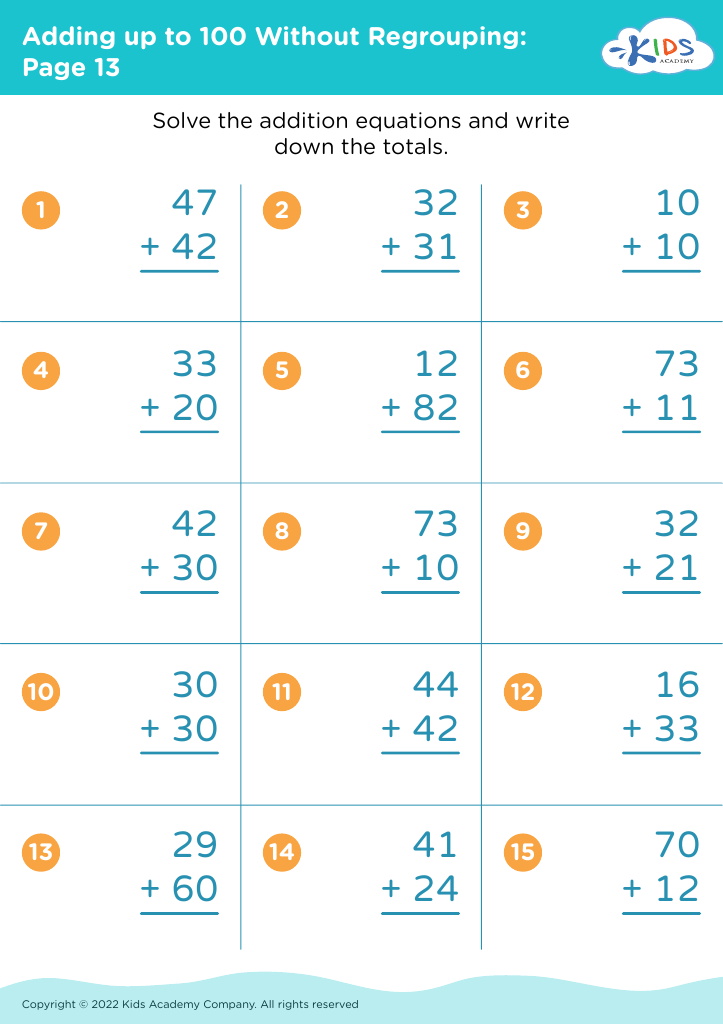
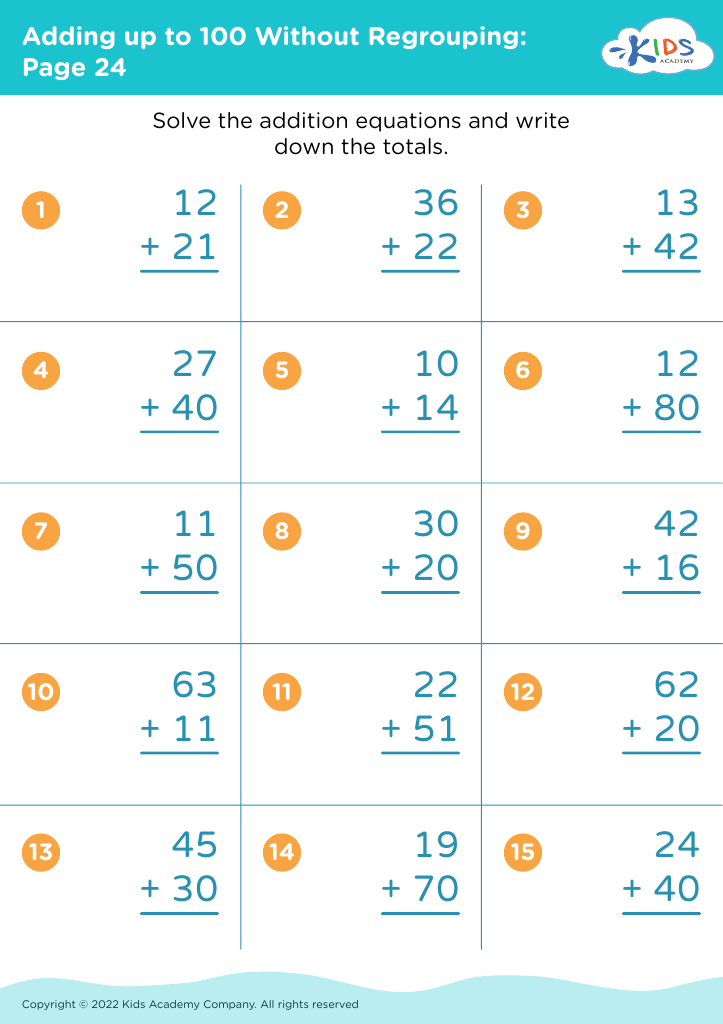
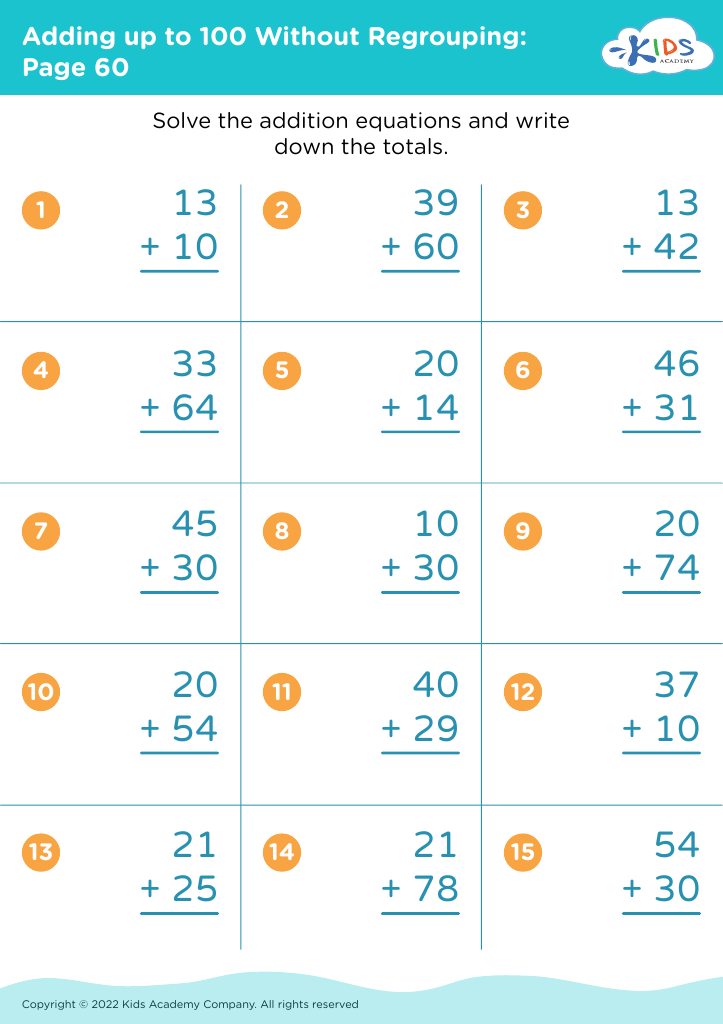




Improving reading skills and foundational math concepts such as adding up to 100 without regrouping are crucial for children ages 8-9, as these abilities are foundational for academic success and overall cognitive development. Proficient reading skills enable children to comprehend age-appropriate texts, fostering critical thinking and communication abilities. Effective readers can navigate various subjects, engage with different formats, and enjoy lifelong learning.
Simultaneously, mastering addition without regrouping helps students build a solid number sense. This skill not only strengthens arithmetic fluency but also sets the stage for more complex mathematical operations they will encounter in future grades. Proficiency in addition contributes to confidence in math, reducing anxiety and building a positive attitude toward the subject.
Furthermore, the ability to read well and perform basic math calculations correlates with improved academic performance across the board. Parents and teachers should prioritize these skills because they reinforce each other; reading comprehension aids in understanding word problems, and a basic grasp of math supports logical proofreading in reading tasks.
In a child’s formative years, implementing strategies that bolser both reading and math skills can have a lasting impact, ensuring a solid foundation for their future educational journeys and life skills.