Reading comprehension Adding up to 100 Without Regrouping Worksheets for Ages 8-9
3 filtered results
-
From - To
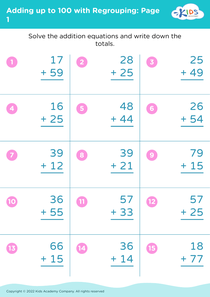
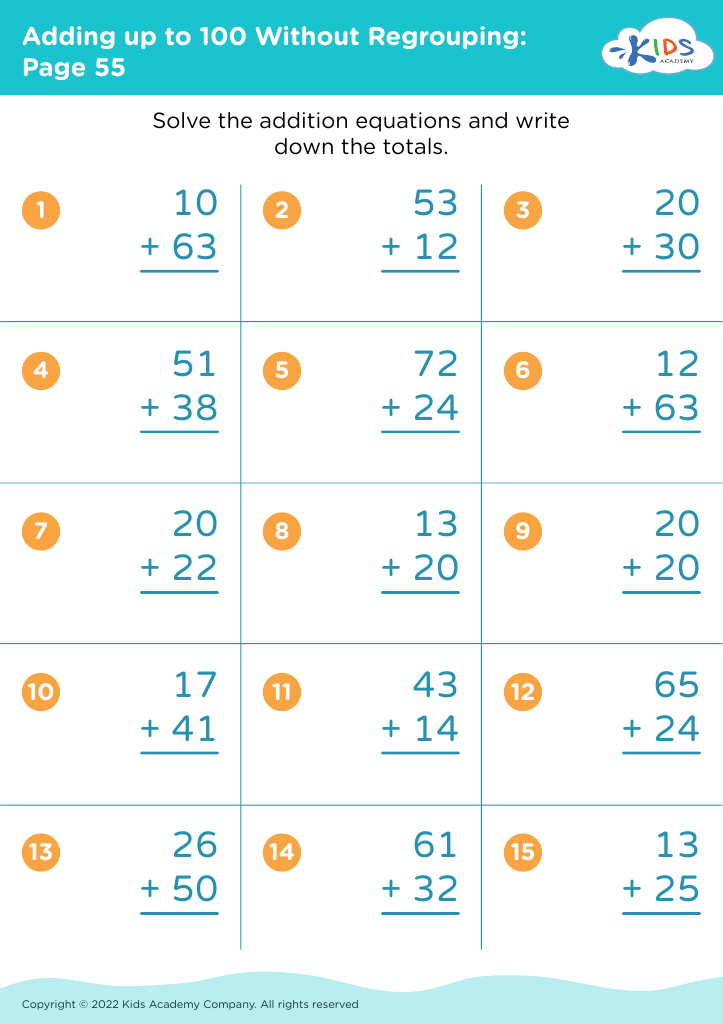
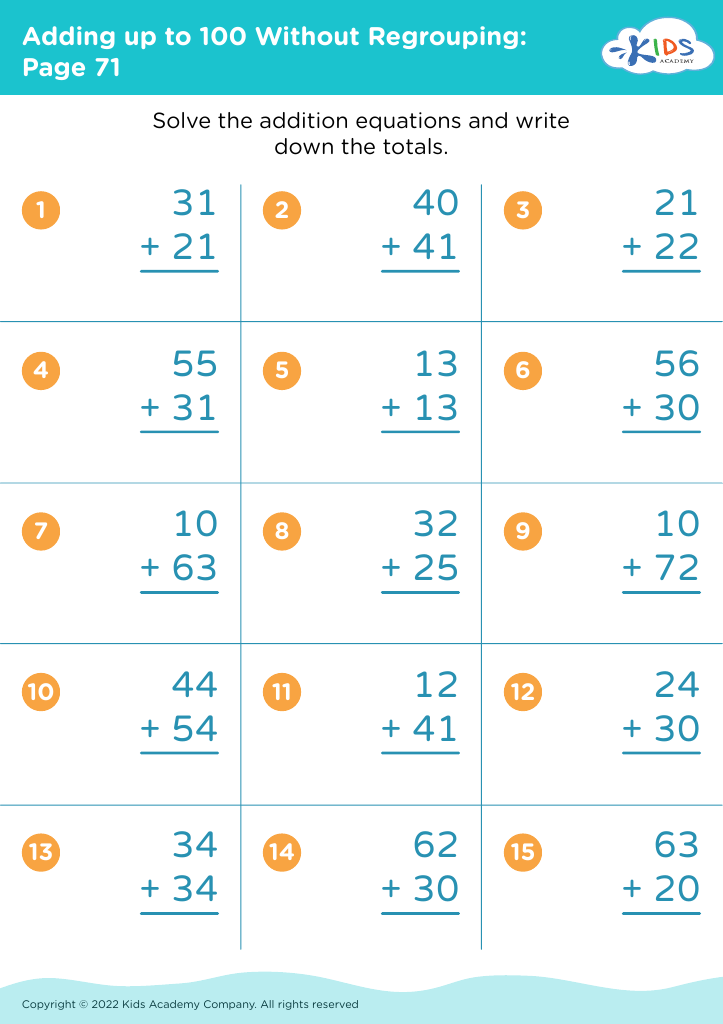
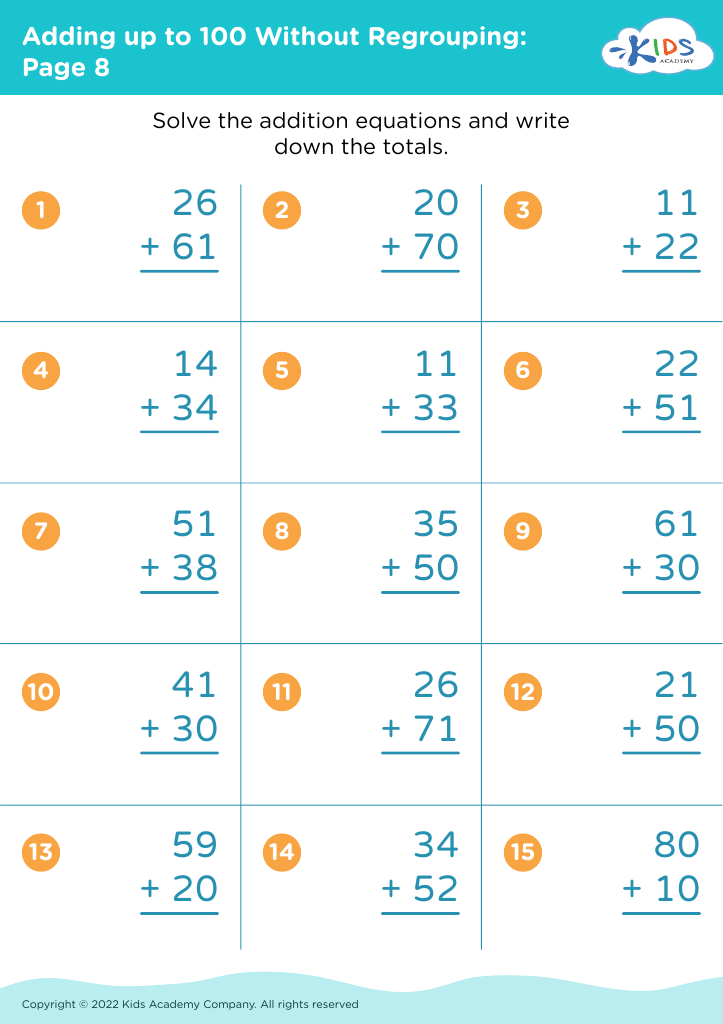
Enhance your child's reading comprehension skills with our specially designed worksheets for ages 8-9, focusing on "Adding up to 100 Without Regrouping". These engaging resources combine math practice and reading exercises, enabling students to grasp essential concepts effortlessly. Each worksheet encourages critical thinking by presenting word problems that require an understanding of addition without regrouping. As children read, they develop their language skills while applying math knowledge. Ideal for classrooms or at-home learning, these worksheets promote confidence and proficiency in both reading and arithmetic. Foster a love for learning in your child with our comprehensive activities that make education enjoyable!




Reading comprehension and addition skills, such as adding up to 100 without regrouping, are critical for children ages 8-9 as they form foundational skills for lifelong learning. First, reading comprehension is essential for understanding instructions, stories, and informational texts. This skill helps children make sense of the world, enhancing their ability to learn across subjects, including science and social studies.
Adding up to 100 without regrouping fosters mathematical fluency. Mastering this concept supports more complex arithmetic in later grades and builds confidence in problem-solving. It also enhances critical thinking and logical reasoning, skills that are vital in both academic and everyday contexts.
When parents and teachers emphasize these skills, they play a crucial role in developing well-rounded students. Incorporating reading comprehension activities and open-ended discussions encourages engagement and enhances understanding. Similarly, interactive math games can make adding up to 100 fun and relatable.
By investing time and effort in these areas, parents and teachers help children succeed academically and socially. Ultimately, attention to reading comprehension paired with solid math skills allows children to navigate both schoolwork and real-world scenarios with confidence and competence. Thus, fostering a love for learning at this age is pivotal for a child's future success.