Understanding multiplication Adding up to 100 Without Regrouping Worksheets for Ages 8-9
5 filtered results
-
From - To
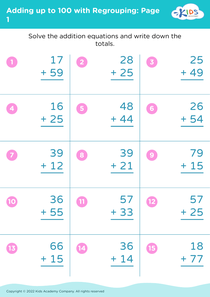
Welcome to our "Understanding Multiplication: Adding Up to 100 Without Regrouping Worksheets" designed specifically for ages 8-9. These engaging worksheets aim to reinforce the foundational skills of multiplication in a fun and interactive way. By focusing on addition up to 100 without regrouping, students will master key concepts while enhancing their problem-solving abilities. Each worksheet is carefully crafted to provide clear explanations and diverse exercises, promoting both independent practice and collaborative learning. Perfect for classroom use or at home, these resources will help your child build confidence in multiplication, setting the stage for future mathematical success. Explore creativity and learning today!
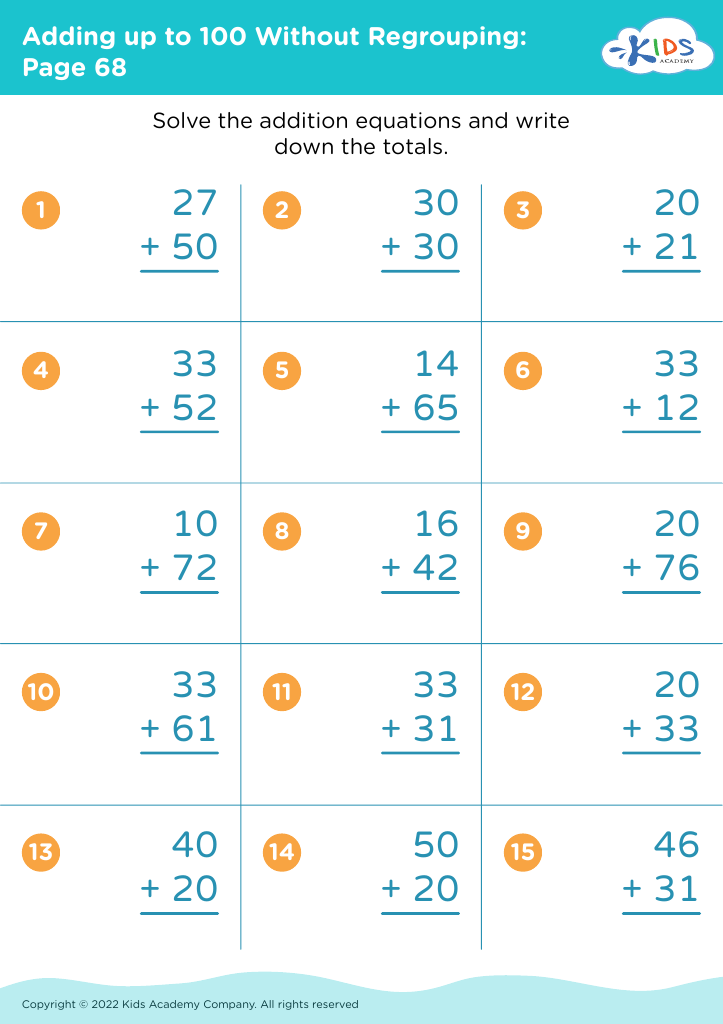
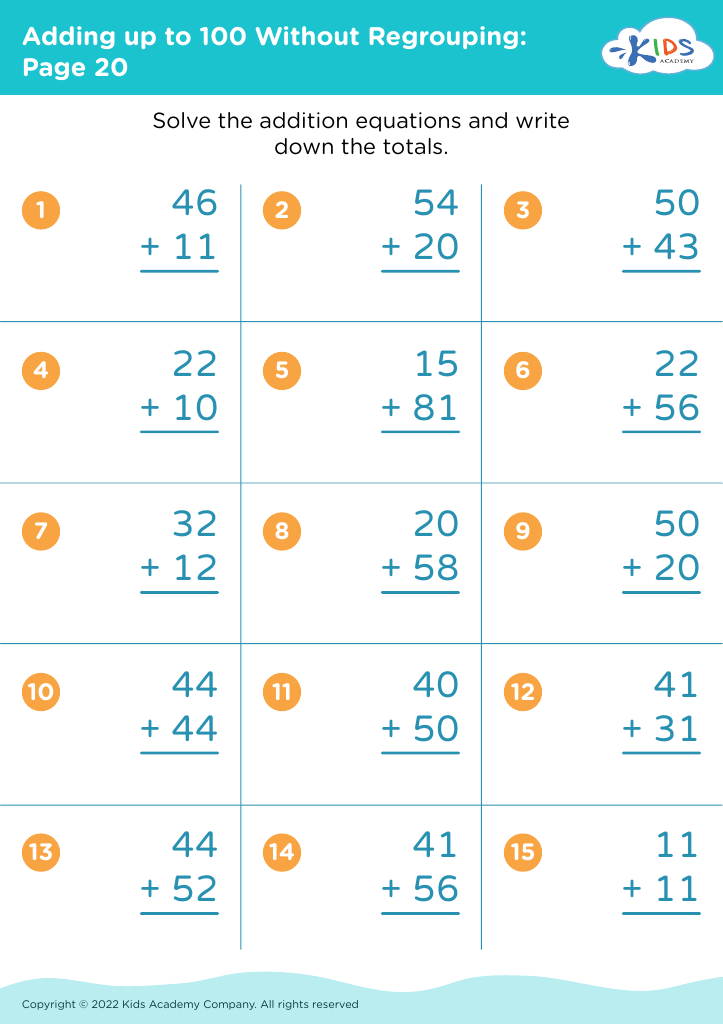
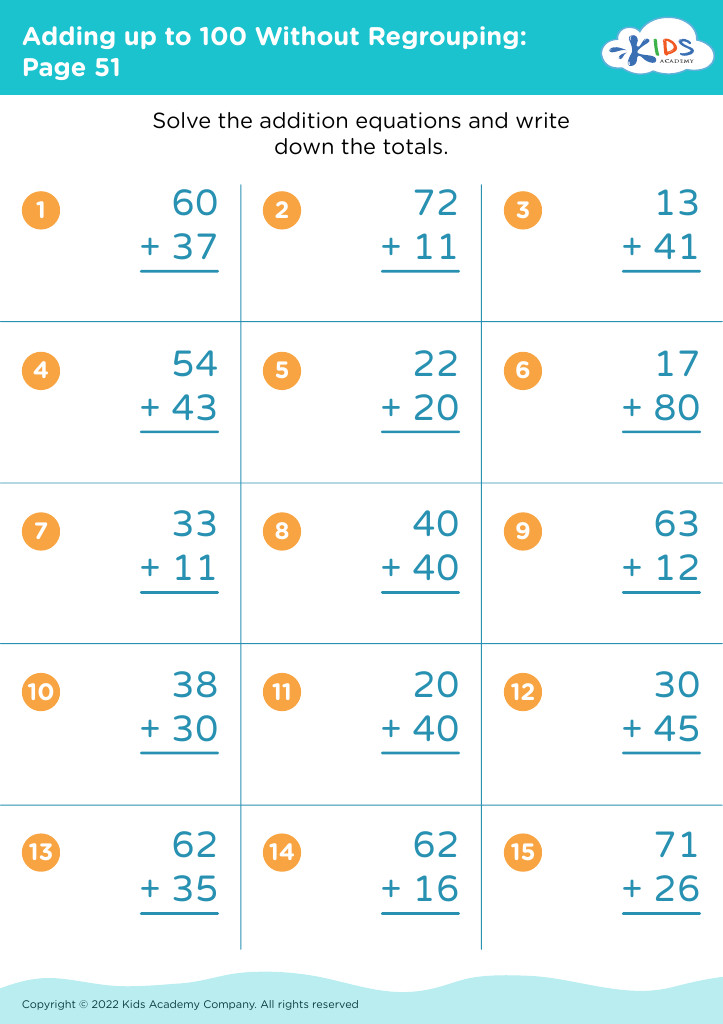
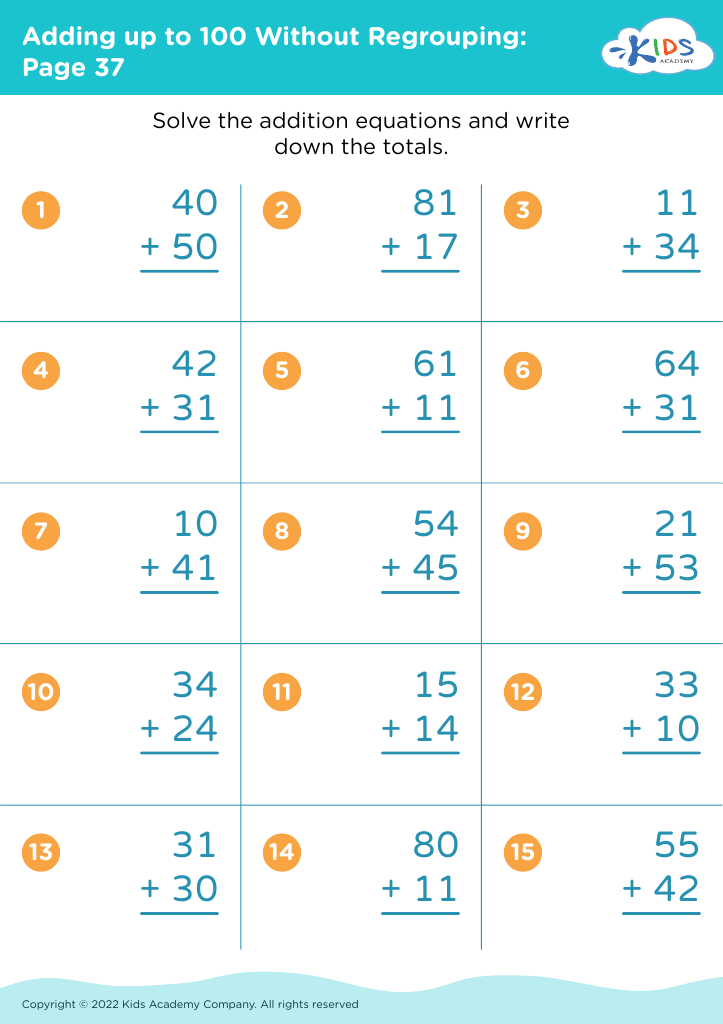
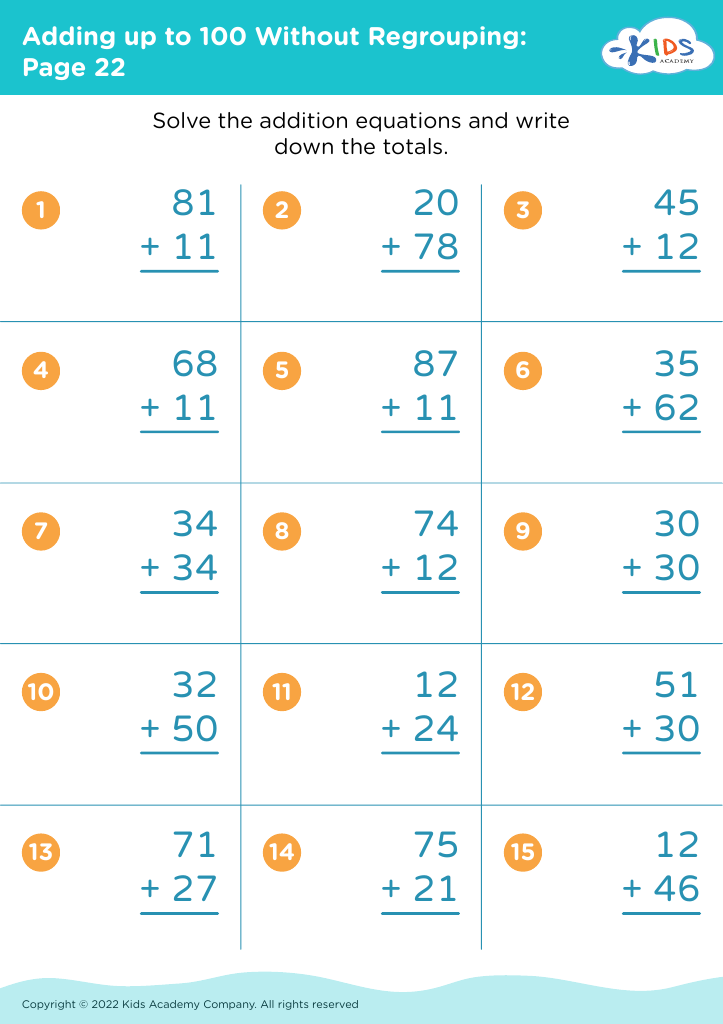




Understanding multiplication and addition, specifically concepts such as "adding up to 100 without regrouping," is vital for children ages 8-9. This foundational knowledge lays the groundwork for more complex mathematical concepts they will encounter later in their education. At this age, students are transitioning from concrete to more abstract thinking, and mastering these skills boosts their confidence in mathematics.
Multiplication, as repeated addition, helps children perceive relationships between numbers, enhancing their number sense. It simplifies problem-solving by making calculations quicker and more efficient. Similarly, learning to add without regrouping reinforces their understanding of place value and number composition. It teaches them strategies for mental arithmetic, providing a crucial toolset for both everyday situations and future higher-level math.
Furthermore, when parents and teachers emphasize these skills, they foster a supportive environment that encourages perseverance and resilience in learning. Cultivating an early love and understanding of math can profoundly influence a child’s academic journey. Promoting these skills also ensures students are not only equipped to tackle math-centric subjects but are also prepared to face challenges in various other disciplines, contributing to their overall educational success.