Recognizing Patterns Adding up to 1000 with Regrouping Worksheets for Ages 8-9
4 filtered results
-
From - To
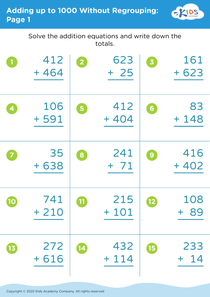
Enhance your child’s math skills with our "Recognizing Patterns Adding up to 1000 with Regrouping Worksheets for Ages 8-9." These engaging worksheets, designed for 3rd grade students, focus on helping young learners recognize numerical patterns and solve addition problems with regrouping up to 1000. The exercises encourage logical thinking and problem-solving by presenting challenges that require identifying sequences and applying addition strategies. Perfect for classroom use or homeschooling, these printable resources support a strong foundation in math. Make learning fun and effective with our expertly crafted worksheets tailored for young minds eager to master new skills!
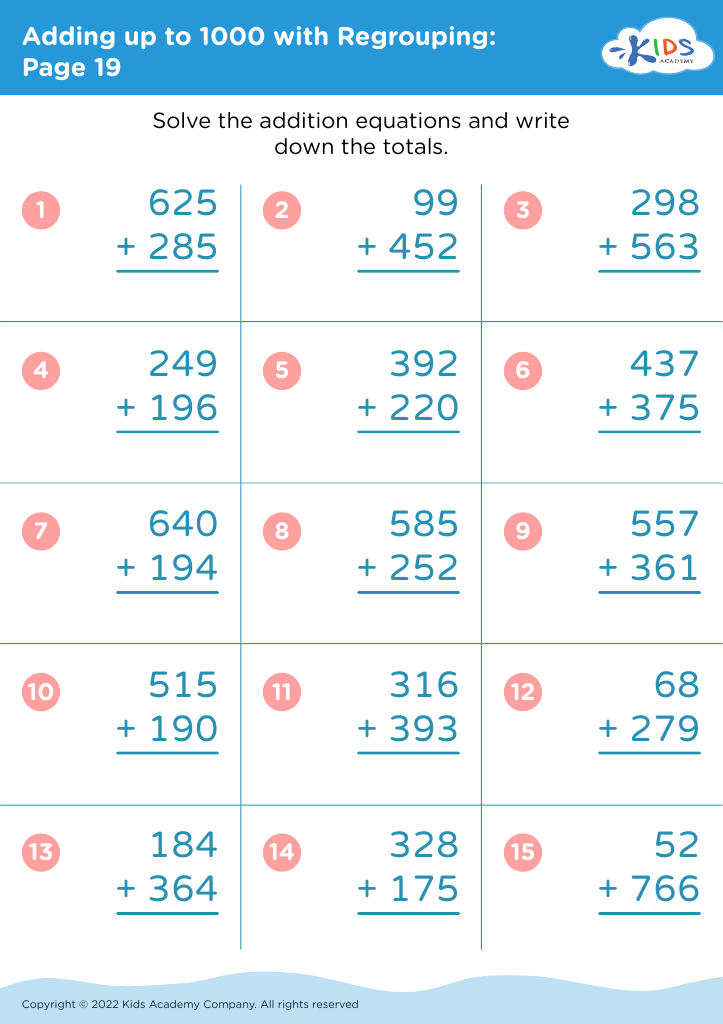
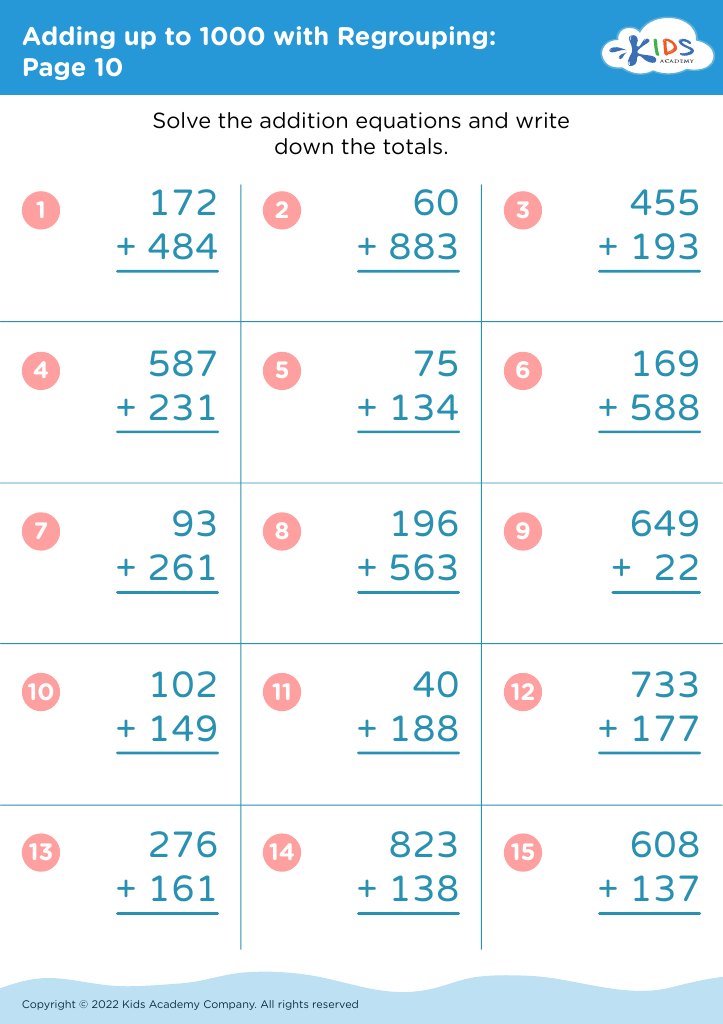
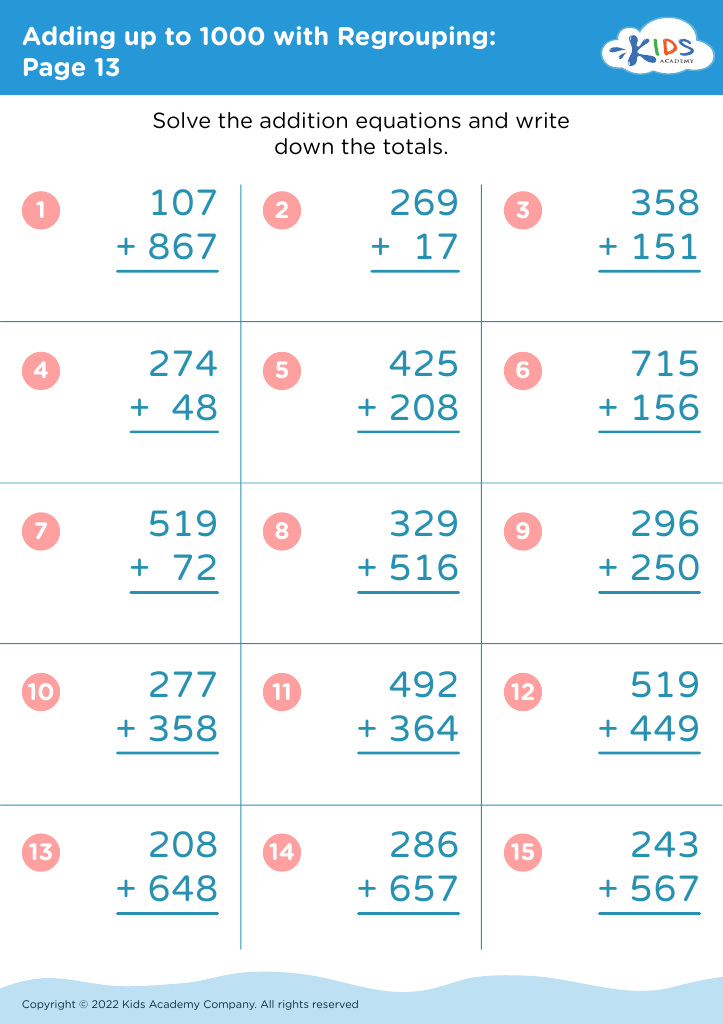
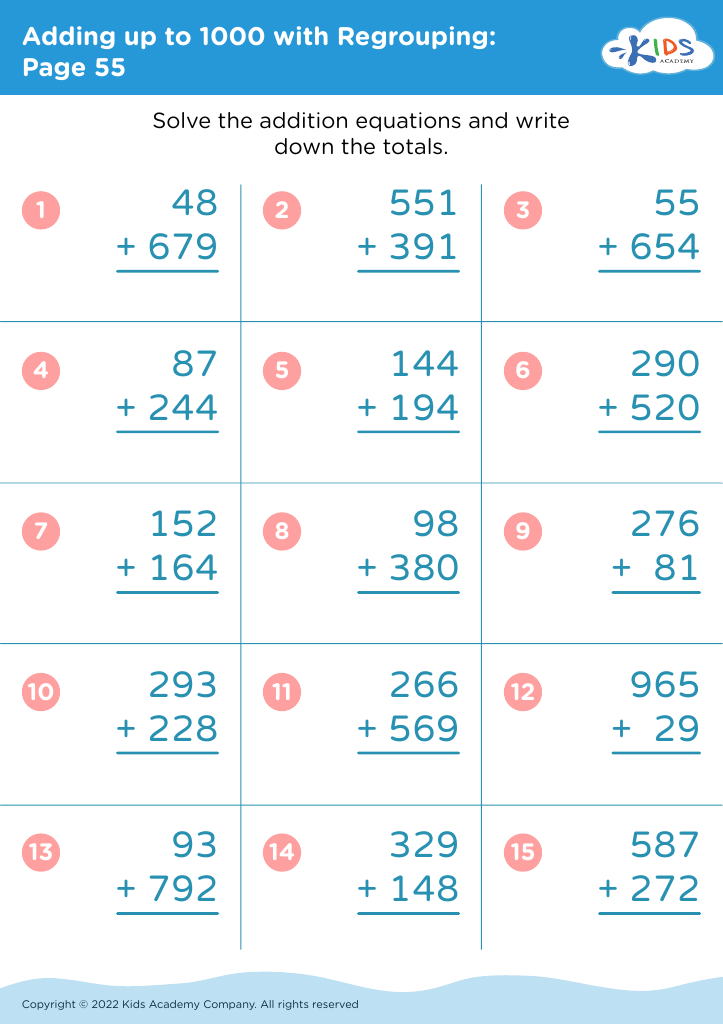


Recognizing patterns and adding up to 1000 with regrouping is a pivotal skill for children aged 8-9 because it lays the foundation for advanced mathematical understanding and fosters critical thinking. At this stage, children are transitioning from simple arithmetic to more complex operations, and the ability to spot patterns aids in predicting outcomes and simplifying calculations. By mastering these skills, children not only improve their numerical fluency but also enhance their problem-solving abilities.
For parents and teachers, nurturing these competencies is crucial because they play a significant role in a child's overall academic success. These skills are directly linked to a variety of everyday tasks and future learning in subjects like algebra and geometry. When children grasp how to regroup and recognize numerical patterns, they can tackle math with greater confidence and accuracy, reducing errors and frustration.
Additionally, understanding these fundamental concepts benefits cognitive development. It encourages logical reasoning, enhances memory retention, and promotes a structured approach to learning across all disciplines. For teachers, they can anticipate future curriculum challenges and ensure students are well-prepared. For parents, supporting these skills at home can reinforce school learning, making education a holistic and collaborative effort. Therefore, investing time and effort into mastering patterns and regrouping is essential for fostering a robust mathematical foundation.