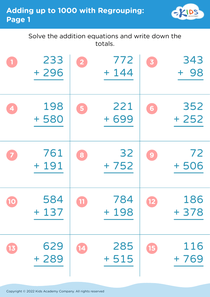
Improve reading skills Adding up to 1000 Without Regrouping Worksheets for Ages 8-9
6 filtered results
-
From - To
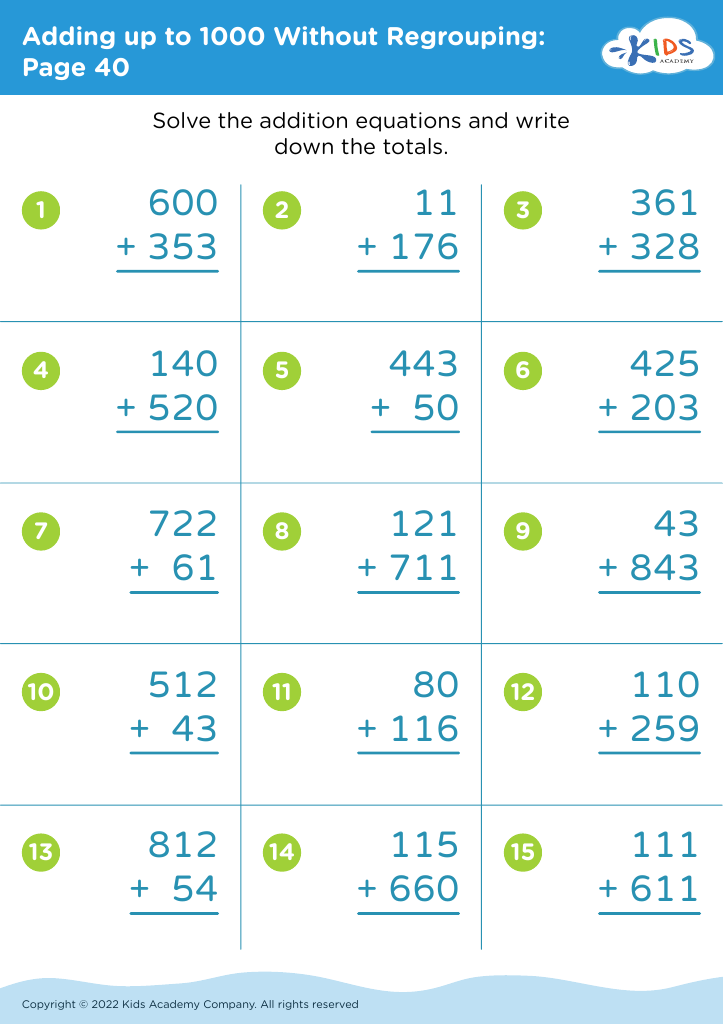
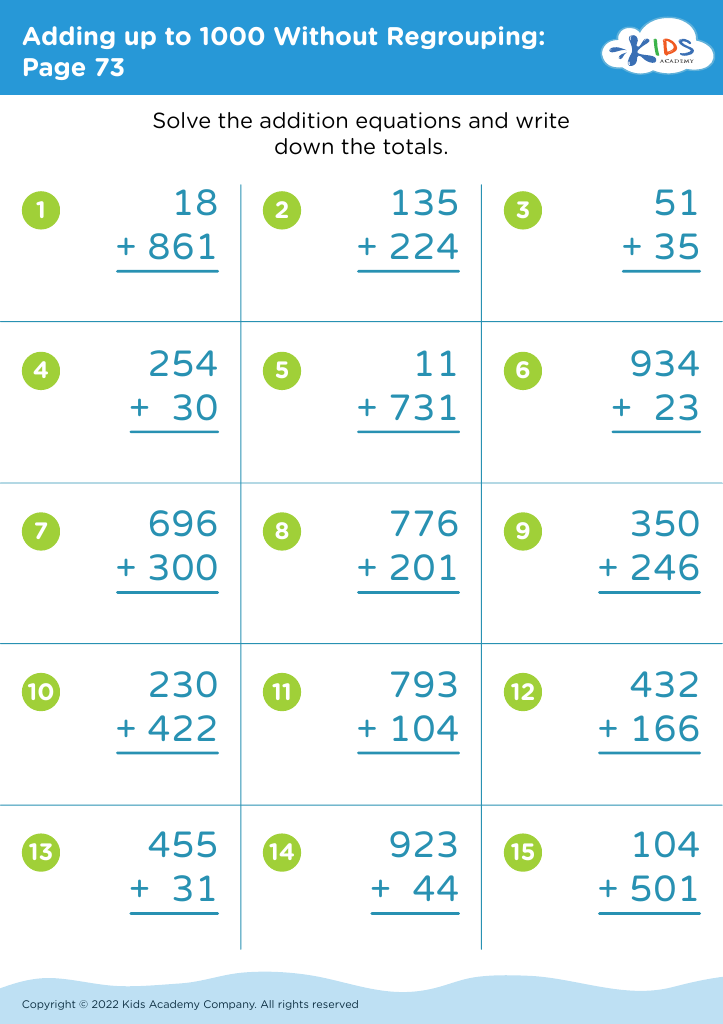
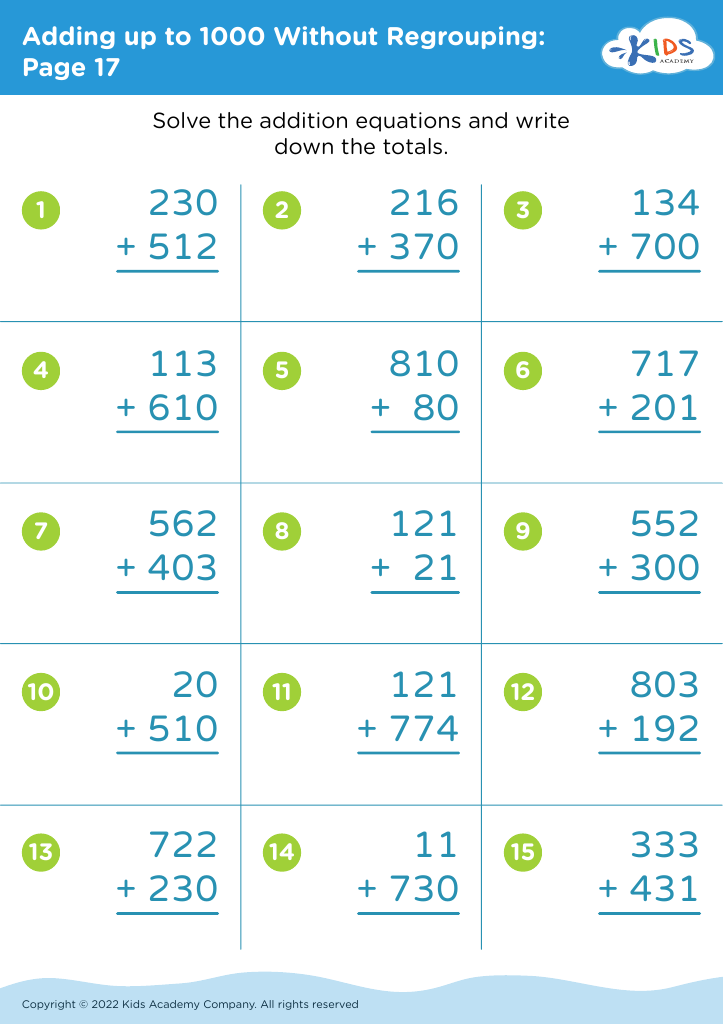
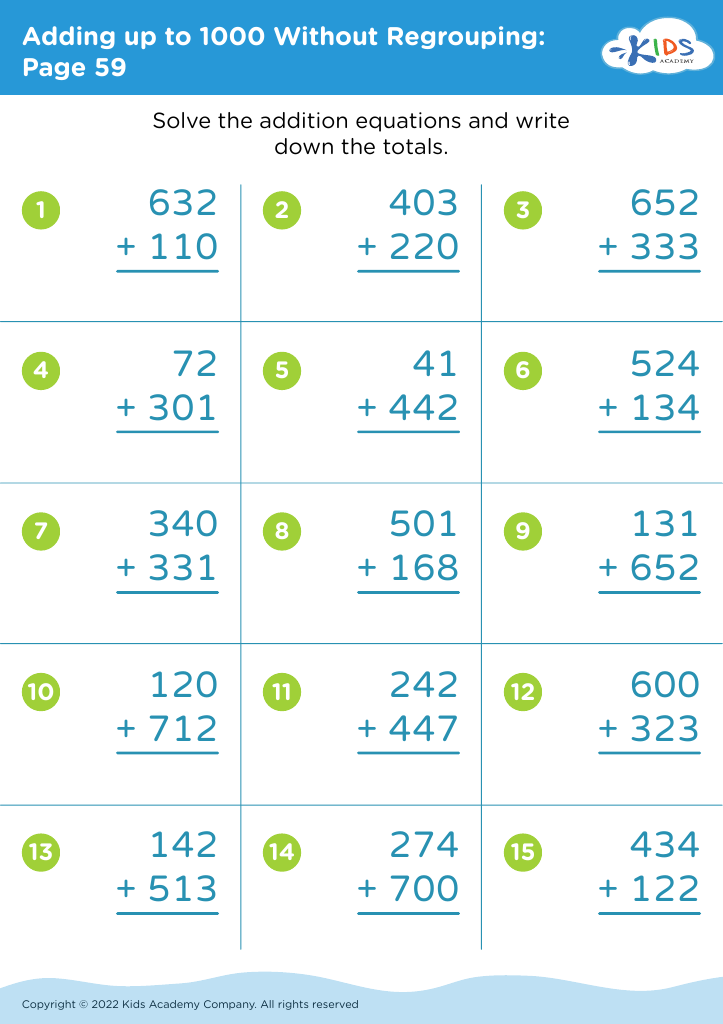
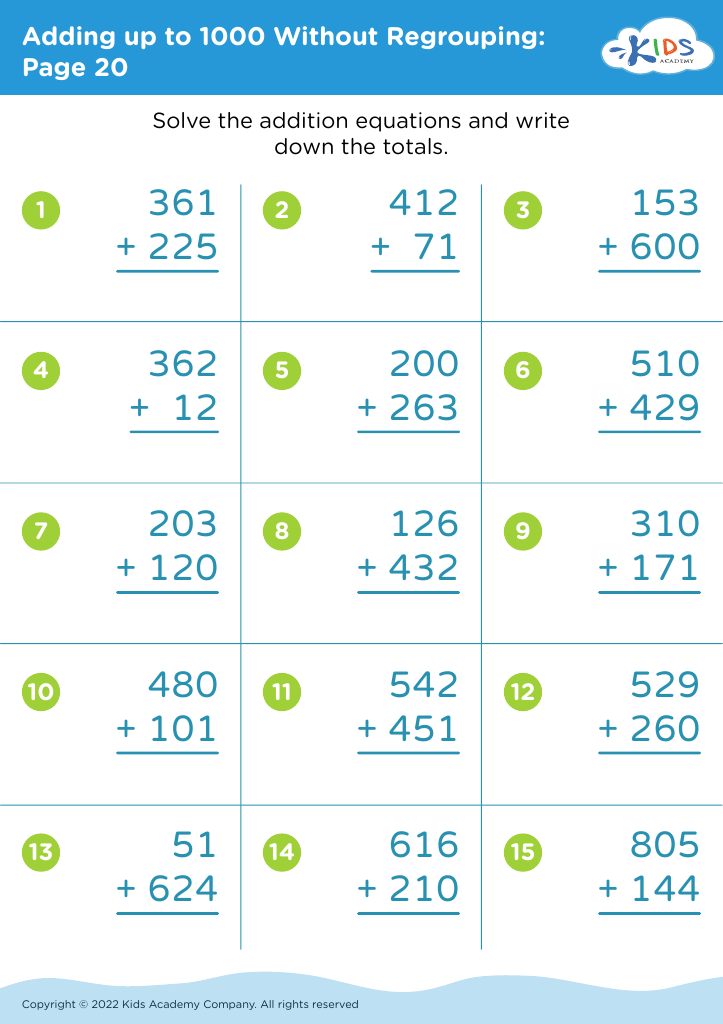
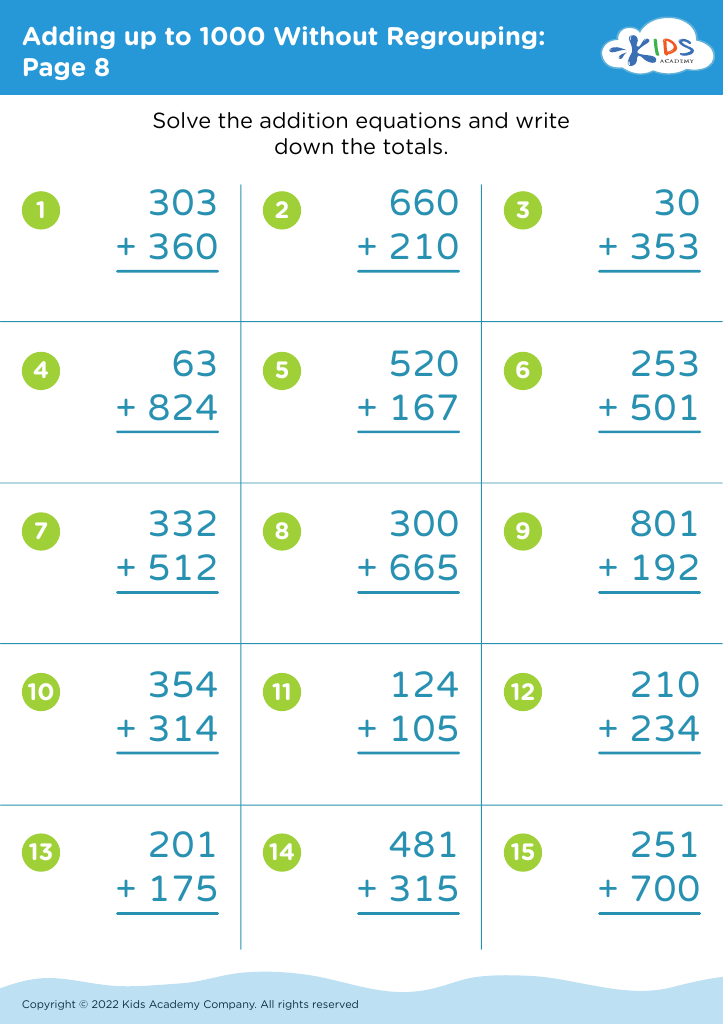
Enhance your child's reading skills while mastering addition with our "Improve Reading Skills Adding up to 1000 Without Regrouping Worksheets" designed specifically for ages 8-9. These engaging worksheets not only focus on arithmetic but also promote comprehension and critical thinking through instructional reading. Students will encounter real-world scenarios that require both mathematical and linguistic skills, helping them build confidence in their reading and numeracy. Perfect for independent or guided learning, these resources integrate fun, educational challenges tailored to the developmental needs of young learners. Foster literacy and numeracy simultaneously with our thoughtfully crafted worksheets today!


Improving reading skills for children ages 8-9 is crucial for their overall academic success and cognitive development. At this age, students move beyond basic decoding to comprehension and critical thinking, forming the foundation for future learning. As they engage with increasingly complex texts, strong reading skills enable them to understand content in subjects like science, math, and social studies, fostering a well-rounded education.
Furthermore, developing strong reading skills enhances a child’s ability to communicate effectively. Engaging with diverse literature expands vocabulary and comprehension, empowering children to express their thoughts and ideas with clarity. This linguistic proficiency is vital in collaborative environments and future professional scenarios.
For children learning mathematics without regrouping, a solid grasp of reading supports their understanding of word problems. Being able to read and interpret a problem accurately is essential for calculations and mathematical reasoning. Moreover, this integration of reading with math concepts fosters critical thinking, encouraging students to analyze problems and deduce solutions effectively.
Ultimately, parents and teachers should prioritize reading skills to help children thrive academically and build a love for learning that will benefit them throughout their lives. Investing in this area now lays the groundwork for future achievements in both language and mathematics.