Simplifying Fractions Adding up to 1000 Without Regrouping Worksheets for Ages 8-9
3 filtered results
-
From - To
Unlock the joy of learning with our "Simplifying Fractions Adding up to 1000 Without Regrouping Worksheets" perfectly designed for ages 8-9! Tailored to boost math confidence, these worksheets introduce young learners to simplifying fractions and adding without regrouping through engaging, fun activities. Each sheet strengthens foundational skills, encourages critical thinking, and makes complex concepts easy to grasp. Foster a lifelong love for math and watch as your child masters these essential skills with ease. Visit our webpage for a wide range of age-appropriate activities that make learning both effective and enjoyable!
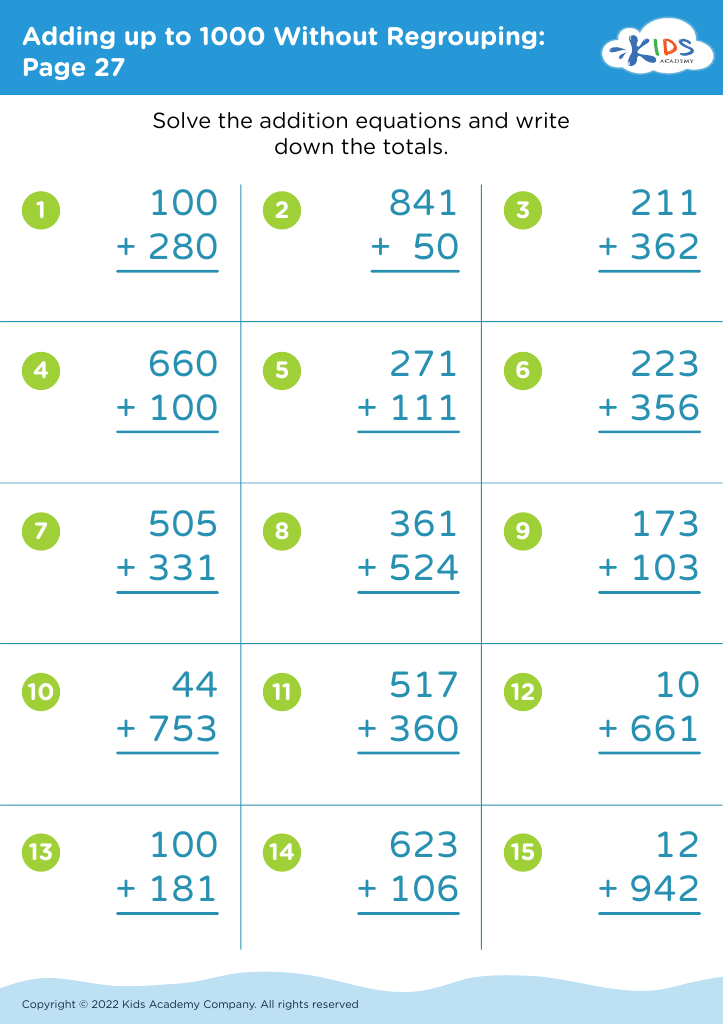
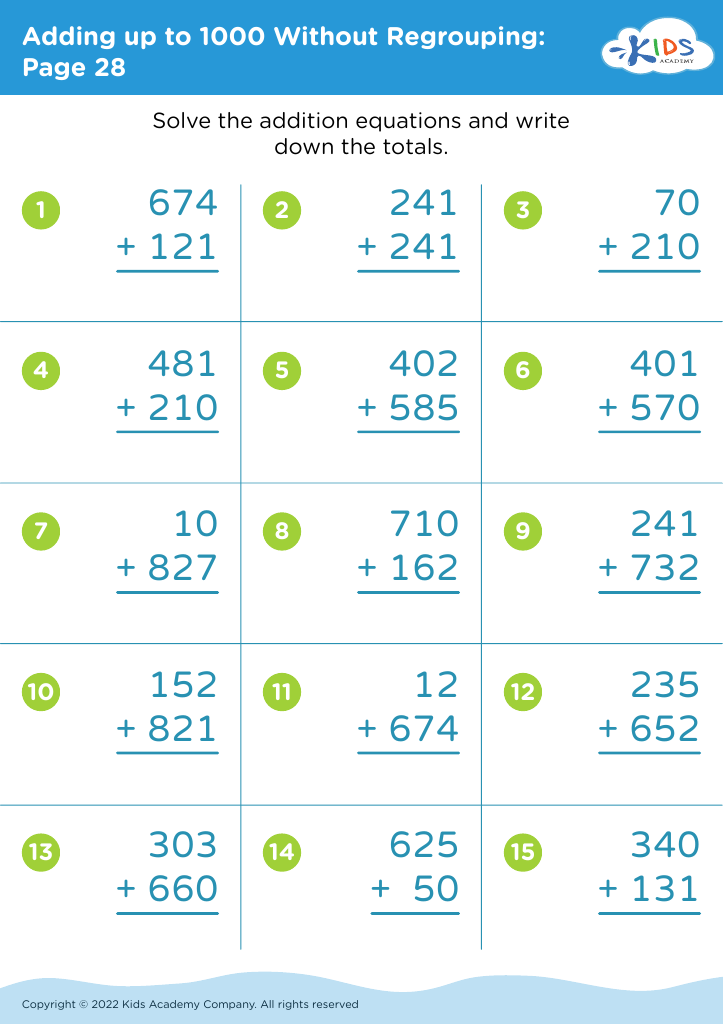
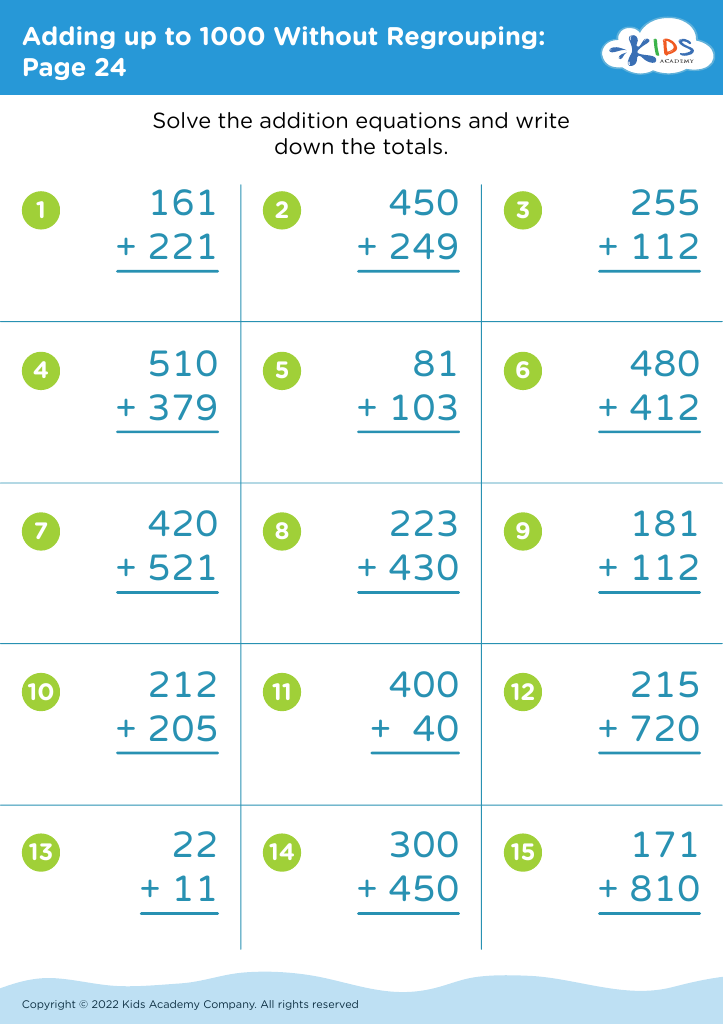


Simplifying fractions and practicing addition without regrouping are essential skills for kids aged 8-9. When parents and teachers focus on these, they sharpen fundamental mathematical operations that are crucial for later advanced concepts. Simplifying fractions, for instance, boosts a child's understanding of multiples and divisors and enhances their numerical fluency, making complex fractions more manageable.
Adding up to 1000 without regrouping strengthens their addition skills within a controlled framework. It provides a sense of accomplishment as they learn to navigate large numbers and reinforces their ability to perform operations quickly and accurately. This serves as a stepping stone to more complex numerical concepts that require regrouping and precise calculation.
For young learners, these skills translate to confidence in handling numbers both in and out of the classroom. It empowers them to approach math challenges with a can-do attitude and less anxiety, laying a strong mathematical foundation. It also ingrains patience and problem-solving habits that impact other areas of learning. As educators and parents, nurturing these skills ensures children are not just academically prepared but develop a positive lifelong relationship with math.
The mastery of these fundamental topics is more than just meeting educational standards; it's about preparing children for everyday tasks and equipping them with skills to excel in all subject areas.