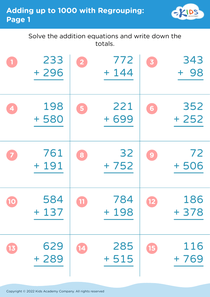
Understanding fractions Adding up to 1000 Without Regrouping Worksheets for Ages 8-9
13 filtered results
-
From - To
Welcome to our engaging resource on "Understanding Fractions: Adding Up to 1000 Without Regrouping Worksheets" for children ages 8-9! These specially designed worksheets focus on helping young learners grasp the concept of fractions while enhancing their addition skills. Through carefully structured exercises, students will navigate adding fractions and whole numbers without the need for regrouping, all while building their confidence in math. Ideal for classroom use or home study, our worksheets provide clear instructions and engaging visuals to make learning fractions enjoyable. Equip your child with the tools they need to master math concepts and foster a love for learning!
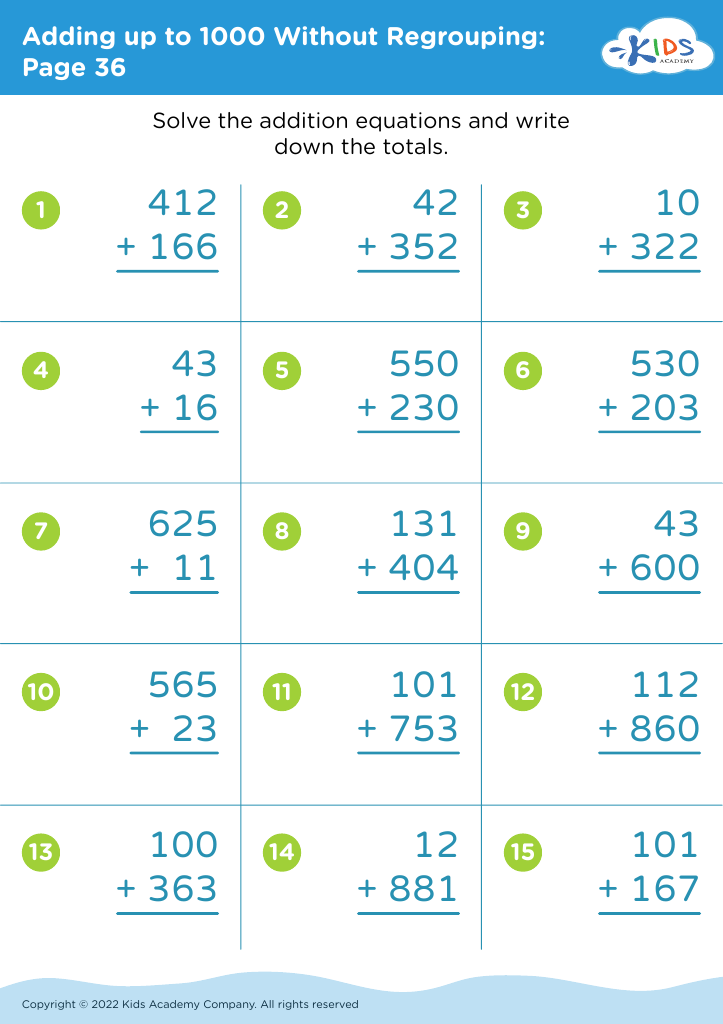
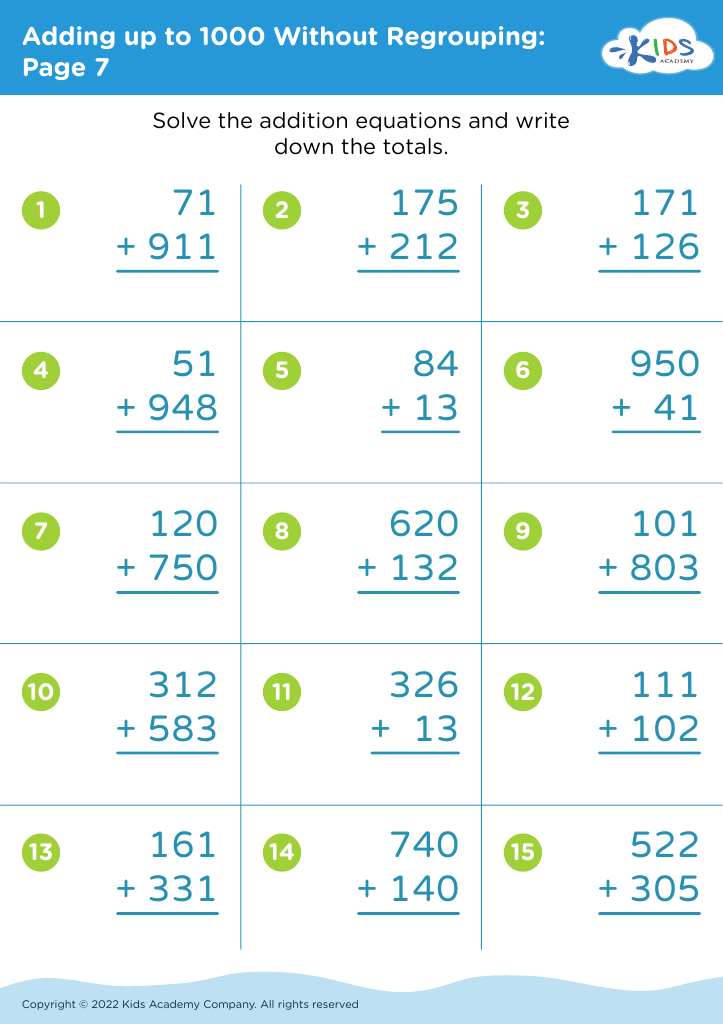
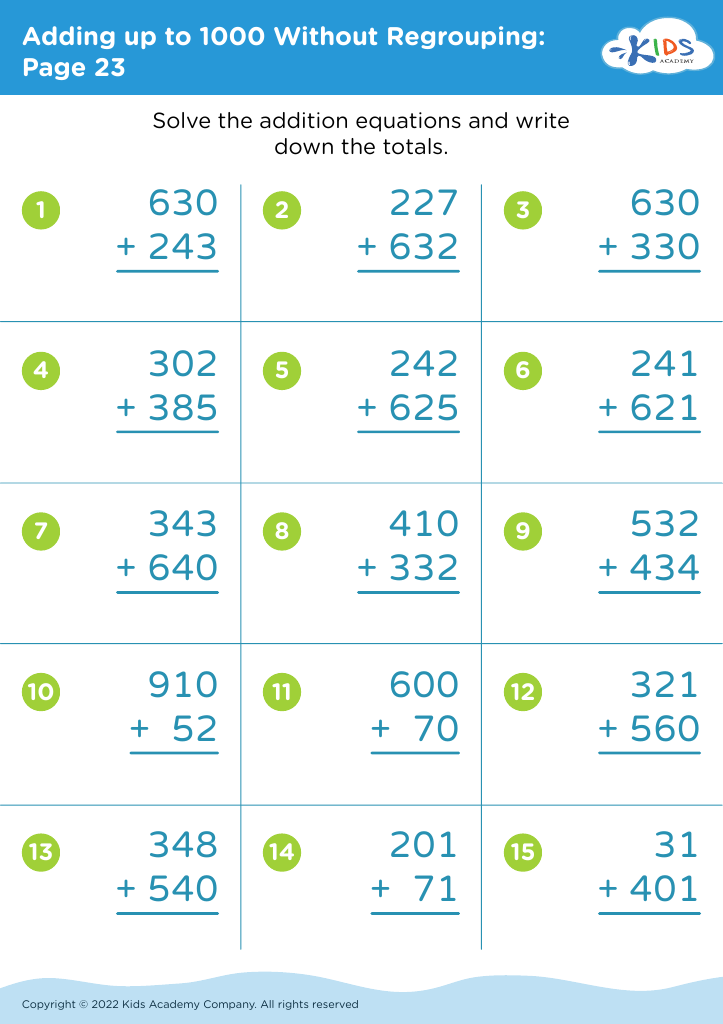
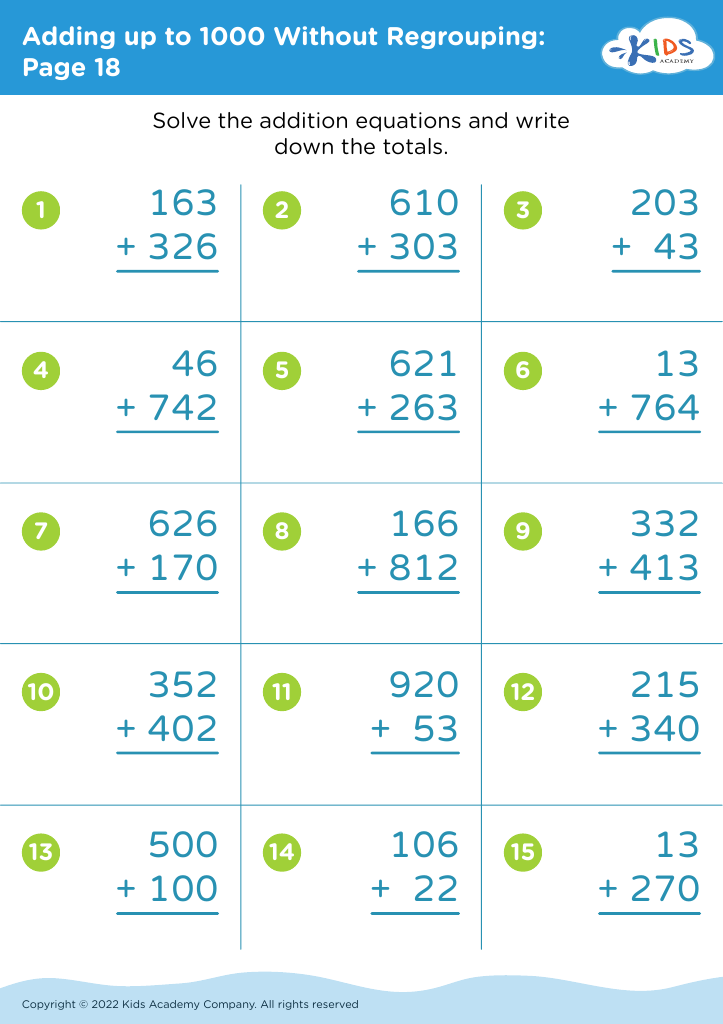
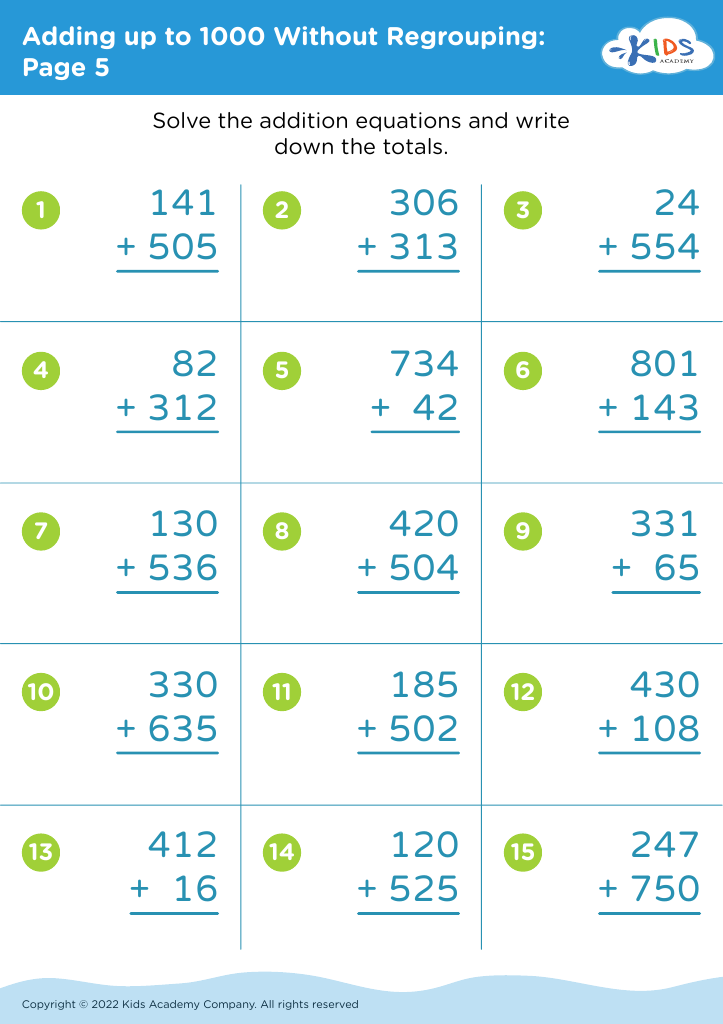
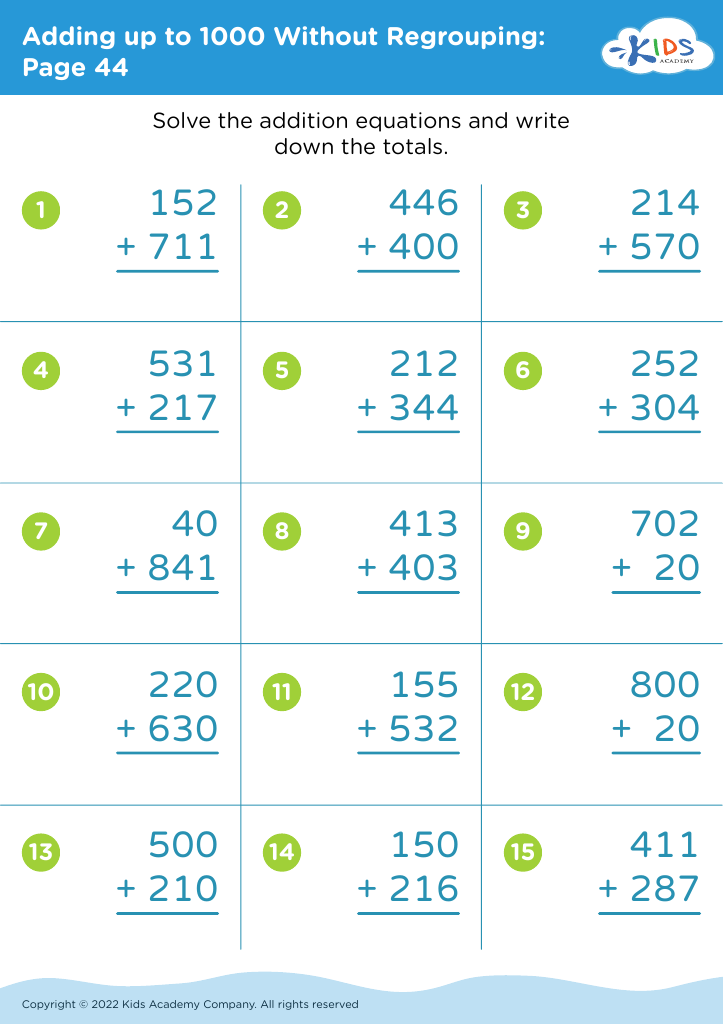
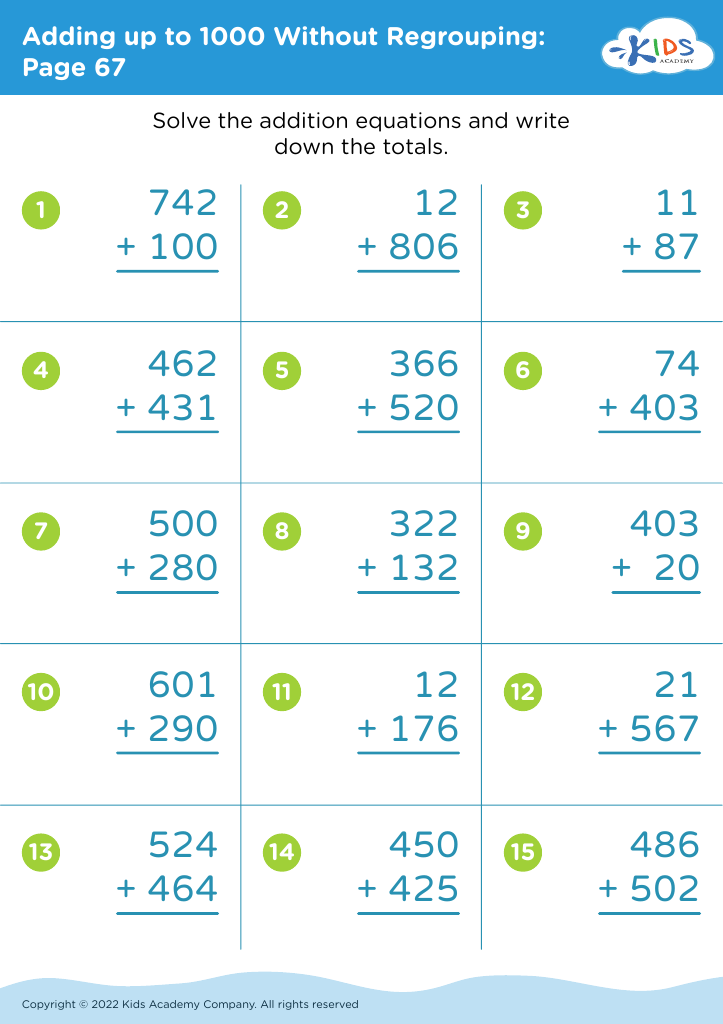
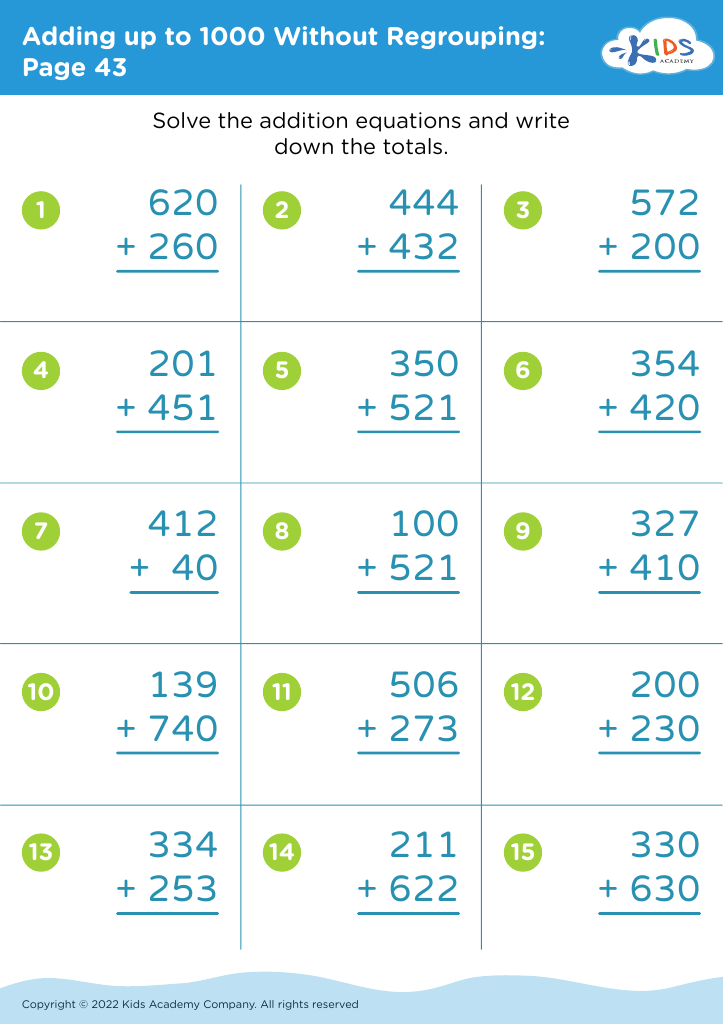
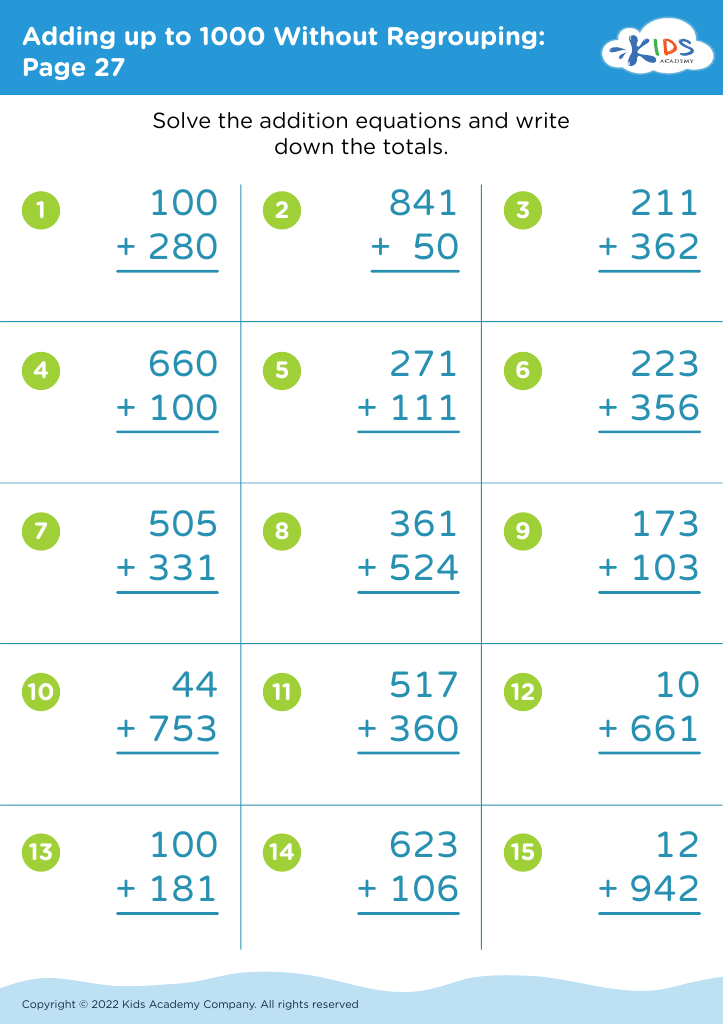
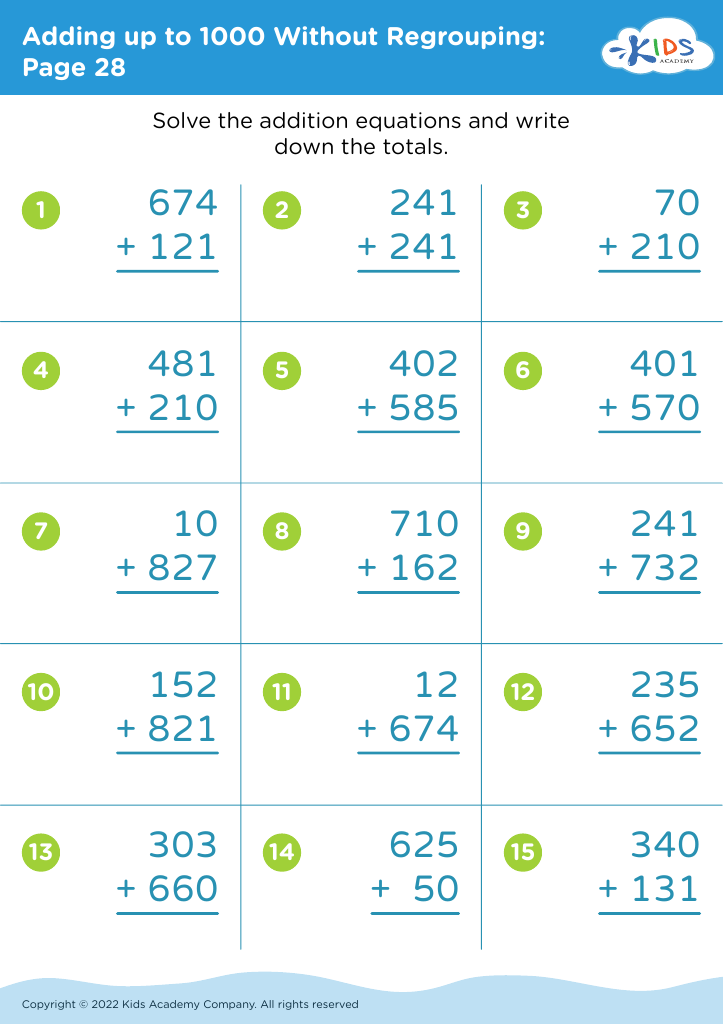
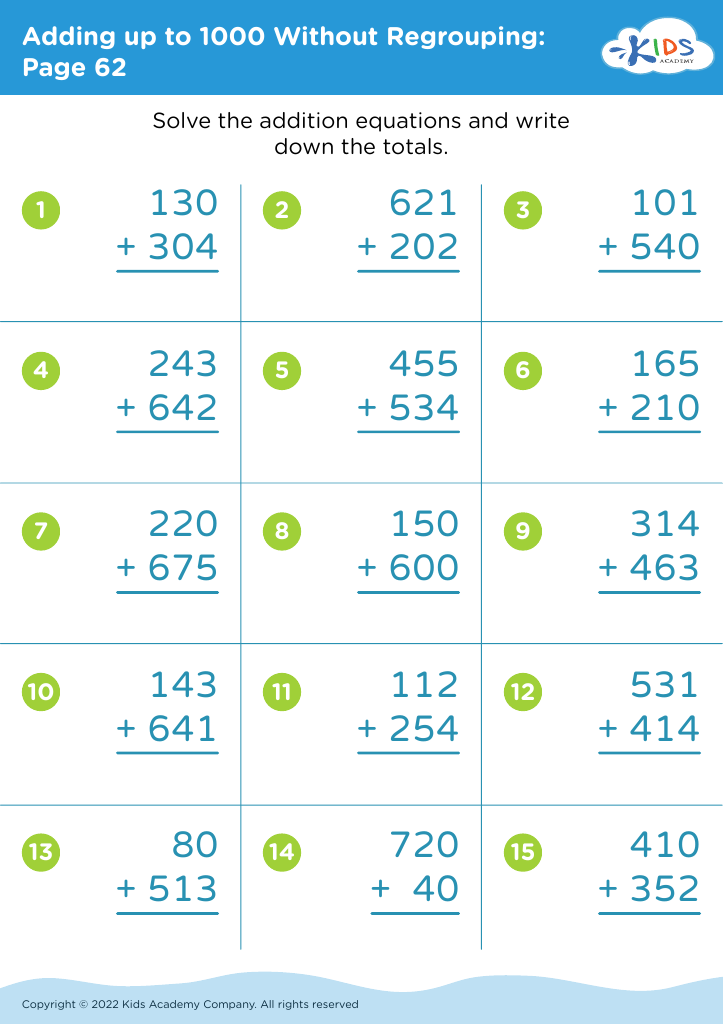
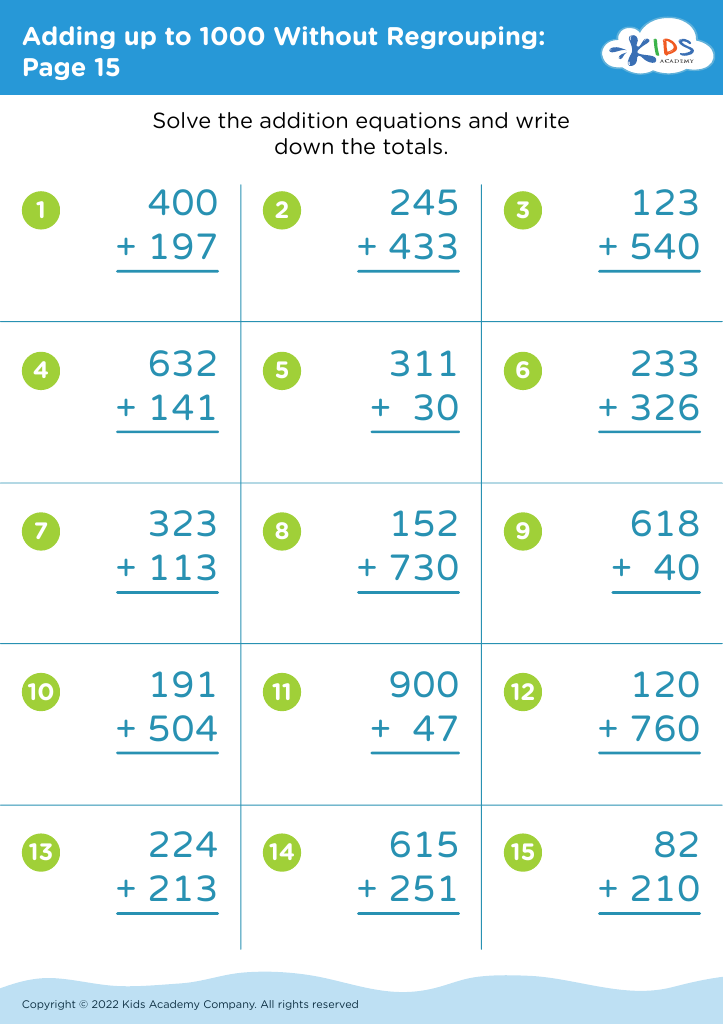
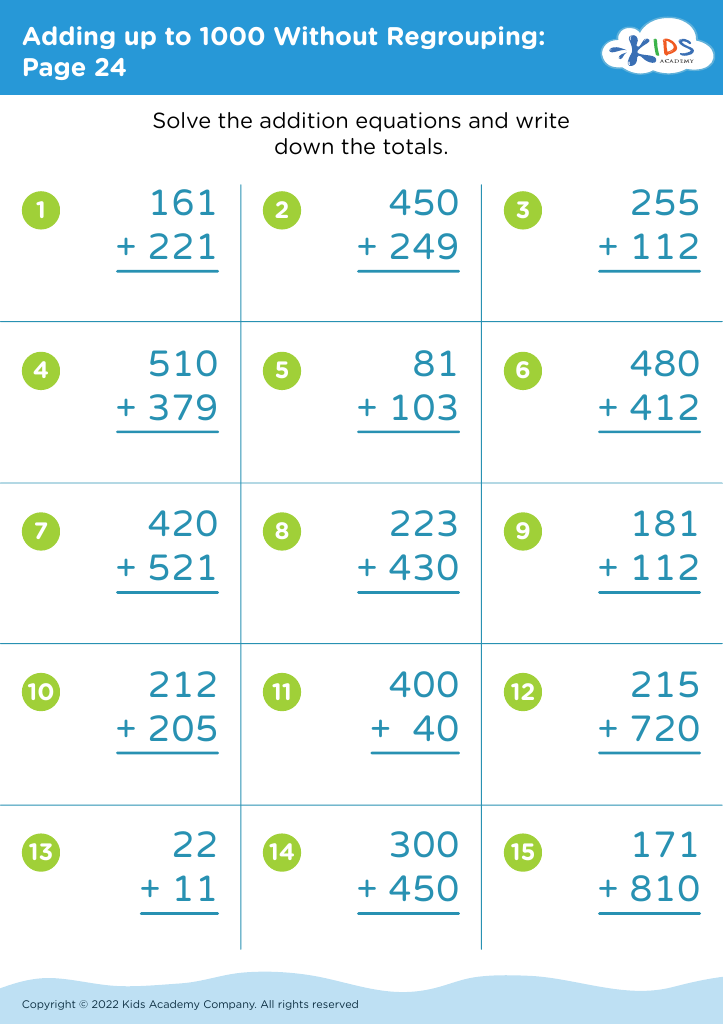


Understanding fractions and developing skills in adding fractions up to 1000 without regrouping is crucial for 8-9-year-olds for several reasons. First, this foundational knowledge builds essential math skills that form the basis for future academic success. At this age, children sharpen their problem-solving abilities and reasoning skills, which are vital not only in mathematics but also in everyday situations.
Moreover, learning fractions enhances children's comprehension of real-life concepts. For example, understanding halves, quarters, or thirds can assist them in cooking, sharing, and budgeting. This familiarity with fractions sets the stage for more complex mathematical concepts and operations in later grades.
Additionally, by mastering addition without regrouping, children can increase their confidence in handling larger numbers and improve their arithmetic fluency. This contributes to a positive math experience and helps mitigate math anxiety, fostering a lifelong appreciation for the subject.
Parents and teachers play a crucial role in supporting students’ understanding of these concepts. Engaging children with hands-on activities, visual aids, and real-world applications will enhance their learning experience and ensure they grasp these important mathematical principles. Ultimately, investing time in fractions now equips children with valuable skills that will serve them well across various aspects of their lives.