Number Recognition Adding up to 1000 Worksheets for Ages 8-9 - Page 2
31 filtered results
-
From - To
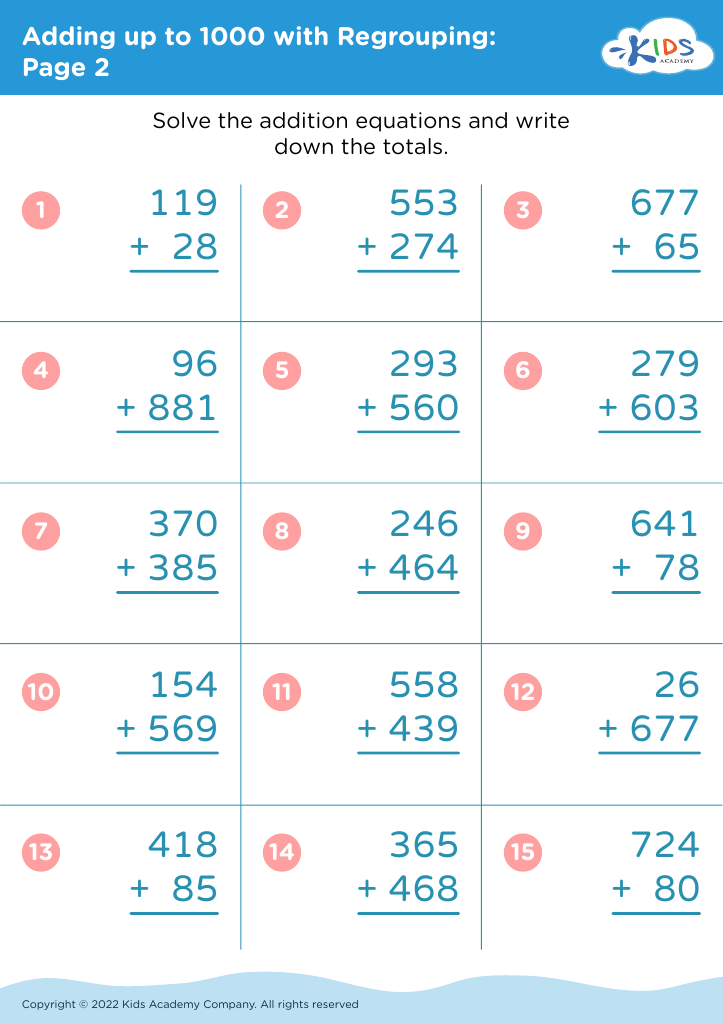
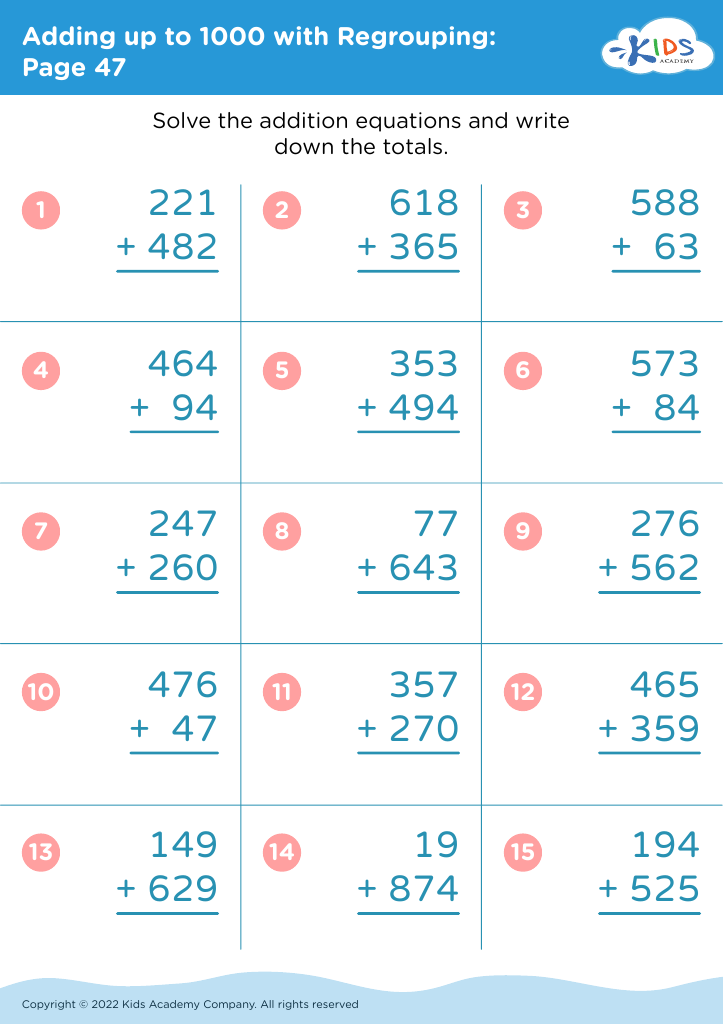
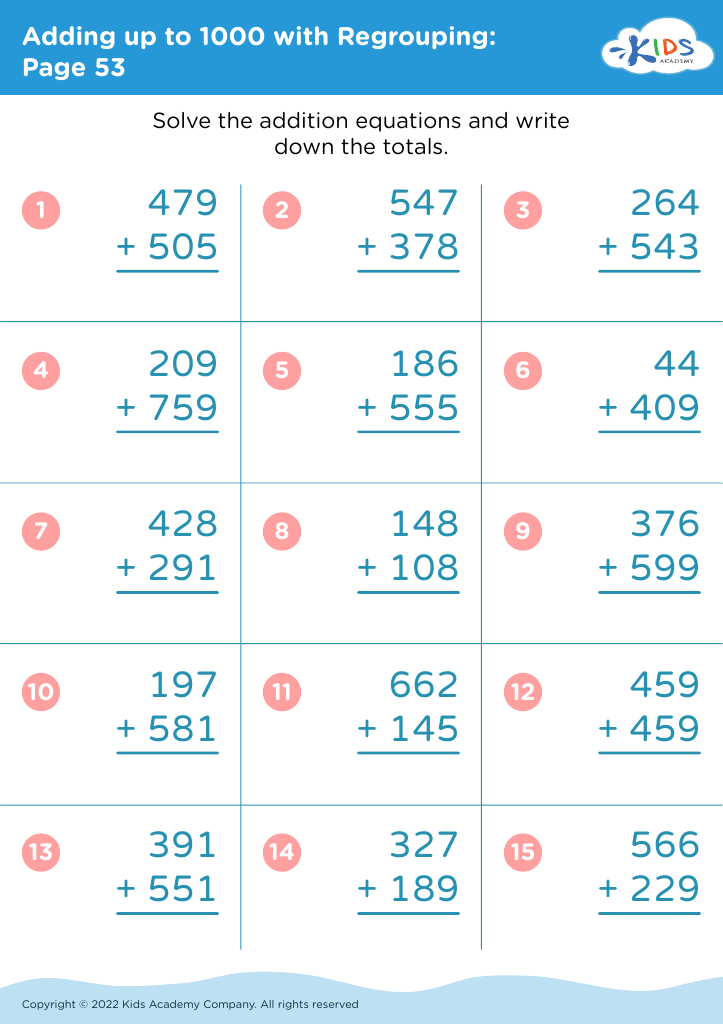
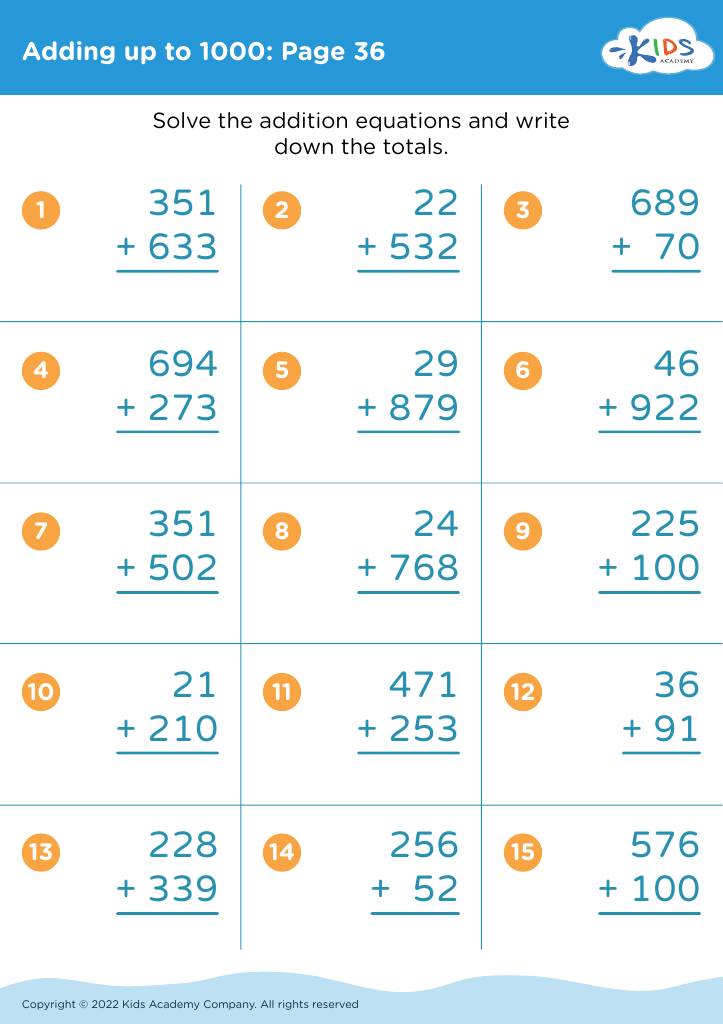
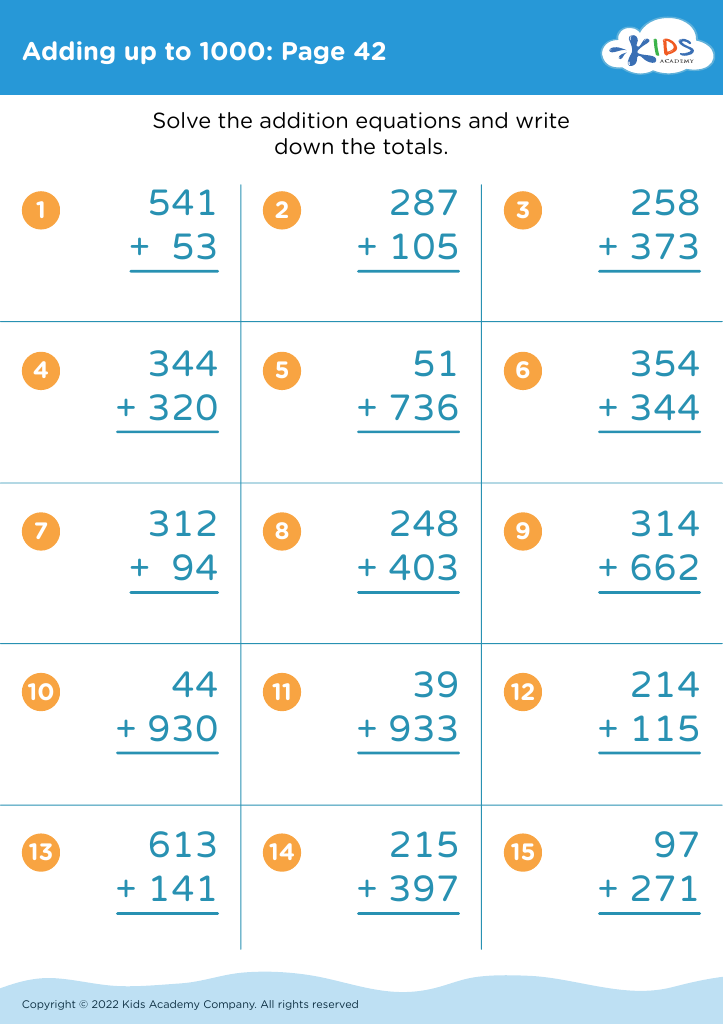
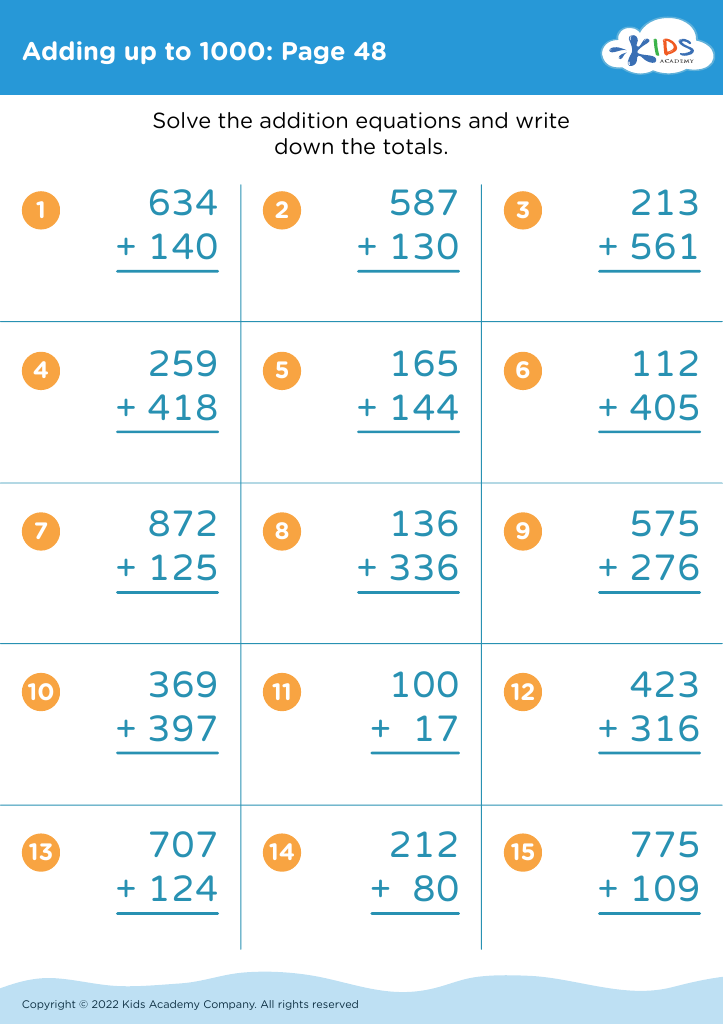
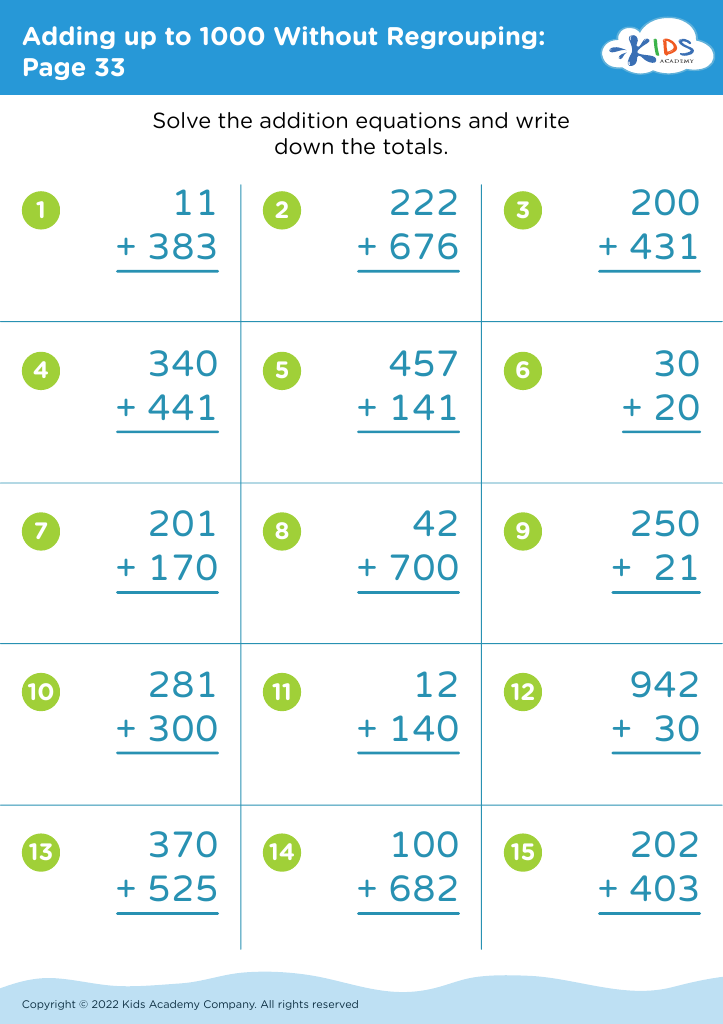




Number recognition and the ability to understand and work with numbers up to 1000 are crucial skills for children aged 8-9. At this stage, students transition from basic arithmetic to more complex concepts in mathematics, and a solid foundation in number recognition is essential for their academic success.
Firstly, mastering number recognition strengthens a child's confidence in their mathematical abilities, allowing them to tackle complex problems with ease. This skill set not only prepares them for schoolwork but also has real-world applications, such as budgeting or measurement in everyday tasks.
Moreover, number recognition up to 1000 fosters critical thinking skills as children begin to understand relationships between numbers, positioning (place value), and the concept of larger quantities. This groundwork is integral for future topics, including multiplication, division, and fractions.
Finally, teachers and parents play a pivotal role in supporting this learning journey. Engaging with children through games, visual aids, and practical activities enhances their understanding and retention. By prioritizing number recognition, parents and educators help ensure that children develop a genuine interest in math, which can lead to lifelong learning and skill mastery in an increasingly numerate world.








