Simplifying Fractions Adding up to 1000 Worksheets for Ages 8-9
6 filtered results
-
From - To
Explore our engaging worksheets designed for children aged 8-9 that focus on simplifying fractions while mastering addition up to 1000! These age-appropriate activities encourage young learners to hone their math skills through clear, step-by-step instructions and fun exercises. Each worksheet promotes critical thinking and problem-solving abilities, making fractions understandable and enjoyable. Ideal for both classroom use and at-home learning, these resources will help students build a strong mathematical foundation. Give your child the confidence they need in math while they practice simplifying fractions and preparing for future concepts. Start simplifying with our worksheets today!
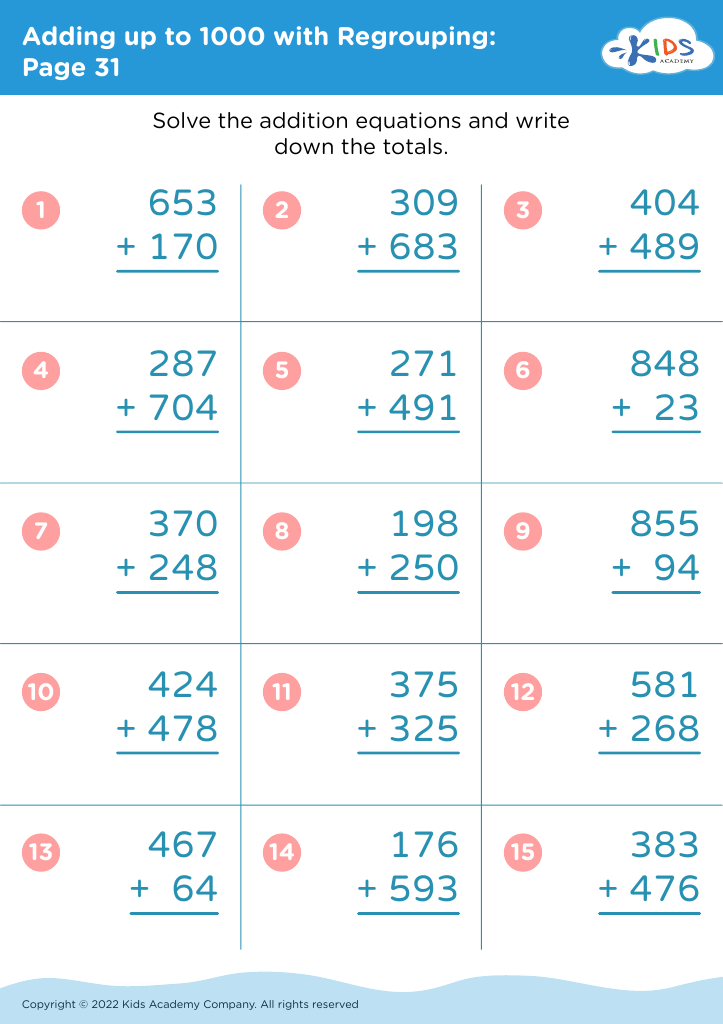
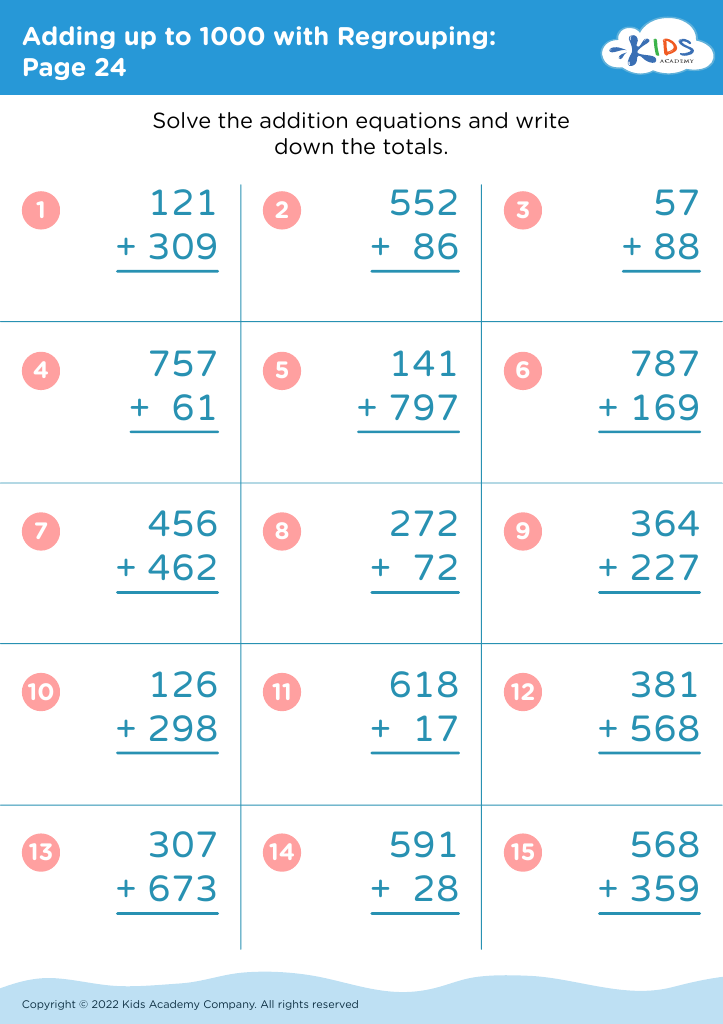
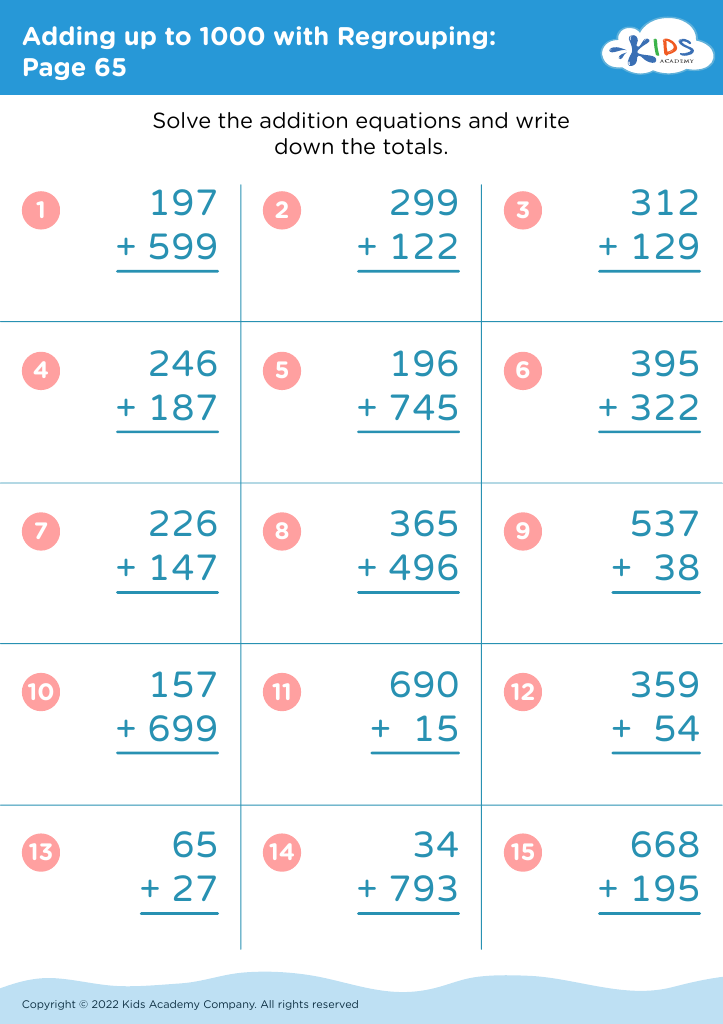
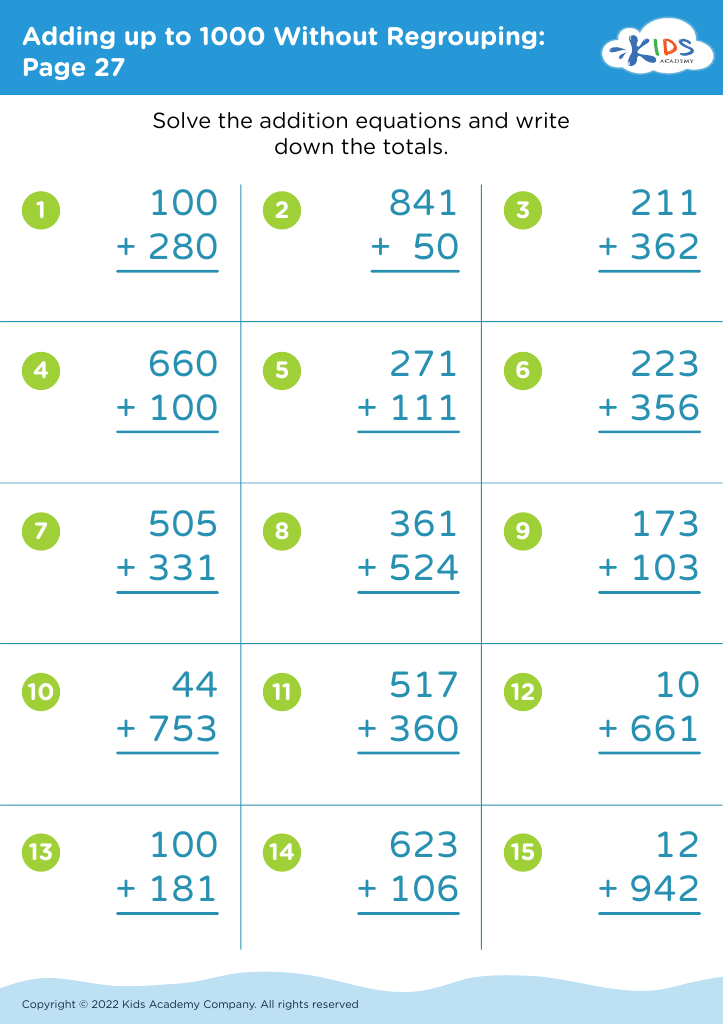
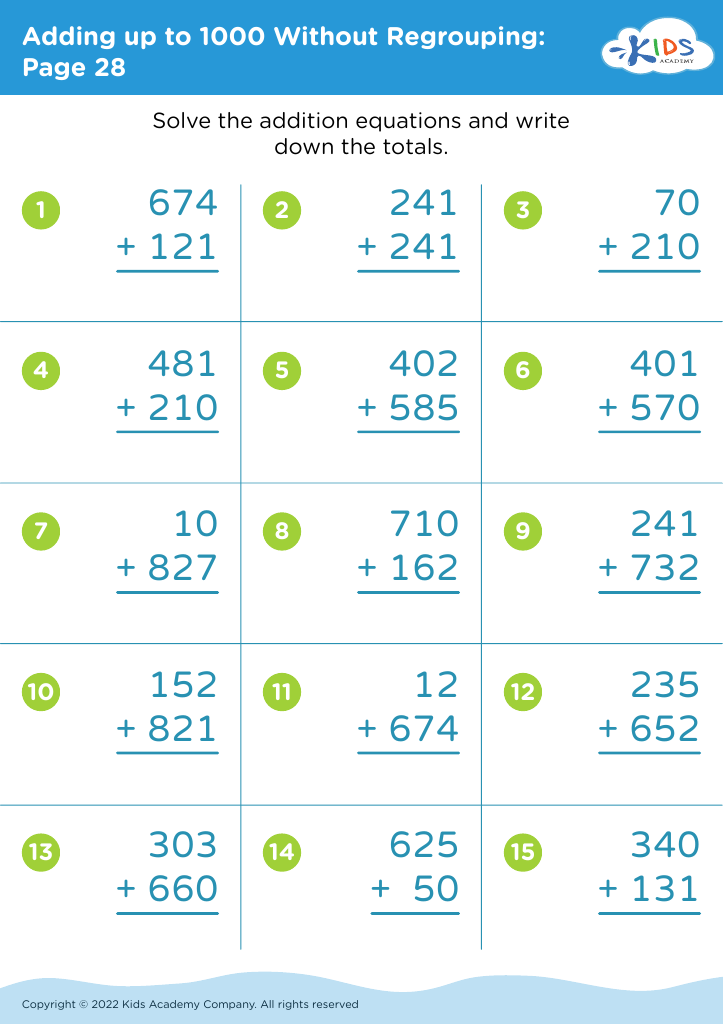
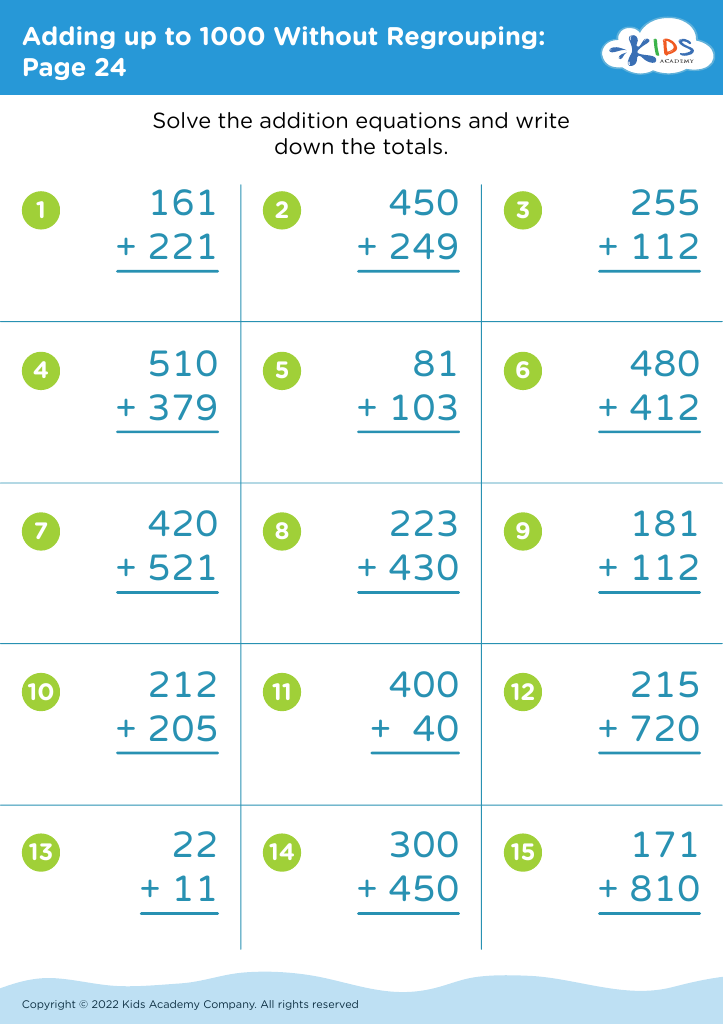



Understanding how to simplify fractions and perform operations like adding fractions is crucial for children aged 8-9. At this age, students are developing foundational mathematical skills that set the stage for future learning. Simplifying fractions helps increase numerical fluency, teaching students to identify equivalent values and recognize the importance of reducing complex numbers to their simplest forms. This skill is not only vital for improving problem-solving abilities in math but also applicable in real-life scenarios, such as cooking, budgeting, and measuring.
When adding fractions that sum up to 1000, children learn to manage larger numbers and grasp concepts of proportionality and scale. Engaging with these topics can enhance critical thinking and reasoning skills, making math more relatable and enjoyable. Additionally, mastery in simplifying fractions fosters confidence and a positive attitude towards math. For teachers, integrating these concepts into the curriculum promotes a deeper understanding of fractions and builds essential math skills that students will rely on in higher-level math courses.
In summary, emphasizing simplifying fractions and adding exercises in a systematic way cultivates mathematical literacy, confidence, and practical problem-solving skills, which are valuable in everyday life and academic success.








