Improve reading skills Adding up to 50 Misc Worksheets for Ages 8-9
3 filtered results
-
From - To
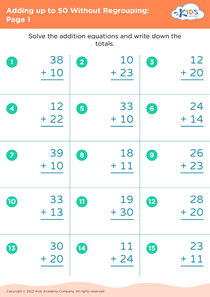
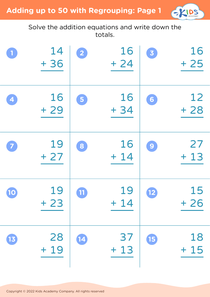
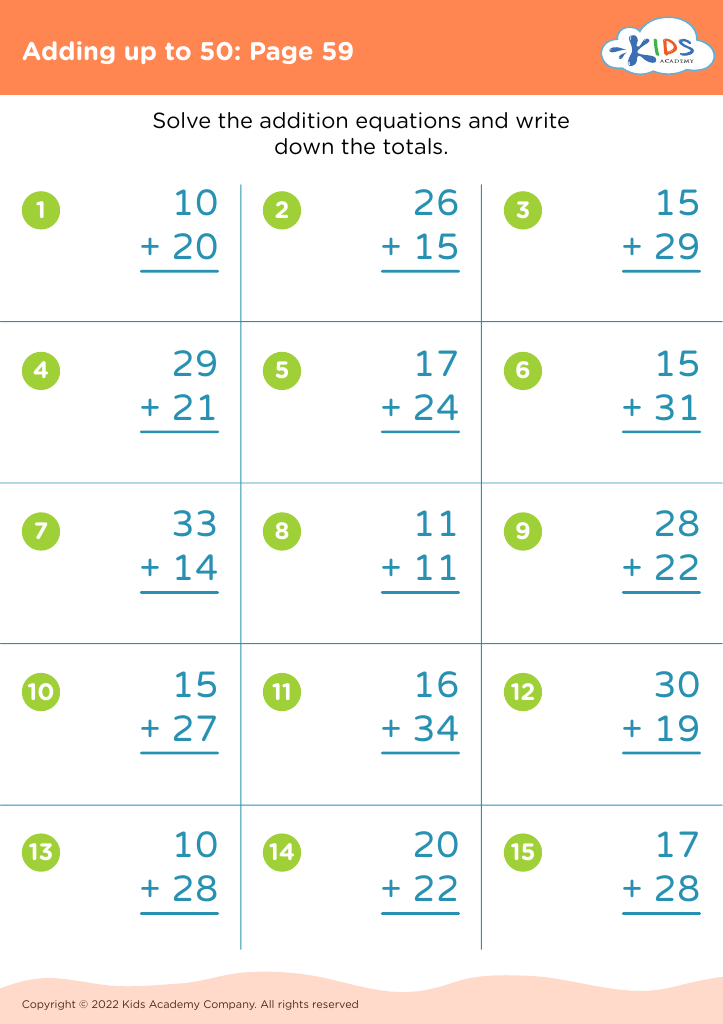
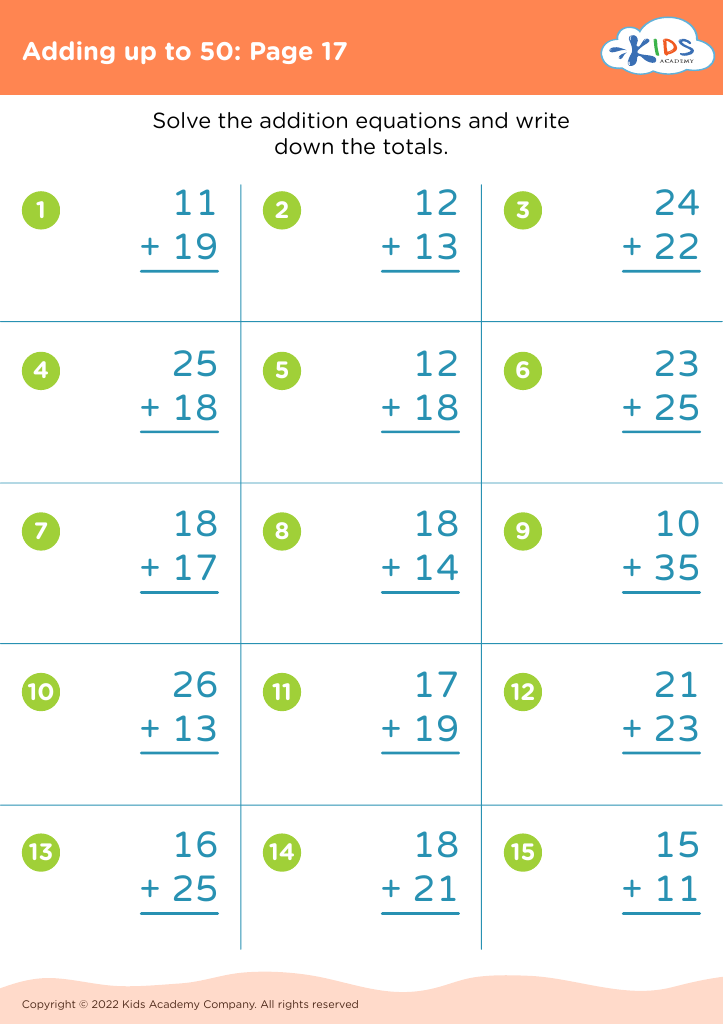
Enhance your child's reading abilities with our "Improve Reading Skills: Adding Up to 50 Misc Worksheets" designed specifically for ages 8-9. These engaging worksheets are tailored to reinforce essential reading comprehension and vocabulary skills through math-related context. As children practice adding numbers up to 50, they will also encounter relevant reading tasks, ensuring a comprehensive learning experience. This unique blend of mathematics and reading not only sharpens calculation skills but also fosters critical thinking and language development. Simple to use and perfect for at-home or classroom activities, these worksheets make learning to read both fun and effective!
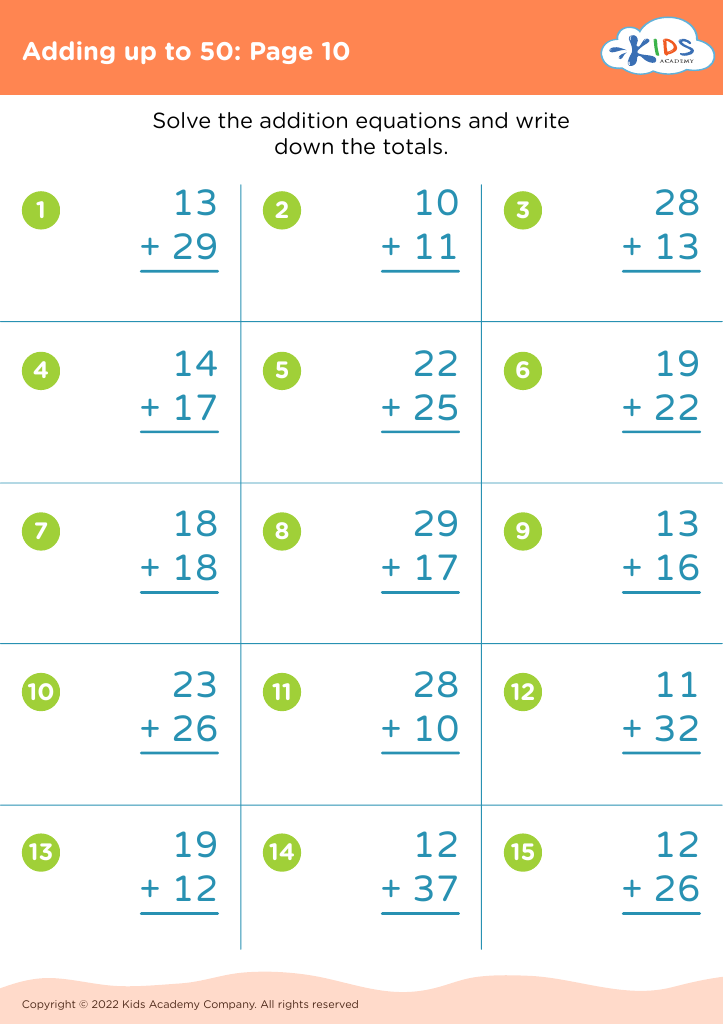


Improving reading skills in children ages 8-9 is crucial for their academic success and overall development. At this age, children are transitioning from learning to read to reading to learn, making it essential to ensure they have strong foundational skills. Proficient reading allows them to comprehend textbooks, engage with learning materials, and grasp complex concepts across subjects.
Moreover, proficient reading enhances children's vocabulary and critical thinking abilities. When children read diverse texts, they are exposed to new words and ideas, which promote cognitive growth and communication skills. Adequate reading skills also contribute to improved writing abilities, as children learn to express their thoughts more clearly and effectively.
Furthermore, strong reading skills can build a child’s self-esteem and fostering a love for learning. Children who read confidently are more likely to participate actively in class discussions, enhancing their social interactions and school experience.
Teachers play a vital role in providing instruction and strategies to enhance these skills, while parents can create a supportive reading environment at home. Together, they can motivate children to embrace reading, ultimately laying the groundwork for lifelong learning and intellectual curiosity. Prioritizing reading skills today will benefit children in all aspects of their lives in the future.