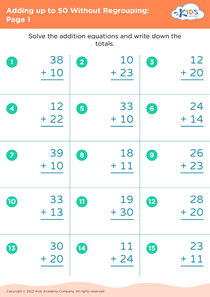
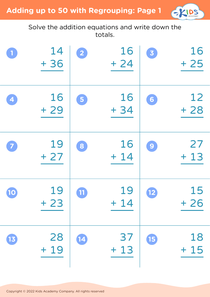
Understanding multiplication Adding up to 50 Misc Worksheets for Ages 8-9
3 filtered results
-
From - To
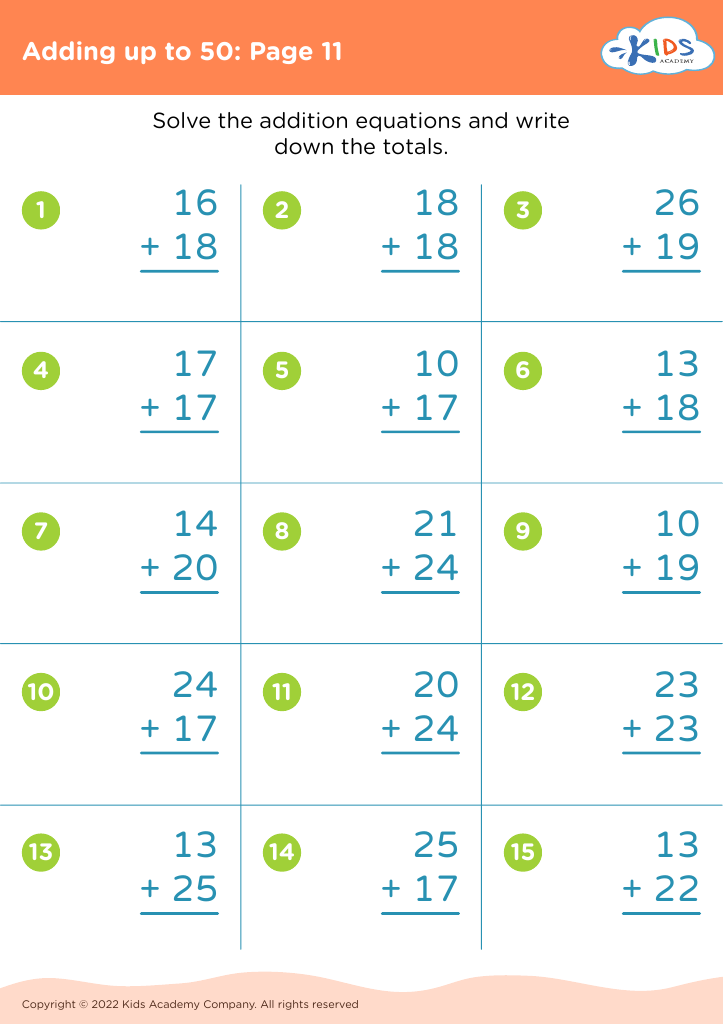
Explore our "Understanding Multiplication: Adding Up to 50 Misc Worksheets," designed specifically for children ages 8-9. These engaging worksheets help young learners grasp the foundational concepts of multiplication, allowing them to build confidence and fluency in math. With a variety of exercises, students will practice multiplication through fun, interactive activities that also reinforce their adding skills up to 50. Perfect for classroom use or homeschooling, these worksheets encourage critical thinking and problem-solving abilities. Download now to support your child's journey in mastering multiplication in a delightful and effective way! Ideal for parents and educators seeking quality math resources.
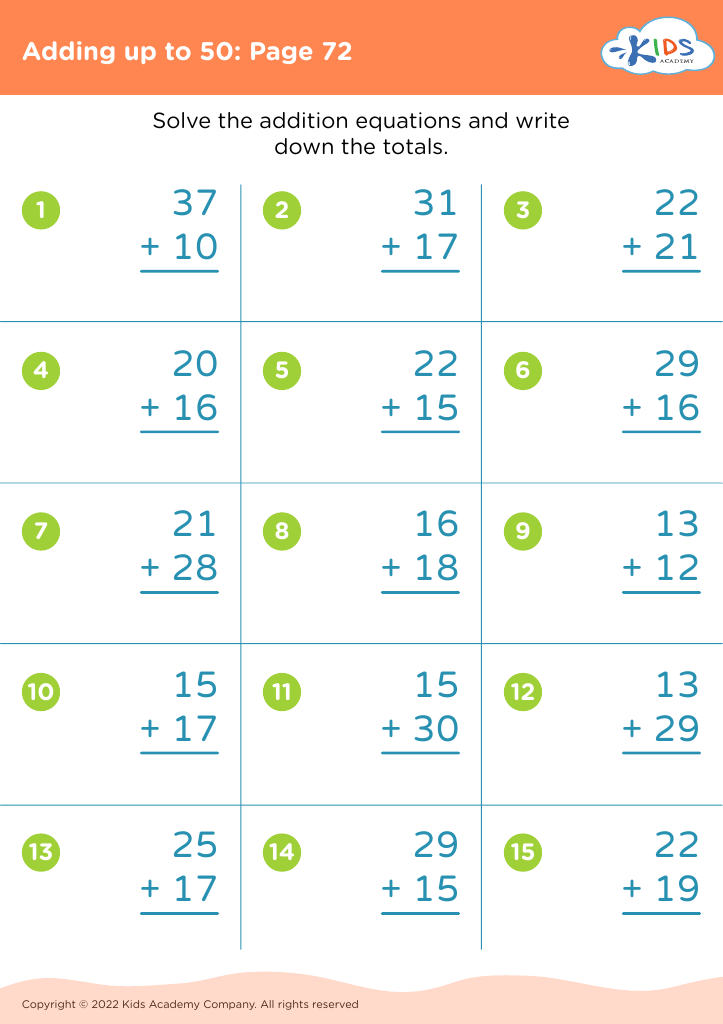
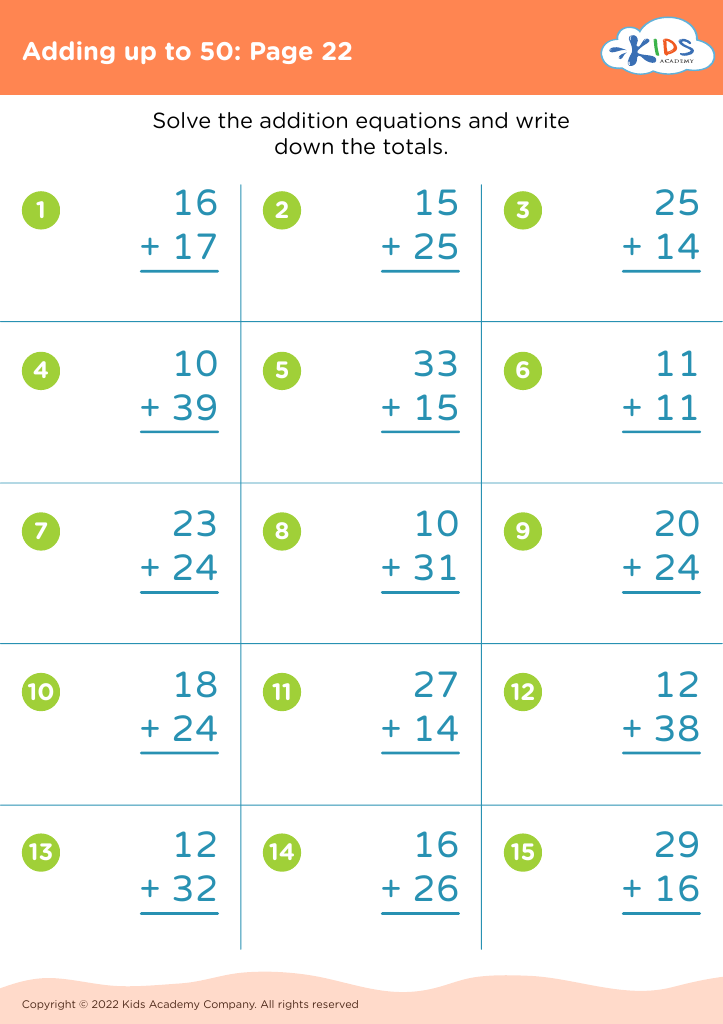


Understanding multiplication and addition concepts is crucial for children aged 8-9 years as it lays the foundation for more advanced mathematical skills. At this age, students encounter multiplication as a form of repeated addition and begin to grasp its relationship with addition, essential for problem-solving in real-world scenarios. When teachers and parents emphasize these concepts, they nurture a child's mathematical fluency, confidence, and critical thinking skills.
Furthermore, mastering addition and multiplication up to 50 helps students develop number sense, enabling them to tackle math word problems, fractions, and even basic algebra in the future. The ability to combine these operations effectively fosters analytical skills, which are valuable in subjects beyond math, including science and economics.
Engagement in these mathematical activities also cultivates a positive attitude toward learning. By actively participating in discussions and exercises at home or in the classroom, parents and teachers can encourage collaborative learning and create an environment where children feel safe to explore and make mistakes. As adults support students in understanding these fundamental concepts, they not only prepare them for academic success but also equip them with essential life skills for financial literacy and logical reasoning.