Filters

17 filtered results

Clear all filters
Favorites
With answer key
Interactive

17 filtered results

Difficulty Level

Grade


Enhance your child's understanding of fractions with our "Adding Up to 50 with Regrouping Worksheets" tailored for ages 8-9. These engaging worksheets facilitate effective learning as students explore the concept of fractions alongside addition and regrouping. Designed to challenge and inspire, they provide numerous practice opportunities, helping young learners sharpen their math skills in a fun way. With interactive exercises and clear instructions, children will gain confidence in working with fractions and reinforce their foundational math knowledge. Start your child's journey toward mathematical mastery today and watch their problem-solving abilities flourish while enjoying the learning process!
Check out this FREE Trial Lesson on Adding up to 50 with Regrouping for age 8-9!

Sorting Objects into 3 Categories

Favorites
With answer key
Interactive
  • 8-9
  • Understanding fractions
  • Adding up to 50 with Regrouping
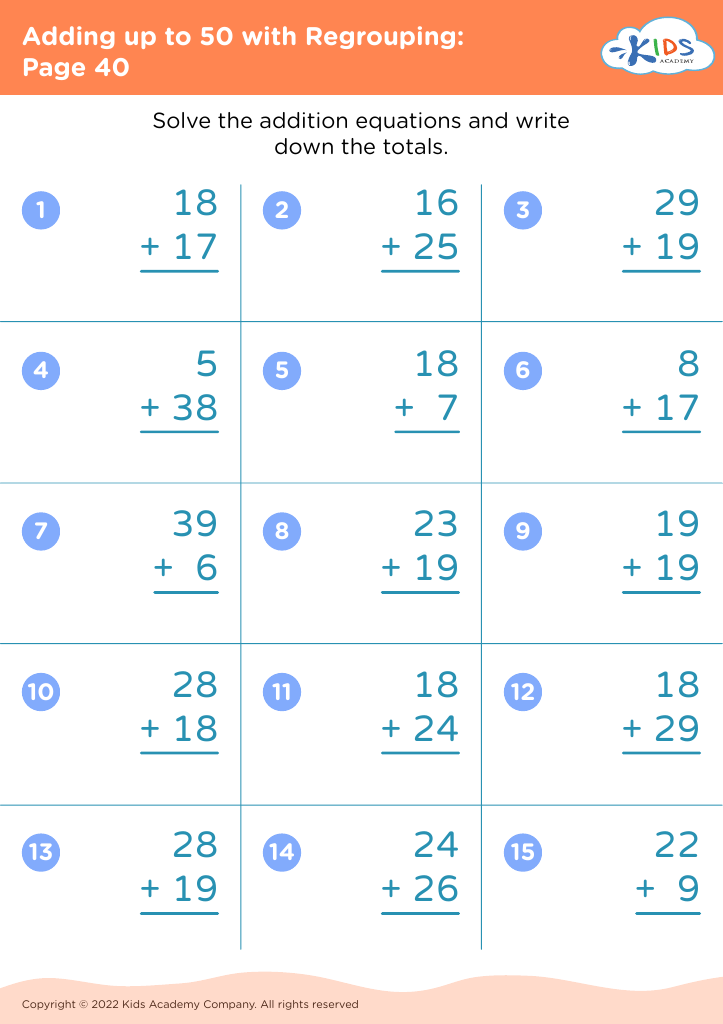
Adding up to 50 with Regrouping: Page 40
Worksheet
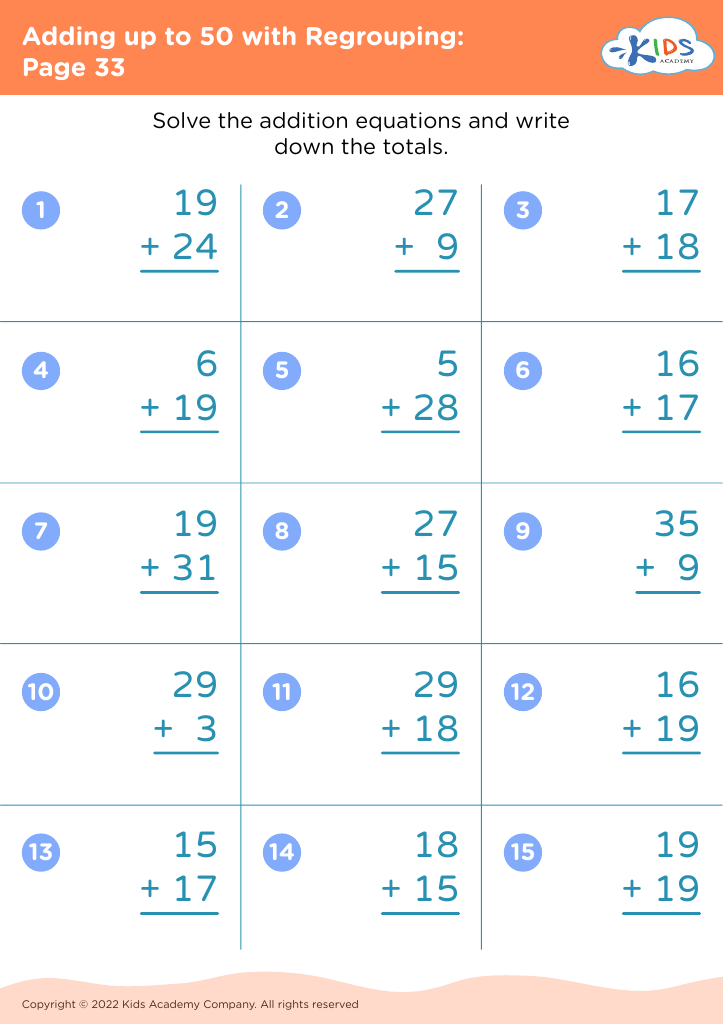
Adding up to 50 with Regrouping: Page 33
Worksheet
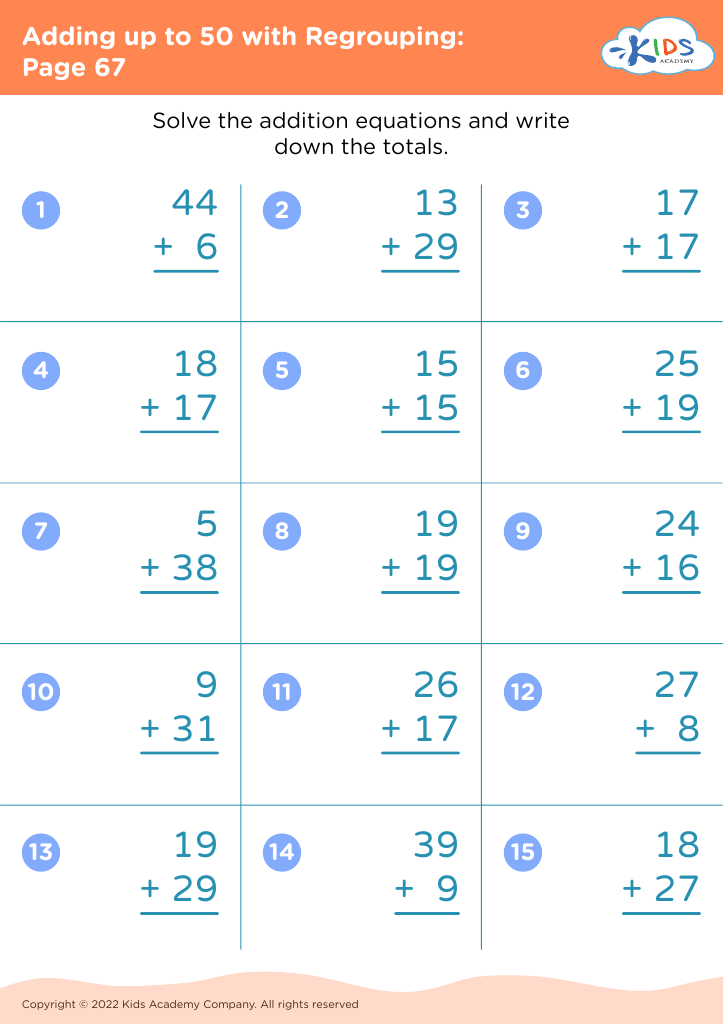
Adding up to 50 with Regrouping: Page 67
Worksheet
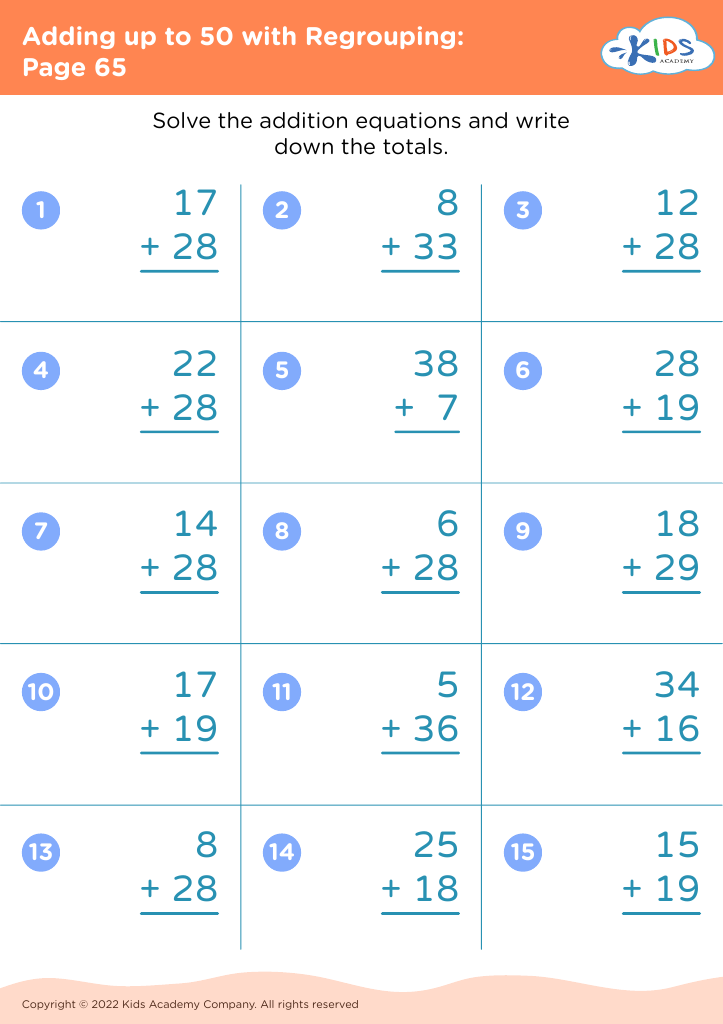
Adding up to 50 with Regrouping: Page 65
Worksheet
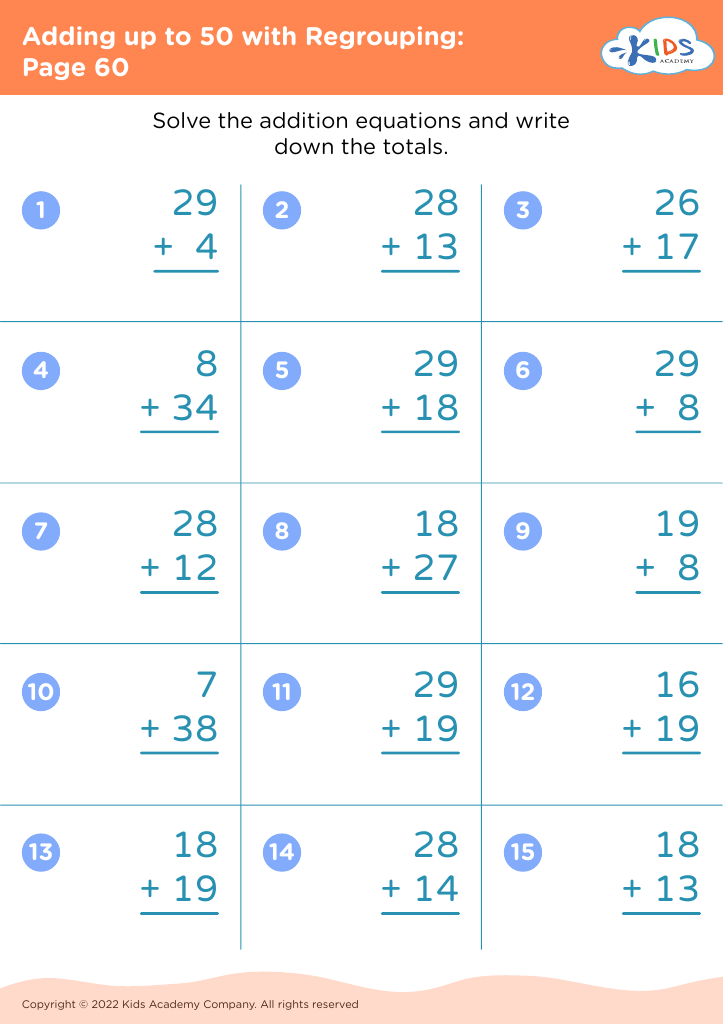
Adding up to 50 with Regrouping: Page 60
Worksheet
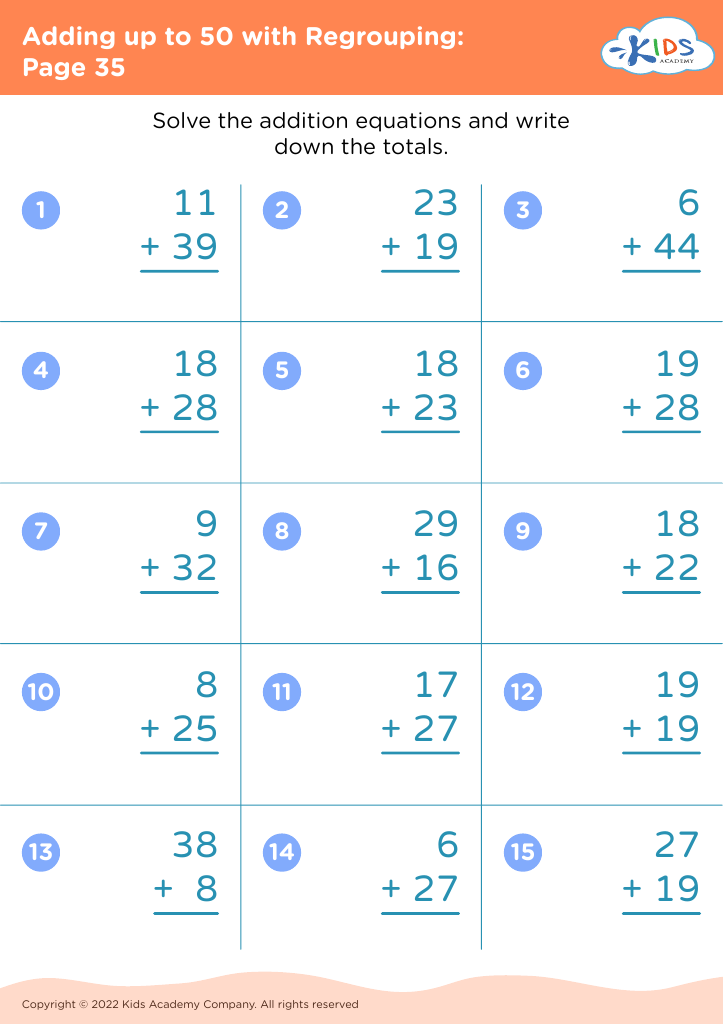
Adding up to 50 with Regrouping: Page 35
Worksheet
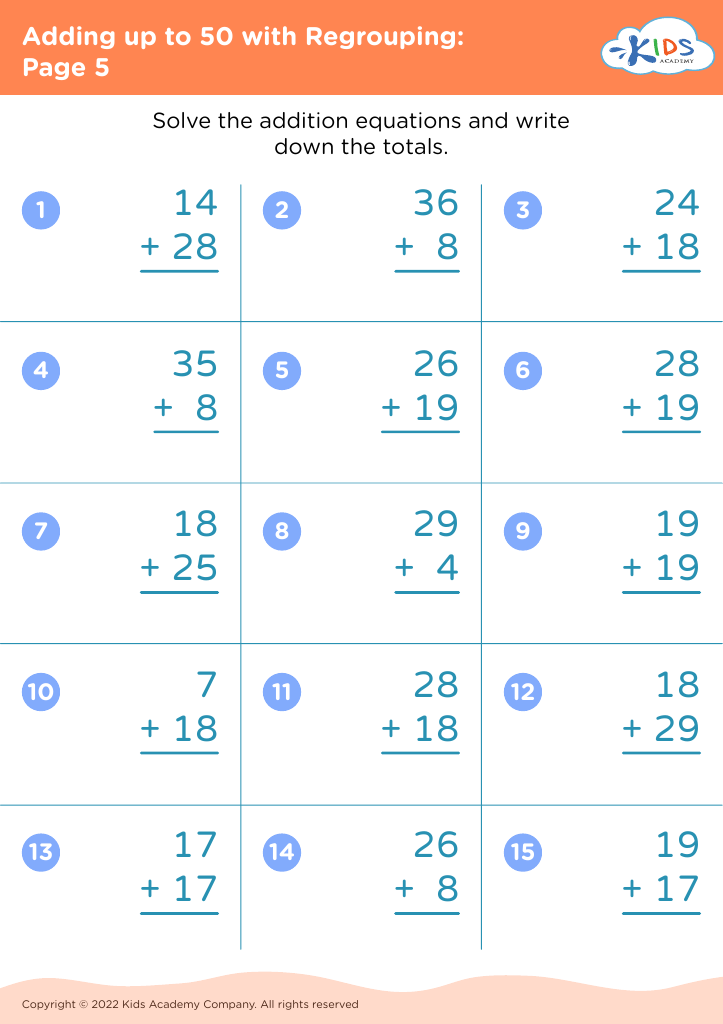
Adding up to 50 with Regrouping: Page 5
Worksheet
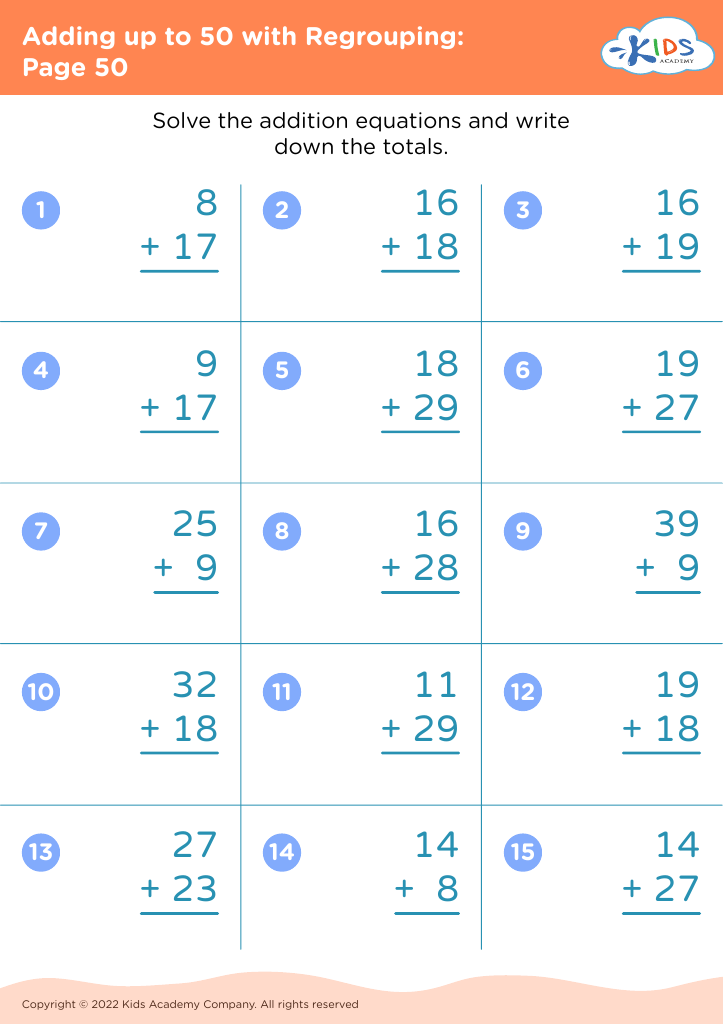
Adding up to 50 with Regrouping: Page 50
Worksheet
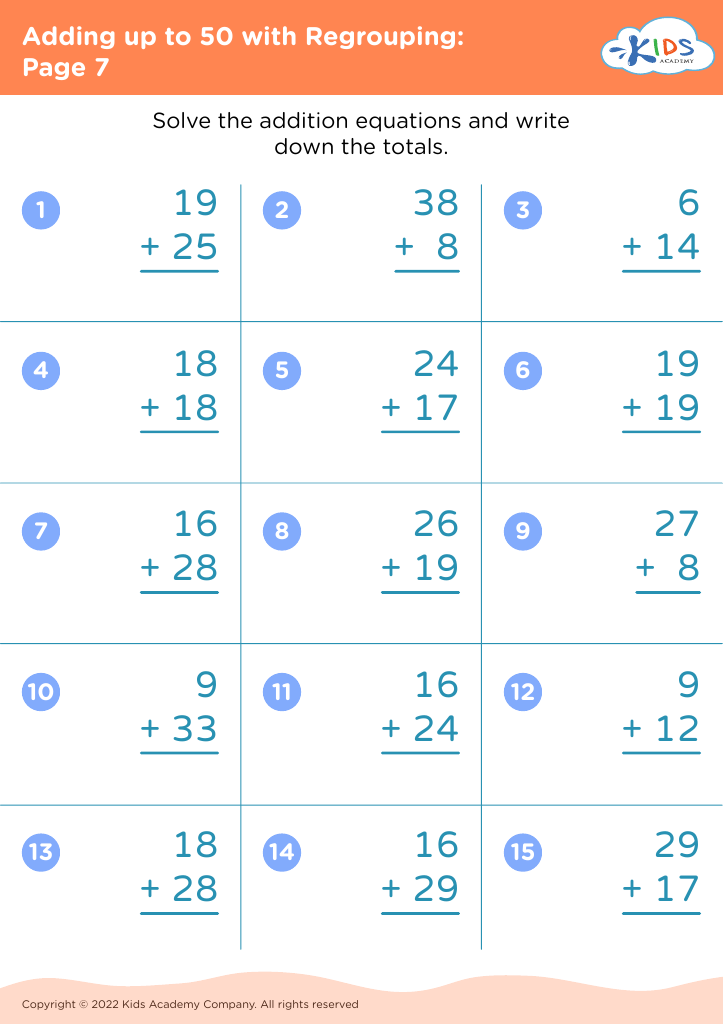
Adding up to 50 with Regrouping: Page 7
Worksheet
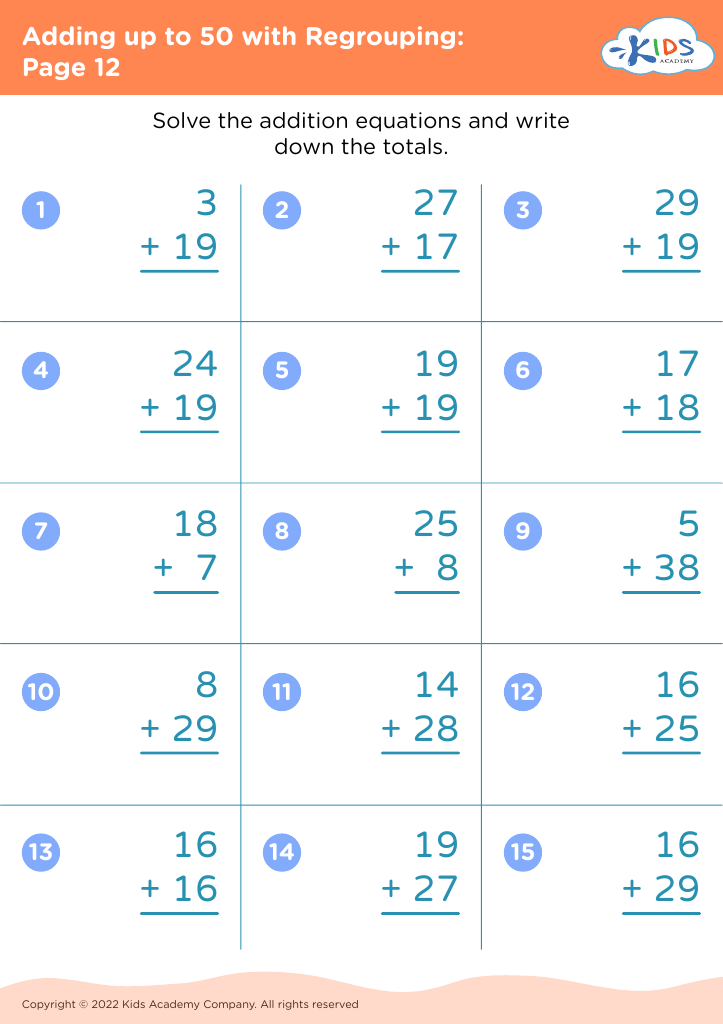
Adding up to 50 with Regrouping: Page 12
Worksheet
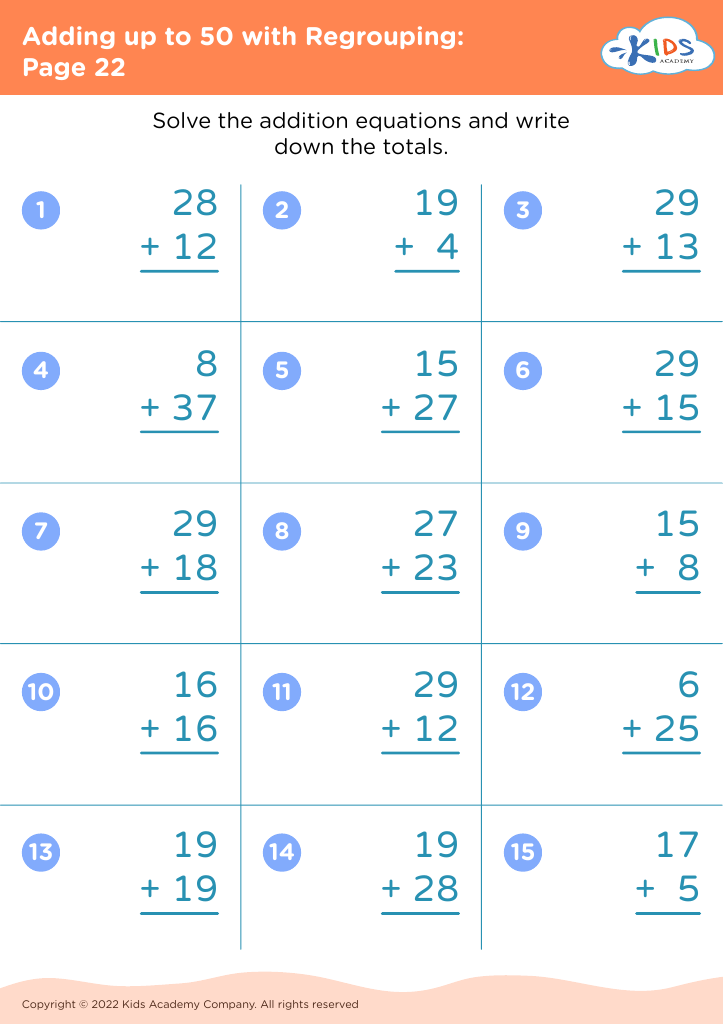
Adding up to 50 with Regrouping: Page 22
Worksheet
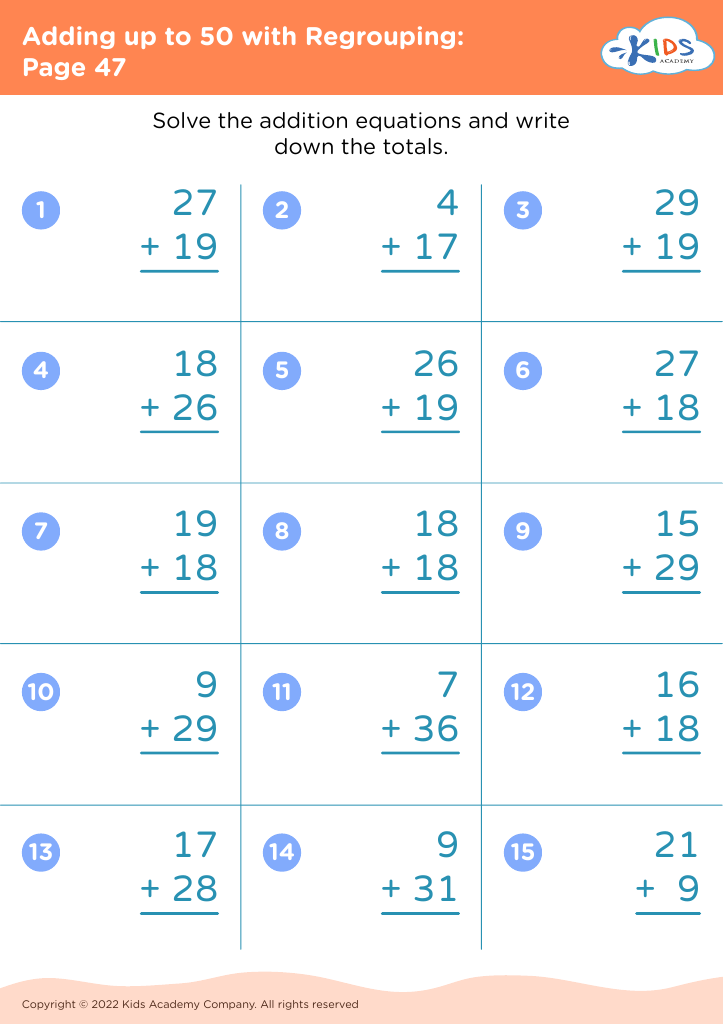
Adding up to 50 with Regrouping: Page 47
Worksheet
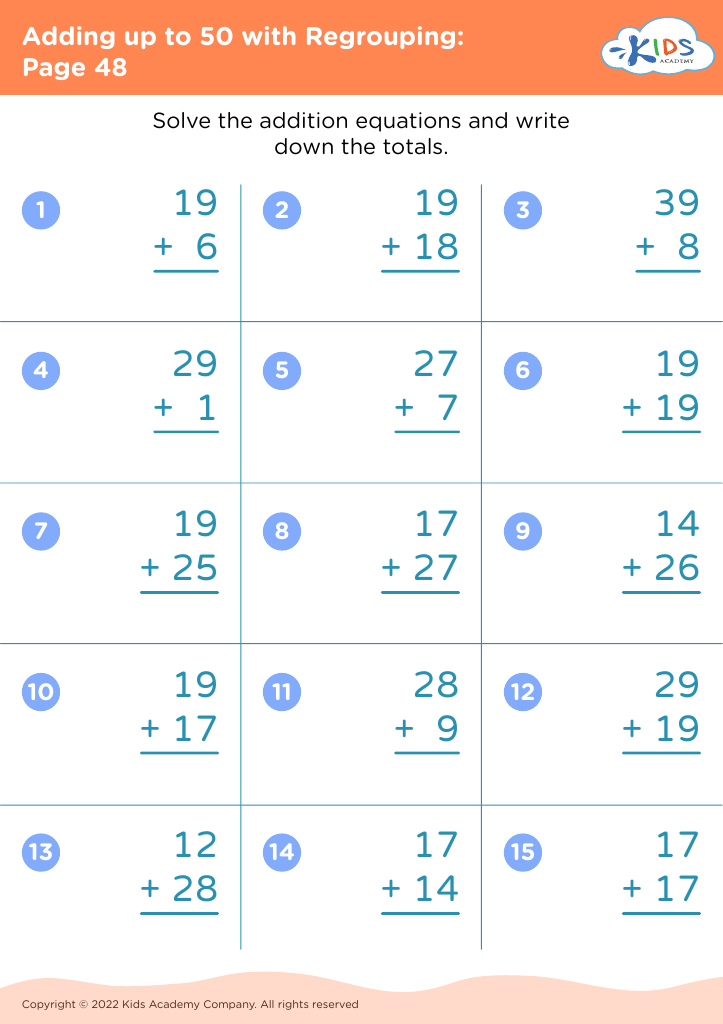
Adding up to 50 with Regrouping: Page 48
Worksheet
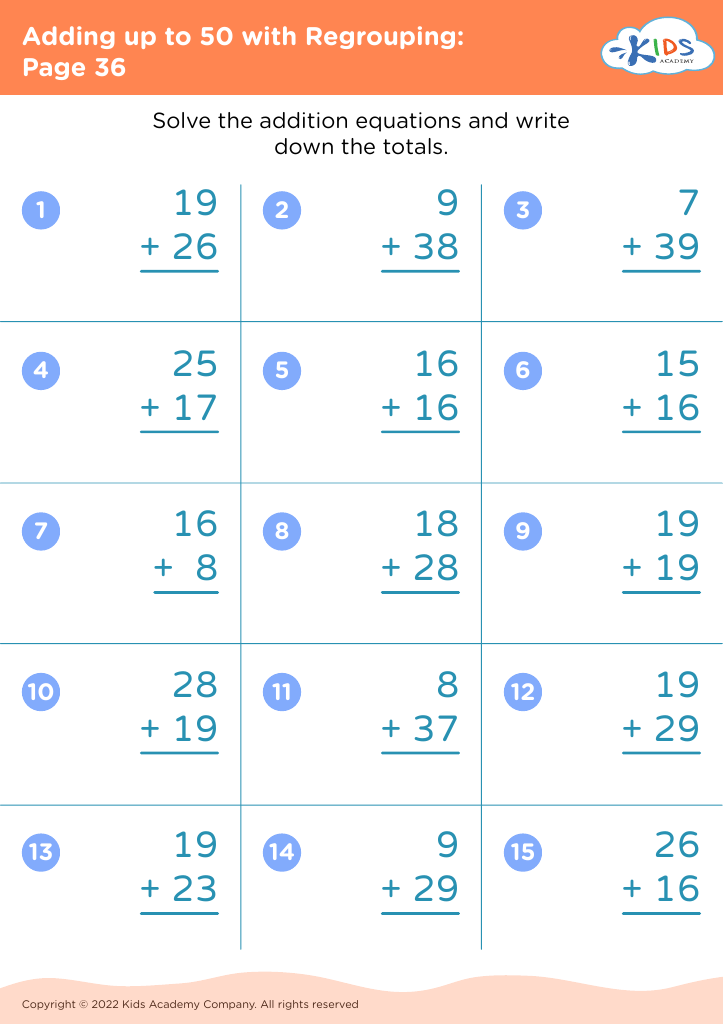
Adding up to 50 with Regrouping: Page 36
Worksheet
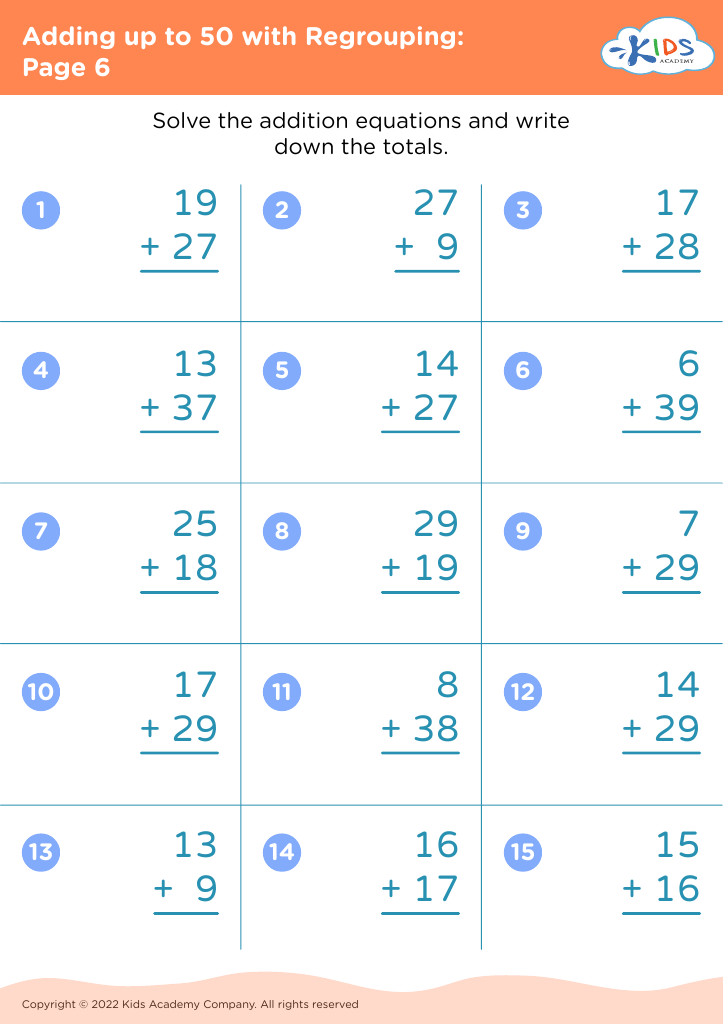
Adding up to 50 with Regrouping: Page 6
Worksheet
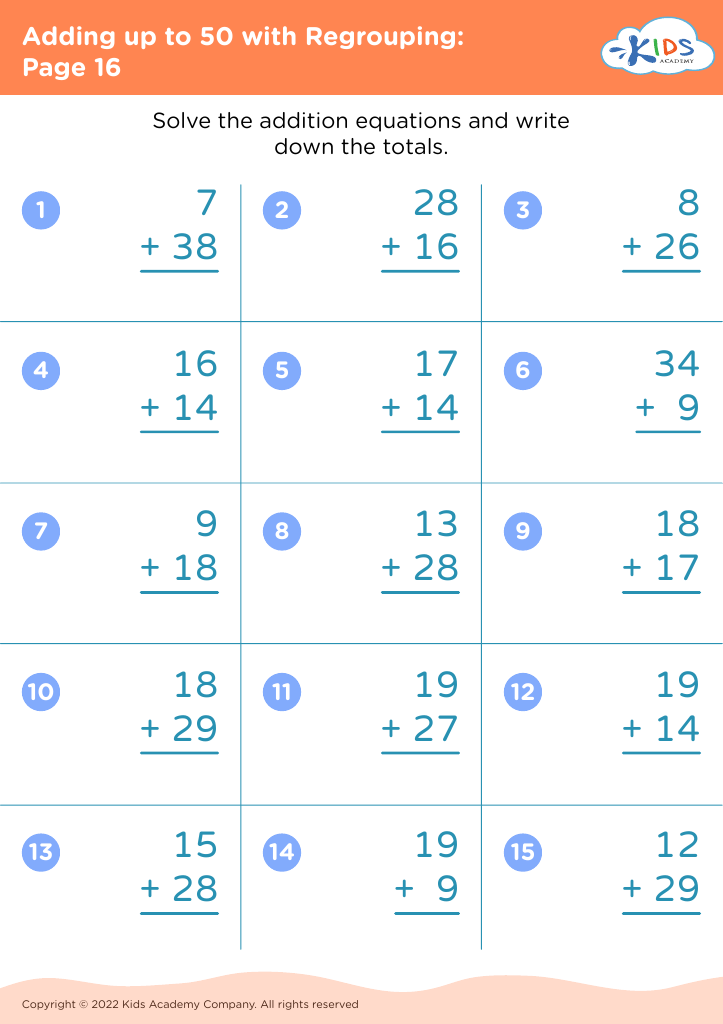
Adding up to 50 with Regrouping: Page 16
Worksheet
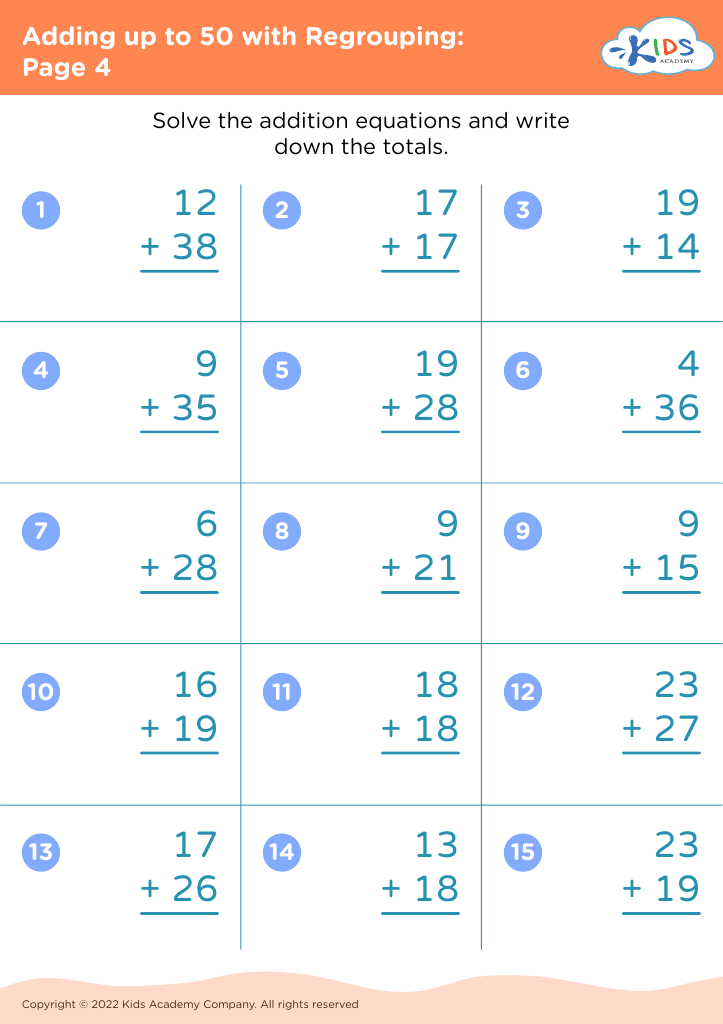
Adding up to 50 with Regrouping: Page 4
Worksheet


Understanding fractions and the addition of numbers up to 50 with regrouping is a critical skill for children aged 8-9, influencing their mathematical development and overall cognitive growth. At this age, children are transitioning from concrete to more abstract thinking. Mastering these concepts builds a strong foundation for future math skills, fostering confidence and a positive attitude toward learning.

Fractions represent a significant part of elementary math and are essential in daily life—whether in cooking, measuring, or budgeting. When children grasp the concept of adding fractions, they develop problem-solving skills and logical reasoning that extend beyond mathematics. Similarly, understanding regrouping, or carrying over in addition, enhances their ability to handle more complex calculations confidently.

Parents and teachers should prioritize these topics as they equip children with practical tools for academic success, laying groundwork for higher-level math, particularly in geometry or algebra. Furthermore, these concepts link theoretical knowledge to real-world applications, making learning relevant and engaging. As children master fractions and addition through regrouping, they not only achieve competency in core subjects but also nurture a lifelong love for learning. Investing in these foundational skills is essential for future growth—both academically and personally.