Basic Math Skills Adding up to 50 Worksheets for Ages 8-9
16 filtered results
-
From - To
Enhance your child’s math proficiency with our "Basic Math Skills Adding up to 50 Worksheets" designed specifically for ages 8-9. These engaging worksheets focus on strengthening fundamental addition skills, allowing young learners to master adding numbers up to 50 with confidence. Featuring a variety of interactive exercises and colorful illustrations, these resources make learning fun and effective. Ideal for reinforcing classroom instruction or providing extra practice at home, our worksheets cater to diverse learning styles. Watch as your child develops critical thinking, problem-solving abilities, and a love for math—all while achieving key educational milestones! Access them today and support your child's journey to success!
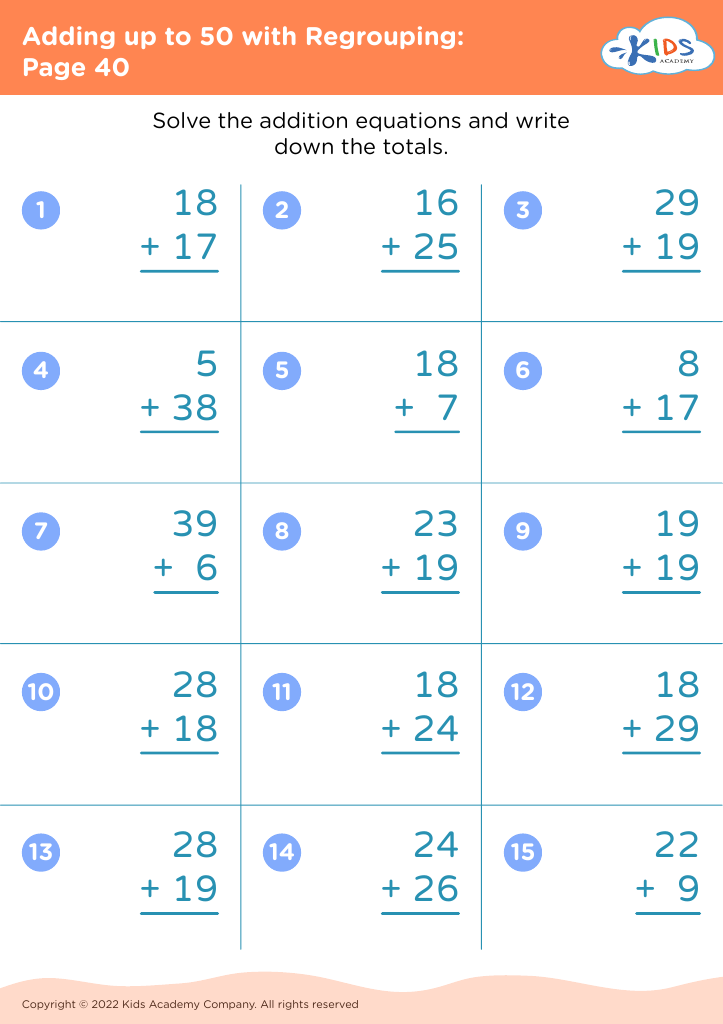
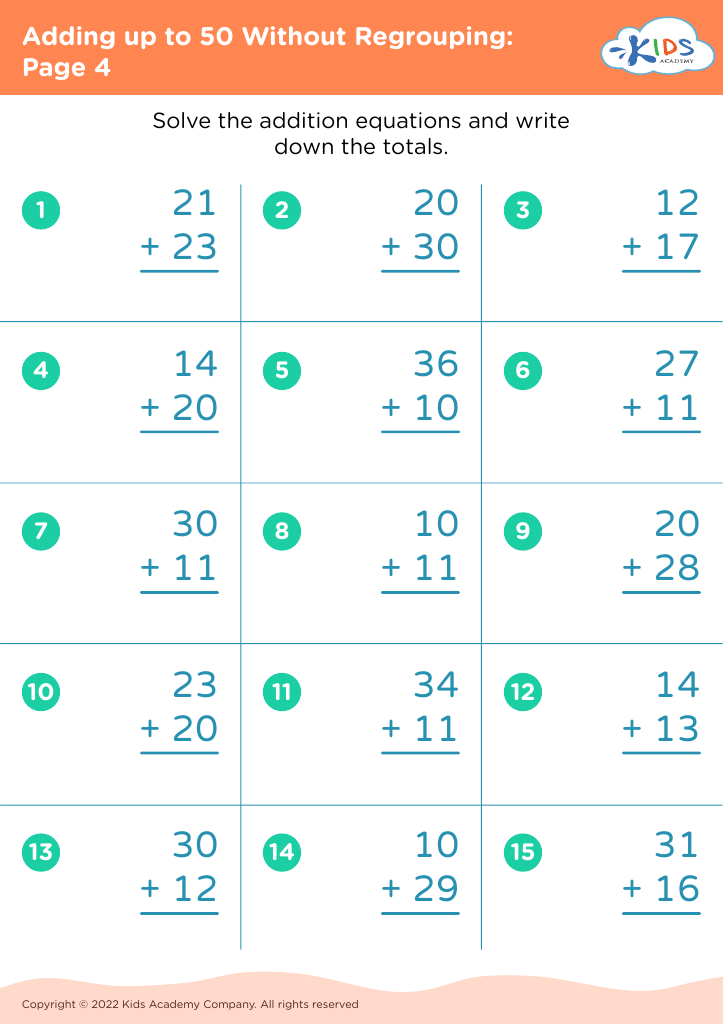
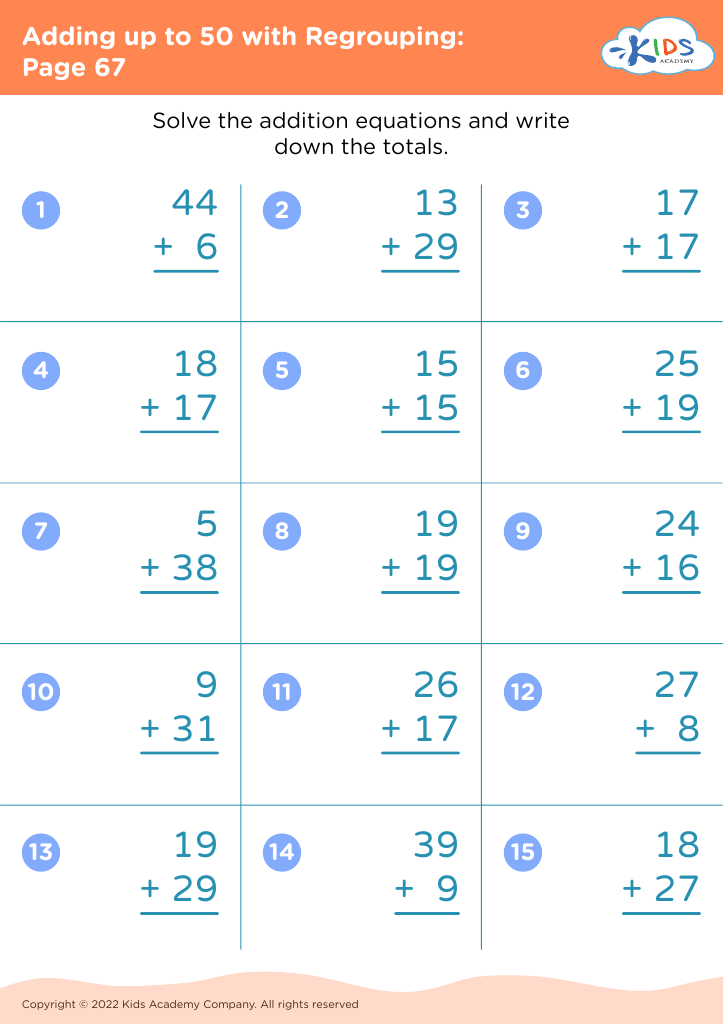
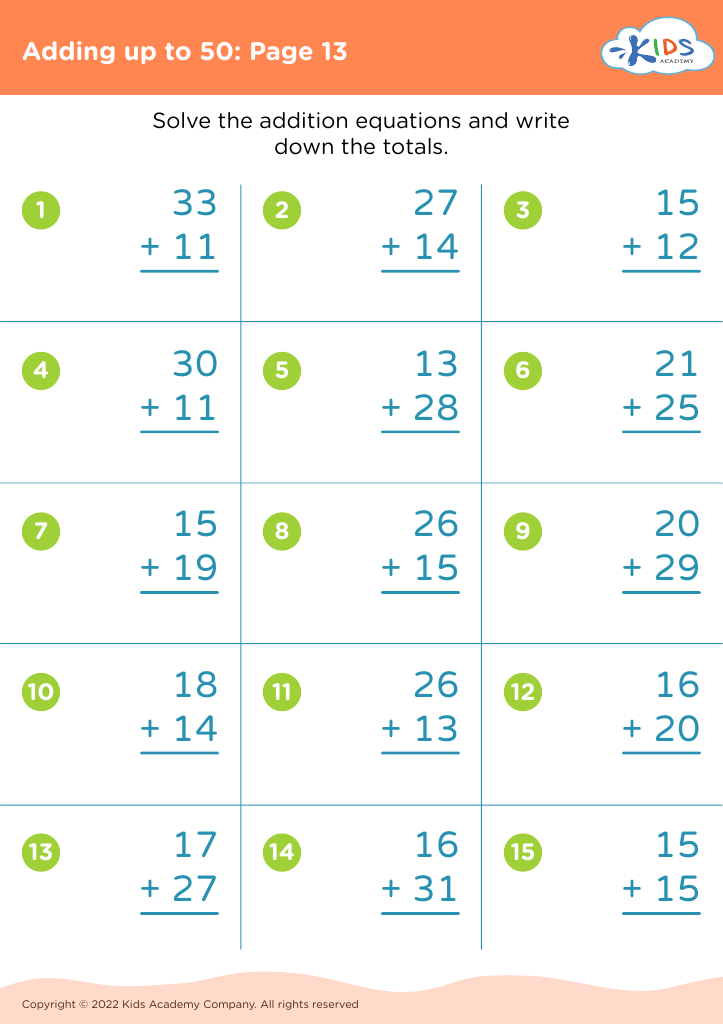
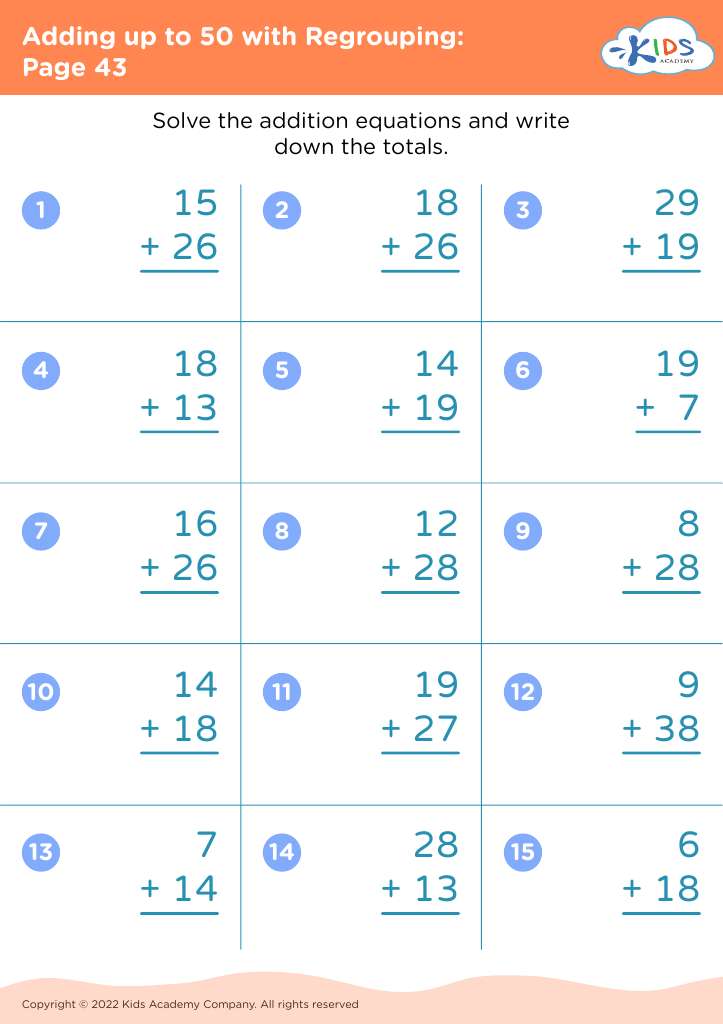
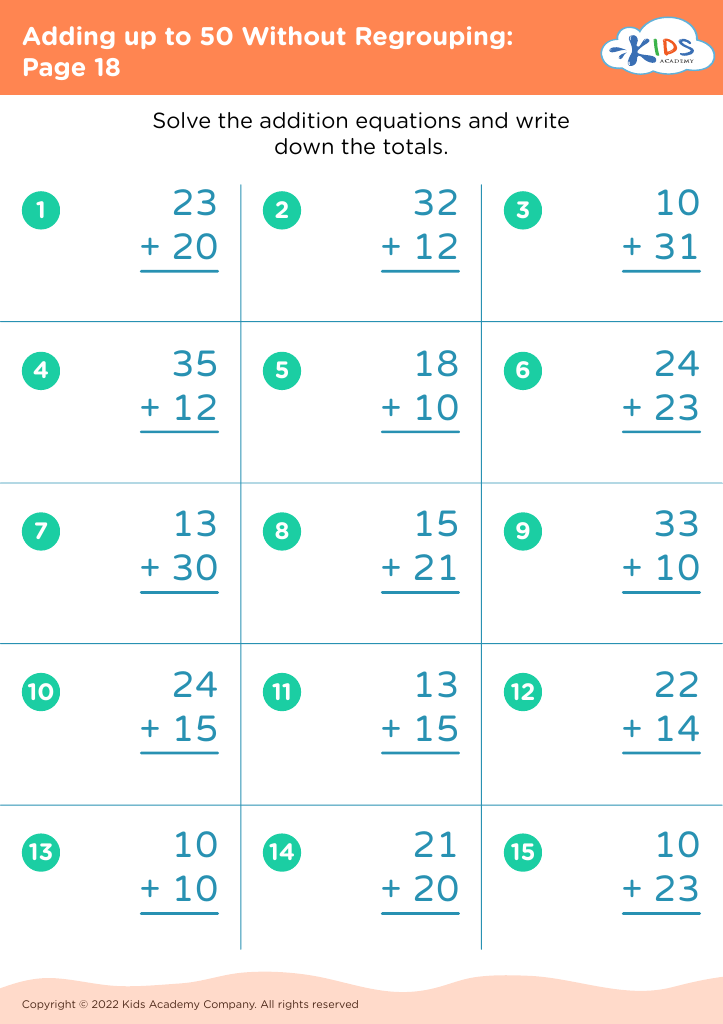
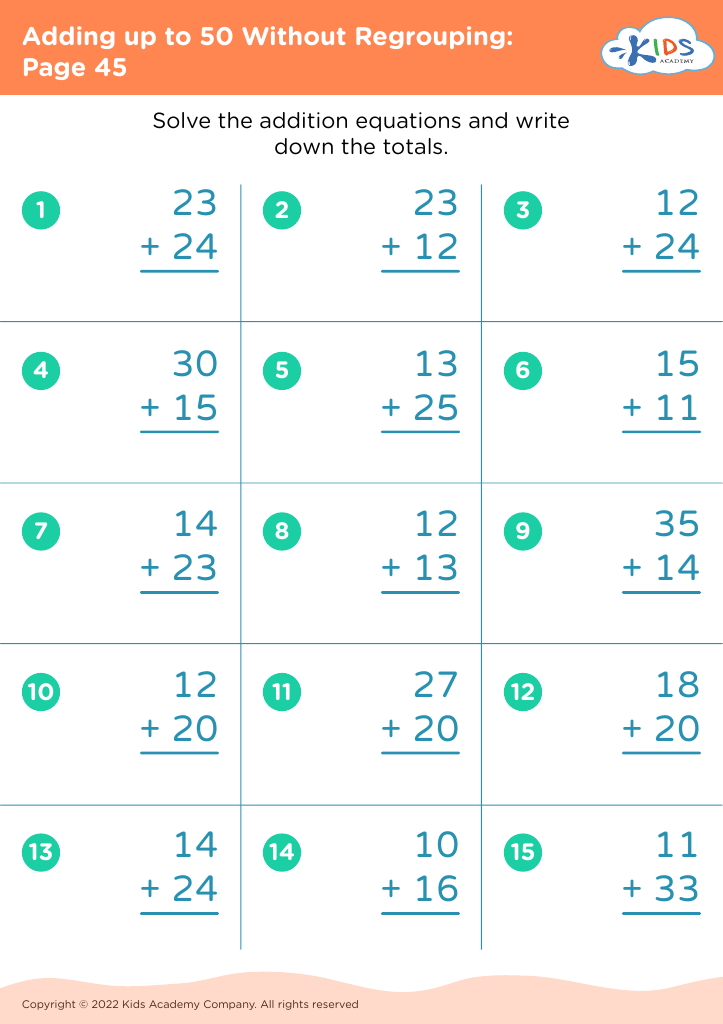
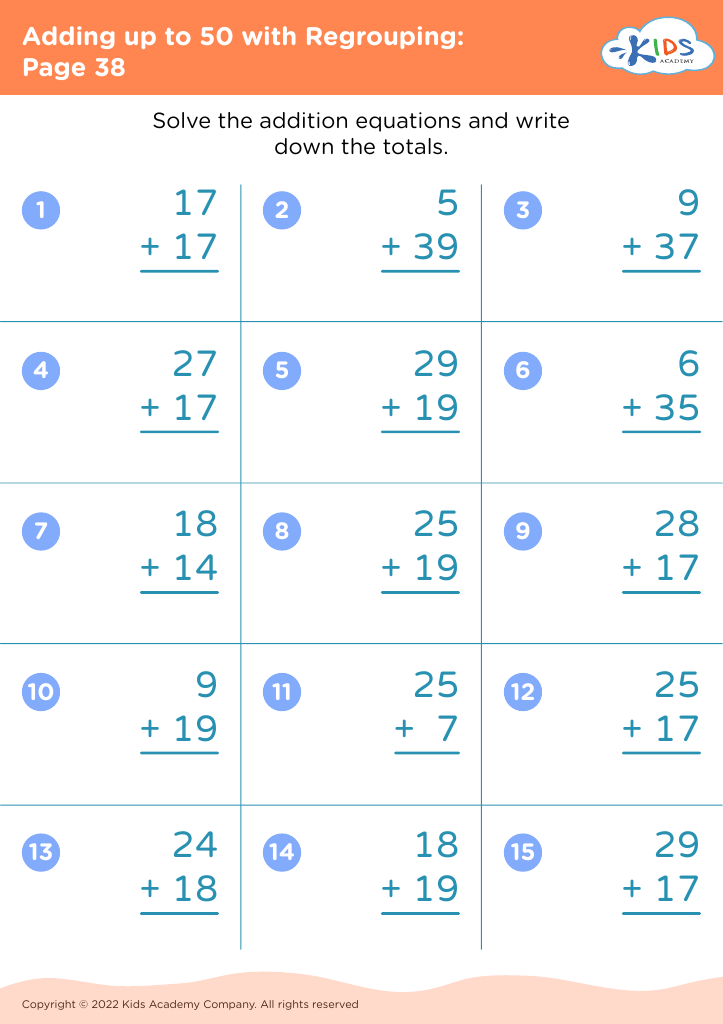
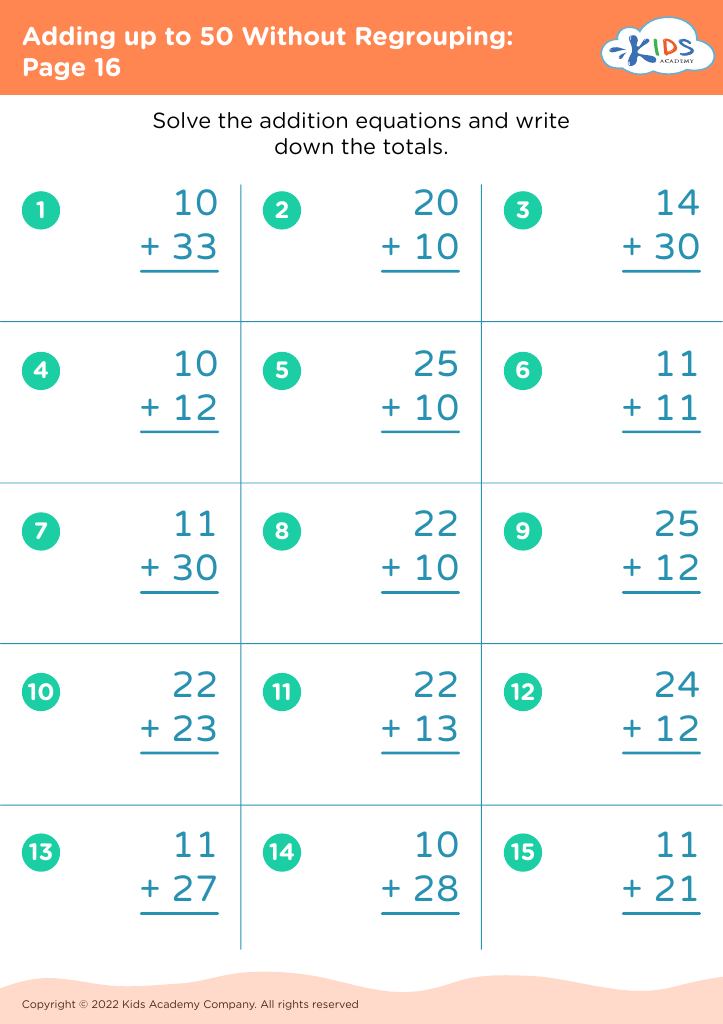
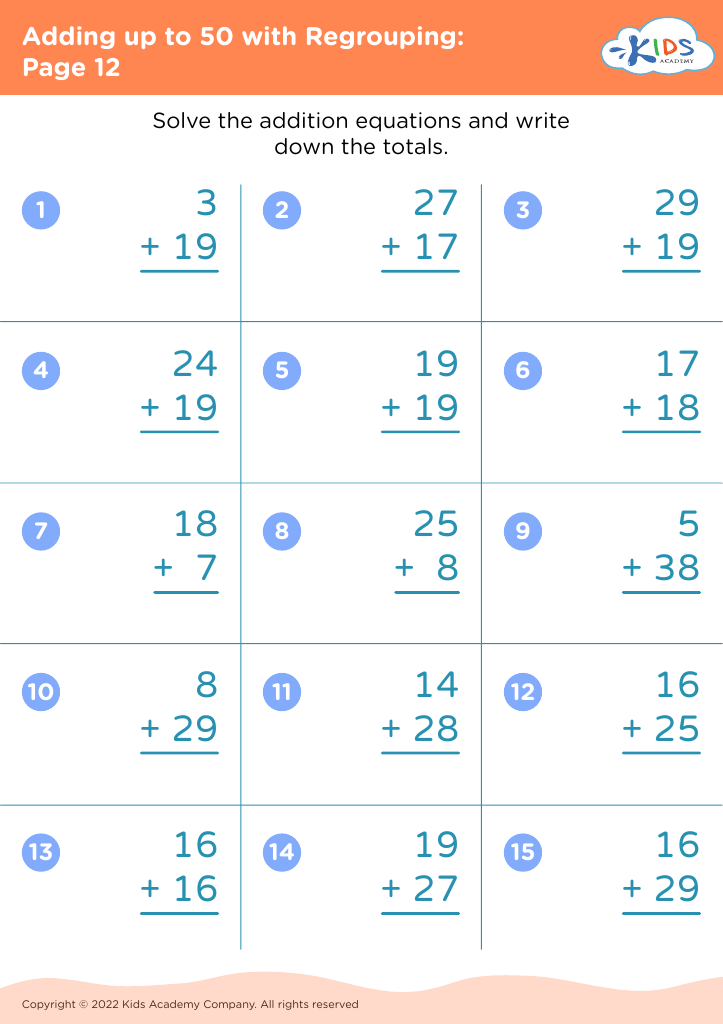
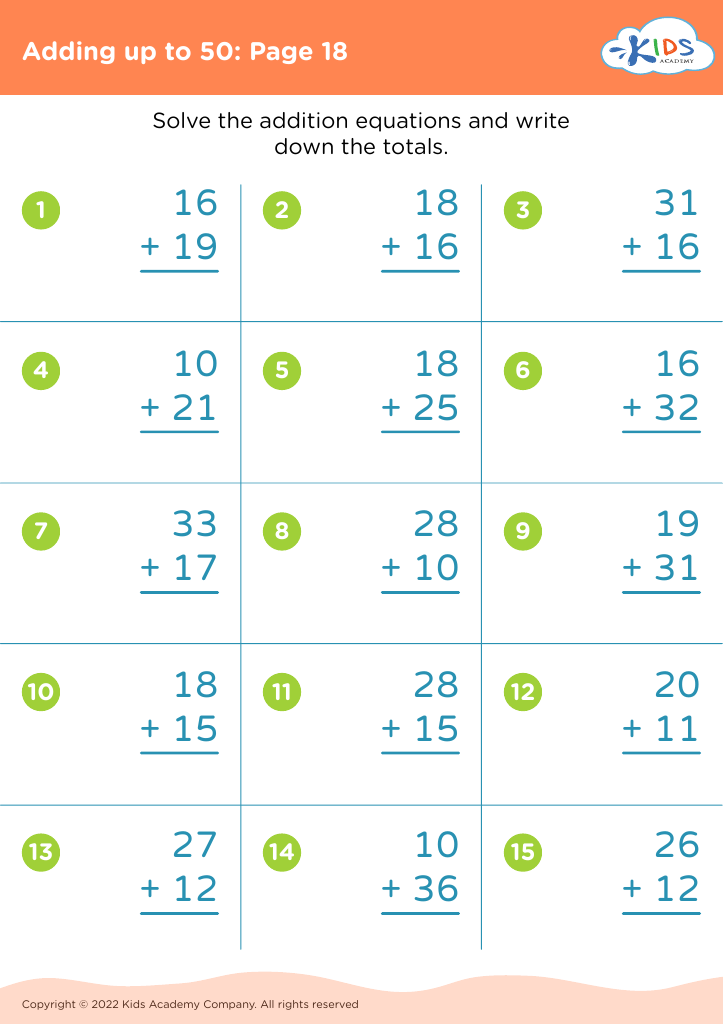
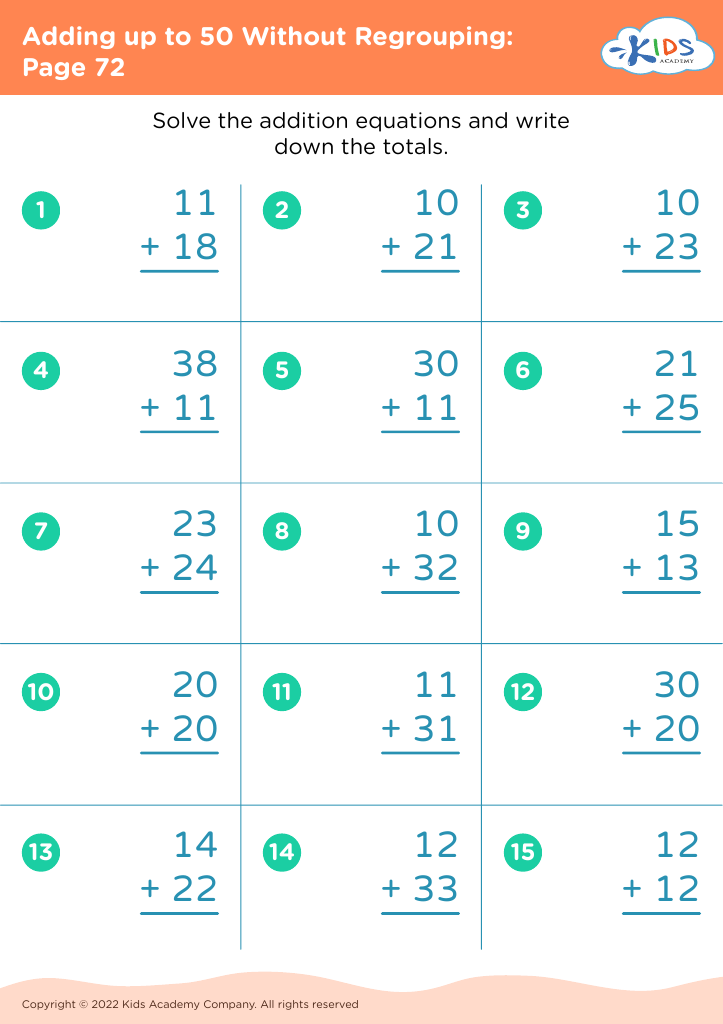
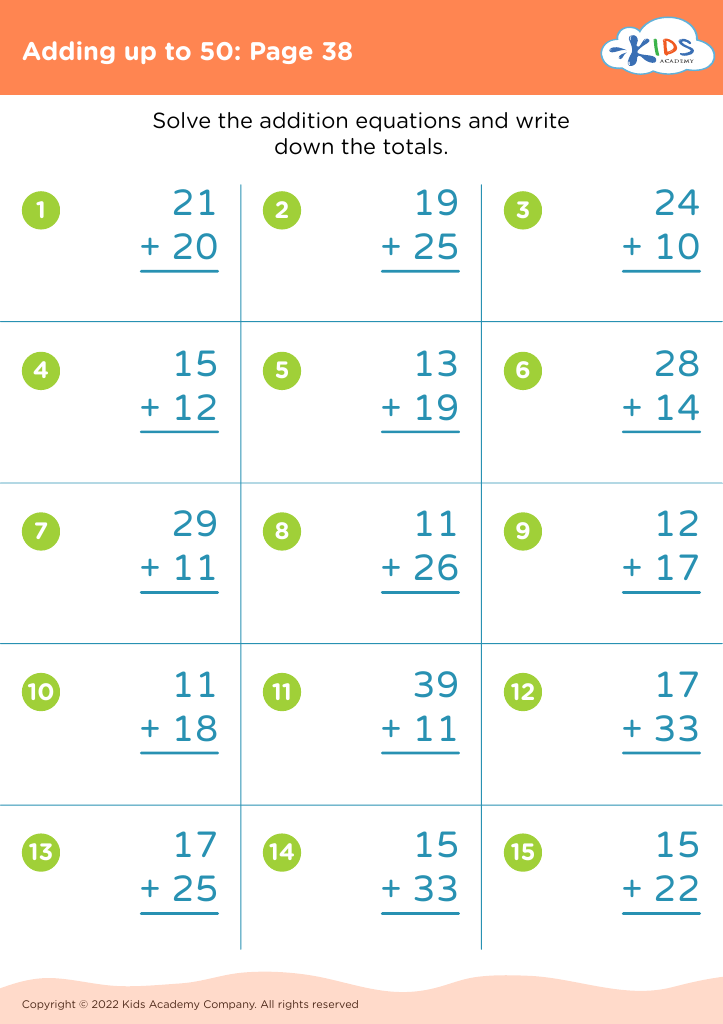
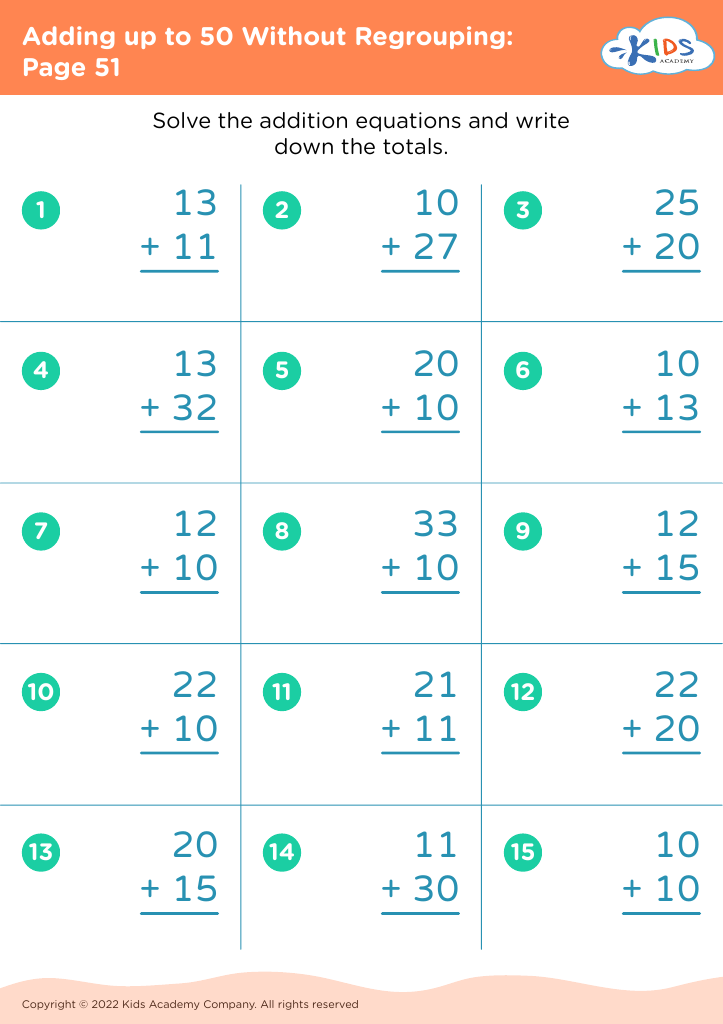
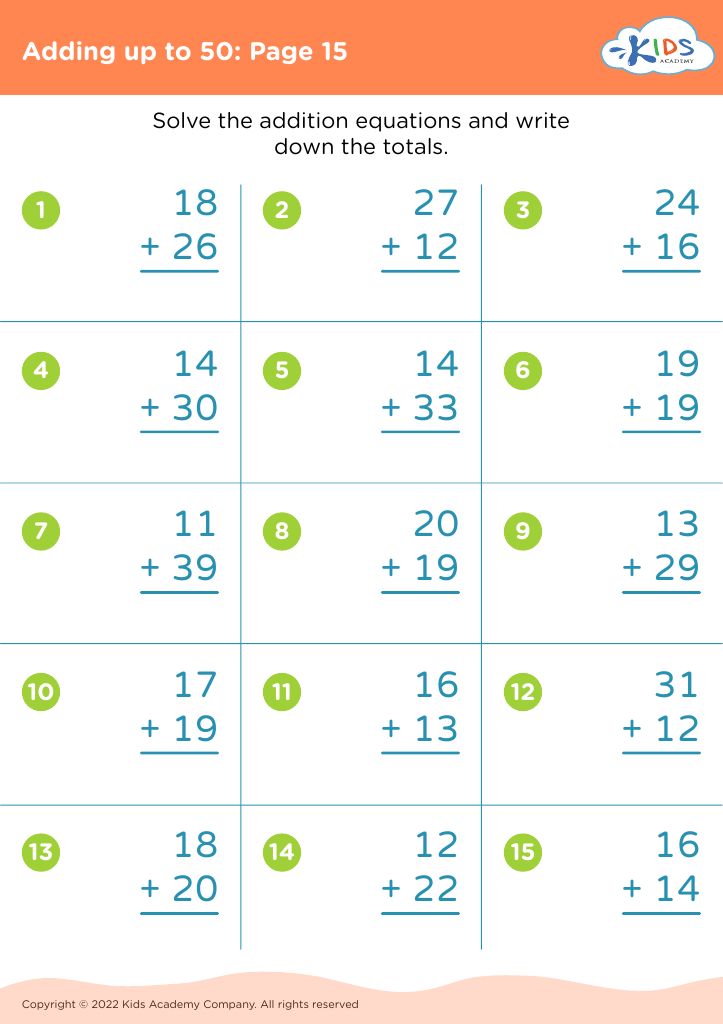
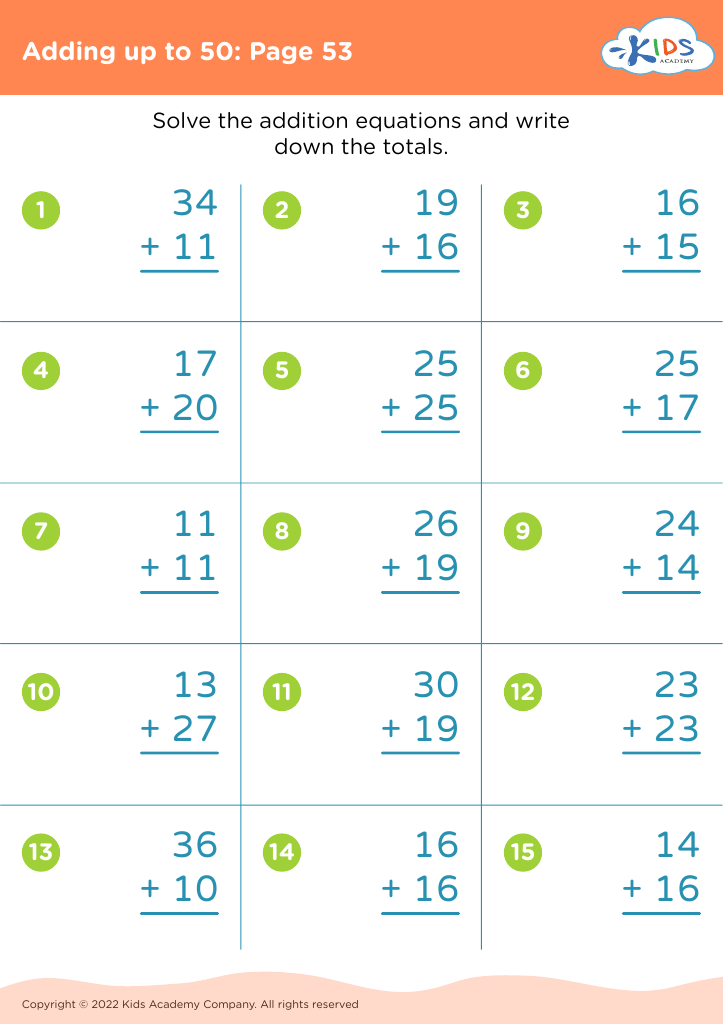




Parents and teachers should prioritize basic math skills, particularly adding up to 50, for children aged 8-9 because these skills form the foundation for more advanced mathematical concepts. Mastery of addition allows children to develop confidence and accuracy in their calculations, which is essential not only for academic success but also for everyday situations, such as budgeting allowances or managing time.
At this age, students are transitioning from simple arithmetic to problem-solving that incorporates multi-step operations. Proficiency in adding up to 50 promotes a deeper understanding of number relationships, enabling children to work with larger numbers and complex mathematical operations in subsequent grades.
Additionally, basic math skills foster logical thinking and analytical reasoning, which are crucial not only in math but across various subjects. Children who struggle with these foundational skills may experience difficulties in higher mathematics, leading to a lack of confidence and a negative attitude toward math in general.
Moreover, focusing on developing these skills encourages positive parent-teacher collaboration, as both parties can support students' learning progress. By investing time and resources into strengthening these essential abilities, parents and teachers can help children build a strong mathematical foundation that will benefit them academically and in real-life applications.








